 11
11

Atlassian, the global leader in team collaboration and productivity software, has officially announced a significant restructuring of its workforce, resulting in the reduction of its total headcount by approximately 10%. This strategic move will impact roughly 1,600 employees across various departments and global regions. The decision, communicated via a direct address from company leadership, marks a pivotal shift in the company’s operational strategy as it seeks to realign its resources toward high-growth areas, specifically artificial intelligence (AI) and enterprise-level sales.
The announcement comes at a time of notable financial momentum for the Sydney-founded firm. In its most recent fiscal reporting, Atlassian demonstrated robust performance, characterized by a 25% acceleration in cloud revenue growth and a 40% increase in Remaining Performance Obligations (RPO). Furthermore, the company reported a growing footprint in the high-value segment of the market, now boasting more than 600 customers with over $1 million in Annual Recurring Revenue (ARR). Despite these strong indicators, leadership emphasized that the "bar for greatness" in the software industry has shifted, necessitating a more aggressive focus on profitability, speed, and long-term value creation.
The primary driver behind the layoffs is the need to self-fund intensive investments in emerging technologies and market segments. Atlassian is currently undergoing a massive transformation, moving from a traditional software provider to an AI-first organization. A central component of this transition is "Rovo," the company’s recently launched AI-powered search and knowledge discovery tool. Since its introduction, Rovo has reached 5 million Monthly Active Users (MAU), signaling a rapid adoption rate that the company intends to capitalize on through further research and development.
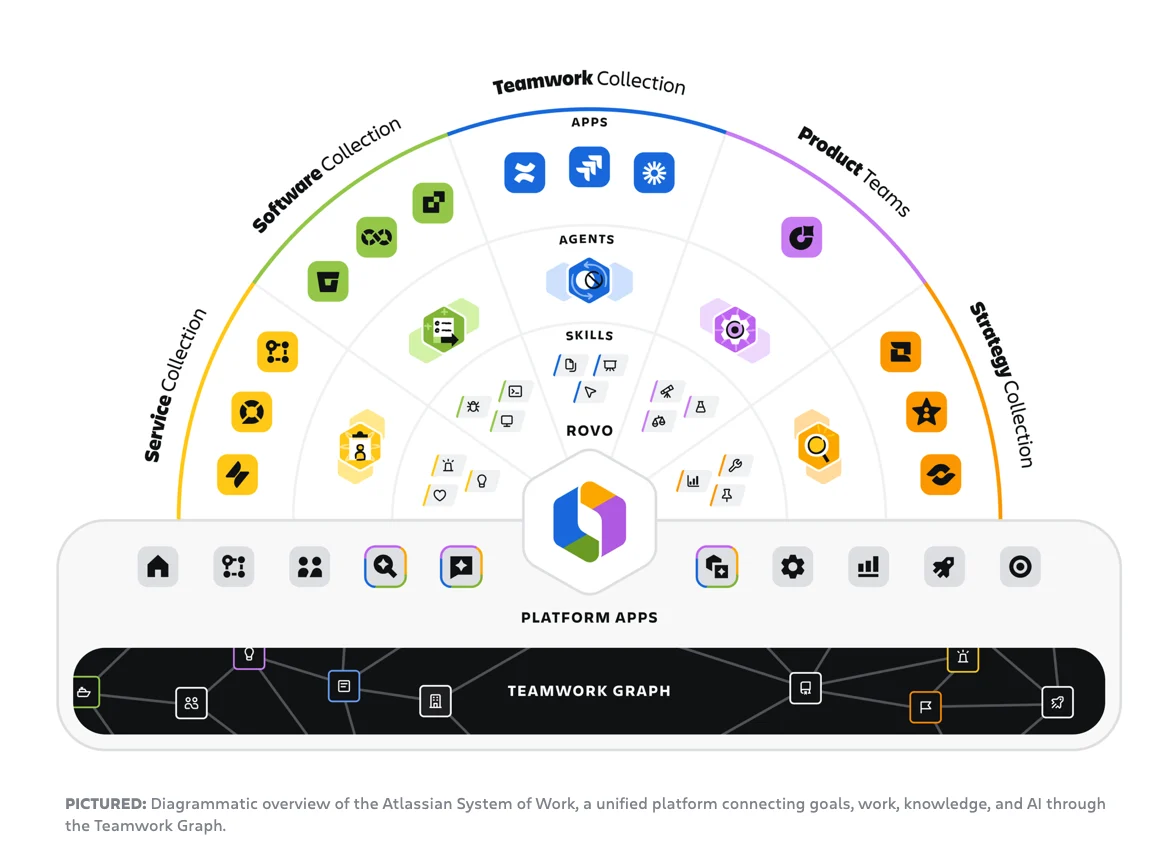
By reducing the workforce in certain legacy or redundant areas, Atlassian aims to strengthen its financial profile to support this "System of Work" transformation. This concept—the System of Work—represents Atlassian’s holistic framework for how modern teams collaborate, integrating its core products like Jira, Confluence, and Trello into a unified, AI-enhanced ecosystem. The company believes that by reorganizing around this framework, it can move faster and deliver more durable, profitable growth in a competitive SaaS (Software as a Service) landscape.
A critical point of discussion within the announcement was the relationship between AI and human labor. Leadership addressed the common concern of whether AI is directly replacing human roles. The company’s stance is that while AI is not a direct replacement for people, it fundamentally alters the skill sets required to remain competitive.
The restructuring is described as a "reshaping" of the skill mix. As Atlassian pivots toward being an AI-first company, the demand for roles focused on traditional manual processes or legacy architectures is decreasing, while the need for employees who can build, manage, and leverage AI-driven workflows is increasing. This adaptation is intended to ensure the company possesses the specific talents required to thrive in the next decade of technological shifts.
The decision to downsize despite strong revenue growth reflects a broader trend within the technology sector. Throughout 2023 and into 2024, many "Big Tech" and high-growth SaaS companies have moved away from a "growth at all costs" mentality toward a model of "efficient growth." Investors are increasingly rewarding companies that demonstrate high margins and disciplined capital allocation.
Atlassian’s acceleration in cloud revenue to over 25% is a testament to its successful transition from on-premise server products to cloud-based subscriptions. However, maintaining this trajectory requires a leaner organizational structure that can respond quickly to market changes. The growth in RPO—a metric that combines deferred revenue and non-cancelable contract value—suggests a strong future pipeline, but the company is proactively adjusting its cost base to ensure that this future revenue translates into higher bottom-line profitability.
In managing the layoffs, Atlassian invoked one of its core values: "Build with heart and balance." This principle is intended to guide the company in making difficult business decisions while maintaining empathy for its workforce. Leadership stated that the selection of impacted roles was the result of a "thoughtful and incredibly thorough" process, guided by company-wide principles and a disparate impact analysis to ensure fairness and objectivity.
The company focused on retaining "Atlassians" who possess transferable skills and the potential to contribute to the AI-driven future, including high performers and recent graduates. For those leaving the organization, Atlassian has committed to a separation package that exceeds local legal requirements in every operating region. While specific financial details of the severance packages vary by jurisdiction and are subject to local labor laws and consultation with employee representative bodies, the intent is to provide a soft landing for those affected.
The notification process was designed for immediacy and clarity. Impacted employees were informed via email within a 20-minute window following the internal announcement. To facilitate a sense of closure, the company opted to keep its internal communication platform, Slack, accessible on mobile devices for 6 to 12 hours, allowing departing staff to say goodbye to colleagues across global time zones.
However, access to Confluence—the company’s primary knowledge-sharing and documentation tool—was restricted immediately for impacted individuals. This measure was described as a necessary step to protect customer data and maintain the security of the company’s intellectual property during the transition.
Atlassian’s history spans more than 20 years, a period during which it has survived and thrived through various technology shifts, including the rise of mobile computing, the transition to the cloud, and multiple economic cycles. Founded in 2002 by Mike Cannon-Brookes and Scott Farquhar, the company has grown from a small Australian startup into a global powerhouse whose products are used by millions of teams, including many in the Fortune 500.
The current restructuring is presented as another necessary chapter in this history of resilience. By making "hard decisions" now, the company aims to set itself up for long-term success. The focus remains on "unleashing the potential of every team," a mission that leadership believes is more relevant than ever as organizations worldwide grapple with the complexities of digital transformation and hybrid work.
While the reduction of 1,600 roles is a significant blow to the company’s workforce, Atlassian remains optimistic about its strategic direction. The company is betting heavily that the integration of AI into its "System of Work" will provide a unique competitive advantage that other productivity suites cannot easily replicate.
As the company moves forward, the focus will be on integrating the remaining team members into the new organizational structure and continuing the momentum in the enterprise market. The transition reflects the harsh reality of the modern software industry: even companies with strong growth and market-leading products must constantly evolve their workforce and strategy to meet the rising expectations of efficiency and technological innovation. Atlassian’s leadership expressed deep gratitude to the departing employees, acknowledging their contributions to the "epic story" of the company, while calling on the remaining staff to prepare for a new chapter focused on durable, AI-driven growth.