 11
11
SAN FRANCISCO, CA – March 18, 2026 – Amid a wave of significant tech industry layoffs, where artificial intelligence is frequently cited as a primary driver, a recent social media post by OpenAI CEO Sam Altman has ignited a firestorm of criticism and sarcastic commentary from the developer community. The sentiment, intended as an appreciative nod to the foundational work of software engineers, was widely perceived as tone-deaf and ironic given the current climate of job displacement.
The post, shared by Altman on X (formerly Twitter) on Tuesday, March 17, 2026, read: "I have so much gratitude to people who wrote extremely complex software character-by-character. It already feels difficult to remember how much effort it really took. Thank you for getting us to this point."
This seemingly innocuous expression of thanks arrived at a particularly sensitive moment for the technology sector. In recent months, major tech giants have announced substantial workforce reductions, often explicitly linking these decisions to the accelerating integration of AI into their operations. Amazon, for instance, recently confirmed the layoff of 16,000 employees. Payment processing firm Block, co-founded by Jack Dorsey, drastically cut nearly half its workforce, affecting approximately 4,000 individuals. Australian software company Atlassian followed suit, paring back 10% of its staffers. Furthermore, reports indicate that Meta, the parent company of Facebook and Instagram, is reportedly considering another massive round of layoffs that could impact up to 20% of its entire global workforce. In each of these instances, the drive towards AI-driven efficiency and innovation has been presented as a key factor in the restructuring.
The core of the controversy surrounding Altman’s tweet lies in the perceived hypocrisy. OpenAI, the company Altman leads, is a vanguard in the field of artificial intelligence, particularly in generative AI, which includes large language models capable of generating sophisticated code. These powerful AI systems, while groundbreaking, were developed and trained on vast datasets of existing code—code meticulously crafted "character-by-character" by the very developers Altman was ostensibly thanking. Critics argue that the technology fostered by OpenAI is now being leveraged by companies to justify reducing their human engineering teams, thereby displacing the individuals whose collective work laid the groundwork for AI’s advancements.
For many software developers, Altman’s statement resonated not as genuine appreciation but as a retrospective acknowledgment of a craft that his company’s innovations are now rendering, in their view, "outdated and unnecessary." The implication that the immense effort and skill involved in traditional software development is becoming a relic of the past, akin to a rotary telephone in a smartphone era, struck a nerve. The industry has already seen a significant downturn in opportunities for junior developers, with some suggesting that the traditional entry points into software engineering are rapidly diminishing as AI assumes more basic coding tasks and augments the productivity of senior engineers. This shift poses profound questions about career paths, skill relevance, and the future of work in a rapidly evolving technological landscape.
The immediate aftermath of Altman’s tweet on X was a torrent of reactions, ranging from raw anger to biting sarcasm and gallows humor. The platform became a digital town square for developers to vent their frustrations and share their anxieties. While some responses were "straight-up angry," directly challenging Altman’s message with comments such as, "You’re welcome. Nice to know that our reward is our jobs being taken away," a significant portion of the internet community opted for humor as a coping mechanism, demonstrating a collective catharsis through shared irony.
Among the thousands of comments, several quickly gained traction for their pointed wit and satirical undertones. One popular response encapsulated the prevailing sense of despair mixed with dark humor: "Dear devs You will lose your jobs forever and be forced to work in the coal mines But you can rest easy knowing sam Altman is grateful. ❤️🙏" This tweet starkly highlighted the perceived future for many in the industry, suggesting a regression to manual labor while the architects of their displacement offer hollow gratitude. It underscored the fear that the technological progress they contributed to might ultimately lead to a degradation of their economic status and professional standing.
Another widely circulated comment offered a satirical business proposition: "Billion dollar app idea: AI that reads billionaire tweets before they post them and says ‘this is going to make you sound incredibly out of touch, are you sure?’" This comment perfectly articulated the frustration with what many perceive as a disconnect between the tech elite, who champion AI’s transformative power, and the everyday workers experiencing its disruptive consequences. It suggested a need for an "AI ethics filter" specifically designed to prevent powerful figures from inadvertently trivializing the struggles of their workforce. The irony of using AI to correct AI leaders’ social media missteps was not lost on the audience.
The global competition in AI development also found its way into the conversation, with one user remarking: "I have gratitude to OpenAI for doing all the AI work so I can have free Chinese open source AI models to use 🙏" This comment subtly pointed to the global nature of AI innovation and the rapid proliferation of open-source alternatives. It hinted at the potential for other nations and communities to leverage foundational AI research, including that of OpenAI, to develop their own accessible and potentially free models, thereby democratizing access to powerful AI tools while perhaps diminishing the market dominance of proprietary systems. It also reflected a practical, pragmatic view of benefiting from the collective advancements in AI, regardless of their origin.
Perhaps one of the most evocative and darkly humorous comments read: "This reads like something the Mayans would say right before the ceremony starts." This historical analogy painted a grim picture, likening Altman’s message to a ritualistic farewell or a pre-sacrifice appeasement. It invoked a sense of an irreversible transition, a point of no return where a valuable segment of the workforce is being ceremoniously retired or displaced in the name of a new technological deity. The comment resonated deeply with those who feel that the rapid advancement of AI is not merely an evolution but a revolutionary shift that leaves little room for the old ways of working.
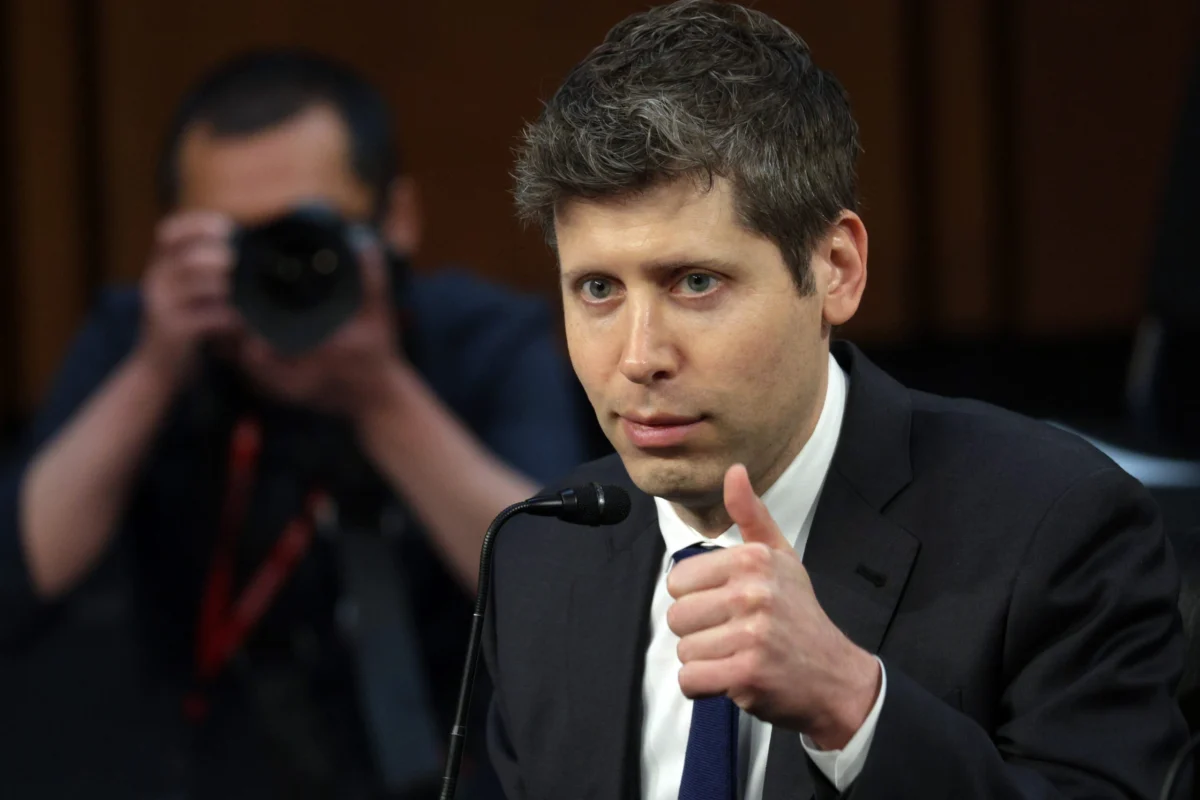
The backlash against Sam Altman’s tweet serves as a potent symbol of the complex and often contentious relationship between technological progress and its human cost. While AI offers unprecedented opportunities for innovation and efficiency, its rapid deployment is undeniably disrupting labor markets, particularly in skilled sectors like software development. The image of Altman testifying in a Senate Commerce Committee hearing on the "AI Race," as depicted in the Getty Images photo accompanying the original report, highlights his position at the forefront of this transformative era. Yet, the public’s reaction to his social media post underscores the critical need for industry leaders to approach discussions about AI’s impact with greater empathy and a more nuanced understanding of the real-world implications for the workforce that built the digital world we inhabit today. The "computer science dream" that once promised endless innovation and opportunity is, for many, beginning to feel more like a "nightmare" as the promise of AI clashes with the reality of job insecurity.
Techcrunch Event
San Francisco, CA | October 13-15, 2026