 11
11 1
1 2
2 3
3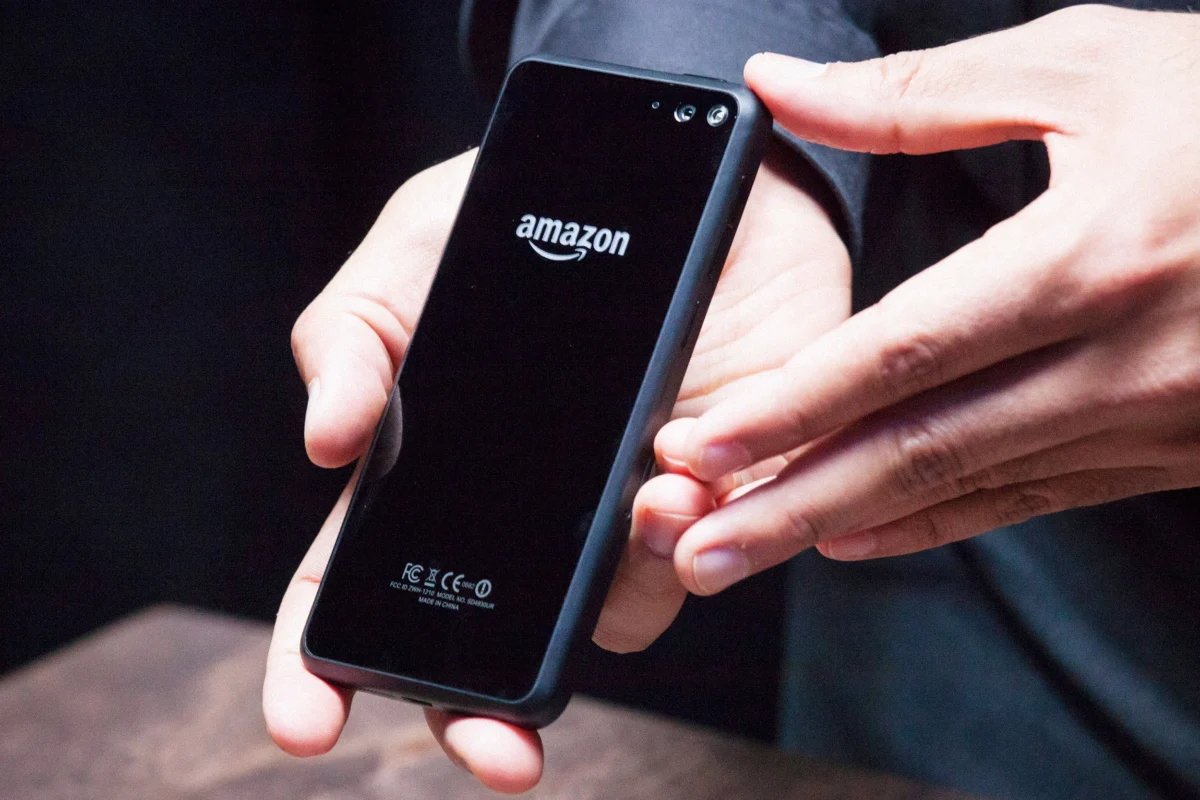
More than a decade after famously abandoning the ill-fated Fire Phone, Amazon is reportedly making a second foray into the highly competitive smartphone market. Reuters reports that Amazon’s Devices and Services unit is actively developing a new smartphone, tentatively codenamed "Transformer." This ambitious project is said to center heavily on Amazon’s advanced Alexa+ AI assistant and seamless shopping integration, aiming to redefine the user experience through artificial intelligence.
However, concrete details surrounding the Transformer project remain remarkably scarce. Key information such as the anticipated retail price, the total investment Amazon is pouring into its development, and the operating system it will run are currently unknown. There is also no official word on a potential launch date, and, as with any nascent technology project, the possibility of the entire endeavor being scrapped before release still looms. When contacted by WIRED for comment, an Amazon spokesperson adhered to standard corporate policy, stating that the company does not comment on rumors and speculation.
Amazon’s initial venture into the smartphone space was the Fire Phone, launched in 2014. It quickly became a cautionary tale in tech history, discontinued shortly after its release due to a confluence of factors, including a severely limited app ecosystem and disastrously low sales figures. Beyond its foundational flaws, the Fire Phone featured a gimmicky 3D display technology, marketed as "Dynamic Perspective," which tracked the user’s head movements to create a pseudo-3D effect. It also prominently featured an app called Firefly, which allowed users to identify and, naturally, purchase items directly from Amazon.com by simply pointing the phone’s camera at an object. This early attempt at integrating shopping directly into the phone’s core functionality serves as a clear precursor to the rumored focus of the Transformer device.
The question of the Transformer’s operating system is particularly intriguing. Amazon is rumored to be preparing to launch a new Fire tablet later this year that, for the first time, will run Google’s Android operating system instead of Amazon’s proprietary Fire OS. Fire OS is a heavily customized version of Android that notably lacks native access to Google’s popular Play Store, a significant limitation for users seeking a broad range of applications. Such a strategic shift for the Fire tablet line suggests that the new Transformer smartphone could also adopt Android, offering a more familiar and robust app environment. However, the Reuters report also hints at a more revolutionary approach, indicating that Transformer might feature an advanced AI interface designed to "eliminate the need for traditional app stores" altogether, pointing towards a paradigm shift in how users interact with their devices.
This concept of a generative user interface, or a new kind of operating system driven by AI, is not entirely novel in the tech world. At Mobile World Congress 2024, Deutsche Telekom, the parent company of T-Mobile, showcased a fascinating concept phone that dynamically generated its interface based on verbal commands, effectively sidestepping the need for conventional apps. Similarly, Nothing CEO Carl Pei shared his vision with WIRED last year, predicting that future smartphones might converge into having "one app, that will be the OS," suggesting a fully integrated AI-driven experience.
Indeed, AI companies are rapidly advancing their chatbots’ "agentic skills," enabling them to autonomously complete complex tasks on behalf of users. This development brings the industry one step closer to the reality of generative interfaces. Google, for instance, recently debuted its "Task Automation" feature within the Gemini assistant on Samsung Galaxy and Google Pixel phones. This functionality allows users to instruct the bot to perform multi-step actions, such as ordering an Uber ride or food delivery from popular apps like DoorDash, directly through natural language commands. Meanwhile, OpenAI is collaborating with legendary ex-Apple designer Jony Ive on developing new AI-powered hardware devices. While details remain scant, these gadgets are envisioned as becoming significantly smarter and more powerful collaborators than current smartphones, pushing the boundaries of human-computer interaction.
The Transformer phone might draw inspiration from devices like the Light Phone, a minimalist feature phone developed by a Brooklyn-based company. The Light Phone is designed with smart features aimed at helping users disconnect from daily smartphone distractions. While Amazon’s device is unlikely to prioritize digital detoxing, treating Transformer as a secondary or companion device could potentially carve out a niche in the fiercely competitive US smartphone market, which is overwhelmingly dominated by established giants like Samsung and Apple.
However, industry experts express considerable skepticism about Amazon’s prospects. Francisco Jeronimo, vice president of data and analytics at the research group IDC, voiced strong reservations. "What can they bring to end users that is not already available from the likes of Apple or Samsung? That’s where I’m struggling to understand the rationale behind this project," Jeronimo stated. He added, "If 10 years ago, a phone did not make any sense and it was obvious that it would not succeed, today is even worse."
Jeronimo also highlighted the challenging economic environment, which could significantly inflate the device’s cost compared to initial projections. Factors such as the ongoing "memory crisis" impacting semiconductor prices, supply-chain disruptions potentially exacerbated by geopolitical tensions like the "Iran war" (referring to broader conflicts affecting global trade routes), and various tariffs on imported goods all contribute to higher manufacturing expenses, making it harder for a newcomer to compete on price.
Furthermore, nearly every major smartphone manufacturer already boasts robust AI capabilities that will likely rival or even surpass what Amazon can offer. Unlike Amazon, these competitors typically do not have a primary business model that involves "shoving Amazon services and shopping down your throat," a potential drawback for users wary of overt commercial integration. "If it’s a phone, it’s dead on arrival," Jeronimo asserted, emphasizing the immense challenges in hardware competition. "From a hardware perspective, it will be completely impossible to compete against Apple, Samsung, Xiaomi. From a software perspective, they may have an opportunity, but that opportunity is very short-term, because Apple, Samsung, and Android in general are moving extremely fast."
Despite the skepticism about a traditional smartphone, Jeronimo believes that if Alexa+ is the central pillar of Transformer, the device could succeed as a dedicated vehicle to explore and advance the AI chatbot in a mobile, always-on format. Alexa has historically been confined to fixed devices within the home. While Alexa+ can be installed on existing smartphones, Amazon currently lacks full control over the user experience; for example, it cannot be set as the default assistant on iPhones. A dedicated phone-like device or wearable would grant Amazon greater authority over the user interface and, crucially, over the collection and utilization of user data. This ambition is underscored by Amazon’s recent acquisition of Bee AI, a company behind an "always-listening wearable" designed to summarize conversations and even generate unprompted to-do lists. Asked about Bee’s potential integration with Alexa at CES 2026, Bee cofounder Maria de Lourdes Zollo, now working at Amazon, hinted that "there’s something in the works," without elaborating further.
However, any new Amazon hardware venture must confront the company’s problematic history with user privacy. Amazon was ranked second to last in privacy in the 2025 Ranking Digital Rights Index, an assessment of how technology companies respect human rights in the digital age. Investigations have revealed instances where Amazon failed to adequately protect customer data, and its Ring home security cameras have raised concerns about creating a "suburban surveillance state" due to their partnerships with law enforcement and extensive data collection. A 2022 report also exposed that Alexa voice transcripts were used for targeted advertising, directly impacting user privacy.
Alexander Gamero-Garrido, an assistant professor at UC Davis specializing in online privacy and a contributor to the 2022 report, highlighted even more recent research. This research indicates that data points such as age and gender can be identified through voices interacting with Alexa devices, and this information is actively used for ad personalization. "This is not a consumer device company that takes privacy very seriously," Gamero-Garrido stated. He warned that since people use smartphones far more extensively than Alexa-enabled home devices or Kindles, an Amazon smartphone today would "significantly increase the scale of the potential privacy harms."
Gamero-Garrido believes Amazon could leverage Transformer primarily as a sophisticated data-gathering tool. By gleaning insights into how people interact with its devices, Amazon could further build its advertising network, intensifying its competition with data-driven giants like Alphabet and Meta, both of whom are currently facing heightened regulatory scrutiny in regions like the European Union and California. He drew an analogy to the Fire TV approach, where Amazon’s streaming platform is integrated into third-party televisions. Even if users don’t buy a Fire TV-branded television from Amazon, the data collected by the operating system remains under Amazon’s ownership. "Whether they end up succeeding with this phone supplement device, or whether they eventually use a similar model where they install their operating system on other phones or ‘light’ phones that are built by third parties, it has the same effect," he explained. "Ultimately, what Amazon is doing is centralizing all the network traffic through its own infrastructure so it can improve its advertising business."
The implications of such pervasive data collection are stark. Gamero-Garrido cited a "real patent Amazon owns" for Alexa technology that can detect when a person is sick from the sound of their voice, then recommend buying specific cold medicine from Amazon Health. If this capability is integrated into a device carried everywhere, it could listen to a wider range of conversations and serve even more precise, and potentially invasive, advertisements.
Despite these privacy concerns, Kassem Fawaz, an associate professor at the University of Wisconsin-Madison who researches security and privacy in consumer devices, notes that customers have generally shown a willingness to accept Amazon’s hardware. "I think when it comes to products, unfortunately, consumers value utility and price over privacy," Fawaz wrote in an email to WIRED, suggesting a pragmatic trade-off consumers often make.
A significant accelerant for this new initiative could be Panos Panay, who joined Amazon as the Devices & Services lead in 2023. Panay gained widespread recognition for transforming Microsoft’s Surface line of computers into an aspirational hardware brand, largely through his energetic and emotionally charged "pumped" keynotes. While Panay has already injected some of that signature enthusiasm into recent Amazon hardware announcements, such as the Kindle Scribe Colorsoft, these products have yet to achieve the same level of market success as Surface. If Amazon is genuinely embarking on a smartphone endeavor, it will require immense passion and a compelling vision to entice customers away from entrenched competitors. "If someone can do it, it’s going to be Panos," Jeronimo conceded, expressing confidence in Panay’s leadership. "For that, I have total confidence. He is the right person for these kinds of initiatives."