 11
 1
 2
 3
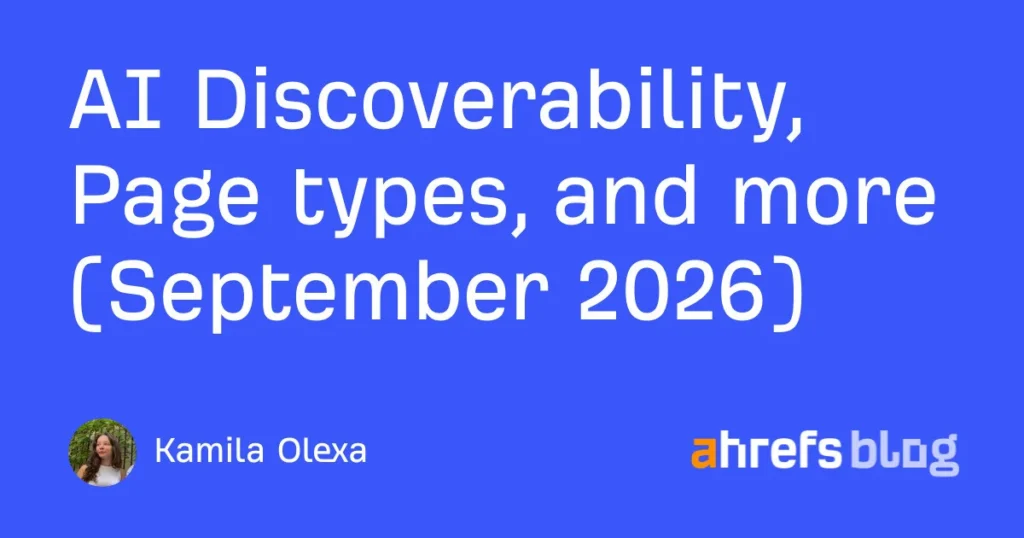
Ahrefs has announced a suite of significant updates across its core SEO and analytics tools, aimed at improving content discoverability for AI, refining competitive analysis, and streamlining data integration. The latest enhancements include a new AI Discoverability category in Site Audit, a Page Types widget in Site Explorer, semantic filters in Keywords Explorer, expanded log source integrations for Bot Analytics, and doubled API unit limits with new endpoints. These updates reflect Ahrefs’ commitment to evolving its platform to meet the changing demands of the digital landscape, particularly the growing influence of artificial intelligence in search and content consumption.
A key highlight of this month’s releases is the introduction of the AI Discoverability category within Ahrefs Site Audit. This new feature is designed to address a critical challenge for content creators: ensuring their content can be found and utilized by AI crawlers such as ChatGPT and Claude. The AI Discoverability feature meticulously examines whether AI bots can access, read, and subsequently cite a website’s pages. If a page is inaccessible or unreadable to these AI crawlers, its potential to appear in AI-generated answers diminishes significantly, irrespective of its inherent quality or SEO optimization.
The initial rollout of AI Discoverability issues focuses on fundamental checks to ensure AI crawlers can effectively navigate and process website content. While the specific list of initial issues is not detailed, the company has indicated that a more comprehensive set of features is forthcoming. This includes the development of an AI Discoverability Score widget, which will provide users with a quantifiable measure of their content’s AI accessibility. Furthermore, a dedicated report will offer in-depth insights into AI discoverability metrics. Structured data recommendations will guide users in optimizing their data markup for better AI interpretation. The detection of stale content will help identify outdated information that might hinder AI discoverability. Crucially, future integrations with Bot Analytics, Web Analytics, and Brand Radar are planned, promising a holistic view of how AI interacts with a site’s content and brand presence. This proactive approach by Ahrefs aims to equip businesses with the tools necessary to ensure their valuable content is not overlooked in the burgeoning era of AI-powered information retrieval.
In Site Explorer, Ahrefs has introduced an "Organic pages by type" widget to the Overview section. This enhancement moves beyond simply reporting the number of pages a website possesses, instead focusing on the types of pages that are driving organic traffic. This granular breakdown allows users to quickly assess the performance of different content formats, such as blog posts, dedicated tools, landing pages, and other distinct page categories. By running this analysis on a competitor’s website, users can gain immediate insights into their strategic content distribution and identify which formats are most effective in attracting organic visitors. The widget offers the flexibility to expand any top-level page type for a deeper dive into specific sub-categories. Additionally, clicking on a particular page type will directly navigate users to the relevant pages within the "Top pages" report, facilitating swift and efficient competitive research and content strategy development.
Keywords Explorer has also received a significant update with the addition of semantic filters. This innovative filter functionality allows users to match keywords based on their meaning rather than relying solely on exact text matches. This is particularly beneficial when researching brands or topics that involve common words with multiple potential interpretations. For example, when searching for keywords related to the running shoe company "On," a standard search might yield thousands of unrelated results due to the commonality of the word "on." By applying "running shoes" as a semantic filter, users can refine their search to precisely identify keywords like "on cloud running shoes," where "On" is clearly understood in its brand context. This semantic filtering capability dramatically reduces the need for manual filtering, leading to cleaner and more relevant keyword lists from the outset, thereby enhancing the efficiency of keyword research and content planning.
Bot Analytics has been enhanced with new log source integrations, now offering direct connectivity with Vercel, Amazon CloudFront, and Fastly. Previously, integrating log data from these popular platforms required a more complex setup process. With the latest update, users can seamlessly link these services directly within the "Project settings" under "Bot Analytics." This streamlined integration enables users to begin monitoring how search engines and AI crawlers interact with their websites in near real-time. By analyzing this bot traffic data, businesses can gain valuable insights into crawl budgets, identify potential crawling inefficiencies, and understand how search engine bots are discovering and indexing their content. This improved connectivity empowers users to gain a more comprehensive understanding of their site’s technical SEO health and its visibility to automated systems.
The Ahrefs API and Managed Cloud Platform (MCP) have seen a substantial increase in their unit limits, with all plans now offering doubled limits. This adjustment addresses a growing bottleneck for users who are increasingly leveraging Ahrefs data within AI assistants and automated workflows. As the adoption of these advanced data integration methods expands, the previous limits were proving insufficient for many users. The doubled limits are intended to provide greater flexibility and capacity for users to extract and utilize Ahrefs data more extensively without encountering usage constraints. Alongside the limit increase, several new APIv3 endpoints have been released. These new endpoints offer expanded capabilities and access to a wider range of Ahrefs data, further empowering developers and businesses to build sophisticated integrations and analytical tools. Full details regarding these new endpoints and the revised limits are available in the official changelog.
These comprehensive updates underscore Ahrefs’ commitment to staying at the forefront of SEO and digital marketing technology. By introducing features like AI Discoverability, semantic filtering, and enhanced analytics integrations, Ahrefs is providing its users with powerful tools to navigate the evolving digital landscape, particularly in light of the rapid advancements and widespread adoption of artificial intelligence. The platform continues to refine its offerings to ensure users can effectively optimize their online presence, understand their audience, and stay ahead of the competition. Users are encouraged to explore the full changelog for details on smaller updates and to submit feature requests on the Ahrefs Canny board.