 11

The pursuit of fusion energy, the process that powers the sun and stars, has long been considered the holy grail of clean energy. For decades, it has remained largely a scientific endeavor, perpetually "30 years away" from commercial viability due to the immense scientific and engineering challenges involved in sustaining and controlling plasma at extreme temperatures. However, a significant paradigm shift is now underway, driven by technological breakthroughs, substantial private sector investment, and a global imperative to combat climate change. This shift sees fusion moving from a purely academic pursuit to a tangible commercial objective, with two pioneering companies, Commonwealth Fusion Systems (CFS) and Helion, leading the charge to integrate fusion-generated electricity into existing power grids.
Commonwealth Fusion Systems (CFS) is at the forefront of this commercialization effort, actively constructing SPARC, a groundbreaking demonstration fusion machine. SPARC is designed not just to prove scientific principles but to pave a clear path for CFS’s ambitious goal: ARC, its first commercial power plant. Concurrently, Helion is rapidly developing Orion, a 50-megawatt fusion power plant slated to commence supplying electricity to tech giant Microsoft as early as 2028. These parallel efforts signify a monumental leap in the fusion landscape, indicating that the long-promised clean energy source is closer to becoming a reality than ever before.
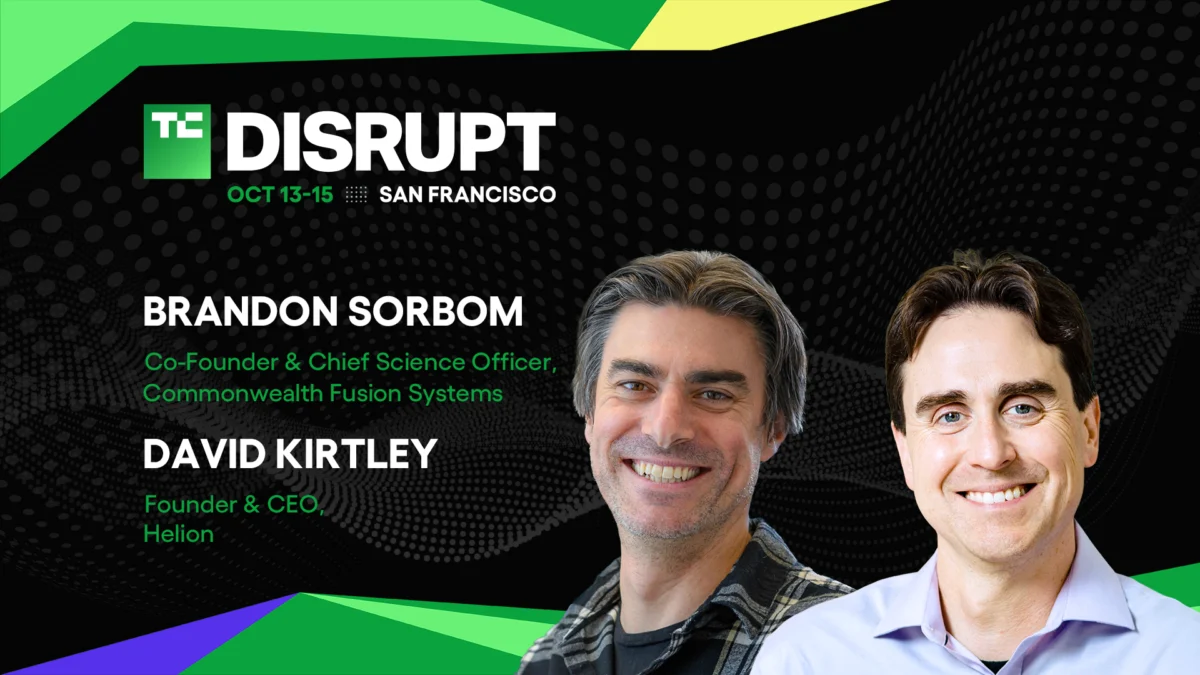
The critical juncture of these advancements will be a central theme at TechCrunch Disrupt 2026. This premier technology conference, known for showcasing innovation and fostering crucial discussions, will host a pivotal session on its Smart Systems Stage titled "Bringing Fusion to the Grid." This session will feature two of the most influential figures in the fusion energy sector: Brandon Sorbom, co-founder and chief science officer of Commonwealth Fusion Systems, and David Kirtley, founder and CEO of Helion. Their joint appearance underscores the collaborative spirit and shared urgency within the industry to overcome the final hurdles. They are expected to delve into the latest breakthroughs that are propelling fusion technology forward, candidly discuss the significant challenges that still lie ahead, and articulate the comprehensive strategy required to deliver fusion power to the grid at a truly commercial scale. The conversation promises to be invaluable for anyone interested in the future of energy, technology, and climate solutions.
Attendees eager to gain firsthand insights into the transition from scientific discovery to commercial power generation can secure their access to this crucial discussion. This exclusive opportunity provides a deep dive into what currently stands between today’s remarkable fusion breakthroughs and their widespread commercial application. To facilitate broader participation in this transformative dialogue, TechCrunch Disrupt offers a special incentive: attendees can grab their pass and bring a co-founder, partner, or peer for 50% off their pass, fostering a collective understanding of the insights shaping the future of fusion.
Brandon Sorbom’s journey into fusion commercialization is deeply rooted in cutting-edge academic research. He co-founded CFS in 2018 with a singular, urgent mission: to commercialize fusion energy within a timeframe that can meaningfully contribute to the global fight against climate change. As CFS’s chief science officer, Sorbom is responsible for steering the company’s scientific direction, overseeing its extensive research and development initiatives, and meticulously advancing the design and engineering of the ARC power plant. The foundational concept for ARC emerged directly from his groundbreaking work at MIT, where Sorbom, while pursuing his Ph.D. in nuclear science and engineering, served as the lead author of the seminal paper proposing the original ARC reactor design. This academic foundation has provided CFS with a robust theoretical framework, coupled with practical engineering foresight.

Today, CFS is meticulously progressing towards the realization of ARC through the development and construction of SPARC, the company’s crucial demonstration fusion machine. SPARC is designed to prove the efficacy of high-field superconducting magnets, a technology that is expected to enable more compact and powerful fusion reactors than previously thought possible. This technological leap is central to CFS’s strategy for achieving commercially viable fusion. A significant commercial milestone occurred in April when CFS became the first fusion company to formally apply to PJM Interconnection, the largest U.S. wholesale electricity market. PJM Interconnection oversees the electricity grid in 13 states and the District of Columbia, making this application a critical and concrete step towards the eventual connection of the future ARC plant to the broader electricity grid. This move signals not just scientific ambition but serious commercial intent and readiness to engage with existing energy infrastructure. The financial world has also recognized CFS’s potential; in July, the company successfully raised an additional $1 billion in funding, bringing its total capital secured to an impressive $4 billion, underscoring significant investor confidence in its technology and commercialization timeline.
For a diverse audience of founders, technology leaders, and investors, Sorbom offers an invaluable perspective. His experience spans the entire journey from pioneering academic research to the intricate design and engineering challenges of building a commercial fusion power plant. He can articulate the scientific hurdles that have been overcome, the engineering innovations required for reliability and scalability, and the regulatory pathways that must be navigated to bring fusion power online. His insights illuminate the complex transition from laboratory success to industrial-scale energy production.
The question of how to transform decades of theoretical and experimental fusion research into a commercially viable power source is paramount. To hear directly from one of the leading scientists actively working to make this transition a reality, secure your Disrupt pass and take advantage of the special offer to grab a second pass at 50% off.
David Kirtley, founder and CEO of Helion, has dedicated his career to developing fusion technology with the ultimate goal of delivering electricity at a commercial scale. Kirtley’s expertise is formidable; as an NSF and NASA Advanced Concepts Fellow, he possesses a deep understanding of advanced propulsion systems and high-Beta plasmas. In fusion, "high-Beta" refers to a state where the plasma pressure is a significant fraction of the magnetic field pressure, indicating more efficient use of the magnetic field to confine the hot plasma, which is crucial for economical reactor design. His leadership at Helion is focused on translating this advanced scientific knowledge into practical, grid-ready fusion power.
Helion achieved a significant scientific milestone in February, announcing that its Polaris prototype had successfully heated plasma to an astounding 150 million degrees Celsius. This temperature is critical, as it is necessary to initiate and sustain the fusion reactions that generate energy. Helion’s approach, which utilizes a pulsed field-reversed configuration (FRC) device, offers a distinct pathway to fusion. Building on this success, the company is now focused on developing Orion, a 50-megawatt fusion power plant. The groundbreaking aspect of Orion is its intended role: supplying electricity to Microsoft as early as 2028. This partnership with a major corporation marks a pivotal moment, as it represents the first publicly announced commercial power purchase agreement for fusion energy, providing a concrete timeline and a real-world application for the technology. In June, Helion announced another key regulatory milestone, a crucial step in the complex process of building and operating a novel power plant, involving permitting, safety assessments, and environmental reviews. Demonstrating strong investor confidence, Helion’s Series G funding round, initially announced at $465 million in June, successfully closed at $500 million in September.
This aggressive timeline for Orion places the core questions of the Disrupt session into sharp focus. While scientific milestones, such as achieving specific plasma temperatures, are undoubtedly important, the ultimate success of commercial fusion hinges on its ability to make the leap to a fully functioning power plant. Such a plant must be capable of reliably and consistently delivering electricity to customers, meeting rigorous operational, safety, and economic standards. Kirtley’s perspective will be critical in understanding the practicalities of this transition.

To gain insight into what it truly takes to transform fusion milestones into tangible electricity on the grid, register for Disrupt and take advantage of the offer to bring someone with you at 50% off to hear Kirtley’s invaluable perspective on the work that still lies ahead.
Commonwealth Fusion Systems and Helion, while pursuing different technological approaches to fusion – CFS with its advanced tokamak design utilizing high-field superconducting magnets, and Helion with its field-reversed configuration (FRC) – share a common, formidable challenge: transitioning from scientific and engineering progress to viable commercial power generation.
At TechCrunch Disrupt, Brandon Sorbom and David Kirtley will provide firsthand accounts of building companies around this monumental transition. For founders, investors, and technology leaders, their combined conversation offers an unparalleled opportunity to understand the factors accelerating fusion closer to commercialization, identify the remaining critical challenges, and delineate the comprehensive strategy required to bring fusion power to the grid at scale. Their discussion will undoubtedly cover topics ranging from plasma stability and material science to regulatory frameworks and economic feasibility.
This highly anticipated session is just one of over 200+ sessions planned across six dedicated industry stages, complemented by intimate roundtables and focused breakouts at Disrupt, taking place from October 13–15 at Moscone West in San Francisco. The event is expected to draw more than 10,000 founders, investors, operators, and tech leaders, creating a vibrant ecosystem for innovation and networking. Attendees will have access to insights from 250+ expert speakers and the opportunity to explore advancements from 300+ exhibiting startups. Beyond the structured agenda, Disrupt facilitates invaluable connections through dedicated matchmaking services, dealmaking opportunities, and extensive networking events, enabling participants to engage directly with the visionary founders, astute investors, and innovative builders who are actively shaping the next generation of technology.
For decades, fusion has been relegated to the realm of "the energy technology of the future." Now, with companies like CFS and Helion making tangible progress, that future is rapidly approaching. Hear directly from two leaders who are actively working to bring fusion power closer to reality and integrate it into our energy infrastructure. These are the final days to grab your pass and get a second of the same type at 50% off, ensuring you don’t miss out on this historic conversation shaping the clean energy revolution.
When you purchase through links in our articles, we may earn a small commission. This doesn’t affect our editorial independence.






