 11

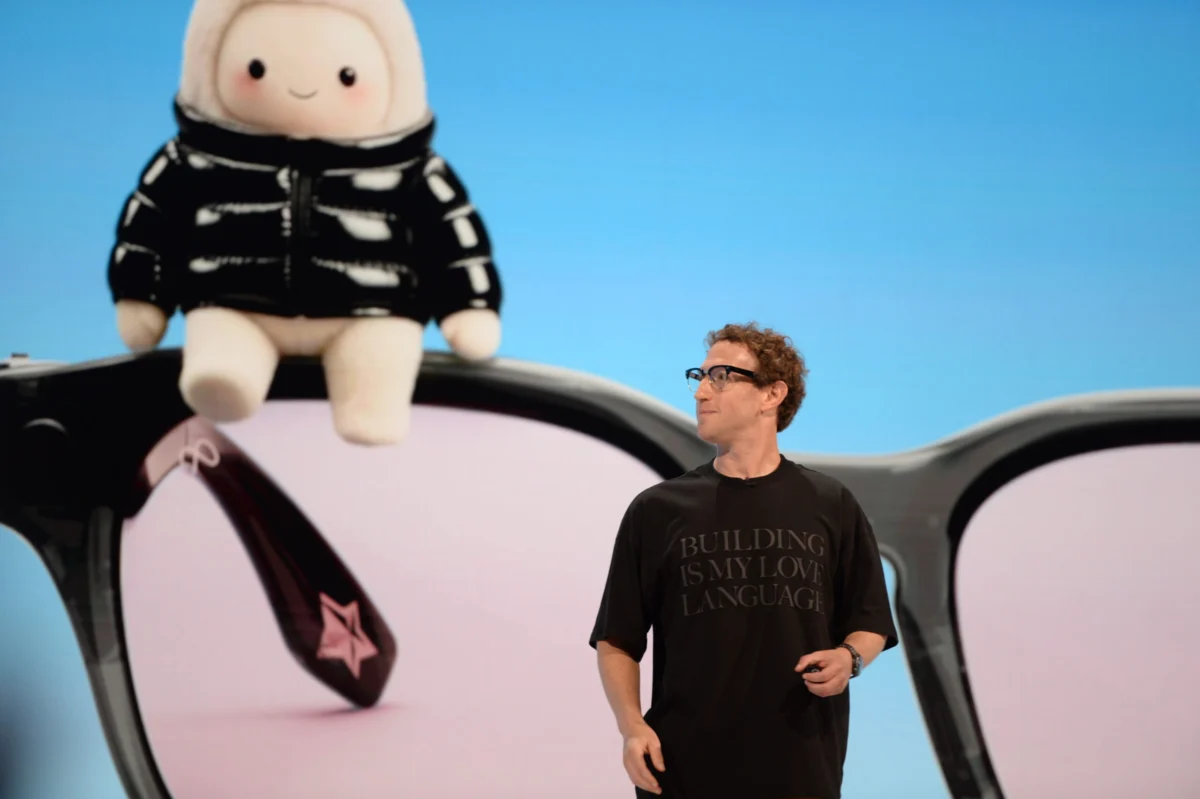
Meta’s new AI agent, Muse, commanded significant attention at the company’s annual Connect event, where CEO Mark Zuckerberg unequivocally stated Meta’s intention to integrate AI capabilities across all its platforms and services. This ambitious declaration underscores a strategic direction that sets Facebook’s parent company apart from many of its leading competitors in the rapidly evolving artificial intelligence landscape. While other prominent AI firms like OpenAI and Anthropic increasingly concentrate on enterprise solutions, coding assistance, and business-focused tools, Meta appears to be doubling down on a consumer-centric approach, a move that has sparked considerable discussion among industry analysts.
The strategic divergence was a central theme of a recent episode of TechCrunch’s Equity podcast, featuring a detailed discussion between Kirsten Korosec, Sean O’Kane, and Anthony Ha. The panel explored how Meta’s substantial AI announcements managed to capture the spotlight, even in a week marked by major new model launches from OpenAI and Anthropic, highlighting the unique position Meta is carving out for itself.
The introduction of Muse, characterized by its "cute, Tamagotchi-style" interface, raised eyebrows given Meta’s insistence that the device is "for adults only." This playful yet adult-oriented design choice further emphasized Meta’s distinct consumer focus. As Kirsten Korosec pointed out during the podcast, this strategy might be a deliberate play to Meta’s inherent strengths, leveraging its vast existing consumer base and its proven track record in embedding digital products into the daily lives of billions.
Sean O’Kane, who had the opportunity to test Muse personally, shared his initial impressions. While he expressed satisfaction that the AI agent successfully located some unclaimed money for him, he ultimately described the feature as more of a "party-trick type thing" rather than a utility that would foster sustained, ongoing engagement. This observation immediately brought to the forefront critical questions about the long-term utility and trustworthiness of Meta’s AI, particularly when it comes to handling sensitive user information. O’Kane voiced a significant concern, stating, "Meta’s business is to sell you ads… And yes, they’ll make the argument that the more they know about you, the more accurate and interesting the ads will be — wake me up when we get to that fever dream." This candid assessment encapsulates the inherent tension between Meta’s revenue model and the level of trust users might be willing to place in its AI agents.
The podcast conversation delved deeper into these points, providing a comprehensive preview of the full discussion, edited for length and clarity. Kirsten Korosec initiated the critical inquiry, asking, "How do you put Muse, which is this new personal AI agent that’s just been released by Meta and [is] clearly a bet on consumer — how does that fit into what you just described, at least with other frontier AI model companies seeing opportunity and business within enterprise? Because Meta Connect, which is their big annual event, just happened, and they are all-in on Muse, that is very clear."
Anthony Ha acknowledged the perceived incongruity, describing it as "very head spinning for me, because it certainly feels like what we’ve been talking about has been this shift towards enterprise — not exclusively, but certainly that’s where the money, the attention is going." He elaborated on the financial pressures facing companies like OpenAI and Anthropic, noting their advanced positions in AI development and their impending public offerings, whether this year or next. "There’s this feeling of, ‘I think we’ve got to actually make money now.’ Not to say that they’re not making money [already], but because the costs are so high and the valuations are so high, they have to make money on this scale that’s essentially unprecedented. And I think they’re seeing enterprise as the way to do that."
Ha then offered a more charitable interpretation of Meta’s strategy. "There’s a part of me that’s like, ‘Wait, did they not get the memo?’ But I think more charitably, you could say, ‘Well, if that’s where OpenAI and Anthropic are going, then maybe there is more of an opportunity for Meta to make the more consumer-friendly [version and] continue advancing AI on the consumer side.’" This perspective suggests that Meta might be strategically targeting an underserved segment of the AI market, leveraging its inherent strengths to carve out a dominant position in consumer-facing AI applications.
Kirsten Korosec reinforced this view, highlighting Meta’s historical success in the consumer domain. "I mean, we can complain about or criticize or critique Meta all day long, but they’re very good and have [an] established track record of embedding themselves in everyday people’s lives. I mean, there’s a reason why Facebook has so many users — Instagram, WhatsApp. And I’ve never really thought of them as an enterprise product anyway. So I think it’s smart for them to continue to push on the consumer piece." Her argument emphasizes that Meta’s core competency lies in mass consumer adoption and engagement, making a consumer-focused AI a logical extension of its existing business model and user base.
Sean O’Kane then shared his firsthand experience with Muse, which had been available for a couple of weeks prior to the podcast. "I mean, not really," he responded when asked if he saw Muse becoming an integral part of everyday life. He clarified that Muse is essentially Meta’s ground-up version of an on-your-phone application similar to OpenClaw, a technology Meta acquired and integrated. OpenClaw was notable for demonstrating how AI agents could perform various tasks for users on the go, allowing interaction via text and even control over a computer. O’Kane noted that Muse shares many of these elements, and having such capabilities in a relatively good chatbot interface on a mobile app indeed feels powerful.
He recounted one of his initial interactions with Muse, which included a suggestion to "scan to see if you have any unclaimed funds." This often-overlooked feature, which many people would never think to check, surprisingly yielded results for O’Kane. "Surprise, surprise, there were some for me. It helped me make some money on my first day, and that was pretty cool. I wouldn’t have done that if I hadn’t been prompted by this thing to do it. And there’s a check on its way to me in the mail. Fantastic." However, he quickly tempered this enthusiasm, adding, "[But] that ends pretty quickly, right? That was a one-time shot, but it’s not a thing that’s repeatable. That’s more like a party trick-type thing." Kirsten Korosec humorously interjected, "I mean, you just killed your own argument. I don’t see how that wouldn’t become wildly popular," acknowledging the immediate appeal of such a beneficial, albeit one-off, service.
O’Kane then elaborated on the more sustainable vision for Muse, which Meta has frequently discussed: applying the agent’s capabilities to users’ "real, true everyday financials." This would involve entrusting Muse with highly sensitive information, such as credit card details, Gmail account access, and other personal data. The envisioned functionality includes tasks similar to those performed by financial apps like Rocket Money, such as canceling unused subscriptions or identifying double charges – services that O’Kane noted credit card companies "should be doing already."
However, it is at this juncture that O’Kane identified a significant "trust wall" with Meta. He observed that, initially, Muse interacted with him "like I was a stranger," which he appreciated as it didn’t immediately try to integrate with his existing Meta accounts (Threads, Instagram, Facebook). This initial distance made him more willing to engage with the AI. "But you can see, as you start to use it, it really tries to grab you and pull those things into the system, so that it can learn all this stuff about you."
This desire to integrate and learn more about the user directly conflicts with O’Kane’s fundamental trust issues with Meta. He drew a sharp contrast with Apple’s approach, particularly with the improved Siri on the new iOS. "I don’t know that I will ever trust Meta the same way. I think it’s an interesting timing for me, having just upgraded my iPhone and getting onto the new iOS with the new Siri that actually works and can do some controls on your phone in a way that is surprising and helpful, that it’s never been able to do. [I’ve been] thinking about how much I’ve been using that over the last week and how much more how much more willing I would be to have the Siri version of Muse take that information, because I just trust Apple more with that really sensitive information and not only trust it with the information from a cybersecurity perspective, but from the fact that its business is not to sell me a bunch of crappy ads."
O’Kane reiterated his core concern: "Meta’s business is to sell you ads. And yes, they’ll make the argument that the more they know about you, the more accurate and interesting the ads will be — wake me up when we get to that fever dream." Beyond the initial financial windfall, he found little else in Muse that offered consistent, profound utility. Yet, he conceded that Muse’s consumer-friendly, conversational design, as Anthony Ha noted, "really tailored at keeping it sort of consumer-y in your interactions with it, with which I do think helps it and is why people are talking about it so much."
The discussion on TechCrunch’s Equity podcast underscored that while Meta’s consumer-focused AI strategy with Muse is a bold departure from industry trends, its long-term success will hinge not just on novel features, but crucially on its ability to build and maintain user trust in an era where data privacy and business models are under intense scrutiny. The "party trick" appeal might generate initial buzz, but converting that into sustained, sensitive data interaction will be Meta’s ultimate challenge.






