11

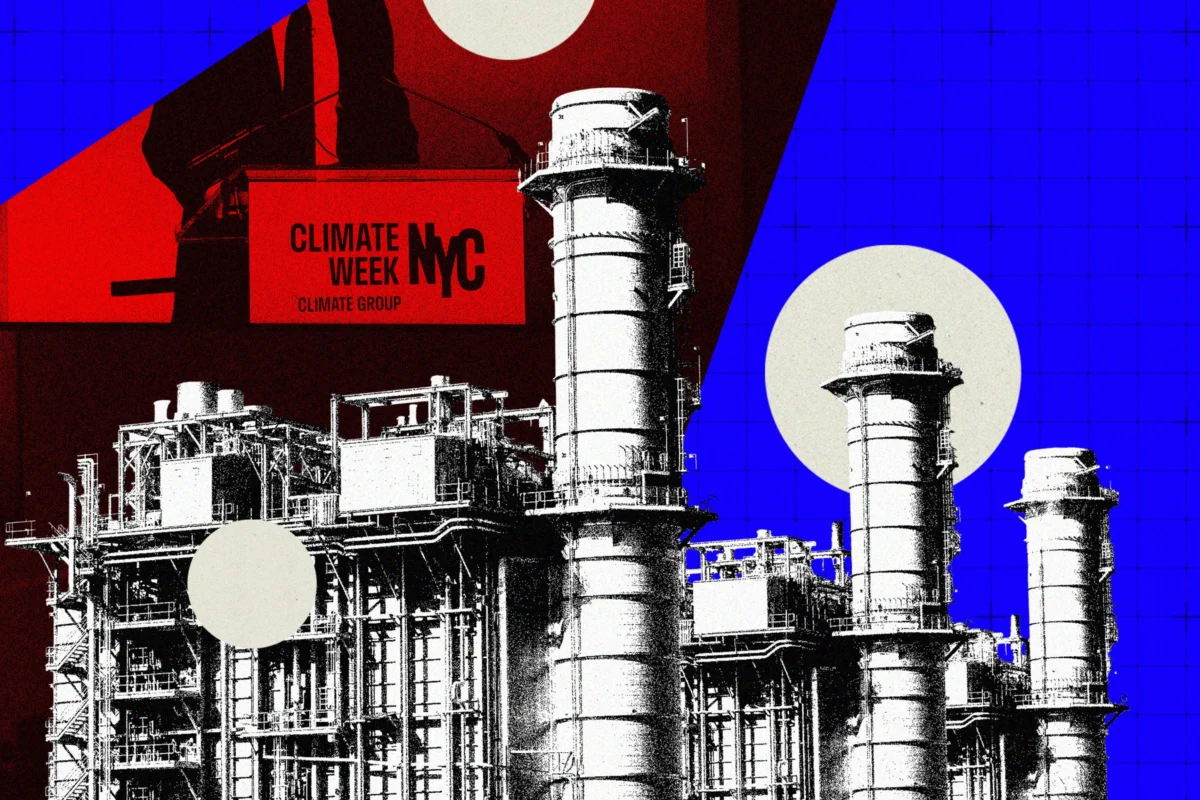
Welcome to the latest edition of Power Play!, a recurring column dedicated to dissecting the complex political landscape surrounding data centers—a topic emerging as one of this political season’s most hotly debated issues leading up to the midterms. This week, senior writer Molly Taft delves into the intersection of tech, environmental activism, and local governance, exploring why the silent hum of server farms is generating increasingly loud protests.
A recent post-lunchtime panel at Climate Week, featuring prominent tech executives discussing advancements in AI and the critical role of data centers, was abruptly interrupted. Barely a minute into the discussion, a man rose from the audience, his voice cutting through the polite hum of the room. "The idea that we can keep running on fracked gas is a lie!" he declared, his words echoing as security personnel swiftly moved to remove him. The panel, momentarily stunned, attempted to regain its composure and continue the dialogue. However, the disruption was far from over. Over the next ten minutes, a series of staggered interruptions followed, orchestrated by activists from Extinction Rebellion NYC. Each protester took their turn, yelling about the various harms attributed to AI and data centers, while the panelists on stage valiantly tried to press on with their intended conversation.
Extinction Rebellion groups have a well-documented history, spanning nearly a decade, of employing public protest as a means to highlight the urgency of the climate emergency. Their tactics often involve staging disruptive actions at corporate-friendly events, much like this one at Climate Week. Typically, such interruptions are met with polite silences or subtle eye-rolls from those on stage, patiently waiting for the activists to finish. However, this particular experience appeared to deeply unsettle the panelists. Cully Cavness, the cofounder and president of Crusoe, a company specializing in data center infrastructure, openly admitted to the session’s moderator that the interruptions lingered in his thoughts several minutes after the last protester had been escorted out.
The palpable tension felt by the tech executives was understandable. This protest served as a microcosm of a challenging period for data center proponents. Public opinion regarding these facilities has reached rock-bottom levels, and moratoriums on new data center construction are increasingly appearing in states across the political spectrum, from traditionally red to blue. It’s a clear indication of widespread public concern that has left tech industry figures feeling on edge.
Cavness, during the panel, speculated that most of the protesters likely did not reside near a data center and therefore might not fully grasp the economic benefits these facilities could bring to local tax bases. Varun Sivaram of Emerald AI, another panelist, pushed forward with the narrative that data centers could evolve into "good citizens," capable of integrating with the electricity grid to help lower consumer bills and accelerate the adoption of clean energy sources. Sivaram concluded with a cautionary note to the now-absent protesters: "Careful what you wish for." He warned that by resisting data centers, communities might inadvertently forego opportunities to partner with entities that could be instrumental in transforming the grid for the better.
While many might seize the chance to confront a data center executive, unlike the Extinction Rebellion activists, climate change is often not their foremost concern. Data centers were a significant topic at Climate Week, but the event itself is a self-selecting gathering of individuals primarily focused on environmental issues. The broader national conversation surrounding data center opposition is largely dominated by local concerns, which resonated with the arguments put forth by Sivaram and Cavness. Numerous polls, including those conducted by Ipsos and the University of Massachusetts, consistently show that climate impact ranks lower on voters’ lists of data center-related environmental worries. Instead, issues such as water consumption, energy usage (and its direct impact on utility bills), and local air and noise pollution typically take precedence. Even within the climate investment community, the focus often shifts. As a cofounder and managing partner at VoLo Earth told the Wall Street Journal, "Climate Week could basically be ‘AI and data center week.’ It’s all about energy, and most of us as climate investors, myself included, are focused on the energy system." This highlights a pragmatic view where the sheer energy demands of data centers become the primary concern, regardless of the source.
This nuanced perspective on data center opposition was further underscored by a conversation during Climate Week with William Lawrence, a candidate locked in a tight race for Michigan’s 7th congressional district. Lawrence is no stranger to climate activism; he is one of the original founders of the Sunrise Movement, a prominent youth-led climate organization. Yet, he has made opposition to data centers and AI a cornerstone of his political platform, a strategy that helped him secure a tough Democratic primary victory.
Lawrence noted that at least three "hyperscalers"—major cloud service providers like Amazon, Google, and Microsoft, known for their massive data center complexes—are currently developing projects within his district. His recently released "Michigan First AI Plan" is a comprehensive platform aimed at regulating or halting AI development, explicitly stating that data centers "threaten our air, water and quality of life." Notably, the platform makes no direct mention of climate change. When asked about this omission, Lawrence acknowledged that while some Michiganders do voice climate concerns about data centers, worries about water usage and rising energy bills generally rank higher among his constituents. He explained that a strong "environmental consciousness" underpins the anti-data center movement in his district, which may encompass climate concerns but is not exclusively articulated through the lens of emissions. He articulated a broader critique, stating, "We have a small amount of billionaires and political insiders who have made it impossible to feel confident about the future. They’ve destabilized our ecological system. They’ve destabilized the political order." This suggests a populist environmentalism that ties local ecological impacts to broader issues of economic and political power.
Sivaram’s theoretical point—that the massive influx of electricity demand from data centers could, in an ideal scenario, catalyze a beneficial transformation of our electricity sector towards cleaner sources—holds a kernel of truth. However, the on-the-ground reality presents a starkly different picture. Instead of driving a clean energy transition, data centers are currently facilitating a significant and accelerated buildout of fossil fuel infrastructure.
A day prior to the panel, at a separate briefing, BloombergNEF (BNEF) analysts presented sobering projections. Their research indicates a massive new influx of demand for fossil fuel power in the coming years, driven primarily by the insatiable energy appetites of data centers. According to BNEF’s 2026 New Energy Outlook executive summary, data centers are projected to account for more than 5 percent of global electricity demand by 2035, tripling their current needs. The overwhelming majority of this increased demand is expected to be met by new and existing natural gas plants. This surge in demand could potentially elevate the power sector’s emissions by 6 percent in less than a decade, a significant setback for climate goals.
Furthermore, this projection doesn’t even account for the growing trend of gas power plants being constructed off the grid specifically to service data centers, ensuring a dedicated and reliable power supply independent of public utilities. A separate BNEF analysis, examining 99 proposed on-site gas power plants for data centers in the United States, found that if all these facilities are built, they could increase US power sector emissions by an alarming 20 to 33 percent, posing a major climate threat. The report highlighted that any declines in emissions resulting from the retirement of older coal plants would be more than offset by these new gas emissions. In fact, the new demand is even causing some existing coal plants to remain online longer than anticipated, further exacerbating the problem.
Ultimately, even if data centers manage to execute a public relations masterstroke, successfully alleviating public concerns about local water consumption and rising energy bills, the specter of a massive fossil fuel buildout remains one of the most profound and far-reaching consequences of their rapid expansion. Extinction Rebellion, in their impassioned protests, may very well be proven right in the end: the cumulative effect of these added emissions means that the environmental impacts, particularly concerning global climate change, will eventually be felt by everyone, regardless of their proximity to a data center. The invisible infrastructure of our digital world is leaving an increasingly visible carbon footprint.
In related news, this week I covered the launch of a new startup aiming to tackle the emissions challenge posed by data centers. This company is developing technology that utilizes supercritical CO2 to enhance the efficiency of gas turbines powering data centers. Supercritical CO2, a fluid state of carbon dioxide held at or above its critical temperature and pressure, acts as a highly efficient working fluid in power cycles, offering the potential for smaller, more efficient turbines. While this technology has been studied for decades as a promising energy solution, it has yet to achieve successful commercialization on a broad scale. The startup’s founders are banking on deep-pocketed data center operators, who are perpetually hungry for reliable and cost-effective power, to invest in this technology. Their hope is that these early adopters will help drive down costs and validate the technology. The long-term vision is to expand the application of supercritical CO2 technology to supercharge other clean energy sources, such as nuclear power, offering a pathway to significantly more sustainable energy generation.
(No specific content was provided for "What We’re Reading" beyond the heading and an empty unordered list, so this section remains as per the original format.)