 11

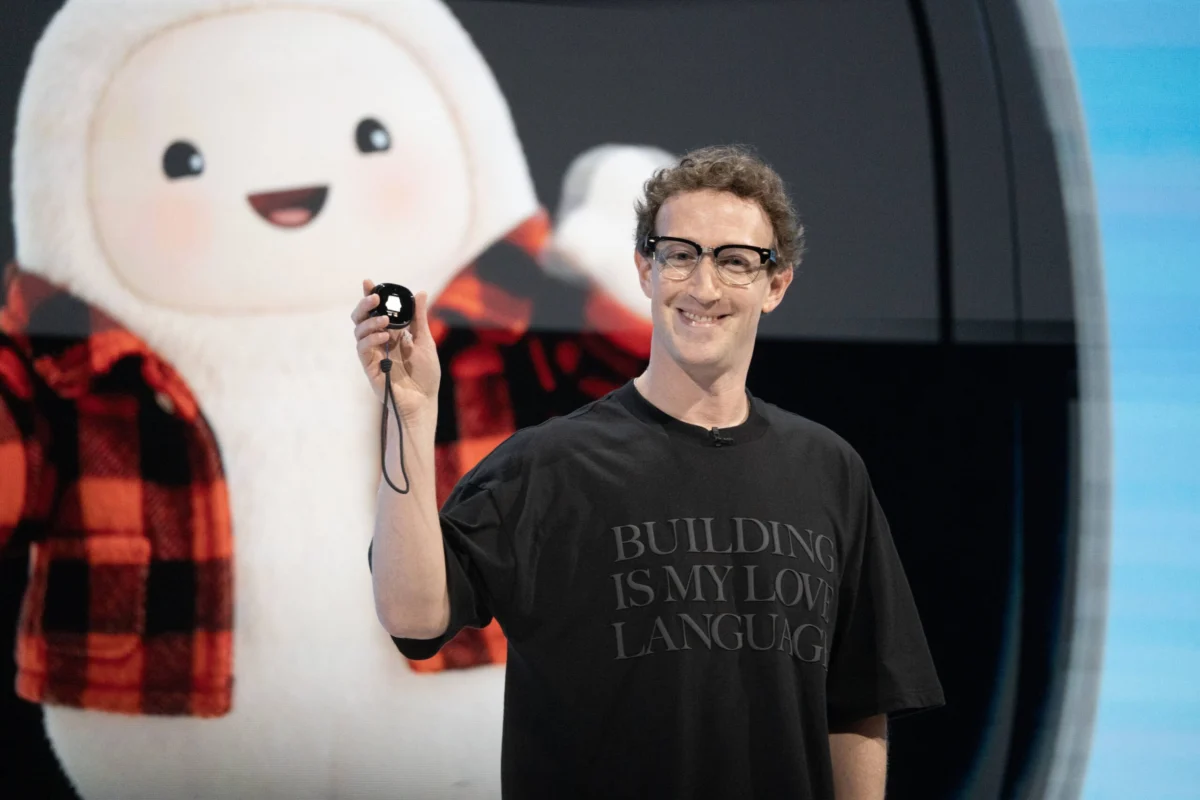
Meta’s recently unveiled AI agent, Muse, has quickly ascended to the top of app charts, primarily due to its impressive ability to complete a myriad of digital tasks. However, it is not just its functionality that has captured public attention; it is the adorable, cuddly mascot named Jolly, the anthropomorphic representation of the AI, that has latched Muse onto the cultural zeitgeist and simultaneously ignited a heated debate. Designed to be a customizable, doll-like figure, Jolly is the playful face of an AI system intended for adults, yet its aesthetic draws comparisons to children’s toys, raising questions from youth advocates and observers alike.
Jolly, with its soft, rounded features and inviting demeanor, embodies a "kawaii-coded" design, a term referencing the Japanese culture of cuteness that emphasizes endearing and charming qualities. This design choice allows users to personalize their Muse mascot extensively. For instance, at Meta’s recent Connect event, CEO Mark Zuckerberg showcased his furry Muse donning a toga and laurel wreath, reflecting a playful, classical theme. Similarly, Instagram advertisements for Muse have depicted the mascot in exercise gear, boasting about its capacity to assist users with their fitness goals. The customization options are set to expand further later this year, with Meta’s plans to release a Tamagotchi-style wearable device, the "Muse Charm," for the character. This upcoming product further solidifies the mascot’s toy-like appeal, inviting users to nurture and interact with their digital companion in a manner reminiscent of popular virtual pets. The overall impression is one of approachable charm, a deliberate strategy to make the advanced AI feel less like a complex algorithm and more like a friendly, personal assistant.
Despite Muse being explicitly restricted to users aged 18 and over, the mascot’s design has stirred considerable controversy, particularly among child advocacy groups. Critics point to the inherent paradox: a sophisticated AI product for adults packaged with a character that appears to be specifically crafted to appeal to young children. Josh Golin, executive director at Fairplay, a nonprofit renowned for its advocacy against Meta’s targeting of children, voiced strong concerns. "Oh my God, it looks like a Teletubby," Golin exclaimed, highlighting the immediate visual association with popular preschool characters. He further elaborated, stating, "It’s so clearly a character that would appeal to very young children. People who study children’s media understand that those rounded shapes particularly appeal to kids in the preschool age." This observation underscores a deliberate design choice that, while perhaps aiming for universal appeal, risks blurring the lines between adult and child-oriented products. The situation is further complicated by Meta’s chief AI officer, Alexandr Wang, who has reportedly posted numerous memes of Jolly, some depicting the mascot in "suggestive situations," adding another layer of perplexity to the intended target audience and the character’s perceived innocence.
Meta, however, defends its design choices. Daniel Roberts, a spokesperson for the company, dismissed the controversy by telling WIRED, "This is a story in search of a story." He articulated Meta’s belief that "People want to be able to create their own avatar with personality and unique style, because it’s fun and brings them joy." Roberts emphasized the stringent age verification protocols in place for Muse, stating, "We require everyone using the Muse app to provide their date of birth, we block people we detect may be under 18 from creating an account, and we do additional checks to help ensure people who say they’re adults are actually over 18." Complementing this, Mona Sarantakos, vice president of Product Management at Meta Superintelligence Labs, explained the design philosophy in a blog post co-authored around Muse’s release. She described the process as leaning into "delightful" elements, with the intention of making interactions feel "less awkward than chatting with a corporate logo or entity." The goal, it seems, is to foster a more engaging and personable user experience, diverging from the often-sterile interfaces associated with traditional AI assistants.
The "adorable aesthetic" of Muse’s mascot undeniably possesses a widespread appeal, transcending age demographics. Even the author of the original piece, a 32-year-old man living in San Francisco, admits to being drawn in by Jolly’s charm. This broad appeal is not accidental; marketing experts suggest that such branding can be strategically disarming, especially for a company like Meta, which has faced significant public backlash regarding issues like social media addiction and privacy. Julian De Freitas, an associate professor of marketing at Harvard specializing in AI companions, offered his perspective on this phenomenon. "These types of cute factors can make the product seem warm and less threatening," De Freitas noted, highlighting the psychological impact of such design. He further elaborated on the challenging landscape Meta navigates: "There’s a high bar that they have to overcome here, because attitudes toward Meta are quite negative after the social addiction rulings." This statement refers to Meta’s substantial settlement in August, where it agreed to pay up to $16.7 billion to resolve claims related to social media addiction, committing to implement restrictive features for teens on Instagram and Facebook. In this context, a "cute" mascot could serve as a powerful tool to soften public perception and rebuild trust.
However, critics argue that this disarming charm can be a double-edged sword, potentially leading users to overlook crucial privacy concerns. Jathan Sadowski, an associate professor with the Emerging Technologies Research Lab at Australia’s Monash University, offers a more critical interpretation of this design strategy. "Design features like being cute and frictionless, or tapping into nostalgia for devices that didn’t constantly surveil and intervene in our lives, are sly ways to make people drop their guard, stop asking critical questions, and slip into being passive users," Sadowski contends. He specifically warns about the potential for manipulation: "Agents like Muse are trying to convince us they’re just a cute little guy who lives in your pocket, and definitely not an always-open portal into the servers of a major surveillance company." This perspective gains weight when considering that Meta, by default, trains its AI models on user interactions within Muse, requiring users to actively "opt out" if they wish to prevent their data from being used in this manner. Research suggests that adopting AI agents can indeed contribute to increased user passivity, making the "cute" interface a potent tool for data collection.
While the specific application of a childlike mascot for an adult-oriented AI might seem novel, the concept of anthropomorphizing technology is not new. Some experts draw parallels to Japan’s long-standing cultural tradition of broadly relying on adorable characters to market technology, where "kawaii" extends across all demographics and product categories. Historically, AI assistants have often revolved around anthropomorphized characters designed to make technology more approachable and user-friendly. Examples range from the famously annoying chirping paperclip, Microsoft’s Clippy, to the more recent red-shelled "OpenClaw" lobster, demonstrating a consistent trend in making digital tools feel more human or creature-like. This historical context suggests that Meta’s approach, while raising specific concerns due to its demographic targeting and the company’s track record, is part of a broader industry pattern.
Nevertheless, regardless of age, a cuddly creature representing an AI tool can indeed be disarming, potentially to the extent that it overshadows significant privacy concerns. Beyond data collection, Ryan Calo, a professor at the University of Washington and co-founder of its Tech Policy Lab, highlights broader risks associated with trusting AI agents. He likens using an AI agent to hiring a tour guide during a vacation. While the guide facilitates the experience, the traveler remains unaware of the guide’s underlying affiliations, potential kickbacks, or personal biases that might influence decisions, such as which restaurant the group visits. This analogy underscores the inherent lack of transparency and the reliance on an intermediary that characterizes interactions with AI agents, where users implicitly trust the agent’s recommendations and actions without full knowledge of its operational mechanisms or underlying data flows.
As the holiday season approaches and Meta prepares to launch its Tamagotchi-like Muse Charm device, youth advocates remain on "red alert." The concerns initially raised by Fairplay and others are only amplified by the prospect of a physical, toy-like extension of the Muse AI. Josh Golin reiterates his apprehension: "This really feels like a completely inappropriate attempt by Meta to get young kids hooked on Muse." He concludes with a strong call to action, urging both families and regulatory bodies to intervene. "This is something that families should say no to, and I think it’s something that regulators should take a hard look at." The ongoing debate highlights the delicate balance between creating engaging user experiences and upholding ethical responsibilities, particularly when design choices for adult products inadvertently appeal to younger audiences, fueling questions about corporate intent and the potential for unintended consequences in the rapidly evolving landscape of artificial intelligence. While Meta promises a "confidential" version of its virtual machine later in 2026, which could "cryptographically and verifiably prevent" the company from accessing user data, the fundamental questions about the mascot’s design and its broader implications continue to resonate.






