 11

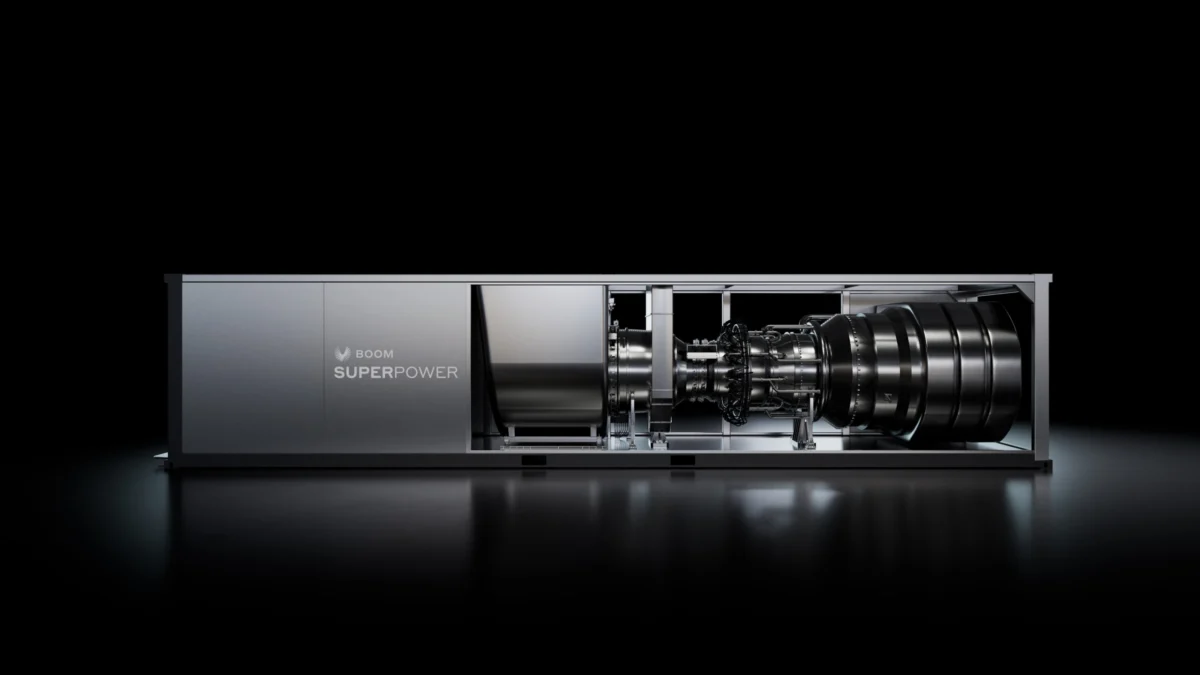
Denver-based AI data center startup Crusoe, fresh off securing a substantial $3.9 billion in funding, has officially terminated its plans to utilize a new line of stationary power plants developed by fellow Denver company Boom Supersonic. This decision marks a significant shift in Crusoe’s near-term energy procurement strategy and represents a notable setback for Boom Supersonic’s nascent venture into the energy sector, which was intended to help fund its ambitious supersonic passenger jet project.
Crusoe, established in 2018, initially carved out a niche as a bitcoin miner that innovatively leveraged excess natural gas from oil fields, transforming what would often be flared gas into a power source for its operations. This early focus on efficient and often overlooked energy resources laid the groundwork for its subsequent pivot and expansion. The company has since evolved dramatically, becoming one of the most prominent builders of AI data centers, crucial infrastructure for the rapidly expanding artificial intelligence industry. Among its high-profile projects is a massive computing campus located in Abilene, Texas, which plays a vital role in supplying computing power to leading AI research organization OpenAI. The sheer scale and energy demands of AI data centers make reliable and scalable power solutions a critical component of their success, a challenge Crusoe has been actively addressing through various innovative approaches.
Boom Supersonic, primarily known for its development of Overture, a supersonic passenger jet aimed at commercial aviation, ventured into the energy market last year with a new business line. This initiative involved selling a version of the advanced engine it is developing for the Overture jet as natural gas-fired stationary power plants. The company’s "Superpower" turbine, designed for ground-based power generation, remarkably shares approximately 80% of its components with its airborne counterpart, the "Symphony" engine. This strategic move aimed to diversify Boom’s revenue streams and capitalize on its engineering expertise, leveraging synergies between aerospace propulsion and industrial power generation.
The now-defunct agreement saw Crusoe sign on as the inaugural customer for Boom’s Superpower business. The terms of the deal were substantial, committing Crusoe to an expenditure of $1.25 billion for 29 of Boom’s 42-megawatt Superpower turbines. These deliveries were initially slated to commence in 2027, promising a significant boost to Crusoe’s power infrastructure and a crucial validation for Boom’s new enterprise. However, the partnership has since dissolved, a development confirmed by Boom Supersonic CEO Blake Scholl.
The public announcement of the deal’s collapse came on Friday, when Blake Scholl posted on X (formerly Twitter). In his post, Scholl first extended congratulations to Crusoe founders Cully Cavness and Chase Lochmiller on their company’s recent successful funding round. He then proceeded to confirm that the two companies were no longer proceeding with the turbine launch partnership. Despite the loss of its marquee launch customer, Scholl was keen to emphasize that other customers were already in Boom’s pipeline for the Superpower turbines, suggesting continued interest in the product from other sectors or companies.

Scholl provided further insight into the rationale behind the decision in his X post, stating, "The TL/DR is that turbines are no longer part of Crusoe’s near term primary power mix at Abilene/etc., so a launch partnership just didn’t make sense." He elaborated on Boom’s independent progress, noting that the company anticipates delivering approximately 250 megawatts (MW) of Superpower turbines to other sites next year, with an ambitious target of 1 gigawatt (GW) in 2028. Scholl also expressed gratitude for Crusoe’s initial collaboration, acknowledging the assistance Crusoe provided in shaping the Superpower product. He concluded by leaving the door open for future collaboration, stating, "The future is long, and we look forward to potentially teaming up if/when turbines become part of their primary power mix."
Crusoe subsequently confirmed the termination of the business relationship with Boom to TechCrunch. Andrew Schmitt, a spokesperson for Crusoe, offered the company’s perspective in an email statement. Schmitt articulated Crusoe’s philosophy of building "AI factories from the power up," highlighting the company’s ongoing expansion with new campuses across the country, all powered by a diverse array of innovative energy sources. He emphasized Crusoe’s commitment to flexibility, stating, "As our portfolio grows, we stay flexible, choosing the energy solutions that are right for each site as its needs evolve – including turbines, along with wind, solar, batteries and the grid." While acknowledging Boom as a "great partner," Schmitt concluded that "the partnership isn’t the right fit today," extending well wishes to Boom.
This statement from Crusoe sheds light on the dynamic and complex nature of powering large-scale AI data centers. While the deal with Boom Supersonic involved gas turbines, Crusoe’s current and future energy portfolio reveals a multifaceted strategy. The company’s initial 1.2 gigawatt data center in Abilene, which serves Oracle and OpenAI, primarily draws its power from the existing electrical grid. At this specific site, a gas-turbine power plant is utilized strictly for backup power purposes, not as the primary energy source. However, Crusoe is concurrently developing another significant data center campus in Abilene, a 900-megawatt facility intended for Microsoft. This particular project is slated to be powered by on-site gas turbines, indicating that gas turbine technology remains a viable and integral part of Crusoe’s broader energy strategy, albeit perhaps with different suppliers or specific implementation models than initially envisioned with Boom.
For Boom Supersonic, the cancellation of this foundational order from its launch customer is undeniably a significant blow. The company had successfully raised $300 million last year, with a substantial portion of that funding specifically earmarked for the commercialization and scaling of its new stationary power plant business. Boom Supersonic CEO Blake Scholl had previously informed TechCrunch that the strategic intent behind this new venture was to generate profits from the stationary power plant business, which would then be reinvested to finance the capital-intensive development of the Overture supersonic jet. The loss of a $1.25 billion initial contract, therefore, could impact the financial timeline and funding strategy for Boom’s core aerospace ambitions, even with other customers reportedly in the pipeline.
The development underscores the intense competition and evolving technological landscape in the energy sector, particularly as it intersects with the burgeoning demands of the AI industry. Data centers, especially those dedicated to artificial intelligence, are notorious for their massive power consumption, making reliable, cost-effective, and increasingly sustainable energy solutions paramount. Companies like Crusoe are navigating a complex environment, balancing long-term contracts, emerging technologies, and a diverse energy mix to ensure the continuous operation of critical AI infrastructure.
As of the time of publication, Blake Scholl could not be reached for further comment. TechCrunch will update this article should he respond to inquiries regarding the implications of this partnership termination for Boom Supersonic’s energy business and its overall corporate strategy.






