 11

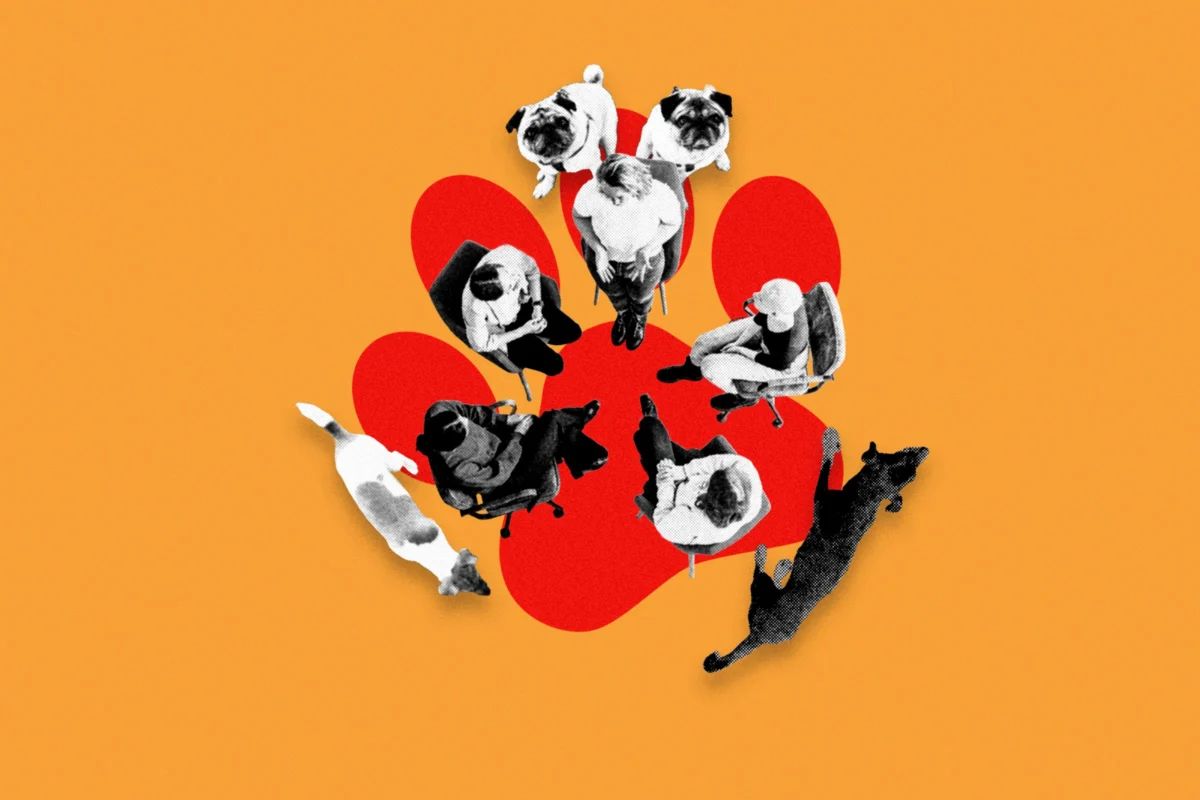
In a candid virtual gathering, held under the strict veil of anonymity, a group of dog owners recently converged on a Zoom call to articulate a deeply private struggle: their profound frustration and exasperation with their canine companions. This wasn’t a casual complaint session but a lifeline, a confidential forum provided by Dogs Anonymous, an organization dedicated to offering both emotional support and expert behavioral guidance to those grappling with the realities of challenging dog ownership. The meeting, which commenced precisely at 6 pm on a Wednesday, revealed the hidden anxieties and burdens faced by individuals who, despite their love for their pets, often find themselves overwhelmed and ashamed.
Before the intimate discussion truly began, Louise Crane, the president and cofounder of Dogs Anonymous, set the foundational tone for the session. She meticulously recited the seven acknowledgements that participants must agree to, a set of principles designed to foster an environment of honesty, self-reflection, and mutual support. The very first acknowledgement resonated deeply with many present: "I admit that life with my dog is not what I imagined." This opening statement immediately validated the unspoken feelings of disillusionment that often accompany difficult pet ownership, providing a crucial first step toward open dialogue. Crane, a visible advocate for social justice, was noted wearing a black T-shirt emblazoned with "Abolish ICE" in bold white lettering, a detail that subtly underscored her broader commitment to supportive, non-judgmental communities.
As the virtual space filled with shared vulnerability, the confessions began to flow, each one painting a vivid picture of the silent struggles endured behind closed doors. One attendee, her voice tinged with desperation, admitted, "I may need to be talked off a ledge." Her plight centered on her boxer, whose sudden and severe mood swings had become a source of immense stress for her entire family. Their household had recently undergone a series of significant and emotionally taxing changes. They had mourned the loss of their other beloved dog, and simultaneously, had taken on the responsibility of fostering a new canine companion. These transitions had evidently unsettled their boxer, transforming him into a creature described as "unsettled" and "grumpy." Most alarmingly, he had developed a new habit of "demand barking," a behavior entirely uncharacteristic of him. This shift in temperament and behavior highlighted the profound impact that environmental changes and emotional distress can have on a dog, and by extension, on their human caregivers.
Other attendees soon followed suit, unburdening themselves of their private shames and anxieties. Another participant shared the escalating challenges with her shepherd mix, a dog that had begun engaging in more intense "resource guarding" when in the presence of other dogs. She elaborated on this common but distressing behavior, explaining it as the aggressive protection of something a dog values, be it food, toys, or even their human companions. She recounted a particularly tense incident: "He got into it with my sister’s little weiner dog the other day because they both were begging for food." The seemingly innocuous act of begging for treats had quickly devolved into a conflict, leaving the owner feeling embarrassed and at a loss for how to manage her dog’s territorial aggression.
A third woman, residing in a bustling apartment complex, sought urgent advice for her dachshund’s relentless barking at strangers. Living in close quarters with neighbors, the constant vocalizations were not only a source of personal frustration but also a significant social strain. Her dog’s persistent alarm at every passing footstep or unfamiliar voice underscored the unique challenges of dog ownership in urban environments, where space is limited and interactions with outsiders are frequent. In keeping with the organization’s core principle of anonymity, Dogs Anonymous had specifically requested that WIRED, the publication covering the meeting, withhold the names and any other identifying characteristics of its participants, ensuring a safe and confidential space for all.
The pervasive emotion that attendees struggled with most profoundly in these meetings, Louise Crane noted in a conversation a few days prior to the session, was an intense feeling of shame. "The embarrassment of having a dog that’s losing its shit, especially as a woman," she explained, is a particularly difficult burden for many. This sentiment speaks to a broader societal expectation often placed on pet owners, particularly women, to have perfectly behaved, well-adjusted animals. When a dog exhibits problematic behaviors, the owner often internalizes the blame, feeling as though they have failed in their role, leading to isolation and reluctance to seek help. This shame is a significant barrier to addressing behavioral issues proactively and candidly.
Recognizing this critical need for a non-judgmental space, Crane, alongside cofounders Daphne Mendoza-Tervanis and Jerri Scherff, launched Dogs Anonymous in 2025. This nonprofit organization was conceived with a dual mission: to provide expert training and emotional support from animal behavior specialists, and crucially, to create an environment where individuals could openly vocalize their shame and struggles without fear of judgment. Daphne Mendoza-Tervanis elaborated on this vision, stating, "We wanted to give people not just a space they could trust for advice on behavior issues or if they are having a crisis with their dog, but also a place where they don’t feel judged to ask questions and admit that maybe it’s a little bit too much for them." This emphasis on psychological safety is what truly differentiates Dogs Anonymous, transforming it from a mere advice forum into a vital support network.
The sessions hosted by Dogs Anonymous are held weekly, catering to a remarkably diverse audience. The participants span the entire spectrum of dog ownership, from first-time guardians navigating the initial challenges of pet parenthood to seasoned owners grappling with unforeseen behavioral shifts in their long-term companions. The meetings also welcome adopters and foster caregivers, individuals often dealing with dogs who come with pre-existing traumas or behavioral patterns. On occasion, even professional trainers join the sessions, seeking fresh perspectives and tips on how to effectively handle complex aggression cases, underscoring the high level of expertise and practical advice shared within the community. While the meetings are primarily attended by residents across the United States, their reach extends globally, with previous sessions attracting dog owners from as far afield as Singapore, Costa Rica, and other international locations, highlighting the universal nature of these challenges.
A significant aspect of Dogs Anonymous’s structure and philosophy is its intentional adoption of traditions from Alcoholics Anonymous. Jerri Scherff, a cofounder with 13 years of sobriety, brought invaluable first-hand experience with recovery programs to the organization’s design. Her insights were instrumental in shaping Dogs Anonymous to be "repeatable, sustainable, and eventually autonomous," mirroring the successful model of established recovery groups. The most crucial tradition borrowed from AA, and indeed the very essence of the organization’s name, is anonymity. The foundational rule that "what is discussed in the group stays in the group" creates an inviolable sanctuary where participants can truly let down their guard, knowing their confessions and vulnerabilities will be protected. This strict confidentiality fosters an unparalleled level of trust and openness, which is vital for addressing sensitive and often stigmatized issues.
The founders firmly believe that the true effectiveness of the group extends beyond the specific advice or training tips imparted during meetings. Rather, the profound impact stems from the powerful bonding that occurs when members connect over shared struggles. Louise Crane articulated this beautifully, drawing another parallel to AA: "The magic of AA the community is that you are going through something that somebody else has either been through or they’re going through the same thing." This shared human experience, the realization that one is not alone in their despair or frustration, forms the bedrock of healing and empowerment. This approach, known as "sharing your experience, strength and hope," is a core component of the traditional 12-step recovery program. It encourages members to articulate and analyze their personal experiences, not only to gain clarity for themselves but also to offer solidarity and practical wisdom to others, fostering a deep sense of camaraderie and mutual support. This empathetic exchange helps individuals process their emotions, develop coping strategies, and ultimately, feel less isolated in their challenging journey of dog ownership.
The struggles voiced in these meetings are not isolated incidents but reflect a widespread phenomenon, a reality underscored by recent scientific research. According to a comprehensive survey published in June in the scientific journal Pets, which specifically examined guilt, burden, and wellbeing among owners of dogs with behavioral problems, the statistics are stark. A significant 53 percent of respondents reported feeling profoundly alone in their struggles. Even more compelling, a staggering 78 percent reported experiencing "elevated caregiver burden," a clinical term used to describe the immense emotional, physical, and financial strain that individuals experience when caring for another being, in this case, a dog with behavioral issues. This scientific validation provides crucial context for the work of Dogs Anonymous, demonstrating that the feelings of isolation, shame, and overwhelm are not simply individual failings but widespread societal challenges that demand recognition and dedicated support. The financial implications of specialized training, veterinary visits for behavioral issues, and potential property damage further exacerbate this burden, adding layers of stress to an already complex emotional landscape. Dogs Anonymous, by offering a confidential, empathetic, and expert-backed community, stands as a vital resource for countless pet owners navigating these often-unseen difficulties, transforming shame into shared strength and fostering hope where despair once lingered.






