 11

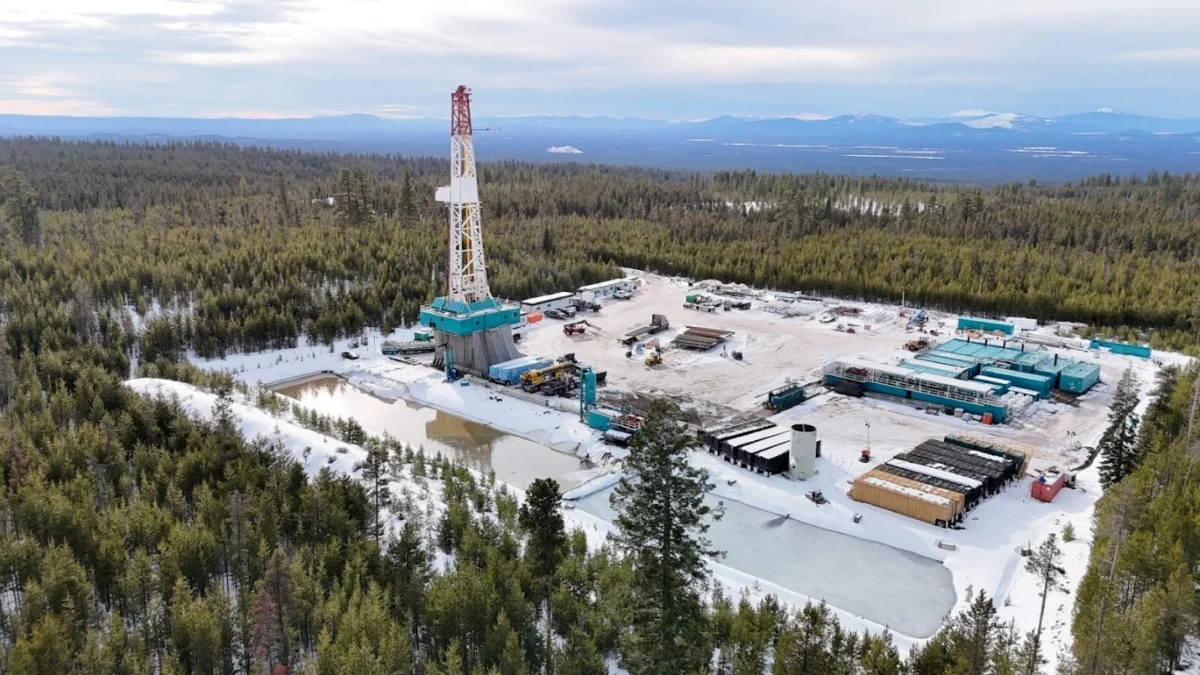
PORTLAND, OR – Geothermal startup Mazama Energy announced Thursday it has successfully closed an oversubscribed Series B funding round, raising $135 million. This substantial capital injection is poised to significantly accelerate the company’s ambitious plans to harness the Earth’s deep heat, developing groundbreaking horizontal wells capable of generating 15 megawatts (MW) of electricity per well. The funding underscores growing investor confidence in enhanced geothermal systems as a critical solution for reliable, round-the-clock clean energy, particularly for power-hungry applications like AI data centers.
The oversubscribed nature of the Series B round signals strong market validation and investor enthusiasm for Mazama Energy’s innovative approach and potential impact. The round was co-led by Centaurus Capital and Doerr Capital, two firms known for their strategic investments in transformative technologies. Their leadership in this funding round highlights a calculated belief in Mazama’s capacity to deliver on its technological promises and scale its operations.
Further bolstering the round’s significance was the participation of major players in the traditional energy sector, including ConocoPhillips and Shell Ventures. Their involvement is a powerful endorsement, demonstrating how established energy giants are increasingly recognizing and investing in advanced renewable technologies as part of the global energy transition. This blend of new strategic investors alongside existing backers paints a picture of robust support for Mazama’s vision. Returning investors included prominent venture capital firm Khosla Ventures and Gates Frontier, both of whom have been instrumental in Mazama’s journey, with Khosla Ventures having incubated the startup from its earliest stages. New participants in this round also included SiteGround Capital, H. Barton Asset Management, and the Jeffrey and Marieke Rothschild Foundation, further diversifying the investor base and broadening the company’s financial and strategic backing.
Mazama Energy’s core innovation lies in its pursuit of enhanced geothermal systems (EGS), a technological leap beyond conventional geothermal power. Unlike previous projects that tapped into naturally occurring hot water or steam reservoirs close to the surface, EGS targets much deeper and hotter rock formations. By creating engineered reservoirs in these high-temperature environments, companies like Mazama can access an almost limitless source of heat energy. This approach is particularly attractive because it does not rely on specific geological features like natural hot springs or geysers, making geothermal energy potentially viable in a much wider range of locations globally.
The technical challenges of drilling to such extreme depths are immense, requiring cutting-edge drilling technologies and engineering expertise. Mazama has demonstrated remarkable progress in this area, notably drilling past 10,000 feet in a mere 15 days on its way to an ultimate target depth of approximately 15,000 feet. This rapid drilling capability is crucial for making deep geothermal economically viable, significantly reducing project timelines and costs. At these formidable depths, the company can access temperatures reaching 750°F (400°C). At such high temperatures and pressures, water transcends its typical liquid or gaseous states, transforming into a "supercritical fluid."
A supercritical fluid is a substance at a temperature and pressure above its critical point, where it can no longer be condensed into a liquid, regardless of how much pressure is applied. In this unique state, the fluid exhibits properties of both a gas and a liquid, allowing it to diffuse through solids like a gas while maintaining solvent properties similar to a liquid. For geothermal energy extraction, this means supercritical water can absorb significantly more thermal energy than ordinary steam or hot water. This enhanced energy absorption capacity is a game-changer, enabling each well to produce up to 10 times more power than traditional geothermal technologies, thereby drastically improving efficiency and reducing the surface footprint required for a given electricity output.
Mazama’s development timeline is aggressive and ambitious. The company plans to commence electricity generation sometime next year, marking a critical milestone in its operational scaling. Its inaugural site in Oregon, where initial work is underway, is projected to have a staggering potential capacity of 10 gigawatts (GW) of electricity. This figure represents a sharp upward revision from the company’s previous estimate of 5 GW, an estimate shared last year by investor Vinod Khosla. The doubling of the estimated potential capacity underscores Mazama’s increasing confidence in the geological resource and its technological capabilities to extract energy efficiently. To put 10 GW into perspective, this capacity could power millions of homes, significantly contributing to regional and national energy grids. The company aims to complete the full development of this first site by 2030, at which point it expects to generate 200 MW of electricity, representing a substantial, reliable baseload power source. Furthermore, demonstrating its long-term strategic planning, Mazama has already secured land for a second development site, signaling its intent for continuous expansion and scaling.
The emergence of enhanced geothermal startups like Mazama Energy is reshaping the landscape of clean energy, positioning them as a "dark horse" in the intensifying battle to power AI data centers and other massive energy consumers on the grid. As technological advancements in artificial intelligence continue at an exponential pace, the energy demands of AI data centers are skyrocketing, requiring not just vast amounts of electricity, but critically, constant, uninterrupted baseload power. While many tech companies and data center developers have traditionally leaned on natural gas for its reliability, the growing imperative for decarbonization and reducing carbon footprints is pushing them towards cleaner alternatives. Geothermal, with its inherent 24/7 availability, stands out as a superior solution compared to intermittent renewables like solar and wind, which require extensive energy storage solutions to provide continuous power.
Mazama’s focus on deep, super-hot rock geothermal aligns perfectly with this demand for reliable, sustainable baseload power. Unlike traditional geothermal projects, which were often constrained by the geology of specific regions, enhanced geothermal’s ability to create engineered reservoirs opens up new possibilities for deployment. The technology promises to deliver a constant, dispatchable source of clean electricity, immune to weather fluctuations or time of day, making it an ideal partner for grids seeking stability and resilience while transitioning away from fossil fuels.
The global potential for super-hot rock geothermal is immense and largely untapped. According to research from the University of Twente and the Clean Air Task Force, tapping into just 1% of the worldwide super-hot rock resource could generate more than 63 terawatts (TW) of electricity. To contextualize this, 63 TW is a monumental figure, dwarfing current global electricity consumption, highlighting the transformative potential of this energy source to meet future energy demands while simultaneously addressing climate change goals. Mazama Energy’s efforts are at the forefront of unlocking this vast, clean energy potential, paving the way for a more sustainable and secure energy future.
Mazama Energy, incubated at Khosla Ventures, is now positioned as a leading innovator in the enhanced geothermal space. With its significant new funding, proven drilling capabilities, and ambitious project pipeline, the company is set to play a pivotal role in the global energy transition, demonstrating the viability of deep geothermal as a scalable, reliable, and environmentally responsible power source for the 21st century.






