 11

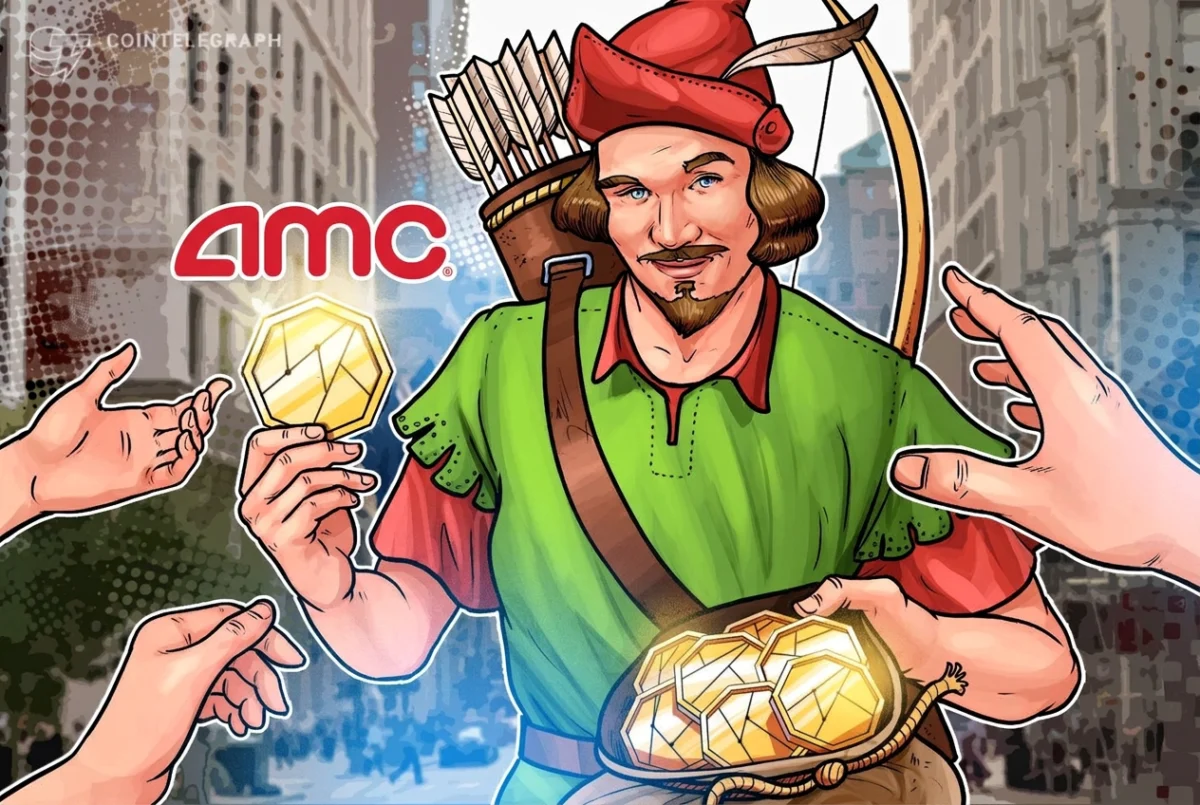
Robinhood CEO Vlad Tenev has articulated a clear stance on the role of issuers in the burgeoning market for tokenized stocks, asserting that companies should not possess veto power over such products if they do not fundamentally alter shareholder rights, impose new issuer obligations, or impact the official stock ledger. This declaration comes amidst growing discussions and some criticism surrounding the integration of blockchain technology into traditional equity markets, particularly in relation to products offered by platforms like Robinhood.
In a public statement posted on the social media platform X on Friday, Tenev detailed his perspective on when issuer consent becomes a necessary component in the creation of tokenized stock products. He explained that the critical determining factor hinges on whether the tokenized product introduces changes to the rights intrinsically linked to the underlying shares or generates novel obligations for the issuing company or its designated transfer agent. If such modifications are present, Tenev acknowledged that the issuer’s involvement and consent would indeed be appropriate and necessary.
However, Tenev’s argument strongly emphasizes that this requirement for issuer consent should not extend to scenarios where the tokenized product functions as a distinct financial instrument. He elaborated that if these products are designed to hold or reference freely transferable shares without any alteration to the issuer’s existing rights, existing obligations, or the established shareholder record, then demanding issuer approval would be an overreach. In such cases, Tenev believes that the issuer’s consent should not be a prerequisite for the product’s existence or operation.
These comments from the Robinhood CEO were made in the wake of criticism directed at Robinhood’s tokenized stock offerings by Adam Aron, the CEO of AMC Entertainment. On September 4th, Aron publicly expressed his company’s lack of affiliation with Robinhood’s tokenized stock products. He stated that AMC had not been consulted or involved in their creation and indicated that the company intended to engage its securities counsel to conduct a thorough review of these offerings. Aron’s critique underscored a perceived disconnect between AMC and the tokenized financial instruments being presented to the market as representing exposure to AMC shares.
In response to such concerns, Tenev provided insight into the structural mechanics of Robinhood’s tokenized stock products. He clarified that these offerings utilize a third-party structure. This means that the tokenized instruments are issued separately and are backed on a one-to-one basis by the underlying shares held in custody. Tenev emphasized that the primary function of these products is to offer investors economic exposure to the performance of stocks and exchange-traded funds. Crucially, he reiterated that these tokenized products are engineered not to modify an issuer’s capital table – the official record of their ownership structure – nor do they alter the fundamental rights attached to the company’s shares.
Tenev’s core assertion is that the advent of blockchain technology and tokenization should not grant issuers a level of control or a veto power that they did not possess in the traditional, off-chain financial system. His statement, "Going onchain shouldn’t give the issuer a veto it never had offchain," encapsulates this principle. He argues that if a company’s shares are freely tradable on public exchanges without requiring issuer approval for every derivative or synthetic product that offers economic exposure, then tokenized versions of these same instruments should not be subject to a different, more restrictive standard. The implication is that tokenization, when implemented responsibly and without altering core rights and obligations, should democratize access and innovation rather than introduce new gatekeepers.
The debate touches upon the evolving regulatory landscape and the technological possibilities of blockchain in finance. Tokenized stocks, often referred to as security tokens, represent a digital manifestation of traditional equity. They can be issued on a blockchain, potentially offering benefits such as increased liquidity, fractional ownership, and 24/7 trading. However, their integration raises complex questions about how existing securities laws apply, the responsibilities of intermediaries, and the rights of both token holders and the issuing companies.
Robinhood’s approach, as described by Tenev, appears to be centered on creating financial products that mimic the economic outcomes of owning the underlying shares without directly impacting the issuer’s corporate governance or financial structure. This distinction is vital. If a tokenized stock product were to grant voting rights, for instance, or create a direct claim on the issuer’s assets, then the issuer’s explicit consent and involvement would be unequivocally necessary. However, in the case of products offering purely economic exposure, Tenev argues that the issuer’s existing rights and obligations remain unchanged, and therefore, their consent should not be a mandatory hurdle.
The broader implications of Tenev’s statement extend to the future of digital assets and their intersection with traditional finance. As more companies explore the potential of tokenization, clear guidelines and principles are needed to foster innovation while ensuring investor protection and market integrity. The stance taken by Robinhood, a prominent player in the retail trading space, suggests a vision where tokenization can enhance market efficiency and accessibility without undermining the established framework of corporate finance, provided it respects the fundamental rights and obligations of all parties involved.
This development also comes in the context of Robinhood’s own strategic expansion into blockchain technology. Bernstein, a financial services firm, recently projected that Robinhood’s proprietary blockchain initiative, referred to as "Robinhood Chain," could generate substantial annual fees, estimating as much as $160 million by 2028. This indicates a significant investment and commitment from Robinhood to developing its presence in the digital asset ecosystem, further underscoring the importance of their positions on issues like tokenized stocks.
Cointelegraph remains committed to providing independent and transparent journalism. This news article has been produced in accordance with Cointelegraph’s Editorial Policy, aiming to deliver accurate and timely information. Readers are consistently encouraged to conduct their own independent verification of all information presented. The ongoing dialogue between technology platforms, issuing companies, and regulatory bodies will continue to shape the future of tokenized securities.






