 11

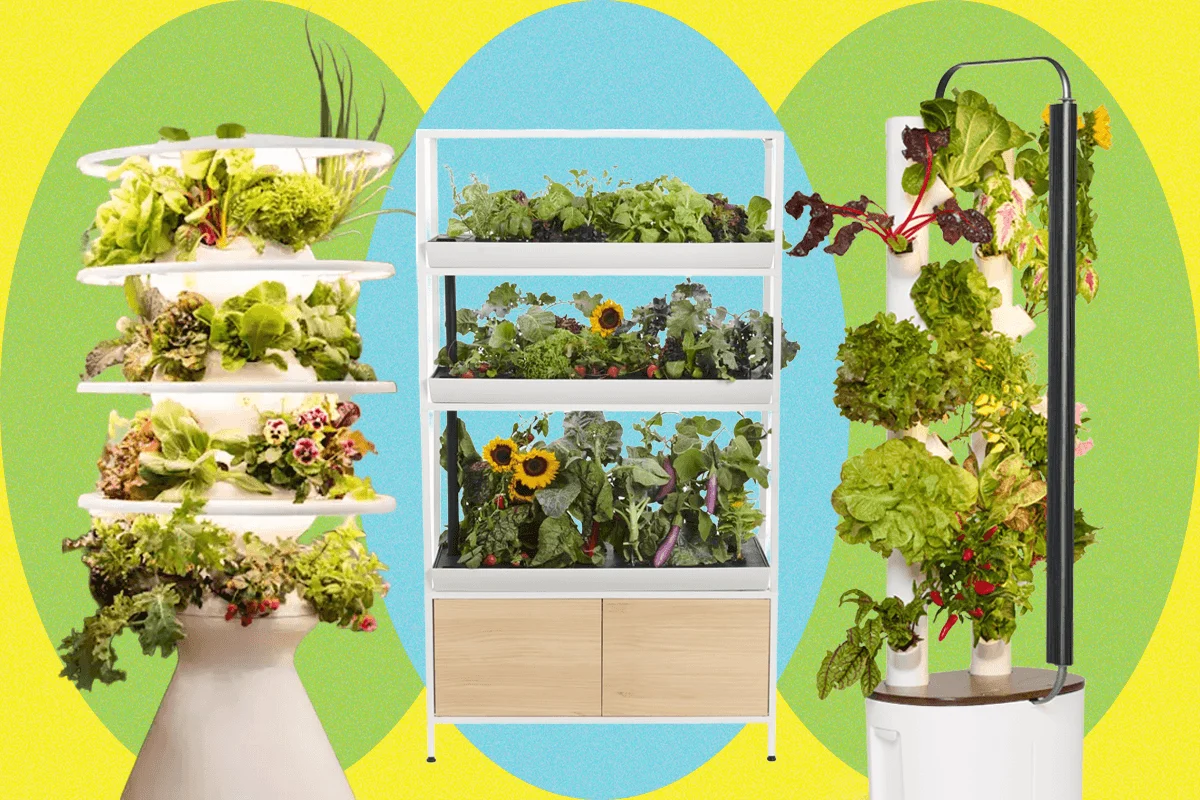
The world of indoor gardening has seen a remarkable evolution, with smart hydroponic systems offering a new way to cultivate fresh produce and ornamental plants year-round, regardless of climate or available outdoor space. These innovative devices range from compact, user-friendly options to sophisticated, high-tech installations, each promising a greener thumb for modern households. This report delves into a selection of these systems, highlighting their features, performance, and overall value, categorizing them into ‘Honorable Mentions’ for their notable qualities and ‘Not Recommended’ for those that fall short, alongside a comprehensive FAQ section to demystify hydroponic gardening.
Honorable Mentions: Cultivating Convenience and Growth
Among the array of indoor gardening solutions, several stand out for their thoughtful design, ease of use, and effective plant cultivation, albeit with varying degrees of success across different plant types.
Click & Grow Smart Garden 9: Simplicity Meets Smart Design
The Click & Grow Smart Garden 9, priced at approximately $125, offers a highly intuitive entry point into smart indoor gardening. Its design, reminiscent of Nespresso coffee pods, features seed pods packaged in plastic three-packs, with refills starting around $15. The system operates on a simple premise: users insert a "smart soil" seed pod into one of the garden’s wicking cups, fill the integrated water reservoir, and the system largely handles the rest. The wicking mechanism efficiently draws water up to the pods, ensuring consistent moisture for the roots, while a clever bobber indicator provides a visual cue when the water level is low. Its compact size allows for versatile placement on shelves or countertops, making it an attractive option for those with limited space.
Despite its user-friendly interface and minimalist aesthetic, testing revealed the Click & Grow Smart Garden 9 to be one of the slower-growing systems, taking several weeks to produce even a single lettuce leaf, and in one instance, a lettuce pod failed to sprout entirely. This characteristic suggests it might be better suited for growing ornamental flowers or herbs where rapid yield is not the primary concern, rather than for a continuous supply of leafy greens for consumption. While the Smart Garden 9 model pictured is currently out of stock, interested gardeners can sign up for notifications to be alerted to its availability.
Modern Sprout Garden Jars: Aesthetic Appeal with Modest Yields
For those seeking a blend of gardening simplicity and home decor, the Modern Sprout Garden Jars, available for $20, present an appealing choice. These charming Mason jar setups require minimal effort: users rinse the included gravel, add seeds, and then water. The manufacturer guarantees sprouting within five to ten days, making them an ideal, low-maintenance gift, perhaps paired with a tea towel or a bottle of olive oil.
However, the Modern Sprout Garden Jars lean more towards decorative appeal than substantial harvests. After over a year of cultivating basil, cilantro, and rosemary on a windowsill, the yield amounted to only a few usable leaves, indicating that while they are aesthetically pleasing and easy to start, they may not satisfy those looking for a bountiful harvest.

Lettuce Grow Counterstand Set: Stylish Hydroponics with Limited Space
A newer offering from the creators of the well-regarded Lettuce Grow Farmstand, the Counterstand Set is priced at $149 and brings a touch of scientific chic to indoor growing. This system comprises three amber beakers, evoking a high school chemistry lab, paired with an 18-inch LED lamp that operates on a 16- or 18-hour timer. It employs the Kratky method of hydroponics, developed by horticulturist Dr. Bernard Kratky, where plants are suspended in cups above a nutrient-enriched water source. A wick initially delivers water to the seedling until its roots mature enough to reach directly into the reservoir. Each set includes three credits for live seedlings, with parsley, basil, and butter lettuce being popular choices.
While the Counterstand is undeniably stylish, its compact design translates to modest yields. Testers typically harvested only a small handful of leaves per week, making it a system where aesthetic integration might outweigh its productivity for the counter space it occupies.
Vego EZ Microgreens Planter: Uncomplicated Microgreen Cultivation
The Vego EZ Microgreens Planter, available as a two-pack for $60, offers a straightforward, non-smart solution for growing nutrient-dense microgreens. Designed for ease of use, each planter features a half-gallon food-safe plastic reservoir. Users simply fill the reservoir with water, optionally cover it with a humidity dome, and bamboo-fiber capillary grow mats absorb the water to germinate microgreen seeds (not included). The system can be placed near a sunny window or used with a dedicated grow light, such as Vego’s 10×20 dome with a built-in grow light ($80), which conveniently fits over both planters. Testing involved placing the planters on a Ferry-Morse pop-up plant stand with a LetPot grow light, yielding consistent success across multiple growing cycles. This system is a reliable choice for those specifically interested in cultivating microgreens for salads, smoothies, or sandwiches without the complexities of smart technology.
Not Recommended: Innovations with Kinks to Resolve
While innovation drives the indoor gardening market, some products, despite their ambitious designs, present significant drawbacks that warrant caution.
Plantaform Smart Indoor Garden: Futuristic Concept, Practical Shortcomings
The Plantaform Smart Indoor Garden, priced at a substantial $900, made waves with its claim as "the world’s first smart indoor garden that uses fog to grow plants," a technology dubbed "fogponics" and ostensibly building on NASA-developed aeroponics. Its futuristic, egg-shaped design even earned it an Innovation Award at CES 2025. The system’s core promise is to deliver water and nutrients to plant roots via an ultrafine mist.
However, WIRED contributor Lisa Wood Shapiro’s testing revealed several critical issues. The Plantaform system restricts users to growing only one type of plant at a time (e.g., only lettuce, or only tomatoes, or only herbs), limiting its versatility. More concerning was its observed degradation of indoor air quality. The system aerosolizes a fertilizer mix added to the water, and Wood Shapiro found the container was not airtight, allowing the mist to escape into the environment. This led to a recommendation to limit its use to basements or other areas where air quality is not a primary concern. Until these fundamental design and operational kinks are resolved, the Plantaform is best approached with significant caution.
LetPot Smart Seed Starter: Promising Features Undermined by Quality Control
The LetPot Smart Seed Starter, priced at $84, boasts an impressive feature set for a grow-light enabled seed starter, including sensors for soil temperature and EC (electrical conductivity), a 24-watt heating pad, and a plastic lid with adjustable vents. The concept aims to provide more control and automation than many competitors.

Unfortunately, the execution suffered from noticeable quality control issues. During testing, the power adapter emitted a high-pitched sound when the lights were on, the EC sensor functioned only intermittently, and the auto-mode settings would reset every time the unit was unplugged. After approximately six months of regular use, the grow light began failing to stay on, requiring repeated unplugging and replugging to coax it back into operation. These consistent reliability problems make it difficult to recommend, despite its promising feature list.
Understanding Hydroponics: A Deep Dive into FAQs
For those new to the concept of growing plants without soil, a clearer understanding of hydroponics, its advantages, disadvantages, and practical considerations is essential.
What Exactly is Hydroponic Gardening?
At its core, hydroponic gardening refers to the method of growing plants without soil. Instead, plants are cultivated with their roots exposed to nutrient-rich water. This can manifest in several ways: some systems suspend plants directly in water (like the Rise or Gardyn), others use pods with wicking mechanisms to draw water upwards (such as the Click & Grow), and advanced systems like the Lettuce Grow employ misting or spraying water directly onto the roots. Almost all modern hydroponic systems integrate an artificial light source, whether for indoor cultivation or to supplement natural light in an outdoor enclosure.
What Are the Benefits of Hydroponics?
The advantages of hydroponic gardening are numerous and compelling. Firstly, it yields cleaner produce, free from mud, dirt, and often, synthetic pesticides. Environmentally, hydroponic systems are remarkably water-efficient, using significantly less water than conventional soil-based methods because water is either recirculated or entirely absorbed by the plants. Many farmers report higher yields due to the controlled environment, where variables like light, nutrients, and temperature can be precisely managed. This control also allows for growing a wider variety of plants in any season or region. A simple yet significant benefit is the complete absence of weeds, simplifying maintenance.
What Kinds of Things Can Be Grown in a Hydroponic Garden?
The versatility of hydroponics is surprisingly broad. As FX Rouxel, creator of Gardyn, noted, nearly anything can be grown with a few exceptions. Plants with large, ground-dwelling roots such as peanuts, potatoes, carrots, or parsnips are generally unsuitable. Similarly, large trees like apples or lemons are too big for typical hydroponic setups. Beyond these, a vast array of plants, including leafy greens, herbs, strawberries, snap peas, cauliflower, and shell beans, thrive in nutrient-infused water. In fact, many users report excellent flavor, with one tester even citing the best cucumber they ever tasted coming from a Gardyn Studio.
What Are the Downsides of Hydroponic Systems?
Despite the benefits, hydroponic systems come with their own set of challenges. The initial investment is typically higher than simply planting seeds in soil. Ongoing concerns include vulnerability to power outages, the need for pump maintenance, potential for algae growth, and general system upkeep. Furthermore, if not properly managed, the water reservoir can harbor undesirable elements, including concentrated fertilizers, as highlighted by the Plantaform review where non-airtight design led to aerosolized chemicals affecting air quality. While some purists argue that hydroponically grown produce lacks the flavor intensity of soil-grown counterparts, personal experience often contradicts this, with many reporting perfectly flavorful harvests.
Will I Save Money by Growing My Own Vegetables?
Realistically, the primary motivation for investing in ready-made hydroponic systems is rarely cost savings. These systems are designed to minimize hassle and guesswork, offering convenience and a unique aesthetic. The added value often lies in manufacturer warranties and tech support, which become invaluable when dealing with water-based systems where malfunctions can lead to significant problems (hence the recommendation for water leak detectors). The convenience and fresh produce supply often justify the cost, rather than direct financial savings.

How Much Can I Really Grow in These Things?
The yield from a hydroponic system varies considerably based on the system’s size and the types of plants being grown. Smaller units, like the Click & Grow, might provide a modest handful of lettuce leaves, while larger systems such as the Rise can produce substantial bagfuls of salad greens daily, often exceeding a family’s consumption needs. Leafy greens and herbs generally grow faster, while fruiting plants like tomatoes and peppers require more time and may necessitate manual pollination (e.g., using a small paintbrush for strawberries).
Where Can I Place Them in My House?
Most hydroponic systems have a relatively small footprint, typically occupying one to two square feet. However, placement requires careful consideration of two main factors: lighting and pump noise. The powerful LED grow lights usually need to run for about 16 hours a day and are very bright, making placement away from bedrooms or other areas requiring darkness advisable. Pump noise is another significant factor; systems like the Lettuce Grow and Gardyn have noticeable pump cycles, while the Rise’s pump runs continuously. These can be disruptive near TVs or home offices. For those sensitive to noise, silent systems like the Auk or Click & Grow are preferable.
How Much Do They Cost to Keep Going?
The ongoing cost of a hydroponic system depends heavily on its design. Systems with proprietary pods or subscriptions, such as Gardyn and Click & Grow, generally incur higher long-term expenses. While these provide convenience—eliminating the need to source seeds or sponges and ensuring appropriate seeds for the system—they represent a recurring cost that can offset any savings from growing your own food. Conversely, truly DIY systems like the LetPot have lower recurring costs. Regarding electricity, systems with continuously running pumps (e.g., Rise) will consume more power, though testers generally reported no significant spike in electricity bills unless multiple large units were operating simultaneously.
How Were These Gardens Tested?
Each garden underwent a rigorous testing process. They were unboxed, assembled, and set up precisely according to the provided instructions, utilizing the seeds, pods, or seedlings supplied with the system. Evaluation focused on ease of setup and use, maintenance requirements, physical space occupancy, and, critically, the performance and health of the plants, noting factors like bolting and overall yields. As a full-time working parent, particular attention was paid to the practicality of maintenance needs, light schedules, and any daily hassles encountered.
How Were Which Gardens Chosen for Testing?
The selection of gardens for review is driven by a genuine passion for indoor gardening and a continuous observation of market trends. The aim is to identify and test unique, tech-forward indoor garden devices that offer value and interest to readers. The decision-making process is entirely independent of affiliate status, prioritizing the potential utility and innovation of the product.
How Are Gardens Acquired for Review?
The majority of gardens received for testing are samples provided by the manufacturers. These samples come without any guarantee of coverage or predetermined expectations regarding the nature of the review. After testing, some gardens are retained by WIRED for extended evaluations, while others are donated to local organizations.
Power up with unlimited access to WIRED. *Get best-in-class reporting and exclusive subscriber content that’s too important to ignore. Subscribe Today.






