 11

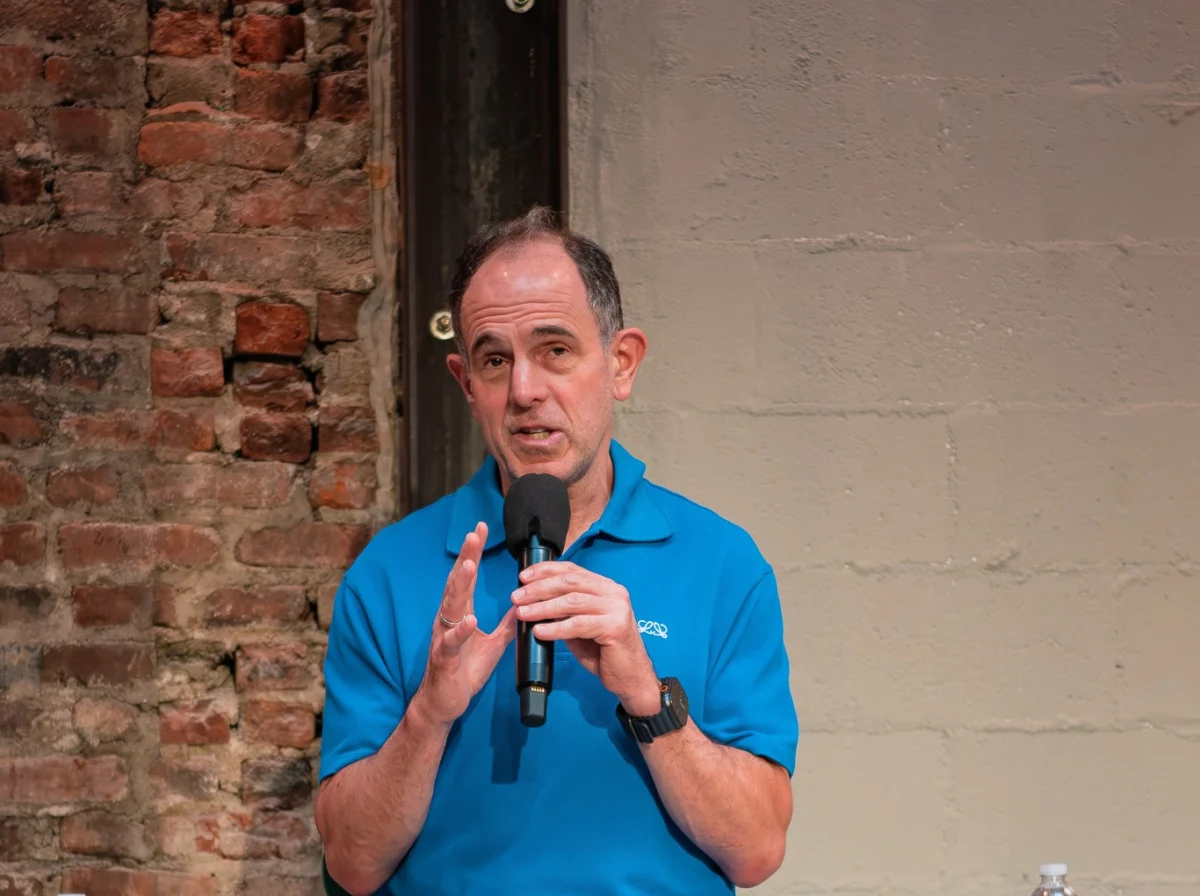
Khosla Ventures, a venerable institution in the Silicon Valley venture capital landscape, is making a significant geographical shift, confirming the establishment of its first-ever office outside its traditional Sand Hill Road base. This groundbreaking expansion will see the firm open a new outpost in New York City, specifically on 14th Street, with an anticipated opening in the fall. The announcement, made by partner Keith Rabois at TechCrunch’s StrictlyVC event in New York’s West Village on Thursday night, signals a notable evolution in the firm’s strategy and the broader venture capital ecosystem.
Keith Rabois, a prominent figure in the venture capital world known for his extensive career spanning 13 years, has been synonymous with Khosla Ventures’ long-standing presence in Menlo Park, California. His confirmation of the New York office marks a pivotal moment, not just for the firm but for Rabois himself, who has recently relocated to the East Coast. Rabois acknowledged the typical challenges of construction timelines, noting, "It’s actually allegedly being built out now. We’ll see. This fall opening date is very vague in my mind."
The move is particularly striking given Khosla Ventures’ historical operational model. The firm has long maintained a singular focus on its Menlo Park headquarters, eschewing even a San Francisco office, which is a common practice for many Bay Area firms. Rabois underscored this point, stating, "We don’t even have an SF office, so this is a very big step for us." This deliberate decision to establish a presence in New York, rather than a closer Bay Area locale, speaks volumes about the strategic importance Khosla Ventures now places on the East Coast.
The new New York office will serve multiple critical functions. While it will house a contingent of Khosla investors, including Rabois, its most innovative feature will be what he termed an "executive briefing center." This dedicated space is designed to host groups of 10 to 12 portfolio companies at a time, facilitating direct meetings with representatives from Fortune 500 corporations, four days a week. This unique model is intended to accelerate business development for Khosla’s portfolio companies by providing unparalleled access to potential customers and pilot programs. "The portfolio companies love this," Rabois informed attendees. "They get pilots and customers, and so it’s going to be a very vibrant office because of that." This approach aims to create a dynamic hub where startups can forge crucial partnerships, a key differentiator in a competitive venture landscape.
The timing of this announcement aligns with significant personal changes for Rabois. Months prior to the firm’s expansion news, he himself made the move to the East Coast. His relocation was motivated by a desire to be closer to his husband, Jacob Helberg, who serves as the Under Secretary of State for Economic Growth, Energy, and the Environment, and their children, currently residing in Washington, D.C. While not explicitly stated as the sole driver, Rabois’s personal move undoubtedly provided an impetus and a seasoned partner on the ground to spearhead Khosla’s East Coast operations.
Rabois’s relocation and the firm’s subsequent expansion naturally prompted questions about the talent landscape in New York compared to the Bay Area, a region he has spent his career cultivating and recruiting from. He offered a nuanced perspective, suggesting that the availability of talent varies significantly with seniority.
When it comes to junior-level talent, particularly individual contributors straight out of school, Rabois was unequivocally optimistic about New York’s capabilities. He cited Ramp, a fintech company he has repeatedly backed, as a prime example. "We’ve been tapping into right-out-of-school graduates and been able to create a critical density of talent from the intern class [onward] that is extraordinary," he noted. This suggests that New York’s dense population, numerous universities, and vibrant culture make it an ideal environment for cultivating early-career professionals in the tech sector.
However, the picture changes for more experienced technical roles. "Senior engineers, architect-level – no, I think that’s a challenge," Rabois admitted. He acknowledged the historical concentration of such highly specialized talent in Silicon Valley. Nevertheless, he offered a mitigating perspective, adding, "Fortunately, maybe in the modern age, you need less of these people per company than you have historically." This could be attributed to advancements in development tools, cloud infrastructure, and increased automation, which may reduce the absolute number of highly senior technical personnel required per organization.
The most significant hurdle for companies seeking to establish or expand in New York, according to Rabois, lies in recruiting talented senior executives. This challenge, he explained, is less about a scarcity of talent and more about geographical and lifestyle factors unique to the New York metropolitan area. "If you have an in-office culture, most of the more senior people that live and reside in the New York area live outside the city, and the commute in and out of the city for an office environment can be very painful," said Rabois, who grew up in a New York commuter suburb himself, understanding the nuances of such commutes. He elaborated on the geographical sprawl, noting, "We were like a 32-minute express train into the city, but many people live two concentric circles further away." This extended commute can be a significant deterrent for executives, particularly those with families, who prioritize work-life balance. "When you need to recruit proven executive talent, and you really believe in an in-office culture, [that has] been very challenging," he concluded. The high cost of living within Manhattan also plays a role, making it difficult for many executives to afford to raise a family directly within the city, pushing them to distant suburbs.
Ramp, the fintech company Rabois referenced earlier, has devised a strategy to navigate this executive talent challenge. "We don’t hire senior people. We just build from the bottom up, ground up. It’s been a very conscious strategy, very intentionally, for the last three years," he revealed. While this approach can be effective for certain companies, Rabois acknowledged its limitations. "That can work," he continued. "But if you need a CFO, a SVP of sales, someone who’s got a lot of gravitas and experience, it’s really hard to have them in the office five days a week, because unless they’re very independently wealthy, they really can’t afford to raise a family right in the middle of the city." This highlights a fundamental tension for companies aiming to build a strong in-office culture in a high-cost urban center like New York.
Khosla Ventures’ expansion places it among a select, but potentially growing, cohort of prominent Bay Area venture firms establishing a stronger foothold in New York. While firms like Sequoia Capital and Andreessen Horowitz have maintained a New York presence for years, these have typically been more modest satellite offices housing a comparatively small number of partners relative to their Bay Area operations. Khosla’s commitment, particularly with its innovative "executive briefing center," suggests a more substantial strategic pivot.
This move also comes on the heels of significant data indicating a shift in the national tech landscape. A report released last month by commercial real estate services firm CBRE found that New York has narrowly surpassed the San Francisco Bay Area in total tech talent headcount. This marks the first time in the 13 years CBRE has tracked this data, and it represents a symbolic milestone in the evolving competition between the two major tech hubs. The report attributed this shift largely to finance firms in New York aggressively hiring for artificial intelligence talent, leveraging the city’s robust financial sector, while Bay Area tech employers have been cutting staff amid a more challenging economic climate.
Despite the compelling data from the CBRE report, a degree of skepticism persists among some New Yorkers, reflecting the deep-seated perception of Silicon Valley’s enduring dominance in tech. As one attendee at the StrictlyVC event remarked, "I heard about that study. I don’t buy it." This sentiment underscores the ongoing debate and the psychological hurdle that New York must overcome to fully cement its status as a premier tech ecosystem on par with, or even surpassing, the Bay Area. Khosla Ventures’ decision, however, serves as a powerful endorsement from one of Silicon Valley’s most respected players, potentially signaling a new chapter in the geographic distribution of venture capital and technological innovation.