 11

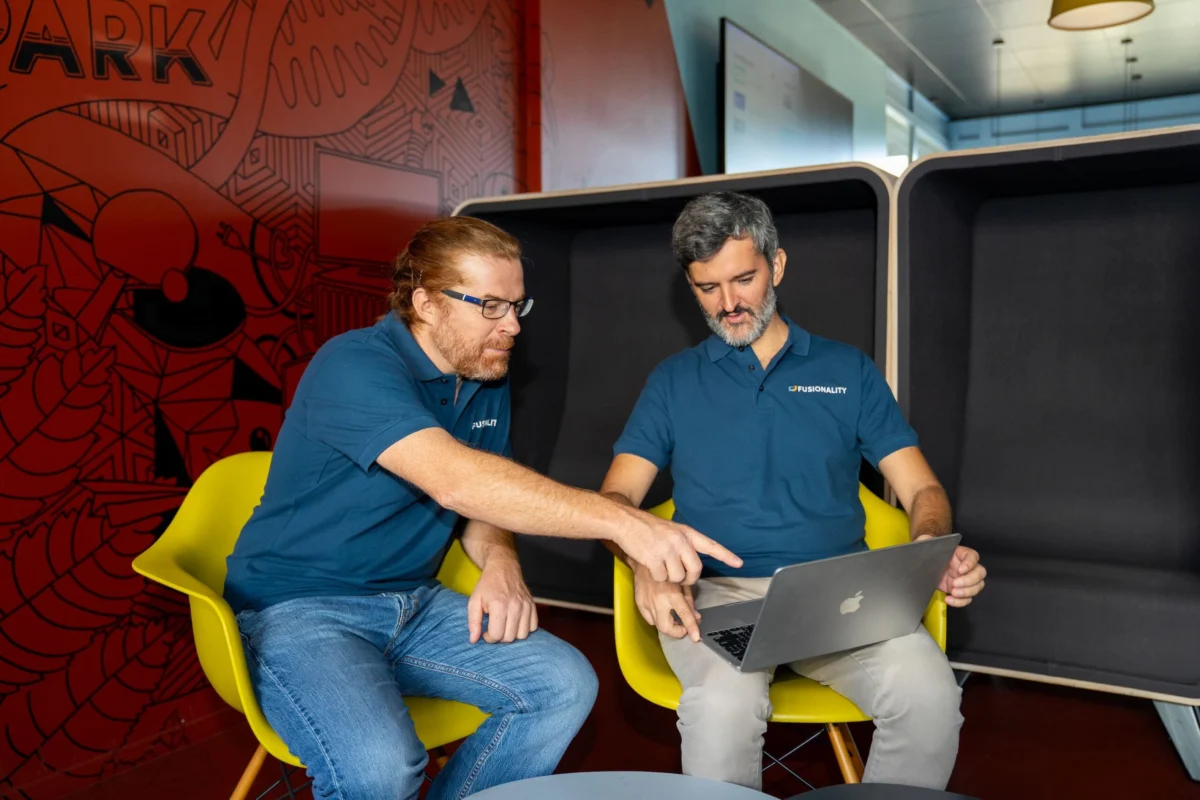
For many startup founders, the journey to a groundbreaking idea involves extensive research and exploration. For Federico Felici and Jonas Buchli, the co-founders of Lausanne-based Fusionality, the path was much more direct, emerging organically from a persistent, unmet need within the nascent fusion energy sector. Their direct experience and deep expertise positioned them perfectly to address a critical bottleneck, making them, in Felici’s words, "two of the lucky ones" whose venture was born from a clear, industry-wide demand.
Over and over again, the same message resonated from companies striving to achieve commercial fusion power: "We would ideally buy many of the components to make our control system, but there isn’t really anybody providing them — and especially there isn’t anybody who speaks the language of fusion," Felici recounted to TechCrunch. This consistent feedback highlighted a significant gap in the emerging fusion supply chain – a need for specialized control system components from vendors who not only understood the complex technical requirements but also the unique operational environment and scientific nuances of fusion reactors. The "language of fusion" refers to the highly specialized knowledge required to manage extreme temperatures, immense magnetic fields, real-time plasma dynamics, and the precise timing crucial for sustaining fusion reactions, a far cry from conventional industrial control systems.
Felici and Buchli were uniquely qualified to decipher and address this specialized language. For years prior to founding Fusionality, the two had dedicated their careers to developing novel methods for controlling experimental fusion devices. Their work involved tackling some of the most intricate challenges inherent in fusion research, giving them an intimate understanding of the problems that fusion companies now face. "We spent quite a lot of our time solving exactly the problems that our customers need to solve," Felici explained, underscoring the direct applicability of their prior research and development. This firsthand experience provided them with an unparalleled perspective on the industry’s pain points and the technical solutions required.
Capitalizing on this profound opportunity, Felici and Buchli officially founded Fusionality this year. The company swiftly secured a substantial pre-seed funding round, raising $3.7 million (CHF 3 million) from prominent investors Founderful and Playfair. This significant early-stage investment signals strong confidence in Fusionality’s vision and the commercial viability of its proposed solutions within the high-stakes fusion energy market. Felici assumes the role of CEO, guiding the company’s strategic direction and business development, while Buchli serves as CTO, overseeing the technological innovation and product development that form the core of Fusionality’s offering.
Fusionality emerges as a crucial player within an expanding ecosystem — an emerging supply chain specifically designed to serve the rapidly burgeoning private fusion power industry. This ecosystem includes a diverse array of startups and established manufacturers. Some, like Kyoto Fusioneering, are focused on developing specific components that will enable fusion startups to convert their engineering breakthroughs into grid-ready electricity. Others are existing manufacturers adapting their expertise to produce the high-precision parts and specialized materials demanded by fusion reactor construction. However, a distinct void remained in the market: few companies specialized in the intricate hardware and software infrastructure required to effectively control the fusion reactors themselves, a gap Fusionality is now strategically positioned to fill.
The challenge of controlling fusion reactors is formidable, requiring systems capable of split-second decision-making and intricate management of extreme conditions. "Across the industry, many companies make their own control systems from scratch," Felici observed. This bespoke approach, while ensuring specific needs are met, is inherently inefficient and costly. Felici highlighted a crucial insight: "But actually, 80% of each company’s control system is really exactly the same." This commonality stems from fundamental plasma physics and universal control principles, regardless of specific reactor design. Recognizing this redundancy provided the impetus for Fusionality’s modular approach.
At its core, fusion power plants aim to generate electricity by harnessing the immense energy released when two light atomic nuclei fuse into a heavier one. This process typically occurs in a superheated, ionized gas known as plasma, often reaching temperatures hotter than the sun’s core. However, these plasmas are notoriously fickle and inherently unstable. Maintaining the precise conditions necessary for sustained fusion — including the proper temperature, optimal shape, and consistent fuel level — demands incredibly sophisticated and rapid control. Any deviation can lead to a disruption, extinguishing the fusion reaction and requiring a restart, which is both costly and time-consuming. The control systems responsible for maintaining these delicate conditions are exceptionally complex to develop and deploy, integrating advanced sensors, high-speed data processing, sophisticated algorithms, and robust actuators.
Fusionality plans to leverage the fundamental physics and common control challenges shared across various reactor designs. Their strategy involves developing a comprehensive suite of standardized control systems and simulation environments. These modular "Lego blocks," as Felici describes them, will provide fusion startups with pre-built, high-performance components that can then be fine-tuned and customized to work seamlessly with their specific reactor design. This approach promises to significantly accelerate development timelines, reduce engineering costs, and enhance the reliability and safety of fusion power plants by providing robust, validated solutions. The simulation environments will allow for extensive testing, optimization, and operator training in a safe, virtual setting, further streamlining the development process.
The founders’ journey deeply intertwined with the development of artificial intelligence for fusion applications. Felici and Buchli first met while collaborating on a project focused on teaching AI to control an experimental tokamak — a donut-shaped magnetic confinement device widely used by researchers to study fusion power. At the time, Felici was working at EPFL in Switzerland, a renowned institution housing one such tokamak, while Buchli was contributing his expertise at Google DeepMind, a leader in AI research. Later, Felici himself transitioned to Google DeepMind, where he further developed advanced simulations and machine learning interfaces specifically tailored for fusion devices.
Their extensive experience with AI gives them a unique perspective on its current and future role in fusion control. Felici acknowledges that AI will "play an important role in future control systems." However, he maintains a pragmatic view, noting that it is not yet ready to tackle the entire challenge of managing a fusion reactor autonomously. "I wouldn’t be somebody who advocates for AI to take the role of controlling the entire fusion reactor," he stated. Instead, Felici envisions AI in a complementary capacity. Today, AI is more likely to "complement or enhance or optimize" specific parts of the system, such as predicting plasma disruptions, optimizing magnetic field configurations in real-time, or analyzing complex diagnostic data, thereby assisting human operators and improving overall reactor performance and efficiency.
For its initial phase, Fusionality is strategically focusing on magnetic confinement fusion (MCF), a leading branch of fusion power research. This approach utilizes powerful electromagnets to create strong magnetic fields that confine and heat the superhot plasma, keeping it dense and hot enough to sustain fusion reactions within a controlled vessel. This particular segment of the industry includes several well-funded and prominent startups, such as Commonwealth Fusion Systems, Realta Fusion, Proxima Fusion, and Type One Energy, all of whom are actively developing magnetic confinement devices. This focus provides Fusionality with a clear and immediate target market. Felici confirmed that while MCF is the initial priority, the company ultimately plans to develop systems applicable to other fusion approaches as the industry matures and diversifies.
The recently secured pre-seed funding will be instrumental in enabling Fusionality’s team, currently comprising seven dedicated individuals, to develop a "tightly selected number of technologies." Felici likened these foundational components to "Lego blocks," emphasizing their modularity and reusability. "We start with a few of these blocks and then we build out more," he explained, indicating a phased development strategy. This initial set of robust, standardized components will form the bedrock of their offering, allowing fusion companies to build their control systems with greater speed and reliability. Fusionality harbors an ambitious long-term vision: "We have the ambition to serve the really wide range of technology that you need to operate a fusion reactor," Felici articulated, positioning the company as an indispensable partner for the commercialization of fusion energy.
This report was filed by Tim De Chant, a senior climate reporter at TechCrunch. De Chant’s extensive background includes writing for prestigious publications such as Wired magazine, the Chicago Tribune, Ars Technica, The Wire China, and NOVA Next, where he served as founding editor. His academic credentials include a PhD in environmental science, policy, and management from the University of California, Berkeley, and a BA in environmental studies, English, and biology from St. Olaf College. De Chant is also a lecturer in MIT’s Graduate Program in Science Writing and was awarded a Knight Science Journalism Fellowship at MIT in 2018, during which he focused on climate technologies and new business models for journalism. His expertise provides authoritative insight into the advancements within the climate and energy sectors, including the burgeoning field of fusion energy.






