 11

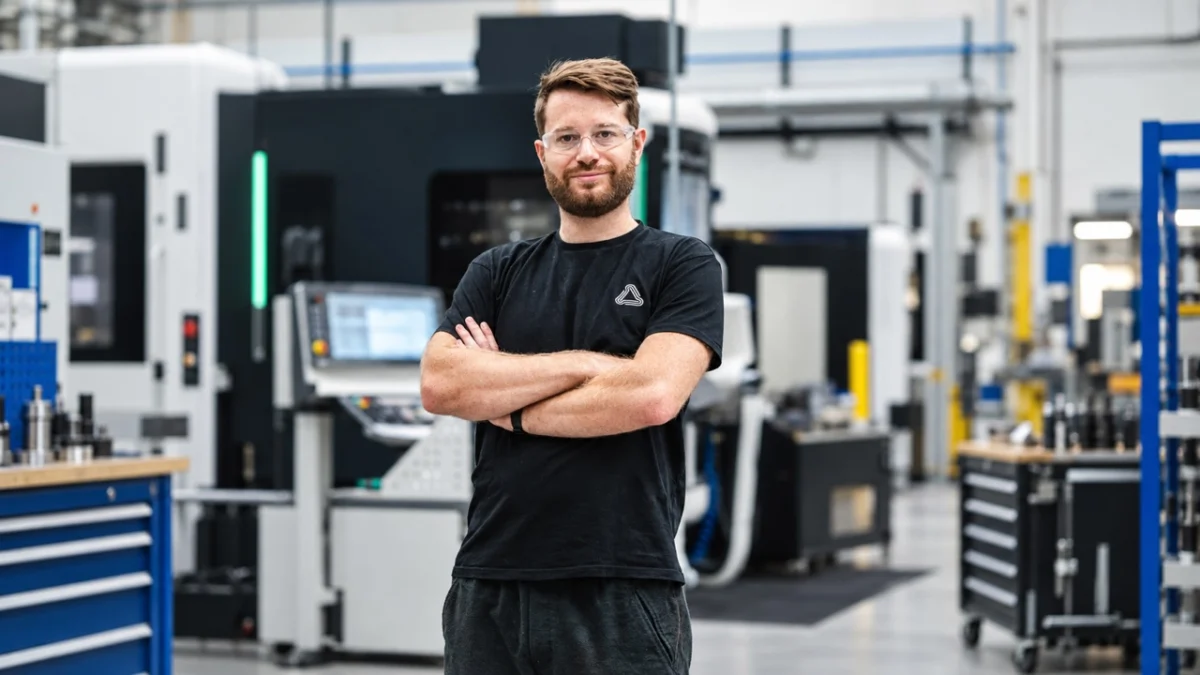
UK-based manufacturing software startup CloudNC announced a significant $20 million B extension funding round on Wednesday, bringing its lifetime total capital raised to $128 million. This latest investment marks a pivotal moment for the company, as its co-founder and CEO Theo Saville noted that their last major funding round occurred four years prior. The strategic timing of this new capital injection underscores CloudNC’s readiness for accelerated growth, with the fresh funds earmarked to scale the adoption of its innovative AI-powered solutions, strengthen its market presence, and drive the development of new products designed to revolutionize the manufacturing sector.
CloudNC was co-founded in 2015 by Theo Saville and Chris Emery, who now serves as the company’s Chief Science Officer. Their mission from the outset has been to tackle some of the most complex and time-consuming aspects of modern manufacturing through advanced software. The company’s flagship product, CAM Assist, leverages artificial intelligence to automate significant portions of Computer Numerical Control (CNC) machining. CNC is a foundational process in contemporary manufacturing, involving the use of highly precise, computer-controlled machines to cut, shape, and form materials into intricate parts. These components are indispensable across a wide array of critical industries, including automotive, defense, and consumer hardware, forming the backbone of countless products we use daily. The precision and repeatability offered by CNC are crucial for modern industrial standards, yet the programming of these machines has historically been a bottleneck.
Before a physical part can be precisely cut and shaped by a CNC machine, an extensive and highly skilled preparatory phase is required. As Saville explained, a machinist or a Computer-Aided Manufacturing (CAM) programmer must meticulously decide a myriad of operational parameters. These decisions encompass critical aspects such as how the part should be securely held within the machine, the specific cutting tools that should be utilized for different operations, and the optimal sequence and path for the cutting process. This ‘ideation phase’ is crucial because it directly impacts the efficiency, accuracy, and cost-effectiveness of the entire manufacturing run. Programmers typically rely on powerful CAM software to assist them in this intricate planning. While these conventional tools are robust and enable users to create individual part features or integrate known part patterns, Saville emphasized a critical distinction: these systems often fall short of autonomously generating a comprehensive, expert-level execution strategy from scratch.
Saville highlighted the inherent limitation of traditional CAM systems, stating, "Traditional CAM systems are powerful, but in most workflows, they are still tools that allow programmers to manually specify how a part should be machined." This manual specification process, while offering immense control, is inherently time-consuming, prone to human error, and heavily reliant on the individual expertise and experience of the programmer. The complexity arises from the vast number of variables involved in machining even a simple part: material properties, tool geometries, machine capabilities, surface finish requirements, and tolerance specifications all interact in intricate ways. Manually optimizing these parameters to achieve the best balance of speed, accuracy, and tool life presents a formidable challenge, often leading to suboptimal strategies that increase production costs and lead times.
This is precisely where CloudNC’s CAM Assist software enters the picture as a transformative solution. Designed to seamlessly plug into widely used traditional CAM systems, such as Autodesk Fusion and Mastercam, CAM Assist acts as an intelligent layer that enhances the capabilities of existing workflows. Its core function is to empower machinists and programmers to make significantly more efficient and strategic manufacturing decisions. By automating the initial, often repetitive and complex, decision-making processes, CAM Assist frees up human experts to focus on refinement and higher-level problem-solving. This integration ensures that shops can leverage their existing software investments while gaining the benefits of advanced AI.
The operational mechanism of CAM Assist is sophisticated and highly automated. Saville elaborated on its capabilities, explaining that the software "selects suitable tools, approach directions, and cutting feeds and speeds, and then drafts the code required to tell the CNC machine what to do." This comprehensive automation covers critical aspects of CNC programming that typically demand extensive manual input and calculation. For instance, determining the optimal tool for a specific feature, deciding the most efficient angle of approach to minimize tool wear and maximize material removal, and calculating the precise feeds (how fast the tool moves through the material) and speeds (how fast the tool rotates) are all complex decisions that CAM Assist handles autonomously. By generating the initial CNC code based on these optimized parameters, the software drastically reduces the time and effort traditionally expended in program creation.
Once CAM Assist generates its proposed machining strategy and associated code, the user retains full oversight and control. The process is designed for collaboration, where the machinist or programmer reviews, edits, and ultimately approves the results. Saville underscored that the fundamental goal of CAM Assist is not to replace skilled workers or diminish their expertise, but rather to help them become "more efficient and productive." The software acts as an augmentation tool, offloading the most tedious and computationally intensive tasks. Saville drew a clear analogy to illustrate this symbiotic relationship: "If traditional CAM is a powerful toolkit," he said, "then CAM Assist is more like an expert assistant sitting alongside the programmer, automating much of the first-pass thinking and repetitive setup so the human can review, improve, and approve the approach." This philosophical approach ensures that human judgment, experience, and creativity remain central to the manufacturing process, while AI handles the heavy lifting of optimization and automation.

CloudNC’s innovative approach has already garnered substantial traction within the global manufacturing community. More than 1,000 machine shops worldwide are currently utilizing CAM Assist, testament to its practical utility and the tangible benefits it delivers. A significant portion of the company’s customer base, approximately 80%, is located in the U.S., highlighting the strong demand for such solutions in one of the world’s largest manufacturing economies. With a dedicated team of 80 employees, CloudNC’s primary objective following this funding round is to accelerate and scale the adoption of CAM Assist even further. This scaling effort involves expanding sales and marketing initiatives, enhancing customer support, and continuously refining the software based on user feedback and evolving industry needs.
Saville articulated the rationale behind the latest funding round: "This makes this the right time to raise additional capital." The investment will enable CloudNC to support a wider take-up of CAM Assist, ensuring that more manufacturers can benefit from its capabilities. Furthermore, the funds will be instrumental in strengthening the company’s go-to-market operations, allowing for more aggressive expansion into existing markets and the penetration of new geographical territories. A crucial aspect of the investment strategy also includes the development of new products, such as the forthcoming "Quote Agent," demonstrating CloudNC’s commitment to continuous innovation across the manufacturing value chain.
The B extension round saw participation from a strategic syndicate of investors. Nimble Ventures led the round, signifying strong confidence in CloudNC’s vision and technological prowess. Other notable investors include Calculus Venture Capital, Entrepreneur First, and significantly, LM Capital, which is the venture arm of aerospace and defense giant Lockheed Martin. The involvement of LM Capital is particularly noteworthy, given the critical role of precision manufacturing in the defense industry, and suggests a strategic alignment with CloudNC’s capabilities in enhancing complex supply chains. This diverse investor base provides not only capital but also strategic guidance and potential partnership opportunities.
The premise behind Quote Agent, CloudNC’s upcoming product, is strikingly similar to that of CAM Assist: to infuse intelligence and automation into a traditionally manual, complex, and time-consuming process. Quote Agent is specifically designed to target manufacturers, providing them with a powerful tool to assess the estimated cost and inherent risk of a new project rapidly and accurately. In the competitive landscape of contract manufacturing, the ability to generate swift and precise quotes can be a decisive factor in securing new business. By automating this assessment, shops can make informed decisions faster, moving quickly to accept profitable work or efficiently reject projects that carry unacceptable risk or insufficient margin.
Saville underscored the broader geopolitical and economic context that makes solutions like Quote Agent increasingly vital. He pointed to global trends such as the push for "reshoring" in the U.S., where companies are increasingly looking to bring manufacturing operations back to domestic soil to enhance supply chain resilience and reduce reliance on overseas production. This reshoring trend, while strategically beneficial, places additional demands on domestic manufacturing capacity. Simultaneously, the manufacturing sector faces a persistent and widening "shortage of skilled workers." This dual challenge of increased demand and limited human capital necessitates innovative solutions that can maximize the output and efficiency of existing resources.
"Machine shops need to quote faster, program faster, and deliver more with the people and machines they already have," Saville stated emphatically, encapsulating the urgent needs of the industry. Quote Agent, set to launch next month, is poised to directly address the "quote faster" imperative, complementing CAM Assist’s ability to "program faster." Together, these tools aim to create a more agile, responsive, and productive manufacturing ecosystem.
Saville reflected on the profound complexity of the problem CloudNC is addressing, noting, "There are more ways to machine a typical CNC part than there are atoms in the universe." This vivid analogy highlights the almost infinite permutations of toolpaths, operations, and parameters involved in precision machining, making manual optimization an intractable challenge. He emphasized the extensive journey the company has undertaken to arrive at its current position, stating, "We have spent years attacking that specific problem, with our own factory, our own software team, and a lot of hard lessons from real machining. It’s been a long process to get to where we are today." This hands-on experience, coupled with deep technological expertise, provides CloudNC with a unique understanding of the practical realities and intricate demands of the manufacturing floor, enabling them to build truly effective and impactful solutions for the industry.






