11

In the current corporate landscape, the integration of Artificial Intelligence is often compared to hiring a brilliant new employee. However, under the current implementation strategies of most organizations, this "employee" arrives with a significant handicap: they never read the onboarding documentation, they possess no knowledge of the company’s history, and they require constant reminders of the core strategy during every meeting. This lack of situational awareness represents the fundamental challenge facing the modern enterprise. While the underlying technology is increasingly sophisticated, it is frequently forced to operate in a vacuum, devoid of the specific context necessary to be truly effective.
Despite this, most organizations continue to measure the success of their AI investments through the lens of adoption metrics. Metrics such as seat counts, prompt volumes, and usage dashboards have become the standard for determining ROI. While these data points confirm that employees are interacting with the tools, they fail to address the more critical question of whether the technology is actually providing meaningful assistance. New research from Atlassian’s Teamwork Lab suggests a profound disconnect between AI usage and AI utility, indicating that adoption is a poor predictor of actual organizational value.
The Teamwork Lab recently conducted a comprehensive survey of 1,002 U.S.-based knowledge workers to identify the factors that determine AI’s effectiveness in the workplace. The findings reveal that the most significant predictor of AI’s helpfulness is not the frequency of use, but rather the degree to which the AI understands the specific work and environment of the user. According to the data, workers whose AI has a deep understanding of their business context are up to six times more likely to report that the technology is helpful across their core tasks. This suggests that the industry’s current obsession with maximizing adoption may be misplaced, as the real value lies in the depth of the AI’s contextual integration.
Molly Sands, a future-of-work expert and head of the Teamwork Lab, emphasizes that the focus on adoption has overshadowed the more complex problem of business understanding. According to Sands, the workers deriving the most value from AI are not necessarily those generating the highest volume of prompts, but those whose AI tools are effectively connected to the specifics of their daily operations. She notes that while many companies have optimized for usage, few have begun to solve the problem of teaching AI the nuances of their specific business.
The research highlights a significant "context gap" that currently exists in the workplace. When AI lacks concrete information about a business, its utility is severely limited, often mimicking the performance of a newly hired junior employee rather than a seasoned professional. This lack of information contributes to what researchers call a "fragmentation tax"—a phenomenon where disconnected information and tools cost Fortune 500 companies an estimated $161 billion per year.
The survey results provide a stark illustration of how workers currently perceive their AI tools. When asked to rate how well their AI understands their organization—including its people, history, and internal processes—only 12% of respondents compared the AI’s understanding to that of a tenured, senior colleague. In contrast, 45% of workers stated that their AI operates more like a brand-new junior hire. The data suggests a direct correlation between the amount of context provided to the AI and its perceived seniority; workers whose AI has the least access to institutional knowledge are the most likely to view it as an inexperienced assistant.
The problem, as Sands points out, is not necessarily with the AI models themselves. Organizations continue to invest in increasingly "smarter" and more powerful models, yet they are often disappointed when the output remains generic. The issue lies in the connection—or lack thereof—between the model and the specific, day-to-day realities of the business. Without a way for the model to learn the unique institutional memory of a company, its output will inevitably lack the precision required for high-level tasks.
To validate these survey findings with objective performance data, Atlassian analyzed behavioral data from DX, its engineering intelligence platform. This analysis involved anonymized user data from 272 different customer organizations. The goal was to determine whether better context leads to measurable improvements in output. The results were significant: organizations that heavily utilized the "Teamwork Graph"—a tool designed to unify and contextualize insights across various workstreams—shipped up to 64% more work.
This performance boost was not limited to a specific niche; the trend held steady regardless of the industry, region, or sector. This suggests that the value of context is a universal driver of productivity. When AI is given the ability to query a connected graph of organizational data, it moves beyond being a simple text generator and becomes a catalyst for actual production.
However, a significant trust gap remains between what workers want from AI and what they believe it can currently deliver. Trust in AI is not a matter of abstract faith in the technology; rather, it is earned through demonstrated competence. Workers have expressed a willingness to hand over "real work" to AI, but only if the tool proves it understands the operational realities of the company. The survey found that 77% of knowledge workers believe it is important for their AI to have a thorough understanding of their company’s institutional knowledge. Despite this high demand, only 21% of respondents believe their current AI tools actually possess that level of understanding.
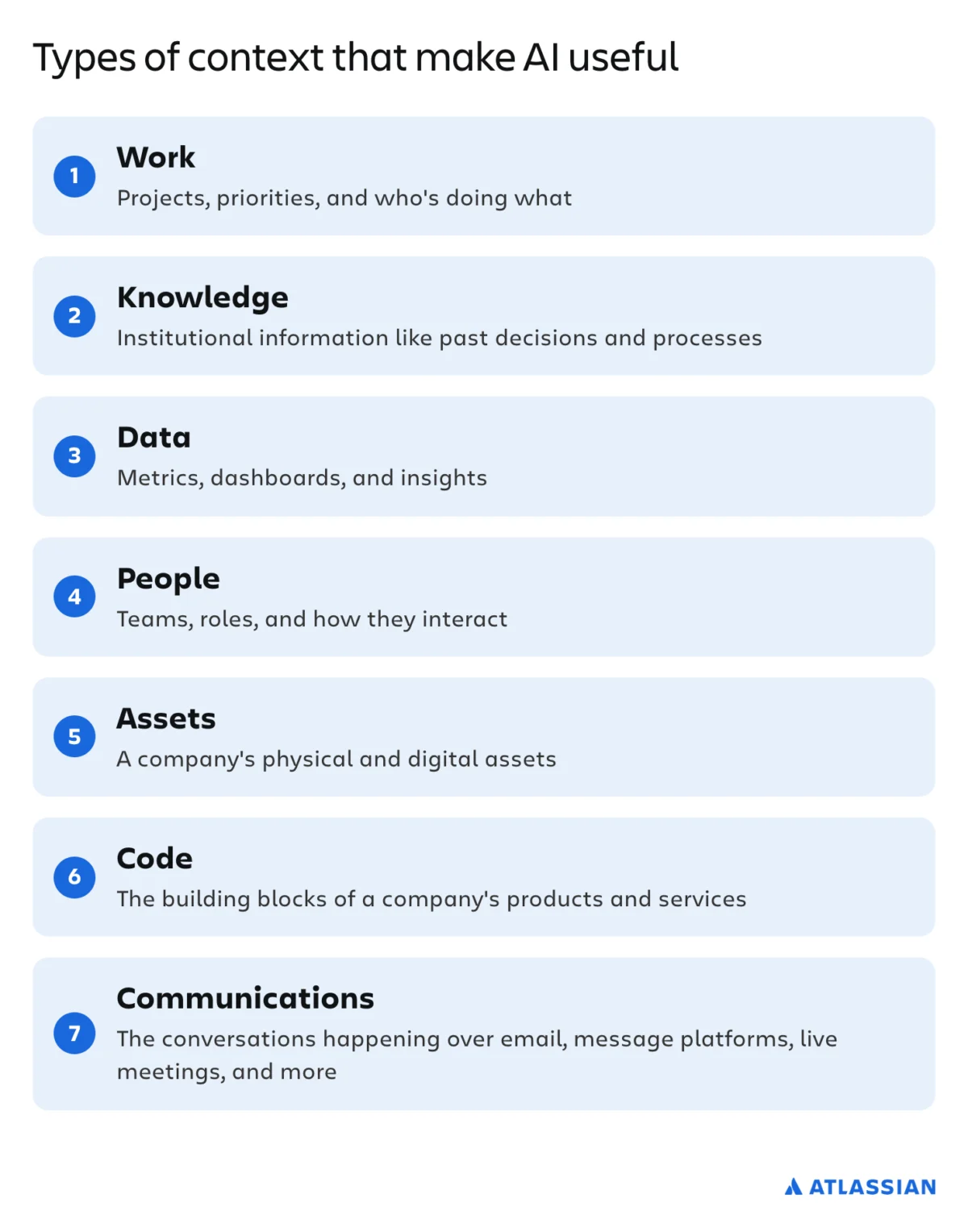
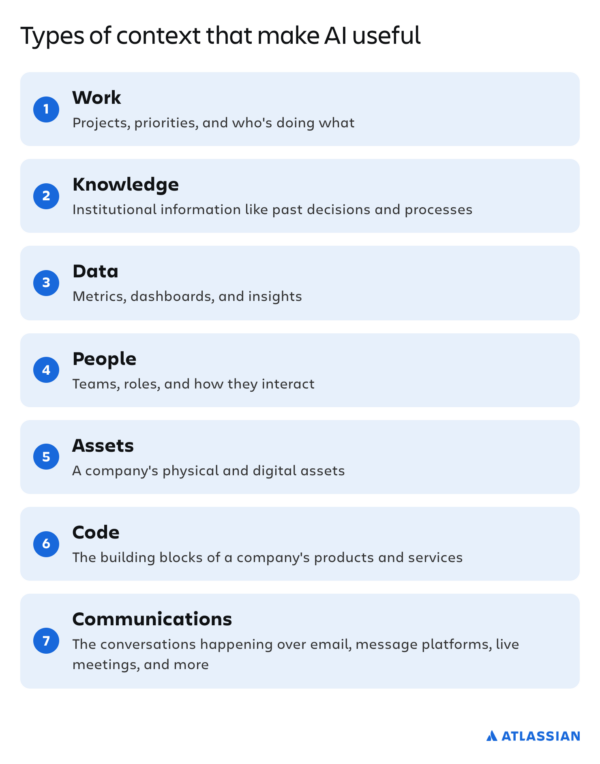
This pattern of high expectation versus low current capability persists across multiple types of context, including data, people, communications, and assets. Sands notes that workers’ skepticism is a "reasonable instinct." Employees are understandably hesitant to delegate critical tasks to a system that lacks awareness of how the company functions. However, this skepticism tends to dissipate the moment the AI demonstrates that it truly understands the nuances of the work.

For leadership teams looking to bridge this gap, the research provides a clear starting point. While it may be overwhelming to consider connecting every piece of data in a sprawling organization, certain types of context yield higher returns than others. The data indicates that prioritizing company-specific data and institutional knowledge provides the most direct path to improving AI utility.
One of the most tangible benefits of context-aware AI is the reduction of "rework." When an AI tool understands the specific parameters of a project and the history of previous decisions, it produces output that is far more accurate. The study found that AI with a strong understanding of the work produces up to 48% more outputs that can be used immediately, without the need for significant revision or editing. This represents a massive efficiency gain, as it frees employees from the tedious task of "fixing" generic AI content.
The distinction between a "new hire" and a "senior colleague" remains the most useful metaphor for understanding this transition. A tenured employee is valuable not just because of their raw skills, but because of their deep internal knowledge—the documented processes, the lessons learned from past failures, and the rationale behind previous decisions. By giving AI access to this institutional memory, organizations can finally close the gap between an experimental tool and a trusted colleague.
The methodology behind these findings involved a double-blind survey conducted by Atlassian’s Teamwork Lab between July 28 and August 3, 2026. The 1,002 respondents were all full-time U.S. knowledge workers across various seniority levels and industries. The analysis controlled for variables such as role, generation, and company size to ensure the drivers of AI helpfulness were accurately identified. Additionally, the developer productivity data was sourced from product telemetry and productivity metrics from 272 DX and Atlassian customers, providing a data-driven foundation for the survey’s qualitative findings. The conclusion is clear: the future of AI in the workplace depends less on how often it is used and more on how much it is allowed to know.