 11

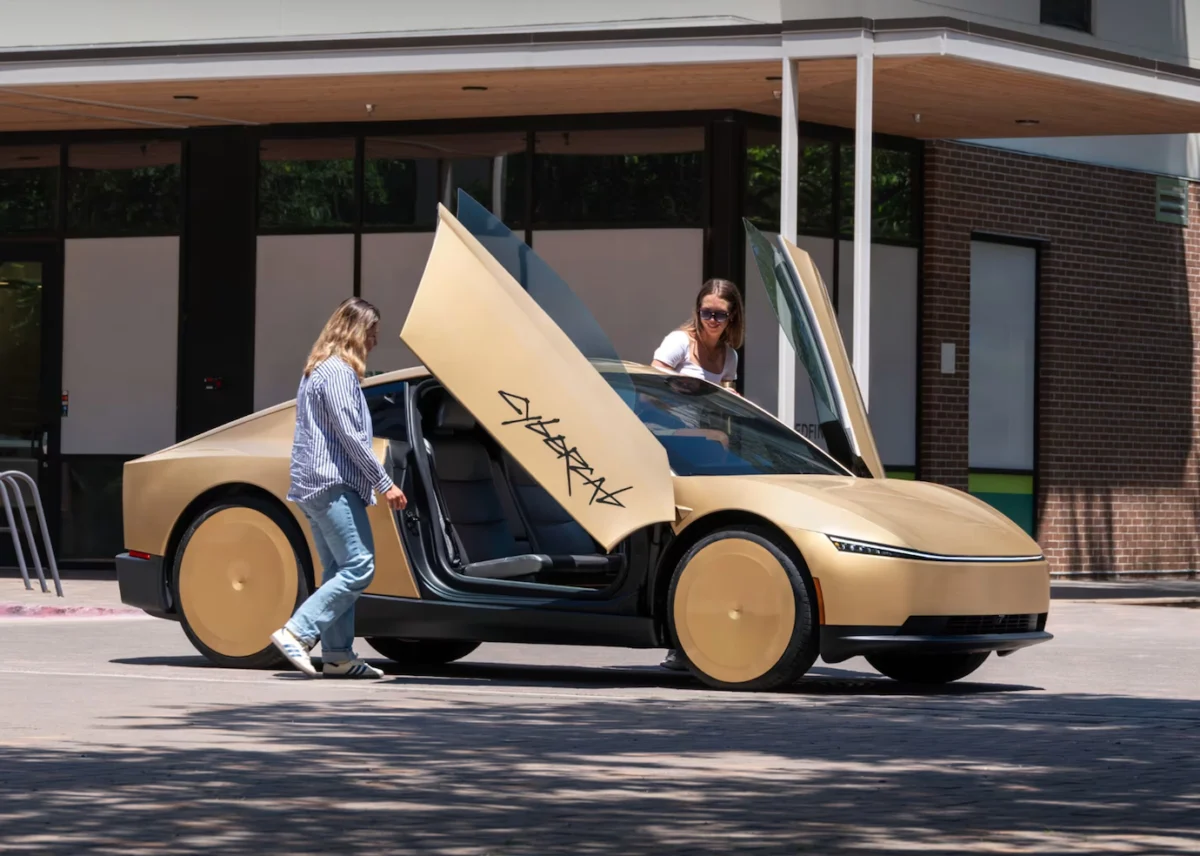
Tesla’s highly anticipated Cybercab event, a significant milestone for CEO Elon Musk’s long-term vision, unfolded in a notably subdued and private setting, a stark departure from the company’s usual large-scale, boisterous, and livestreamed product launches. This unconventional approach to introducing a product that Musk has been building towards for years raised eyebrows across the industry and among enthusiasts. Unlike past unveilings featuring Musk at the helm for extensive presentations, reports suggest the keynote for the Cybercab event was remarkably brief, lasting only about 15 minutes, and it appears Musk himself did not deliver the address. This understated debut has left many questioning the company’s strategy for a product considered a "fork in the road moment" for Tesla.
The core promise of the Cybercab is monumental: to deliver a fully autonomous vehicle relying solely on cameras and artificial intelligence for navigation, all while offering a significantly lower cost of operation compared to existing robotaxi services like Waymo. However, the comprehensive details surrounding this ambitious new service were not disseminated through a singular, grand presentation. Instead, information was scattered across various channels, including official PDFs released by the company, updated terms of service within Tesla’s "Robotaxi" app, and subsequently shared online by a select group of dedicated fans who attended the private event. This fragmented release of information presents challenges for public understanding and regulatory assessment, especially as the company embarks on proving the safety and reliability of these vehicles.
Indeed, the path to widespread deployment for the Cybercab is already facing scrutiny. The National Highway Traffic Safety Administration (NHTSA), the federal agency responsible for vehicle safety, has proactively launched an investigation into Tesla’s Cybercab rollout. This immediate regulatory oversight underscores the critical need for Tesla to demonstrate the safety and operational integrity of its autonomous technology not only to the public but also to local governments and federal authorities. The investigation will likely focus on the vehicle’s autonomous driving capabilities, emergency protocols, and the overall safety framework supporting its operation without human drivers.
In the wake of this low-key launch and the subsequent piecemeal release of information, several intriguing and pivotal details about the Cybercab’s design and operational parameters have emerged.
No Cybercab for Kiddos (Under 13)
One of the more unexpected stipulations found within the Cybercab’s fine print is a current restriction prohibiting minors under the age of 13 from riding in the vehicle. This policy stands in contrast to Tesla’s existing "Robotaxi" Model Y SUVs, which permit minors between the ages of 8 and 17, provided they are accompanied by an adult. While Tesla does provide guidelines for using child seats in both vehicle types, a peculiar design choice for the Cybercab is the absence of standard LATCH (Lower Anchors and Tethers for Children) anchors. Instead, child seats can only be secured using the vehicle’s seat belts. Tesla executives, including Elon Musk, have frequently emphasized a focus on cost reduction through the elimination of unnecessary parts. However, the decision to omit child seat anchors, especially given Musk’s public advocacy for increasing birth rates, was an unanticipated cut that raises questions about child safety protocols and the target demographic for the initial Cybercab service. All children under 18 are required to be accompanied by an adult in both Cybercabs and Model Y Robotaxis, but the specific age restriction for the Cybercab suggests particular hesitations regarding younger passengers that Tesla has yet to fully elaborate on.
What Happens in a Crash?
Despite the primary objective of autonomous vehicles being to prevent collisions, even the most advanced systems on the road today can be involved in accidents. Tesla has outlined a specific protocol for the Cybercab in the event of a crash. Upon impact, the vehicle’s airbags will deploy, all doors will automatically unlock, hazard warning lights and interior lights will activate, the high-voltage battery will be disabled to prevent further hazards, and the windows will move to a "vent" position. The Cybercab is designed to apply its brakes to come to a complete stop and park, after which its infotainment system will initiate a two-way communication link with Tesla’s dedicated rider support team.
The automatic unlocking of doors is a particularly significant feature, addressing previous criticisms leveled against Tesla concerning its reliance on electronic door latches. The company has faced scrutiny over the potential for these electronic systems to trap occupants inside vehicles following a crash, both in its home market of the United States and notably in China, its largest market. Just last month, Tesla was part of a group of automakers that agreed to recall 3 million cars in China due to an investigation into electronic door latches that could impede egress after a collision. The Cybercab’s programmed response to unlock doors post-crash indicates an attempt to mitigate such safety concerns.
Manual Door Releases
Further addressing past safety criticisms related to door mechanisms, the Cybercab incorporates manual door releases in a more prominent and accessible location. Previous Tesla models have been criticized for having interior manual door releases that were difficult to locate in an emergency, particularly because the primary method of entry and exit relies on electronic latches, activated by buttons or smartphone apps. The Cybercab utilizes electronic door latches that facilitate automatic door opening at the beginning and end of a ride. An exterior button also allows riders to open the doors. Crucially, the interior manual release in the Cybercab is positioned in a very obvious spot on the armrest of each door, enhancing safety and ease of escape during emergencies.
Brake-by-Wire Technology
In line with its cost-cutting philosophy, Tesla has implemented a brake-by-wire system in the Cybercab. This advanced technology replaces the traditional hydraulic braking system, which relies on fluid pressure transmitted through lines to control brake calipers. Instead, the Cybercab employs electronic actuators to control the brake calipers directly. Elon Musk himself articulated the rationale behind this choice, noting in a post that "Having electric brakes avoids the complexity of a hydraulic system: no need to rout [sic] plumbing all around the car." This innovation simplifies vehicle architecture, reduces weight, and potentially enhances braking responsiveness and control through software. Tesla had previously pioneered the use of steer-by-wire technology in a major production vehicle with its Cybertruck, severing the physical connection between the steering wheel and the front wheels. The adoption of brake-by-wire in the Cybercab underscores Tesla’s commitment to pushing the boundaries of automotive electronics and software control, aiming for greater efficiency and design simplicity.
A Little Fresh Air
Another curious detail is the Cybercab’s inability for its windows to be fully opened "at this time." Tesla’s documentation released this week does not provide an explanation for this limitation. Potential reasons could range from structural design considerations, the desire to maintain optimal climate control within a shared autonomous vehicle, passenger containment for safety or security, or simply an interim software or hardware limitation that may be addressed in future updates.
USB-C Power
For passenger convenience, the Cybercab is equipped with robust charging capabilities. According to influencer Jeremy Judkins, who shared details from the event, the USB-C outlets available in the Cybercab deliver an impressive 90W of power. This output is roughly four times greater than what is typically found in standard automotive USB ports, allowing passengers to rapidly charge power-hungry devices such as laptops, tablets, and high-end smartphones, enhancing the utility and comfort of the ride experience.
As Tesla navigates the complex landscape of autonomous vehicle deployment, the Cybercab represents a bold step forward. However, the company faces significant challenges in building public trust, satisfying rigorous regulatory demands, and proving the real-world safety and reliability of its vision-only autonomous system, especially with the unique design and operational choices revealed in this initial unveiling.






