11

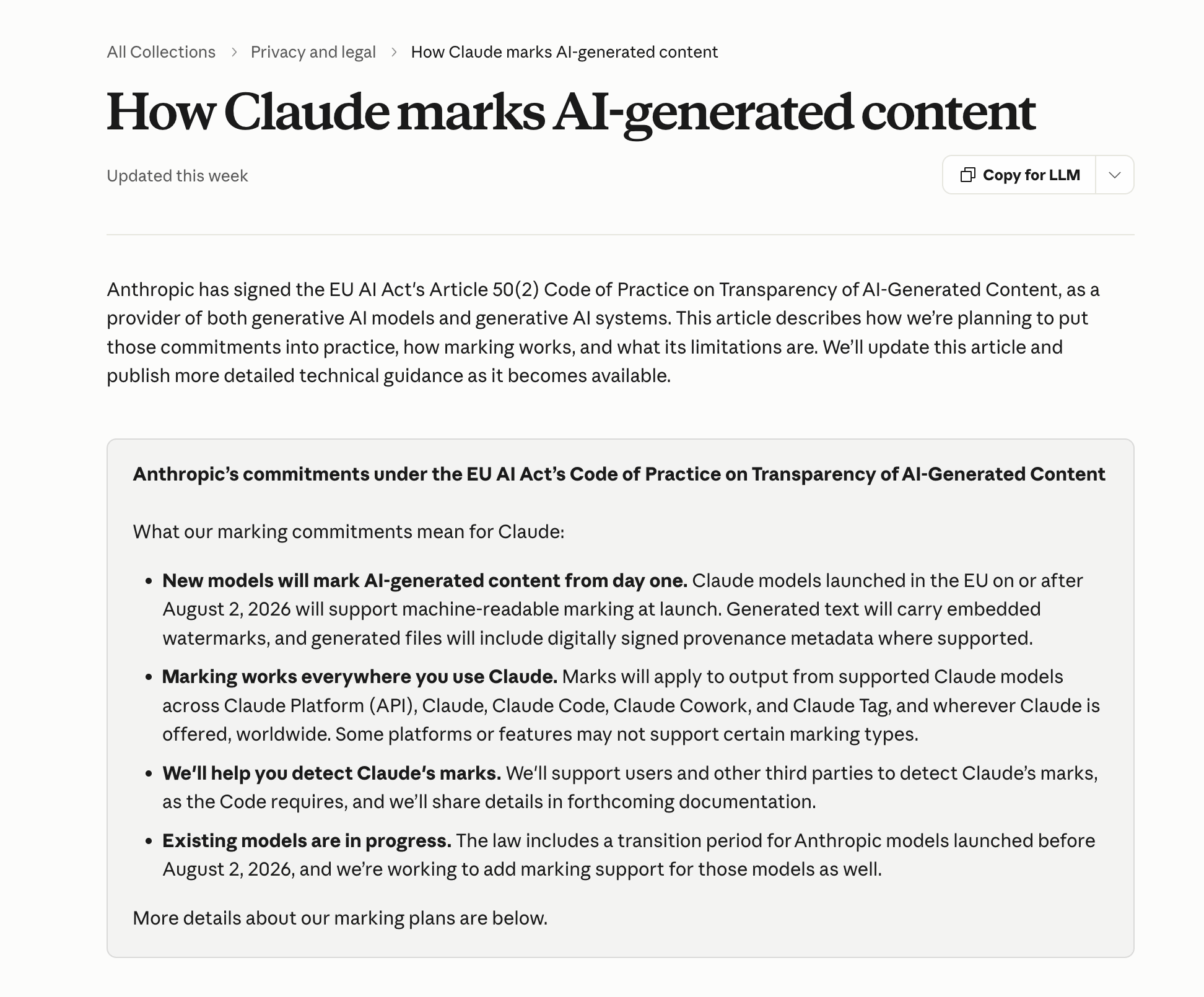
Anthropic has begun embedding an invisible, machine-readable watermark into all content generated by its AI model, Claude. This watermark is integrated directly into the text, ensuring its persistence through copy-and-paste actions and applying to every version of Claude deployed worldwide. The move is primarily a compliance measure with new European Union regulations, specifically Article 50 of the EU AI Act, which mandates that providers of generative AI systems mark their output in a machine-readable format. This regulation became applicable on August 2, 2026.
The embedded watermark signifies that content "may have been processed by Claude," according to Anthropic’s official documentation. This distinction is crucial; it indicates Claude’s involvement in the content generation pipeline, not necessarily that the AI was the sole author. For instance, if a user pastes their own draft into Claude for grammatical corrections, translation, or summarization, the resulting output may carry the watermark. Anthropic also clarifies that the absence of a watermark does not definitively prove content is human-generated. Watermarks can go undetected in short passages, heavily rewritten text, or when file format conversions strip associated metadata.
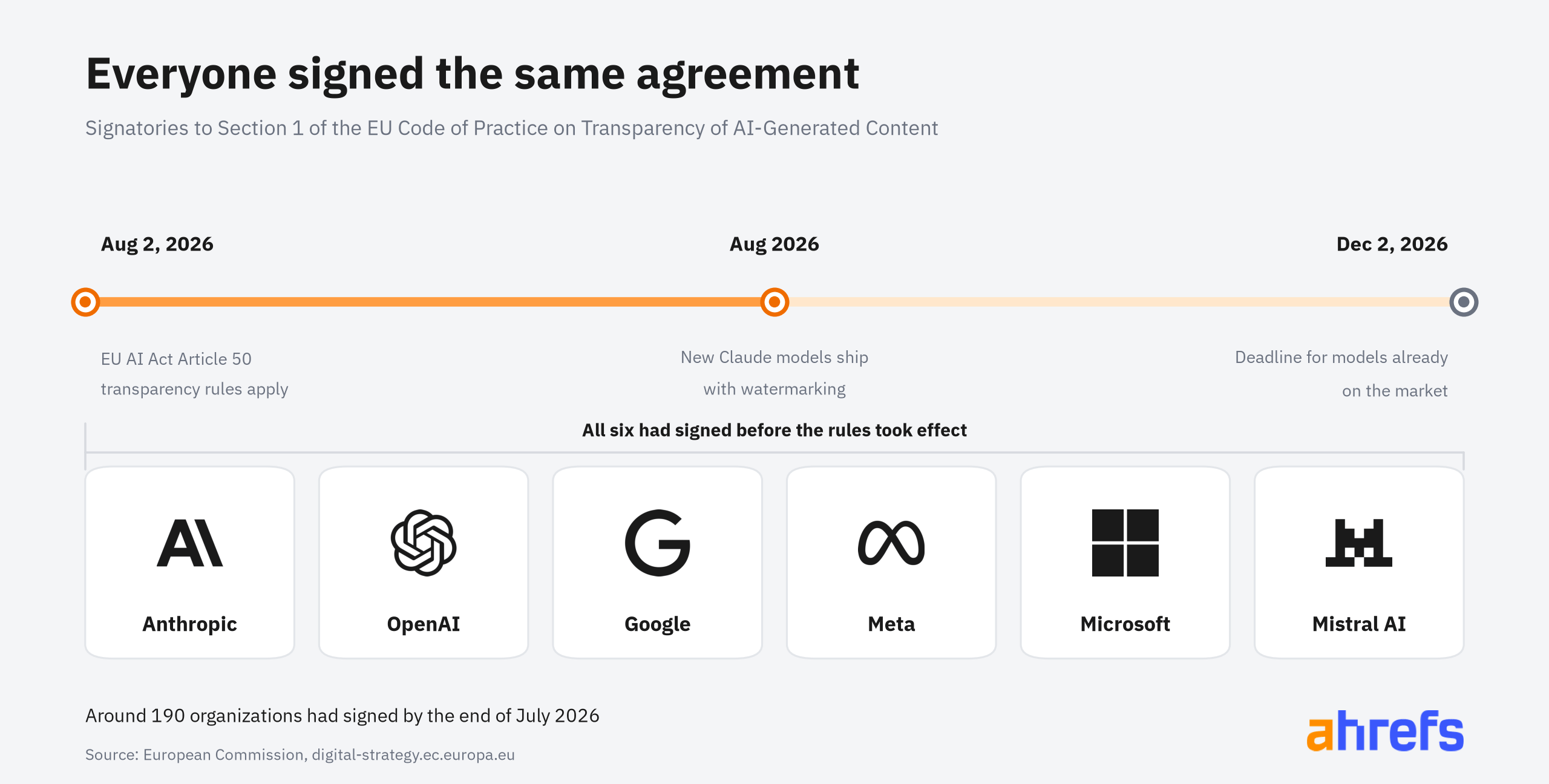
The implementation by Anthropic positions them as the first major AI provider to comply with the EU mandate, drawing significant media attention. However, this is a trend that will soon encompass all major AI companies. OpenAI and Google are expected to follow suit within months, having already committed to similar obligations under the EU AI Act. This means that switching to a different AI model will not necessarily circumvent the eventual implementation of watermarking across the industry.
Beyond content marking, Article 50(4) of the EU AI Act imposes a second obligation on publishers. It requires disclosure when AI-generated text is published to inform the public on matters of public interest. However, the European Commission’s guidance clarifies that this requirement does not apply if the text has undergone human review or editorial control, and a natural or legal person holds editorial responsibility for the publication.
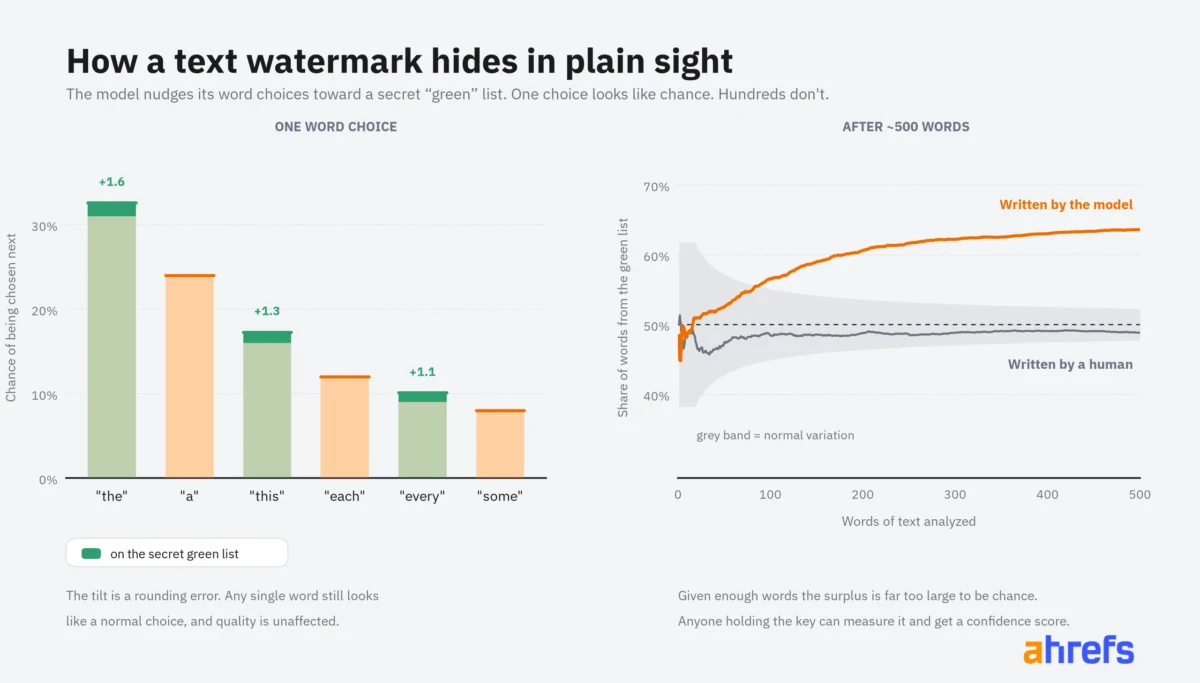
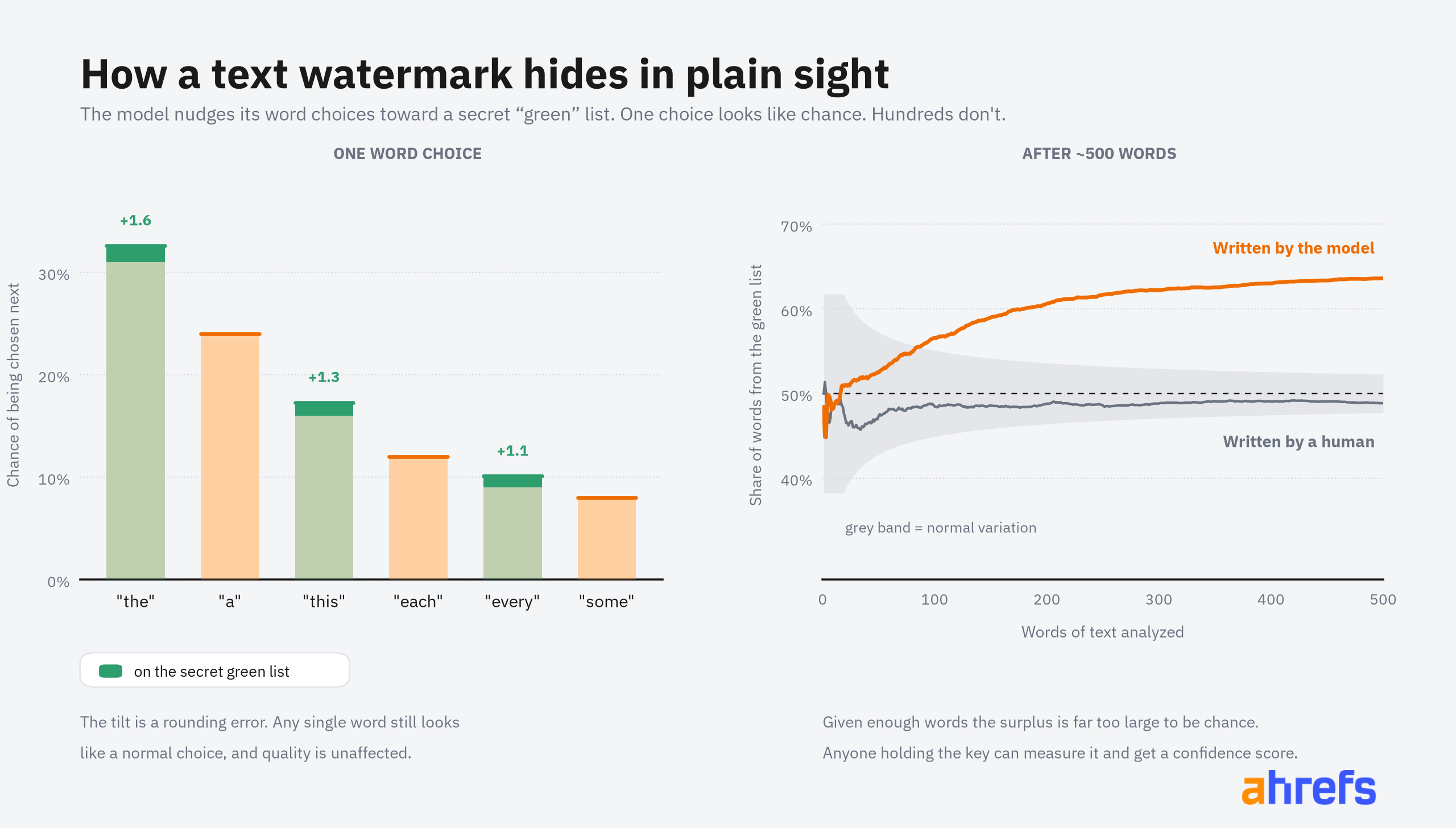
The technical mechanism behind this watermarking involves subtle nudges in the AI model’s word choices. When a Large Language Model (LLM) generates text, it assigns probabilities to potential next "tokens" (words or parts of words). Watermarking subtly influences these probabilities, promoting the use of tokens from a predetermined "secret list." While individual word choices appear natural, the aggregate pattern over a substantial amount of text becomes statistically detectable. This method is analogous to a slightly biased coin; a few flips may show no anomaly, but thousands of flips will reveal a discernible pattern. A detector, armed with the "key" or detection method, can then analyze the text and generate a confidence score indicating the likelihood of AI origin.
However, the effectiveness of this watermarking technology has inherent limitations. Short texts may not contain sufficient statistical signal for reliable detection. Significant rewriting or translation can degrade the watermark, with confidence scores dropping sharply, as noted by Google DeepMind in their research on watermarking AI-generated text and video. File metadata can also be lost through re-saving. Crucially, detection currently requires access to the specific method and key held by the provider, such as Anthropic, as their detection methodologies have not yet been publicly released.
The implications for search engine rankings, particularly for Google, are likely to be minimal. Google has maintained an agnostic stance regarding the use of AI in content creation, focusing instead on the quality and helpfulness of the content itself. Research indicates that AI-generated content, even when entirely produced by AI, can and does achieve top rankings in Google search results. While there is a slight trend of AI content becoming less prevalent at the very top of search engine results pages (SERPs), the gradient is gentle, with no sharp drop-off observed. Similarly, indexing rates for AI-generated content do not show a significant disadvantage compared to content with lower AI involvement.
The possibility of AI content detection existed even before the introduction of watermarking. If Google intended to penalize content solely based on its AI origin, such a policy would likely be evident in ranking data, which currently shows no such evidence. Instead, Google’s established practice is to penalize "bad content," which often, but not always, coincides with poorly executed AI-generated content. Therefore, it is improbable that watermarking will become a direct ranking factor.
The primary utility of these watermarks is expected to be in contractual and legal contexts. For instance, agencies that have agreed to clauses prohibiting AI-generated content or clients who have paid for human-written material may use watermarking to verify the origin of content. Even in these scenarios, a detected mark only confirms Claude’s involvement, and its absence provides very little definitive information.
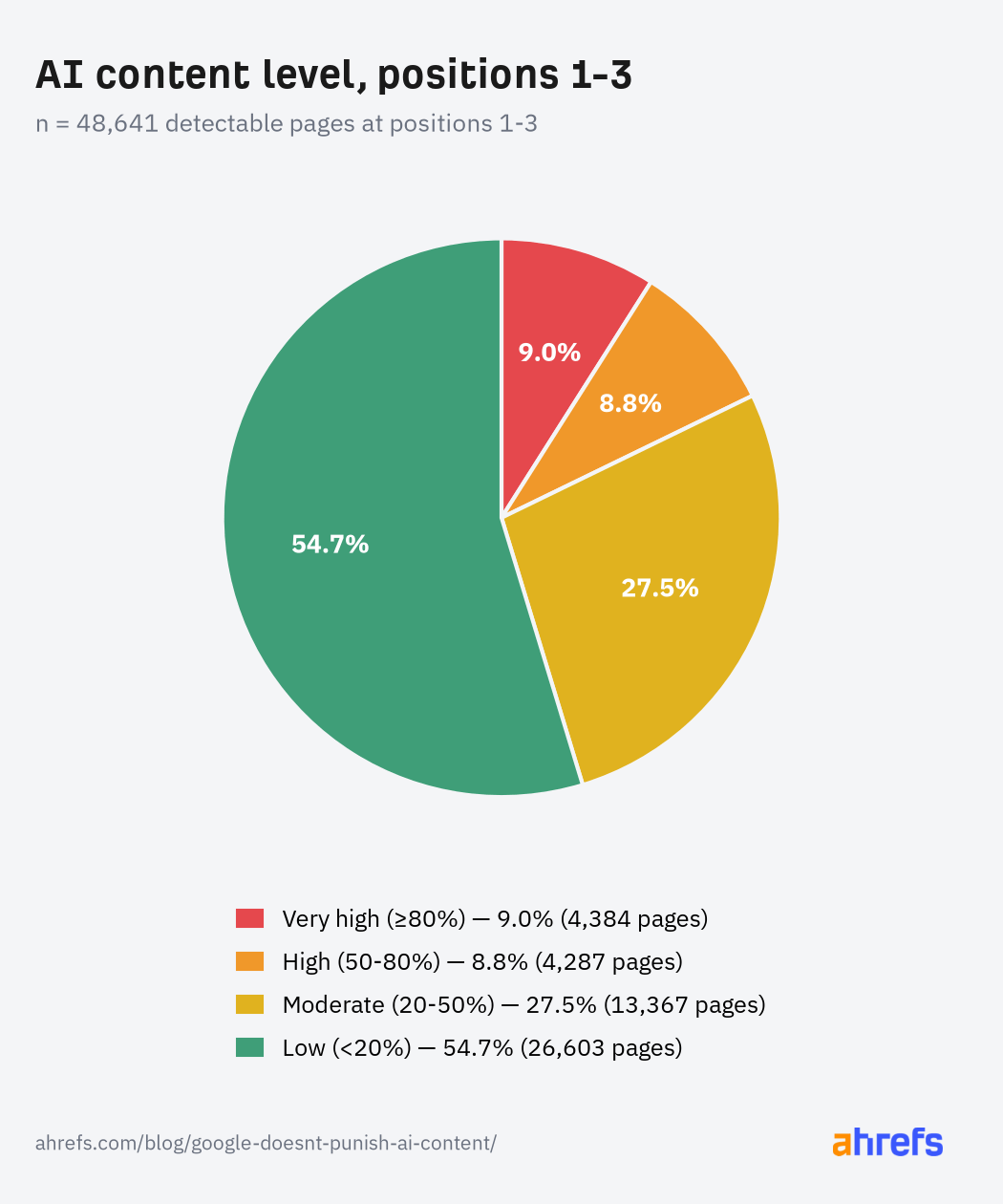
Ahrefs offers a tool within its Site Explorer that rates the AI content level of web pages across entire domains without requiring provider cooperation or a secret key, demonstrating a method for assessing AI content prevalence that bypasses the limitations of provider-specific watermarking.
In conclusion, the widespread adoption of watermarking by major AI providers is driven by regulatory deadlines. The expectation is that this technology will not fundamentally alter search engine dynamics, as platforms like Google continue to prioritize content quality over its generative origin. The core principle remains that AI is a tool, and its effective use in content creation is paramount, rather than the mere fact of its involvement. The challenge lies in using AI to produce content that is superior to, or at least on par with, traditional human-generated content, rather than creating inferior output.