 11

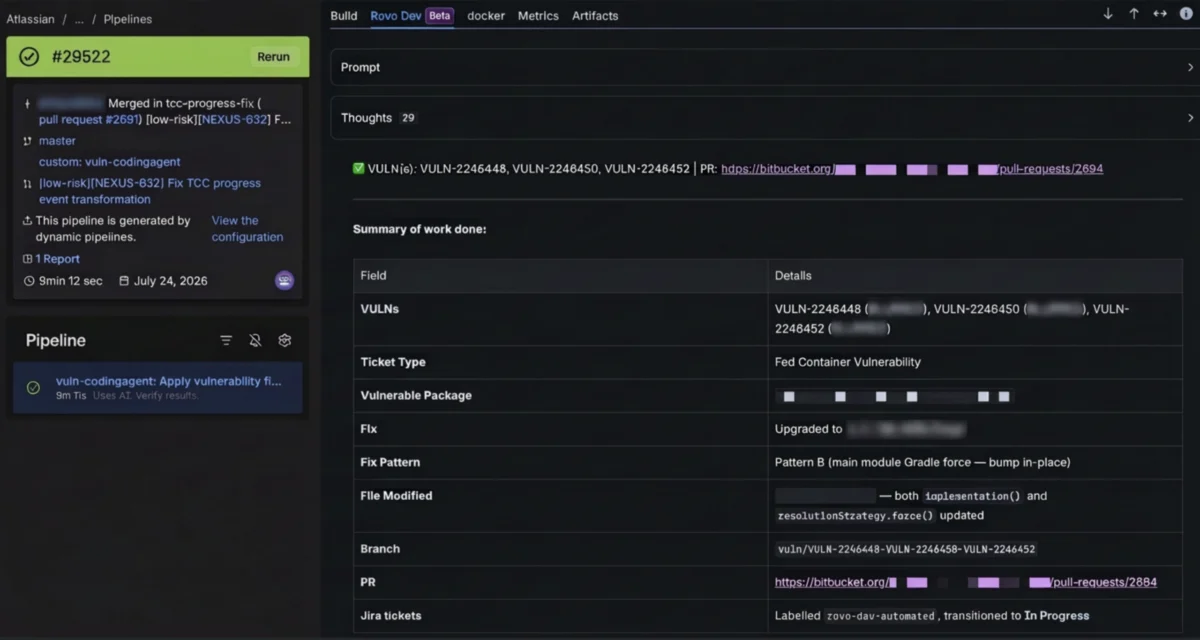
In a significant shift toward autonomous software engineering, Atlassian has detailed a new framework designed to eliminate the "interruption tax" that plagues modern development teams. This system leverages Bitbucket Agentic Pipelines, Rovo Dev, and the Atlassian Model Context Protocol (MCP) to automate the predictable, repetitive tasks that consume significant engineering resources. The primary focus of this implementation is the continuous remediation of security vulnerabilities—a task that is traditionally high-volume and process-heavy but low in creative demand.
Every engineering department operates under a burden of work that, while critical for compliance and security, offers little intellectual stimulation for developers. This work follows a rigid, predictable sequence: identifying the issue, understanding the delta between current and patched versions, implementing a fix, verifying the build, and closing the associated ticket. When multiplied across hundreds of teams and thousands of vulnerabilities, this "interruption tax" results in massive productivity losses due to constant context-switching and the overhead of sprint planning and bookkeeping.

To address this, Atlassian has architected an autonomous system comprising three distinct agentic components: a Dispatcher, a Coding Agent, and a Closer. This ecosystem operates within the standard Atlassian platform, specifically utilizing Bitbucket Cloud with Agentic Pipelines. Unlike traditional automation, which follows hard-coded scripts, these agents use Large Language Models (LLMs) to make decisions based on codebase-specific knowledge and real-time environment data.
The technological foundation of this system rests on the integration of Bitbucket Agentic Pipelines with Rovo Dev. This configuration allows each agent to be defined as a versioned pipeline step. The prompts, configurations, and specialized "skills" are stored directly within the application repository, ensuring that the AI’s instructions are treated with the same rigor as source code. This "prompts-as-code" approach allows for version control, peer review, and continuous improvement of the automation logic.
The repository structure for such a system typically includes a .rovodev directory containing markdown files for each agent’s instructions, a pipeline-config.yml for model and tool permissions, and a skills directory. The configuration file is particularly critical as it defines the operating boundaries for the AI. It specifies the model—such as Claude 3.5 Sonnet—and allowlists specific tools through the Atlassian MCP. These tools might include the ability to search Jira issues, transition tickets, or create pull requests. By explicitly defining these permissions, organizations maintain a high degree of security and control over what the autonomous agents can execute within their infrastructure.

The first stage of the workflow is managed by the Dispatcher. This agent is not a simple trigger but a decision-making entity. Triggered by a scheduled Jira Automation rule, the Dispatcher performs four critical functions before any code is modified. First, it fetches eligible work items from the security backlog. Second, it classifies which items are suitable for automation versus those requiring human judgment. Third, it deduplicates and batches items; for instance, if multiple vulnerabilities can be solved by a single dependency upgrade, the Dispatcher groups them to avoid redundant pull requests. Finally, it dispatches a specific run for the Coding Agent and reports the outcome of its triage. This ensures transparency, as every item in the backlog is accounted for as either dispatched, grouped, or flagged for manual intervention.
Once the Dispatcher has identified a batch of work, the Coding Agent takes over. Its primary objective is to apply the necessary fix and open a pull request. The instructions for this agent are intentionally streamlined because the codebase-specific domain knowledge is encapsulated in a "skill." This skill acts as a structured instruction set that encodes how vulnerabilities are handled within a specific technical environment.
The "fix-vulnerability" skill operates like a complex decision tree. It analyzes where the vulnerability resides—whether it is in a direct application dependency, a transitive dependency, a platform baseline, or a container image. Each scenario has a predefined strategy. For example, if a vulnerability is found in a transitive dependency, the skill determines if upgrading the parent package will resolve it or if an explicit override is required. If the vulnerability is in a platform-managed component that the team cannot modify, the agent is instructed to close the item and flag it for the platform team.

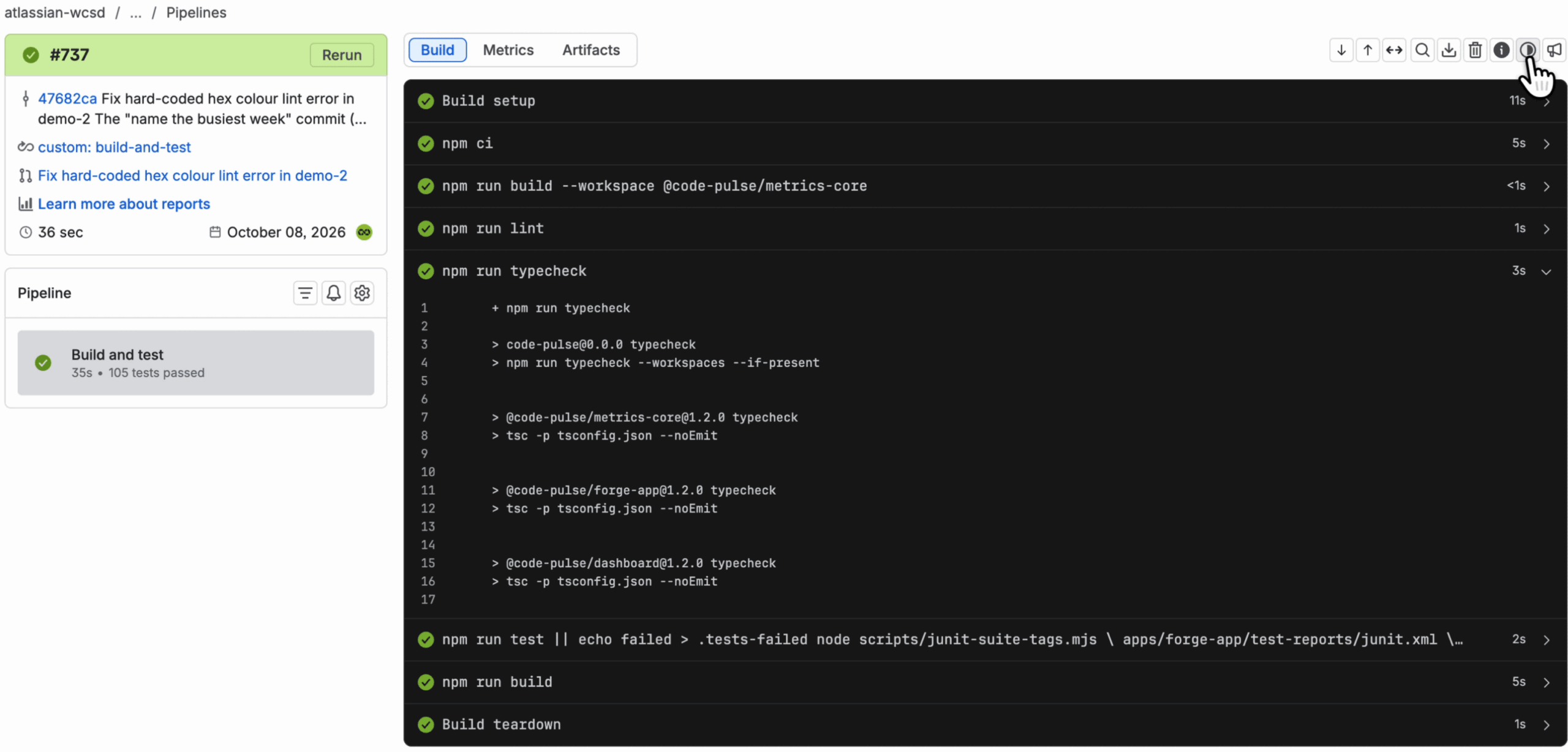
Crucially, the Coding Agent is bound by a "no green build, no PR" rule. After applying a fix, the agent must confirm that the dependency resolves to the patched version and run the full suite of automated tests. A pull request is only generated if the build is successful. This pull request is automatically titled, described, and linked to the original vulnerability ticket, making it ready for a human engineer to review and merge.
The final stage of the autonomous loop is the Closer. Triggered after a deployment, the Closer answers the ultimate question: is the fix actually live in production? It verifies that the corresponding change was merged and confirms that the deployed build includes the fix before transitioning the Jira item to its final "Closed" state. The workflow is designed to be idempotent, meaning it can be re-run safely without creating duplicate actions or closing items prematurely. This design ensures that the system state remains the single source of truth.
The impact of this system on the daily lives of engineers is profound. In a traditional "Before" scenario, an engineer is notified of a ticket approaching its SLA, finds space in a sprint, investigates the package, makes the change, runs tests, opens a PR, and eventually returns to close the ticket after deployment. In the "After" scenario powered by Atlassian’s agentic system, the engineer simply receives a pull request in their inbox. The Dispatcher runs daily before working hours, meaning that when the team starts their day, fixes are already waiting for review. The engineer’s role shifts from the "execution layer" to the "decision layer." They no longer perform the labor; they provide the final verification and approval.

Results from initial implementations show that the system can operate with zero engineer effort beyond the pull request review. Atlassian reports high first-run merge rates, with the system capable of running 24/7. This allows backlogs to drain continuously rather than accumulating until a dedicated "security sprint" is required.
To achieve success with this model, Atlassian emphasizes several best practices. First, the prompts must be treated as the system itself. Investing in high-quality, versioned prompts that are stored alongside the code is essential. Second, organizations must avoid generic prompts. An AI agent must understand the specific frameworks, conventions, and dependency patterns of the codebase it is working on. Third, the system must be iterated upon based on real-world runs. Failure logs should be used to tighten the logic of the "skills" over time.
Furthermore, the use of dedicated service accounts is recommended. Attributing pull requests to a bot rather than a personal identity removes ownership ambiguity and makes machine-generated changes instantly recognizable in the development feed. This clear separation of human and machine contribution history is vital for long-term repository maintenance and auditing.

While security vulnerability remediation is the primary use case presented, the implications of this technology extend much further. Any repetitive, scheduled task with a clear definition of success is a candidate for this type of autopilot. Whether it is library migrations, documentation updates, or routine environment configuration changes, the integration of Bitbucket Agentic Pipelines and Rovo Dev provides a blueprint for the future of autonomous engineering operations. Atlassian’s framework suggests that the transition to an agentic workflow is not a question of possibility, but a strategic decision of which manual processes an organization chooses to automate first.