 11
 1
 2
 3
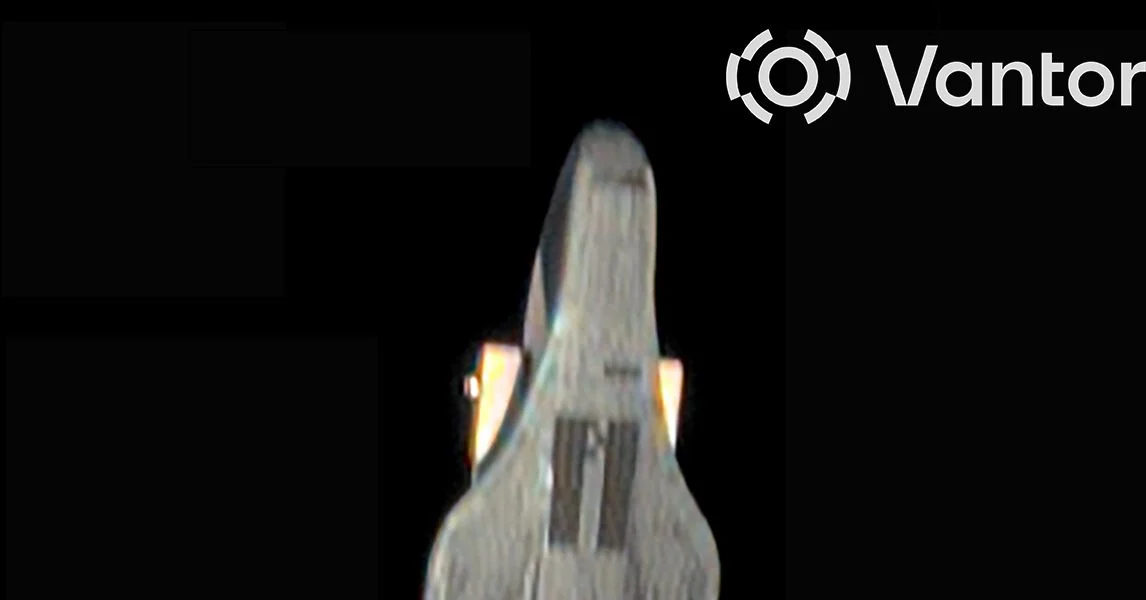
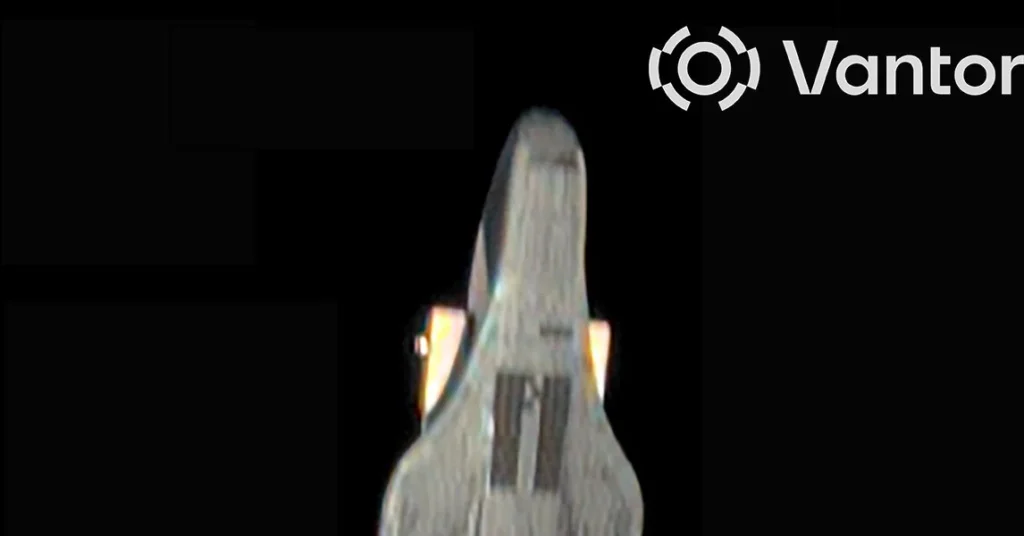
A winged Chinese spacecraft, bearing a strong resemblance to the US military’s X-37B spaceplane, was photographed in orbit in 2024 by a passing US-owned commercial satellite, with the image now publicly released. This significant development provides the clearest view yet of China’s secretive reusable experimental spacecraft, highlighting its advanced capabilities and the intensifying competition in orbital technologies.
The newly released photograph depicts the Chinese spaceplane with distinct delta wings, indicating its design for atmospheric reentry and controlled runway landing. Visible features also include payload bay doors, suggesting a capacity to deploy or retrieve objects in space, a dark heat shield essential for surviving the extreme temperatures of reentry, and a rear-mounted service module equipped with power-generating solar arrays. These design elements collectively point to a vehicle whose architecture is, to a remarkable degree, a close copy of the X-37B spaceplane currently operated by the US Space Force. The striking similarities underscore China’s rapid advancements in space technology and its apparent strategy of developing systems mirroring those of leading space powers.
The crucial image was captured by a commercial imaging satellite belonging to a company known as Vantor, which was identified as Maxar in 2024. Maxar is a prominent provider of high-resolution reconnaissance imagery to various clients, including the US military and US intelligence agencies, offering detailed views of locations across the globe. Critically, these advanced Earth-imaging satellites possess the capability to reorient their powerful telescopes to observe objects in space, a practice known as non-Earth imaging (NEI). This emerging field allows for the close inspection of other satellites and spacecraft, even those operating in high-speed, intersecting orbits.
While lower-resolution views offering a general outline of the Chinese spaceplane’s shape had been available previously, the full-resolution image remained unreleased until recently. A US Space Force official initially revealed Maxar’s observation at a 2024 conference held in South Korea. However, the Pentagon withheld the high-fidelity photograph from public dissemination until Monday, when it was included in an unclassified assessment of threats to the United States in space published by the Defense Intelligence Agency (DIA). The inclusion of this image in such a high-level report signifies the strategic importance the US places on understanding China’s spaceplane program.
Catch and Release: Advanced Orbital Operations
The DIA report, while confirming the visual evidence, did not disclose extensive new details regarding the specific functions or mission profiles of the Chinese spaceplane in orbit. China has launched four spaceplane missions since 2020, demonstrating increasing endurance with durations reaching up to nine months. The fourth and latest mission remains in orbit, having commenced in February. Public information does not clarify whether China possesses multiple such spaceplanes or if it reuses a single vehicle. This lack of transparency contrasts with some aspects of the US X-37B program, contributing to the perceived mystery and potential strategic implications.
For comparison, the US Space Force operates two X-37B spaceplanes in rotation. These vehicles have executed eight missions to date, with the longest mission extending for two-and-a-half years from launch to landing. US officials have, at times, released photographs of the X-37B vehicles and published limited information about their design, dimensions, and a handful of the unclassified experiments conducted in orbit. However, a significant portion of the X-37B’s activities and capabilities in space remains classified, fueling speculation about its military applications and role in advanced space operations.
Like its American counterpart, China’s spaceplane begins its mission by launching inside the payload shroud of a conventional rocket. Once in orbit, it functions as an autonomous satellite. The spaceplane is designed to fly as a miniature, unpiloted version of NASA’s iconic Space Shuttle, capable of reentering the atmosphere and executing an autonomous land runway landing at the conclusion of each mission. Following its return, ground teams are responsible for refurbishing the vehicle, preparing it for subsequent flights, which is a hallmark of reusable space systems.
The DIA report emphasizes that the "enhanced maneuverability" of spaceplanes makes them "more suitable for certain missions than traditional satellites," hinting at their versatility and strategic advantages. So far, the Chinese spaceplane has been observed operating exclusively in low-Earth orbit (LEO), typically at altitudes of a few hundred miles. In contrast, one of the US Space Force’s X-37B flights demonstrated an ability to soar to a much higher altitude of over 24,000 miles before utilizing aerobraking techniques to set up for its eventual reentry and landing, showcasing a broader operational envelope.
Beyond simply flying in orbit, spaceplanes like China’s and the X-37B possess the capability to deploy small satellites from their cargo bays, effectively acting as orbital motherships or testbeds for new technologies. More recently, China demonstrated an even more sophisticated capability: the ability to "catch" an object in orbit, possibly utilizing a robotic arm. According to an analysis of open-source orbital tracking data by astrophysicist Jonathan McDowell, the vehicle currently in space released a sub-satellite in June and successfully recaptured it in July. This complex maneuver was then repeated in August and September, indicating a deliberate and repeatable operational capability. Such "catch and release" demonstrations have significant implications for on-orbit servicing, satellite inspection, debris removal, or even, potentially, the hostile capture of other spacecraft.
The Mystery of the Shenlong and Non-Earth Imaging
The official designation of the Chinese spaceplane remains shrouded in mystery. In Western publications, it is frequently referred to as "Shenlong," a name that emerged from reports in the 2000s concerning China’s development of a robotic spaceplane. However, Chinese state media consistently refer to the vehicle as Chongfu Shiyong Shiyan Hangtian Qi, or CSSHQ, which translates to "reusable experimental spacecraft," according to a fact sheet published by the Secure World Foundation. This ambiguity surrounding its name adds to the secretive nature of the program.
The DIA’s report did not provide specific details regarding the exact circumstances of Maxar’s observation of the Chinese spaceplane, such as the precise timing, geographical location, or the distance at which the image was taken. However, such Earth observations frequently involve cameras pointing at other objects in space as their orbits intersect, a rapidly developing field known as non-Earth imaging (NEI).
NEI capabilities allow commercial operators and government analysts to closely inspect satellites, providing an invaluable tool for intelligence gathering. This is particularly useful for gleaning information about classified or proprietary satellite designs, extending a new avenue for international and corporate espionage into the high frontier of space. This commercial NEI capability is distinct from the recent, deliberate actions of some military spacecraft, such as Russia’s Kosmos 2612, which intentionally maneuvered to approach a US-registered radar imaging satellite earlier this month. Commercial NEI observations, by contrast, typically arise from chance encounters, often occurring at extremely high relative speeds.
Pew-Pew With DEWs: China’s Counterspace Arsenal
The DIA’s comprehensive assessment of space threats also includes an updated overview of China’s pursuit of anti-satellite (ASAT) technology, commonly referred to as "counterspace" weapons. The intelligence agency reported that the Chinese military likely considers directed-energy weapons (DEWs) as "ideal counterspace systems" due to their potential to permanently or temporarily disable an adversary’s satellite without creating space debris, which is a major concern with kinetic ASATs. One potential application for lasers in space, for example, would be to "dazzle" or blind a sensor on an adversary’s satellite, disrupting its intelligence-gathering capabilities.
"China has multiple ground-based laser weapons with varying power levels to disrupt, degrade, or damage satellites in LEO," the DIA stated, indicating a tangible and immediate threat. The report further projected China’s future capabilities: "By the late 2020s, China may field space-based directed energy systems and higher-powered ground-based directed energy systems capable of threatening satellites in higher orbits," signaling a significant escalation in its counterspace ambitions.
Beyond DEWs, the DIA noted China’s testing of ground-based anti-satellite missiles, a more traditional but highly destructive form of counterspace weapon. The report also highlighted the country’s historic demonstration last year of satellite refueling in geosynchronous orbit (GEO), a highly strategic regime approximately 22,000 miles (36,000 kilometers) over the equator. This achievement, unmatched by any other country above LEO, signifies China’s capability for sustained operations and longevity in critical orbital areas. Furthermore, China has tested a robotic arm that could potentially snag a spacecraft out of orbit and now operates a growing fleet of satellites, known as TJS, which routinely approach foreign spacecraft, underscoring its sophisticated on-orbit maneuvering and proximity operations capabilities.
Global Militarization of Space
The escalating competition in space is not limited to China. The US Space Force also maintains a constellation of inspector satellites in geosynchronous orbit and recently procured additional units designed for refueling, thereby overcoming traditional maneuverability limitations and extending their operational lifespan. In a landmark disclosure last month, Air Force Secretary Troy Meink confirmed that the Pentagon has "fielded weapons in space," making the United States the first nation to publicly acknowledge the possession of orbital weapons. This declaration marks a significant and unprecedented step in the overt militarization of space.
Russia, too, is actively pursuing its own orbital combat program, which, according to US intelligence officials, includes an ambition to deploy a nuclear weapon in space—a development that would have profound and destabilizing global implications. A more conventional Russian weapons system, known as Nivelir, is designed to fire projectiles from one satellite to physically smash into another. The Russian military simulated an attack using the Nivelir system in 2020, demonstrating a kinetic anti-satellite capability. More recently, in April, Russia launched a fleet of small satellites into an orbit close to a commercial radar remote sensing satellite owned by ICEYE, which provides reconnaissance imagery to Ukraine. One of these Russian satellites maneuvered within "tens of meters" of the ICEYE satellite earlier this month before retreating, US officials reported, illustrating a concerning pattern of close-proximity operations and potential harassment in orbit.
The revelations surrounding China’s spaceplane, coupled with the escalating counterspace capabilities of multiple nations, underscore a rapidly evolving and increasingly militarized space domain.