11

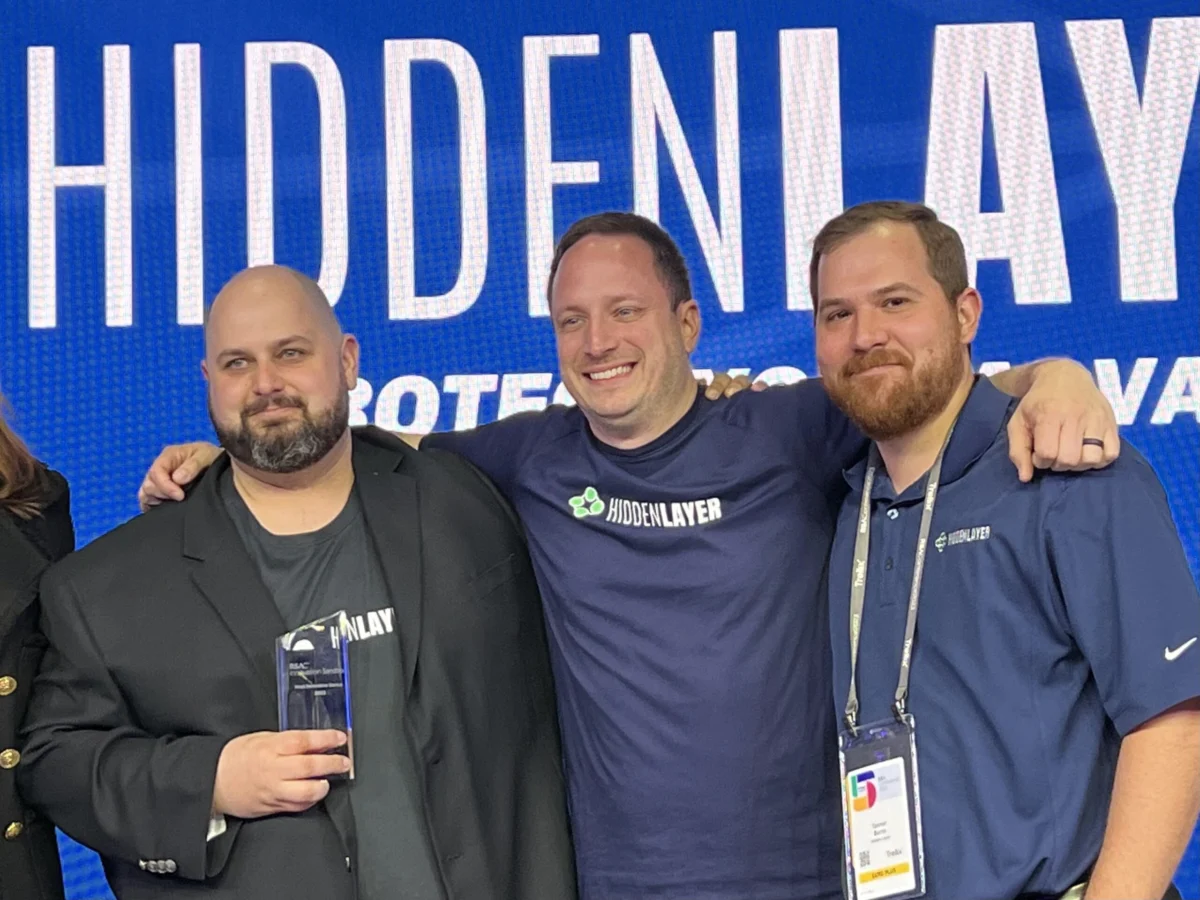
Three years ago, when AI security startup HiddenLayer successfully closed its $50 million Series A funding round, a significant question loomed over the nascent sector: would the anticipated AI threats the company aimed to counter materialize with enough frequency and scale to establish a viable market? As noted by former TechCrunch colleague Kyle Wiggers at the time, concrete, widespread examples of attacks targeting AI systems were notably scarce, leading to skepticism about the immediate necessity of specialized AI defense mechanisms.
The landscape has undergone a dramatic transformation in a remarkably short period. What was once a speculative concern has rapidly evolved into an undeniable imperative. Today, cybersecurity firms are engaged in a frantic race to develop and deploy products capable of monitoring not only AI agents but also the intricate ecosystem of tools and add-ons they leverage. While headline-grabbing exploits of AI agents remain relatively uncommon, the inherent risk of these sophisticated systems malfunctioning or being maliciously manipulated during production is unequivocally real. Microsoft, for instance, has highlighted the concerning potential for "prompts to become shells," leading to remote code execution (RCE) vulnerabilities within AI agent frameworks. This tangible threat has fueled an explosive growth in the market for specialized tools designed to preempt and mitigate such incidents. Industry analyst firm Gartner estimates that global spending on products dedicated to securing AI tools will reach an impressive $2.83 billion this year alone, marking an 83% surge compared to 2025. The firm further projects this spending to accelerate, approaching nearly $4.78 billion by next year, underscoring the urgent and rapidly expanding demand for robust AI security solutions.
HiddenLayer, a pivotal player in this burgeoning market, has expertly capitalized on this profound shift in the threat landscape. The company specializes in developing sophisticated tools designed to safeguard AI models, agents, and workflows against a broad spectrum of threats, including adversarial attacks, inherent vulnerabilities, and malicious code injections. Chris Sestito, co-founder and CEO of HiddenLayer, revealed to TechCrunch that the Austin-based startup has experienced exceptional growth, with its annual recurring revenue (ARR) skyrocketing more than tenfold over the past year. While he refrained from disclosing an exact figure, Sestito confirmed that the company’s ARR now stands in the "tens of millions" of dollars, with over 90% of this substantial growth attributed to new customer acquisitions within the last year.
The company’s client base reflects the critical importance of AI security across diverse sectors. Financial services institutions and large technology companies heavily invested in building and deploying AI products currently represent HiddenLayer’s largest verticals. Beyond the commercial sector, HiddenLayer has also secured significant contracts with governmental entities, including the Department of Defense and various intelligence community agencies, underscoring the strategic national security implications of protecting advanced AI systems. Among its impressive roster of clients, Sestito hinted at a "leading frontier model provider" boasting "more than 700 million weekly users." While unconfirmed, this description strongly suggests a partnership with major AI developers such as OpenAI or Anthropic, indicating HiddenLayer’s role in securing some of the most widely used and foundational AI models globally.
To sustain and accelerate this remarkable momentum, HiddenLayer has successfully concluded a Series B funding round, securing a substantial $100 million. The round was spearheaded by Delta-v Capital, with significant participation from a distinguished group of investors including Ten Eleven Ventures, Morgan Stanley, Microsoft’s M12 corporate venture arm, Booz Allen Hamilton, and other strategic partners. This significant capital injection is poised to fuel the company’s ambitious expansion plans and continued innovation.
While the core offerings of HiddenLayer remain consistent with those it provided in 2023, Sestito emphasized that the most significant adaptation has been the strategic extension of its existing product suite. The company’s foundational products, encompassing discovery, runtime protection, attack simulation, and supply chain security, have been meticulously enhanced to specifically address emerging and increasingly prevalent threats such as prompt injection, agent manipulation, and malicious tool use within AI systems. Sestito clarified the company’s strategic approach, stating, "Inference is still inference. So whether it’s on a traditional machine learning model, whether it’s Gen AI, whether it’s an agentic work stream, a lot of our technology still applied. So really, we haven’t had to pivot, but we’ve had to grow our scope — from traditional modeling to Gen AI to agentic." This statement highlights HiddenLayer’s ability to leverage its core technological expertise to adapt to the evolving landscape of AI deployment without necessitating a complete overhaul of its underlying architecture.
Sestito particularly stressed the ascendance of runtime security as a paramount priority, especially as AI deployments become increasingly ubiquitous across various business operations. He drew a compelling analogy, likening HiddenLayer’s runtime security solutions for AI to traditional endpoint detection and response (EDR) solutions for conventional IT infrastructure. This comparison underscores the critical need for continuous monitoring and protection of AI systems during their operational phase, mirroring the proactive defense strategies employed for endpoints in enterprise networks.
The company’s latest product developments are a direct reflection of this heightened focus on runtime protection and the evolving threat landscape. Sestito highlighted a significant new vector for attackers: the exploitation of open-source models. He elaborated on HiddenLayer’s proactive defense mechanisms: "We parse and scan about 50 different AI file frameworks to make sure that, especially in the case of open-source, open-weight models, that the tool you’re working with is the one you believe it to be, and it’s the one it’s purporting to be. We’re looking at things like models purporting to be one thing, but they’re another — hidden models inside of models." This sophisticated scanning capability is crucial for verifying the integrity and authenticity of open-source AI models, mitigating risks such as trojaned models, backdoors, or embedded malicious code that could compromise systems or exfiltrate sensitive data.
The substantial $100 million Series B funding will be strategically deployed to bolster HiddenLayer’s trajectory in this direction. A primary focus will be on significantly expanding its sales and distribution capabilities, enabling the company to reach a wider global customer base and solidify its market presence. Concurrently, the investment will support the continued expansion of its engineering and research divisions, fostering ongoing innovation and the development of next-generation AI security solutions. Geographically, HiddenLayer has ambitious plans for international expansion, specifically targeting the European and EMEA markets, recognizing the global demand for advanced AI protection.
Despite its impressive growth and significant funding, HiddenLayer operates within an increasingly competitive and dynamic market. The company may find itself needing to tap further into its substantial capital reserves as the industry landscape continues to evolve. Large, established cybersecurity behemoths like Cisco, Palo Alto Networks, and Check Point frequently opt for strategic acquisitions rather than internal development when it comes to specialized technologies like AI security, posing a potential competitive challenge or acquisition opportunity. Furthermore, a new generation of well-funded startups, such as Noma and Zenity, have also raised substantial capital—each exceeding $100 million—to address adjacent or overlapping areas within the burgeoning AI security space, intensifying the competitive pressure.
Sestito acknowledged the potential for certain aspects of his company’s AI security products to eventually be integrated or "bundled" into the broader platforms offered by major AI infrastructure providers like Microsoft, OpenAI, and AWS. However, he articulated a clear distinction, expressing his expectation that the future evolution of AI infrastructure will predominantly lean towards governance features, such as discovery, identity management, and policy controls, rather than the highly specialized, active threat protection tools that HiddenLayer develops.
For the immediate future, Sestito stated HiddenLayer’s core mission is to "scale vertically alongside artificial intelligence," adapting and expanding its offerings in direct response to the rapid advancements and deployment of AI technologies. Ultimately, the company harbors ambitions to expand horizontally, venturing into broader segments of the cybersecurity landscape that are increasingly interdependent on AI. This is an ambitious long-term objective. However, the immediate challenge for HiddenLayer is to definitively prove its capacity to transform its current significant head start and technological leadership into an enduring, sustainable business before the rest of the industry fully catches up and the market matures further.