 11

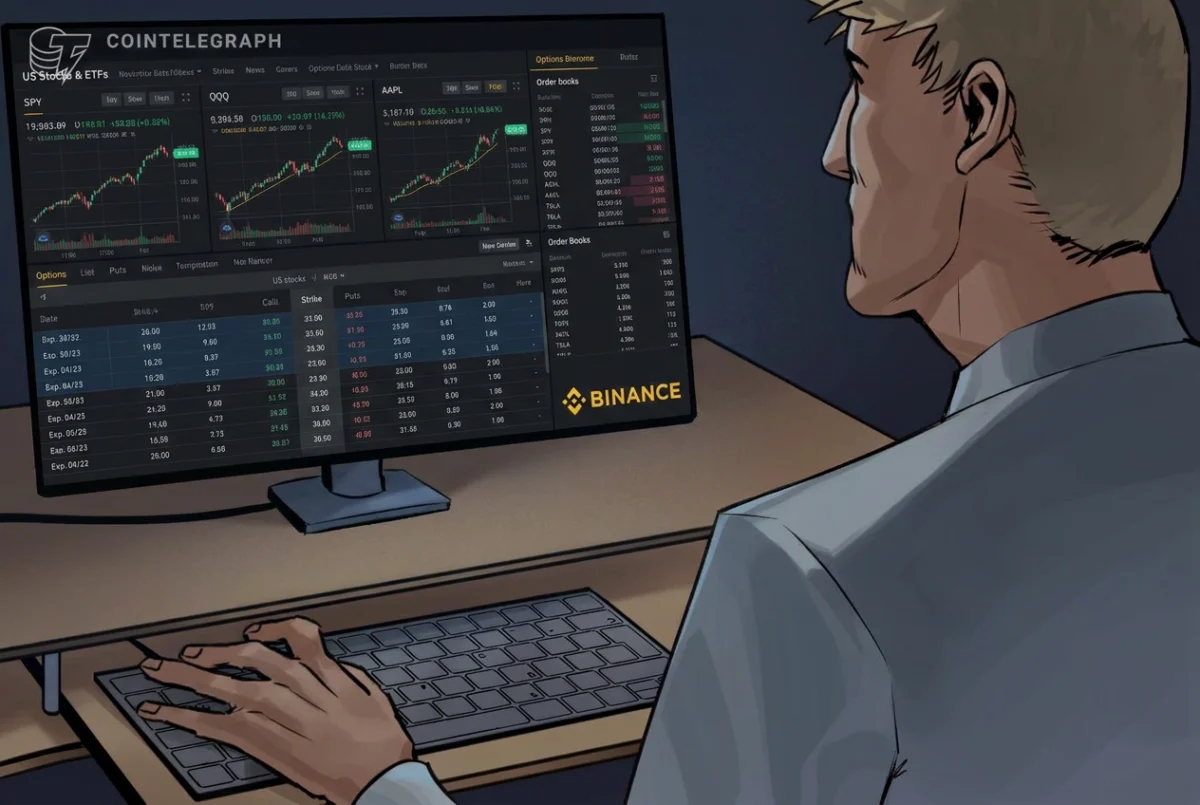
Binance, a leading cryptocurrency exchange, is significantly deepening its integration with traditional finance markets by launching options trading on over 1,000 U.S. stocks and exchange-traded funds (ETFs). This new offering is exclusively available to eligible users located outside of the United States, marking another strategic move in the company’s expansion into the global financial landscape.
The new options trading service is facilitated through Binance’s broker-dealer entity, Nest Trading, which is regulated in Abu Dhabi. The operational backbone of this service involves routing client orders to Alpaca Securities, a U.S.-registered firm responsible for the execution, clearing, settlement, and custody of these trades. This collaboration leverages established financial infrastructure to provide a bridge between the digital asset world and traditional securities.
This latest development builds upon Binance’s existing equities offering, which already encompasses more than 7,000 U.S. stocks and ETFs. The introduction of options trading further diversifies the range of traditional financial products accessible through the Binance platform, catering to a growing demand from its international user base. A key differentiator of these new options, compared to equity-linked perpetual futures, is their physical settlement. This means that when an option is exercised, the user will either receive or deliver the actual underlying shares, mirroring the mechanics of traditional equity options.
Binance attributes this expansion to a notable acceleration in trading activity for traditional financial products on its platform. In August, the volume for TradFi (Traditional Finance) perpetual futures on Binance reached approximately $433 billion. This figure represents a substantial increase, roughly 15 times the total volume recorded in January of the same year, underscoring a surging interest in these asset classes.
The expansion of Binance’s offerings coincides with a broader trend of growth in the tokenized stock market. As cryptocurrency exchanges and traditional brokerages alike venture into offering tokenized equities, the on-chain stock market has experienced a dramatic surge over the past year. Data from RWA.xyz indicates that the distributed value of tokenized stocks has grown to approximately $2.6 billion, a significant leap from roughly $346 million recorded a year prior. Furthermore, monthly transfer volume for tokenized stocks has seen a robust increase of 93% over the preceding 30 days, reaching $25.1 billion. The number of holders for these assets has also surged by an impressive 157%, now standing at nearly 2.5 million.
This burgeoning market for tokenized securities is being fueled by several key players. Last week, Coinbase introduced its B20 tokenized equities to its Base blockchain. This initiative grants eligible non-U.S. users continuous, 24/7 access to on-chain versions of prominent stocks such as Apple, Nvidia, Meta, and Alphabet. A significant advantage of these tokenized assets is their interoperability with decentralized finance (DeFi) protocols, allowing for uses like trading and collateralized borrowing.
Kraken, another major cryptocurrency exchange, also intensified its presence in the equities market in August. The exchange expanded access to over 7,000 U.S.-listed stocks for eligible customers across Europe. These offerings are now positioned alongside Kraken’s expanding suite of tokenized xStocks, further integrating traditional and digital asset trading.
In July, the U.S.-based online brokerage Robinhood launched Robinhood Chain, a new public blockchain mainnet. Alongside this, the company introduced a new generation of Stock Tokens, making them available to eligible users in more than 120 countries. This move by Robinhood signifies a commitment to broadening access to equity investments through blockchain technology.
The growth in tokenized equities and the expansion of traditional finance products on crypto platforms highlight a convergence of financial markets. This trend offers new avenues for investment and trading, particularly for international users seeking broader market access and innovative financial instruments. The underlying technology and regulatory frameworks are evolving to support this integration, paving the way for a more interconnected global financial ecosystem.






