 11

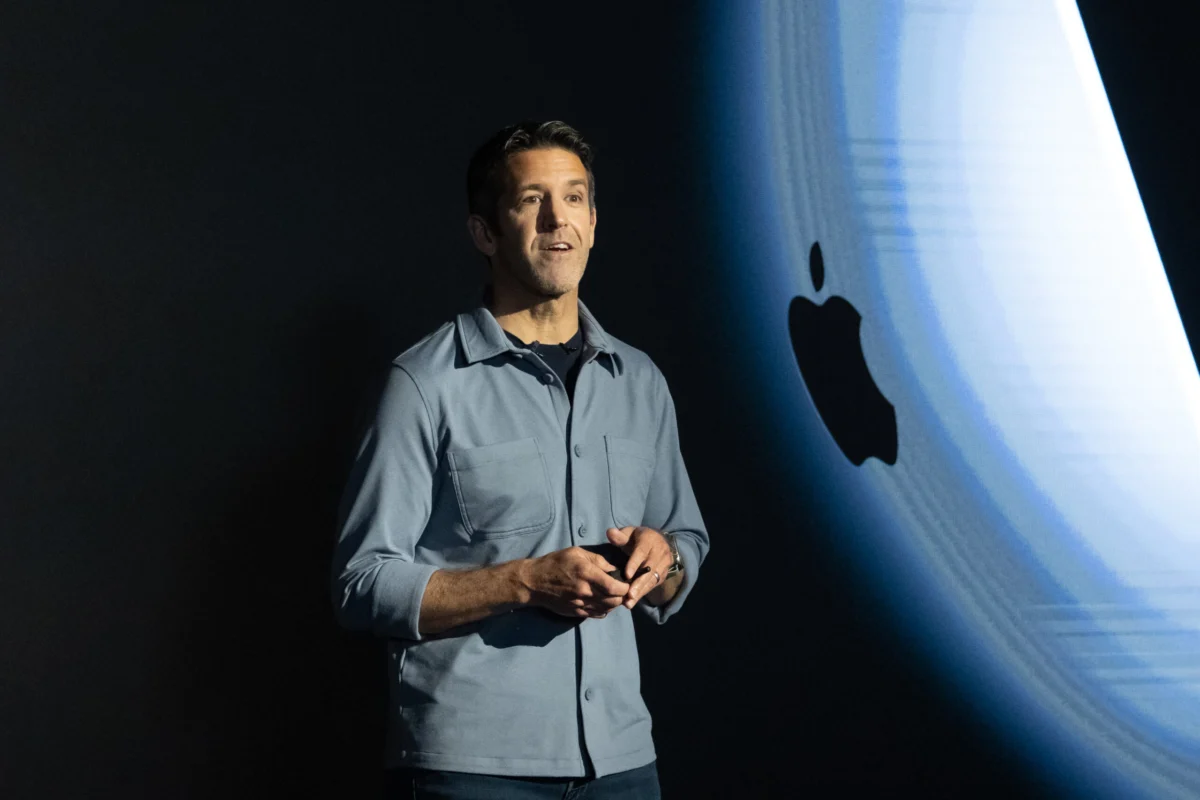
After 15 years at the helm of one of the world’s most valuable and influential companies, Tim Cook has officially handed off the Apple CEO role to John Ternus, the company’s former senior vice president of hardware engineering. The transition, which saw Ternus assume leadership on Tuesday following an announcement in April, marks a significant moment for Apple, ushering in a new era under a leader who, despite his extensive contributions, has largely operated outside the public spotlight.
Ternus steps into the CEO position at a particularly crucial juncture for Apple. The company is on the cusp of its highly anticipated iPhone launch event next week, scheduled for September 9, which will unveil its newest line of hardware to a global audience. This annual event is a cornerstone of Apple’s product cycle and revenue, placing immediate pressure on the new CEO to deliver. Furthermore, Apple is preparing to roll out its new-and-improved Siri AI experience, a critical move in the competitive artificial intelligence landscape. Notably, this enhanced Siri will be powered by Google’s Gemini, highlighting Apple’s strategic partnerships in its pursuit to catch up in the rapidly evolving AI race.
In a parting message to staff on his last day as CEO, Tim Cook expressed profound confidence in his successor. "I take enormous comfort in handing the helm to someone as brilliant and wonderful and capable as John," Cook wrote, emphasizing Ternus’s deep understanding of product development. "Few people understand what it takes to build products that change the world the way John does and I could not be more excited for his leadership." Cook will not be entirely departing from Apple, as he will remain with the company in the capacity of executive chairman, ensuring a degree of continuity and mentorship for the new leadership.
John Ternus: A Quarter-Century at Apple
John Ternus, now 51 years old, brings a quarter-century of experience within Apple to his new role, having been with the company for nearly half his life. His journey at Apple began in 2001 when he joined the product design team, making it only his second professional position out of college. His initial venture after graduating was with Virtual Research Systems, a small company specializing in virtual-reality devices, providing him with foundational experience in hardware and emerging technologies.
Ternus’s career at Apple progressed steadily through the ranks. By 2013, his talent and dedication were recognized with a promotion to Vice President of Hardware Engineering. His ascent continued, culminating in his appointment as Senior Vice President in 2021, a role that placed him in charge of all hardware engineering across Apple’s vast product ecosystem. Being 15 years younger than Tim Cook, Ternus was among the youngest of the top Apple executives rumored as a potential successor, signaling a strategic move by Apple to install a leader capable of guiding the company for an extended period, in line with its tradition of long-term leadership continuity. Indeed, Apple has seen only two CEOs this millennium prior to Ternus, underscoring the importance of stable leadership to the company’s ethos.
Throughout his tenure, Ternus reported directly to Tim Cook, whom he regards as a mentor. This close working relationship and his leadership over all hardware engineering—a monumental task for a company synonymous with iconic devices like the iPhone, iPad, Mac, and Apple Watch—have equipped him with unparalleled insight into Apple’s core operations and product philosophy.
A Glimpse into Ternus’s Character and Philosophy
Insights into Ternus’s leadership style and values can be gleaned from his 2024 commencement speech at his alma mater, the University of Pennsylvania’s engineering school. In his address, Ternus shared a core lesson he learned at Apple: "Always assume you’re as smart as anyone else in the room, but never assume that you know as much as they do." This statement encapsulates a philosophy that balances self-confidence with intellectual humility, encouraging both assertive pursuit of innovation and a willingness to learn and ask questions. In a tech industry often characterized by prominent, sometimes abrasive, personalities, Ternus’s emphasis on "humility" is a refreshing departure. His recent decision to join X (formerly Twitter) also suggests a willingness to engage more directly with the public, a potential shift from his previously low-profile persona.
Ternus’s commitment to detail and craftsmanship, hallmarks of Apple’s product development, was evident from his earliest days. He recalled a vivid experience from his first year at Apple, scrutinizing parts for the Apple Cinema Display, an early desktop monitor. "At some point in my first year, I found myself at a supplier facility. I was far away from home. Well past midnight, I was using a magnifying glass to count the number of grooves on the head of a screw… and I was arguing with the supplier because these parts had 35 grooves. They were supposed to have 25," Ternus recounted. This anecdote highlights an uncompromising dedication to precision that has defined Apple’s product quality.

He further elaborated on this ethos by recalling a memorable interaction with Steve Jobs, the co-founder of Apple, emphasizing Jobs’s legendary attention to craftsmanship. In a recent interview, Ternus shared a story about Jobs moving a piece of furniture: "[Jobs] was moving a piece of furniture, a chest of drawers, and pulled it away from the wall and looked at the back and was just reflecting on, you know, that the carpenter who made it had made it beautiful. It finished the back as beautifully as the rest of it, even though nobody was going to see it, right? And I think about that all the time because I think that perfectly exemplifies what we do here." This story underscores Apple’s deep-seated belief in perfecting every aspect of a product, even those unseen by the user, a principle that Ternus clearly champions.
Architect of Apple’s Iconic Hardware and Strategic Shifts
As Ternus climbed the corporate ladder, his responsibilities expanded from scrutinizing individual components to leading the hardware development for a broad array of Apple’s most successful and innovative products. His leadership has been instrumental in the creation and launch of beloved devices such as AirPods, the Apple Watch, and the groundbreaking Vision Pro, each of which has redefined its respective product category.
Beyond individual product lines, Ternus also played a pivotal role in major technical upgrades that have reshaped Apple’s strategic direction. Most notably, he was a key figure in Apple’s monumental transition from using Intel chips to developing and integrating its own proprietary Apple silicon. This strategic shift was not merely a technical upgrade but a profound move towards greater vertical integration, offering Apple unprecedented control over its hardware and software synergy, leading to significant performance gains and power efficiency across its Mac lineup.
More recently, Ternus was heavily involved in the production of the MacBook Neo, Apple’s new, more affordable laptop model. This product represents a strategic expansion into a more budget-conscious segment of the market, achieved through clever trade-offs in hardware design, such as leveraging an iPhone chip to power the device. Speaking about the MacBook Neo, Ternus explained the delicate balance of cost and quality: "We never want to ship junk. We want to ship great products that have that Apple experience, that Apple quality. To do that with the Neo required building something completely new from the ground up… leveraging both the technologies we’d been developing like Apple silicon, but also the kind of expertise that we’ve developed over many, many years of building Macs, and building phones, and building iPads, and all of these things." This quote from an interview with Tom’s Guide perfectly illustrates his pragmatic yet quality-driven approach to product development.
Challenges and the Road Ahead
As CEO, Ternus will be tasked with steering Apple through significant challenges and opportunities. A primary focus will be navigating the intense competition in the artificial intelligence sector, ensuring Apple not only catches up but also innovates in a way that aligns with its ecosystem and user experience. Furthermore, he will need to determine the future trajectory and commercialization strategy for the underlying technology developed for the Vision Pro, Apple’s ambitious entry into spatial computing.
Beyond the Professional Sphere: Personal Insights
Outside of his demanding professional life, a few details offer a glimpse into John Ternus’s personal background. During his time at the University of Pennsylvania, he was a member of the swim team, indicating a background rooted in discipline and teamwork. His senior project at Penn’s engineering school showcased an early humanitarian inclination: he designed and built a feeding arm that individuals with quadriplegia could control with head movements, demonstrating an early commitment to leveraging technology for societal benefit.
Public records of political donations indicate that Ternus made a contribution of $2,900 to Senator Chuck Schumer (D-NY) in 2021, providing a rare peek into his civic engagement, albeit without revealing further political affiliations or motivations. Otherwise, true to his long-standing approach, Ternus has maintained a relatively low public profile, allowing his work and products to speak for themselves.
This article, originally published on April 20, 2026, has been updated to reflect the official assumption of the CEO role by John Ternus. As Apple embarks on this new chapter, all eyes will be on Ternus to see how his deep product expertise, commitment to quality, and balanced leadership philosophy will shape the future of the technology giant.






