11

The global software industry is currently undergoing a fundamental transformation in how value is measured and monetized, driven largely by the integration of artificial intelligence into enterprise workflows. Atlassian, a leader in team collaboration and productivity software, has officially announced a strategic evolution of its pricing structure. Moving beyond the traditional per-seat licensing model that has dominated the Software-as-a-Service (SaaS) landscape for two decades, the company is introducing an expanded usage-based pricing model. This shift is designed to better reflect the tangible business value generated by AI agents and automated processes, which are increasingly performing tasks that once required manual human intervention.
According to official company communications, this new pricing framework will officially go into effect on December 3, 2026. The transition period is intended to provide existing and future customers with ample time to monitor their current usage patterns, understand the financial implications, and implement the necessary administrative controls to manage their budgets effectively. The move comes as Atlassian observes a significant shift in how organizations utilize its platform, moving from individual productivity tools to a holistic orchestration of complex, cross-functional workflows.
The rationale behind this change is rooted in the measurable efficiency gains observed across the Atlassian ecosystem. As AI capabilities move beyond simple text generation to "agentic" functions—where software can autonomously execute multi-step tasks—the traditional "seat count" model becomes less representative of the software’s impact. Internal data from Atlassian highlights that customers are already achieving substantial returns on investment through AI and automation. For instance, some organizations have reported that reporting processes now run up to 40 times faster when utilizing AI agents. Furthermore, the implementation of advanced automations has allowed teams to save an average of 400 hours per month, effectively reclaiming human capital for higher-value strategic initiatives.
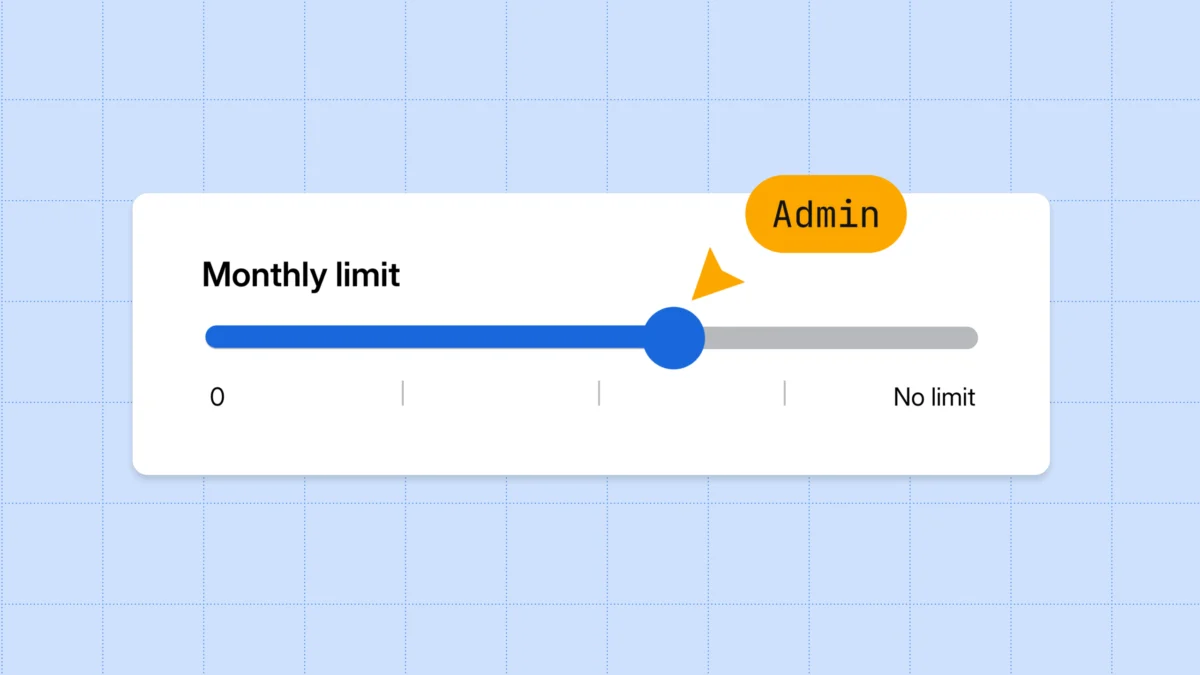
To facilitate this transition, Atlassian is introducing a series of "meters" that will track the consumption of AI and automation services. While the specific pricing tiers for these meters are detailed in the company’s updated usage and pricing guides, the core philosophy remains focused on transparency and user control. Most customers currently on paid cloud plans will find that they already have built-in allowances included in their existing subscriptions. These allowances act as a buffer, permitting a baseline level of AI and automation usage without additional costs. For organizations that require higher volumes of activity, Atlassian is empowering organization and billing administrators with the ability to adjust limits at any time, ensuring that scaling occurs in alignment with business needs rather than through rigid, pre-set constraints.
A key component of this announcement involves the expansion of "Assets" availability to a broader range of customers and a significant change to how Bitbucket allowances are handled. Moving forward, Bitbucket allowances will transition to organization-level pooling. This pooling mechanism is designed to provide greater flexibility, allowing larger organizations to distribute their usage allowances across various teams and projects more fluidly, rather than being restricted by siloed, department-specific limits.
Atlassian’s leadership emphasizes that this shift is not merely a billing update but a reflection of the company’s ongoing investment in the "context" that makes AI effective. At the heart of this technological push is the Atlassian Teamwork Graph. Built on twenty years of data regarding how teams interact, manage tasks, and complete projects, the Teamwork Graph serves as a "living context layer" for an organization. This graph allows AI tools to understand the relationships between different pieces of work, the history of project decisions, and the specific roles of various team members.
The performance benefits of this context-heavy approach are quantifiable. Internal benchmarking conducted by Atlassian reveals that AI agents equipped with Teamwork Graph context deliver 44% better answer quality compared to those operating without it. Perhaps more importantly for the new pricing model, these agents achieve higher quality while using 48% fewer tokens. In the world of generative AI, tokens represent the basic units of text processed by a large language model. By reducing token consumption while increasing quality, Atlassian is positioning its platform as a more cost-effective solution for enterprises concerned about the high compute costs typically associated with AI.
To ensure that this context is not limited to the Atlassian stack, the company has also introduced the Teamwork Graph Command Line Interface (CLI) and integrated Teamwork Graph tools into the Rovo MCP (Model Context Protocol) Server. This openness allows third-party AI tools and custom-built enterprise applications to tap into the same rich organizational context that powers Atlassian’s native AI, Rovo. By doing so, Atlassian aims to become the central nervous system for an organization’s entire AI ecosystem, regardless of which specific Large Language Models (LLMs) a company chooses to deploy.
The introduction of Rovo, Atlassian’s AI-powered agent, represents a cornerstone of this new era. Rovo is designed to help teams find, learn, and act on information scattered across various SaaS applications. As these agentic capabilities become more central to the "System of Work," the usage-based model ensures that customers pay for the outcomes—such as successful data retrievals or automated task completions—rather than simply for the number of employees who have login credentials.
For IT administrators and financial controllers, the move to usage-based pricing often brings concerns regarding "bill shock" or unpredictable monthly expenses. To mitigate these risks, Atlassian has integrated comprehensive visibility tools into the Atlassian Administration portal. This centralized dashboard provides a single-pane-of-glass view of usage across all meters. Administrators can monitor how their organization is currently tracking against its allowances in real-time. The portal also includes features for setting hard or soft limits, providing notifications when usage reaches certain thresholds, and offering cost estimation tools to help with annual budgeting.
The announcement also touches upon the broader industry trend toward "agentic workflows." Unlike traditional chatbots that respond to prompts with text, AI agents can perform actions like updating a Jira ticket, summarizing a Confluence page for a specific stakeholder, or triggering a deployment in Bitbucket based on specific criteria. Because these actions vary significantly in their complexity and the compute power required, usage-based metering is presented as the most equitable way to scale these services.
As the December 2026 deadline approaches, Atlassian is encouraging its customer base to begin an "AI journey" characterized by experimentation and data-driven scaling. The company has launched a dedicated resource hub containing FAQs, estimation tools, and technical documentation to assist with the transition. The messaging from the company is clear: the goal is to provide an AI platform that is as transparent and flexible as it is powerful.
In summary, Atlassian’s pivot to usage-based pricing for AI and automation represents a significant milestone in the evolution of enterprise software. By tying costs to the actual utilization of high-value AI features and providing the infrastructure—via the Teamwork Graph—to make those features more efficient, the company is attempting to align its financial interests directly with the productivity gains of its customers. With two years of lead time before the new billing meters take full effect, the enterprise world will be watching closely to see how this model influences the adoption and implementation of AI agents in the workplace. The success of this transition will likely depend on the continued ability of Atlassian’s AI to deliver the promised 40x speed increases and token-efficient outcomes that justify a move away from the predictability of seat-based licensing.