 11

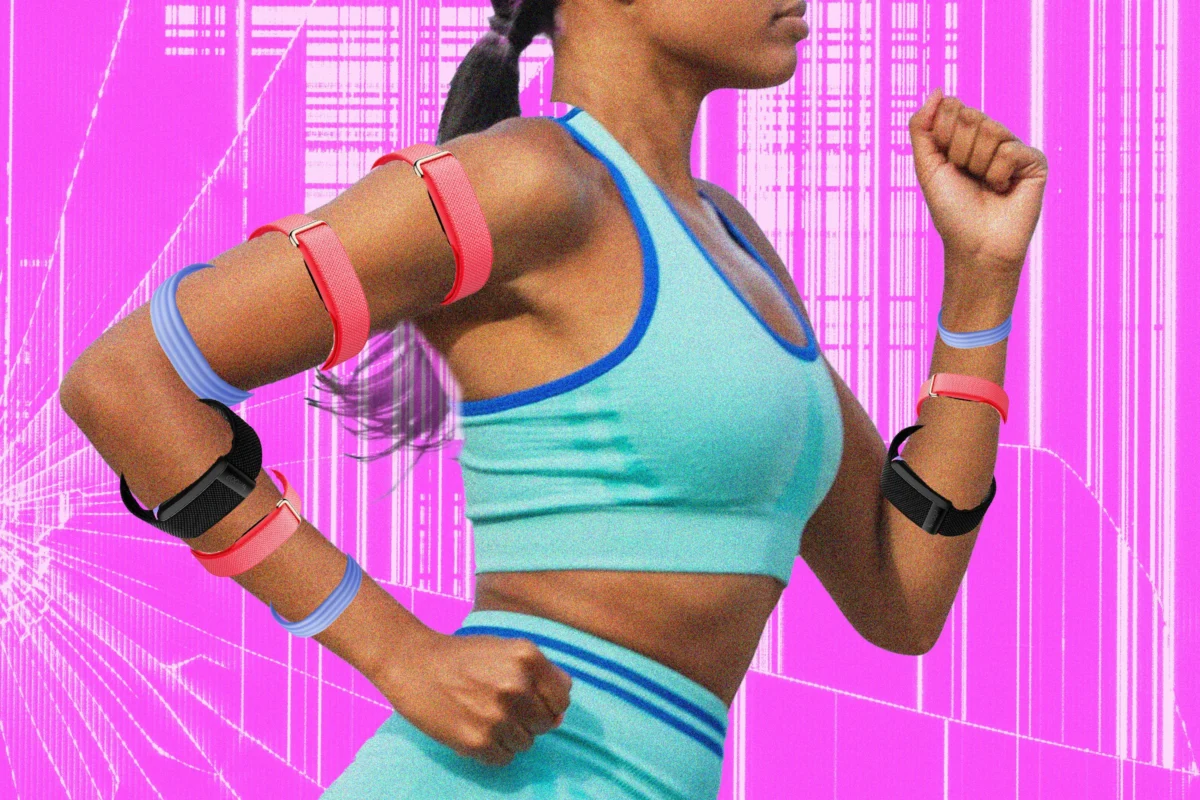
A new category of personal technology is emerging on the market, distinguished by its design for minimal interaction: the screen-free wearable. Unlike its more demanding predecessors, this innovative gadget requires attention only when its battery runs low, otherwise operating discreetly on the user’s body 99 percent of the time. These devices are engineered to seamlessly collect vital health statistics around the clock, allowing users to review their data at their convenience through an accompanying smartphone application, without the constant digital nudges and demands for immediate engagement that characterize many modern smart devices.
This segment of the wearables market has experienced a significant surge in recent times and is poised to capture even more attention in the coming months. Their appeal lies precisely in the promise of demanding less of the user’s attention once purchased, a stark contrast to the ever-increasing digital clamor. Prominent examples currently available include the Garmin Cirqa, Google Fitbit Air, Polar Loop, and the Amazfit Helio Strap. The Whoop series stands out as the original pioneer of this rapidly expanding category. Even tech giant Apple is reportedly exploring its own version of this concept, according to a recent report from Bloomberg. The underlying reason for this burgeoning trend is clear: a growing segment of the population is weary of attention-hoarding technology and pervasive social media, increasingly recognizing the detrimental impact these platforms can have on their well-being.
The evolution of wearables has been a journey of fluctuating design philosophies. Having reviewed wearable technology since its initial mainstream adoption with the early waves of Fitbits from 2009 onwards, one observes a striking resemblance between this new generation of trackers and those pioneering devices. For instance, the Fitbit Ultra, released in 2011, was a clip-on tracker designed to be unobtrusive, often attached to clothing like jeans. Its low-profile nature meant that, in one instance, two days passed before its absence was even noticed after being lost on the streets of Zagreb, Croatia. While later devices like the 2012 Fitbit Zip introduced small screens with charming, sub-Tamagotchi-like cartoon faces, even these, much like the contemporary Fitbit Air, were not intended for more than a couple of quick glances daily, at most.
However, the trajectory of wearable technology soon veered towards greater integration and constant digital presence. Over the last few years, the typical user experience with brands like Garmin, Samsung, Fitbit, and Coros has involved interacting with these devices dozens, if not hundreds, of times a day. The constant stream of WhatsApp messages and emails buzzing on their small screens often triggers a reflexive raising of the wrist to check for updates. Moreover, the pervasive nature of modern wearables often lulls users into routines of checking elaborate evening and morning "reports," or pathologically scrutinizing sleep scores immediately upon waking. This is further compounded by persistent "move alerts," a long-standing and often irritating feature that serves as a constant digital nag.
The Transformation of Wearables
The core appeal of this new breed of screen-free wearables lies in their intentional divergence from the prevailing trends in the broader smartwatch market. While fitness watches have increasingly morphed into sophisticated smartwatches, boasting near-ubiquitous OLED screens and even integrating AI assistants for hardcore running enthusiasts, smartwatches themselves have largely failed to deliver on their initial promise of life-changing applications or features. The original Apple Watch, launched in 2015, saw limited groundbreaking usage beyond basic functions. While undeniably, Apple Watches have, on occasion, been credited with saving a life or two, this remains a fringe benefit rather than the primary reason for purchase. The wider ecosystem of wearable apps has, for the most part, withered like neglected houseplants, failing to deliver the revolutionary experiences once envisioned. Screen-free wearables represent a deliberate effort to "reset" the entire category, shifting focus back to passive data collection without the added layer of digital distraction.
A significant factor in this paradigm shift, particularly notable in 2026, is the principle of "design subtraction." These new devices retain the essential components of a modern fitness tracker – including a heart rate sensor, battery, accelerometer, Bluetooth transmitter, and other specialized sensors – but critically, they excise the display. This deliberate omission is not a step backward but a strategic re-evaluation of what a wearable should offer in an increasingly saturated digital landscape.
Whoop’s Evolving Vision
Whoop, a company that has championed screen-free wearables since its inaugural release in 2015, provides a compelling illustration of this market transformation. The evolution of Whoop’s self-definition directly mirrors the broader changes observed in the wearables industry. Initially, in 2015, Whoop positioned itself quite self-seriously as a "performance optimization system exclusively designed for elite athletes and teams." Fast forward a decade, and a Whoop band is now marketed towards a much wider audience, accessible to "just about anyone with the spare cash to pay for its $199 annual subscription." Its current mission, in Whoop’s own words, is a system designed to "help you improve how you sleep, train, and feel—starting day one."
While Whoop has consistently been grounded in concepts like "training readiness," which has since become a common feature across many fitness trackers, its shift towards a broader consumer base and a "low-distraction" lifestyle selling point has converged with the strategies of larger tech companies entering this space. Therefore, while it might appear that Google’s Fitbit and other competitors are merely playing catch-up with Whoop, the reality is more nuanced: Whoop itself has adapted its focus to align with the growing demand for less intrusive technology.
AI: The Double-Edged Sword
The emergence and increasing prevalence of AI play a complex, dual role in the rise of screen-free wearables, acting both as a catalyst for innovation and a contributor to the very problems these devices aim to solve. On one hand, AI presents a lucrative opportunity for wearable companies to upsell services and generate revenue. On the other, it significantly contributes to the overall "tech-ification" of daily life, fueling the very need for low-distraction technology.
Many rivals to Whoop’s subscription model offer basic functionalities without a recurring fee, yet they heavily leverage AI as a premium upsell. Consider the Google Fitbit Air: while its companion app provides essential stats and charts without a subscription, accessing more in-depth, "chatty explainers" of what the data signifies requires a Google Health Premium subscription, priced at $10 per month. With this premium service, raw numbers and graph lines are transformed into personalized paragraphs that reference specific daily quirks or events, embodying the principle, as humorist and podcaster John Hodgman once quipped, that "specificity is the soul of narrative."
Peter Richardson, vice president and cofounder of Counterpoint Research, affirms the nascent but promising future of AI in this domain: "The use of AI in monitoring and guiding health and wellness is still at the early stage of development but will likely become significantly more advanced as AI matures." While the personalized chatbot ramblings of Google Fitbit can sometimes be annoying or even condescending, a user whose profession requires a deep understanding of metrics like VO2 Max or heart-rate variability trends might find the subscription-free experience preferable. However, this level of expertise is far from the norm for the average user. AI has the potential to bridge this knowledge gap, preventing users from "glazing over data" beyond a simple step count. Crucially, this AI-driven interpretation is best delivered via the phone application, making the absence of a screen on the wearable itself a strength, allowing the AI to truly shine without creating another point of digital distraction.
The Pervasive Issue of Technostress
Beyond its role in data interpretation, AI’s most significant influence on this trend lies in its contribution to the broader "tech-ification" of our lives. Anecdotal evidence suggests a growing corporate push for AI integration: many individuals report that recent work appraisals now include demands from higher-ups for greater AI utilization within their "personal workflow." This escalating digital demand has tangible consequences.
Elizabeth Marsh, a doctoral researcher at the University of Nottingham specializing in the "dark side of the digital workplace," highlights that ubiquitous digital tools consistently precipitate a familiar cluster of harms: technostress, information overload, constant interruption, and the blurring of work-home boundaries. Marsh explains to WIRED, "These appear to have become the predictable by-product of environments where the volume and pace of digital demand has risen faster than people’s capacity to absorb it." She further notes a strong correlation between information overload, the fear of missing out (FOMO), lower well-being, and increased strain.
This pervasive digital pressure provides a compelling argument against having notifications and alerts constantly vying for attention across multiple devices—your wrist, phone, work PC, and any other digital manifestation of your responsibilities. Marsh’s research on "digital workplace technology intensity" revealed participants describing notifications in visceral terms. One individual stated, "the notifications make me feel sometimes on edge and it does make me feel anxious and it affects my mental health," while another expressed anger at senders for taking their time, simultaneously feeling guilty for not replying immediately.
However, simply cutting off notifications isn’t a complete panacea, as Marsh discovered. Users often develop a fear of missing out on crucial information. Screen-free wearables offer a parallel solution to a complete "tech cold turkey," providing a middle ground. They allow individuals to access essential health metrics like sleep scores and step counts without the constant, conscious advertising of data throughout the day. For example, a Garmin Cirqa can track runs and walks, even generating maps, without the user ever needing to tap a "start workout" button. Critically, these devices eliminate the constant buzzing notifications and the daily "charge coddling" often associated with smartwatches like the Apple Watch. This is perhaps the most vital aspect: a significant driver behind the development of these low-distraction wearables is the widespread desire among consumers to opt out of constant digital engagement, at least in the areas of technology where such an option exists.
Embracing Digital Mindfulness
To counter the pervasive tech strain, Marsh proposes a strategy she terms "digital mindfulness." This approach centers on cultivating an "awareness of how you engage with technology, rather than operating on autopilot." It stands in direct opposition to mindless activities such as endless social media feed scrolling, which can hardly be considered a digitally mindful practice. Marsh outlines three key components to achieving digital mindfulness:
First is intention: "having a clear purpose for picking up the device in the first place, rather than reaching for it reflexively and then wondering where twenty minutes went," she explains. This encourages conscious engagement over habitual reactions.
Second is attention: "staying with what you’ve chosen to do and resisting the pull of whatever else is competing for your attention." This emphasizes focused interaction and resisting the omnipresent distractions of the digital world.
Finally, attitude: "responding to yourself with a bit of kindness and patience when it goes wrong, as self-criticism about our own tech habits tends to make the relationship worse rather than better." This promotes a compassionate self-awareness in navigating one’s relationship with technology.
While the act of purchasing a screen-free tracker like a Fitbit Air does not inherently equate to practicing digital mindfulness, such devices are undeniably more intuitively compatible with adopting this mindset than a notification-spewing, constantly buzzing smartwatch. By removing the immediate visual and haptic demands of a screen, these wearables facilitate a more deliberate and less intrusive approach to personal health tracking, aligning with a growing desire for a healthier, more balanced digital life.






