 11

Nearly every company striving to deploy artificial intelligence encounters a significant hurdle: the inherent difficulty in seamlessly integrating this advanced technology into their routine operational frameworks. Industrial titan Caterpillar, a company that has spent decades grappling with analogous challenges in the physical world, is now applying its profound experience to effectively deploy AI across its vast global operations. This strategic pivot highlights a unique advantage, transforming the company’s historical understanding of complex machinery and environments into a blueprint for future-proof AI adoption.
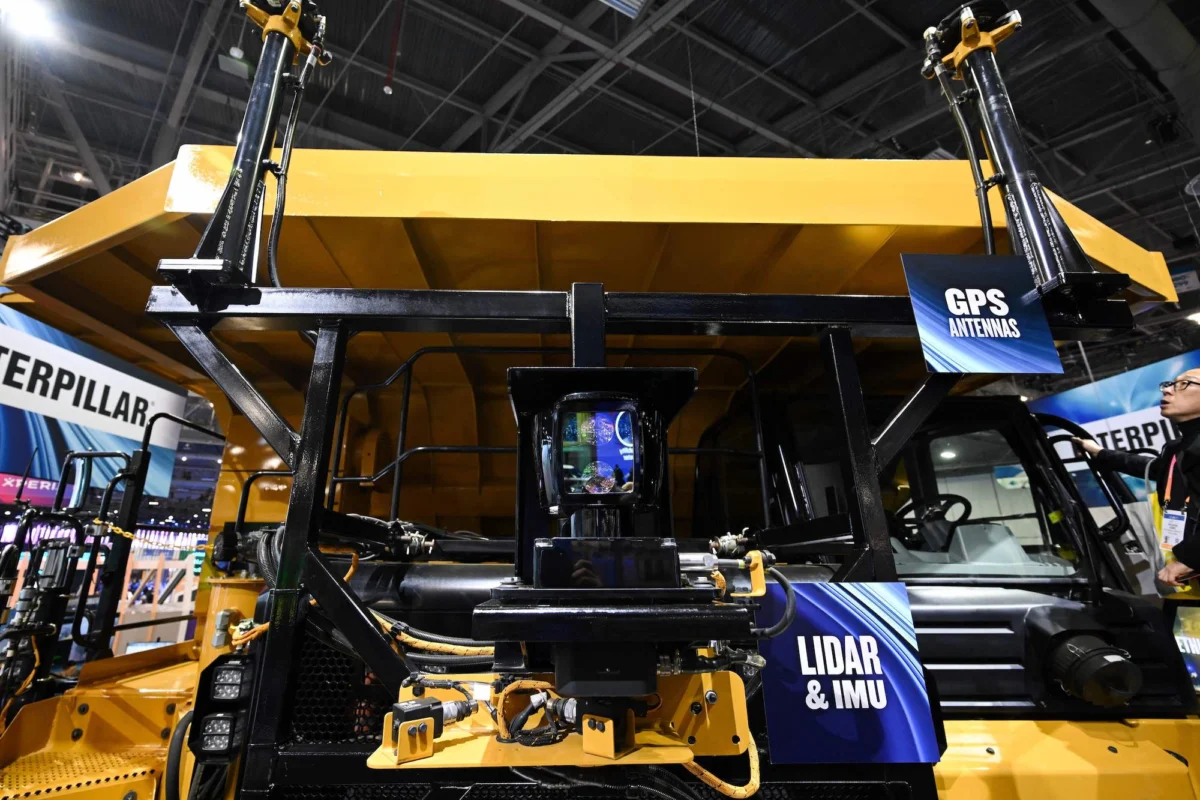
Caterpillar’s foray into the autonomous space commenced strategically within the mining sector, an industry particularly ripe for automation due to persistent labor shortages and the inherently hazardous conditions that pose risks to human workers. The benefits of automation in mining are multifaceted, encompassing enhanced safety by removing personnel from dangerous areas, increased operational efficiency through continuous and optimized work cycles, and improved precision in tasks like drilling and hauling. Today, the company offers a comprehensive suite of autonomous solutions, including self-driving haul trucks, automated drilling rigs, underground loaders, and dozers. Beyond these robust hardware solutions, Caterpillar also provides an integrated software command center, sophisticated fleet management systems, and cutting-edge remote terrain intelligence, all forming a cohesive autonomous toolkit designed to optimize productivity and safety in demanding environments.
The insights gleaned from these pioneering efforts in mining are now being scaled and adapted for broader application. "Now we’re in this super exciting time where we can take all of that learning from mining and bring it into much more dynamic environments, jobsites, quarries, and construction sites," stated Jaime Mineart, Caterpillar’s Chief Technology Officer, during an interview with TechCrunch at the Ai4 conference in Las Vegas earlier this month. This expansion represents a significant undertaking, as construction sites and quarries present distinct challenges compared to the more controlled and repetitive nature of many mining operations. These dynamic environments often involve constantly changing layouts, closer interaction with human workers, and a wider variety of tasks, demanding more sophisticated and adaptive AI systems.
The industrial giant is now applying AI more broadly across its enterprise, including the development of intuitive tools for its technicians and employees. A prime example is the Cat AI Assistant, an innovative tool that empowers field technicians to interact with machines using voice commands. Standing directly alongside a piece of equipment, technicians can verbally request repair procedures, troubleshoot potential problems, and quickly identify necessary parts before initiating a repair. This drastically reduces diagnostic time and improves first-time fix rates, ensuring equipment returns to operation swiftly. Mineart confirmed that this assistant is already in active use by customers, operators, and technicians, streamlining workflows and democratizing access to complex technical knowledge.
The intelligence powering the Cat AI Assistant is derived from Caterpillar’s extensive proprietary data, a massive repository of information generated by its vast network of connected machines. With approximately 1.6 million connected assets globally, Caterpillar has accumulated more than 16 petabytes of structured data. This data encompasses a wide array of information, including telemetry, diagnostic logs, historical repair records, operational parameters, and digitized service manuals. This rich dataset serves as the foundational knowledge base for the AI systems, allowing them to learn from decades of real-world operational performance and maintenance history.
Beyond the AI Assistant, Caterpillar is leveraging artificial intelligence in numerous other critical areas. The company is employing AI-powered software for scanning job sites and generating highly detailed digital twins. These digital replicas are invaluable in manufacturing processes, enabling precise analysis of operations, optimization of workflows, and proactive identification of potential inefficiencies or bottlenecks. This capability facilitates better planning, enhances safety by simulating various scenarios, and improves resource allocation. Furthermore, like virtually every major corporation today, Caterpillar is integrating AI across its broader enterprise operations. This includes applications in supply chain optimization, predictive analytics for demand forecasting, and various human resources functions. Crucially, AI is also being deployed within its software development lifecycle. "We use AI agents to modernize legacy code, generate and test new software, and identify defects earlier," Mineart elaborated. These AI agents can refactor outdated codebases, automatically generate test cases to ensure robust performance, conduct fuzz testing, and pinpoint software defects through advanced static analysis and anomaly detection, thereby accelerating development cycles and improving software quality.
However, Mineart is quick to emphasize that the development of cutting-edge technology represents only one facet of the challenge. The true complexity lies in the deployment of autonomous machines and, more broadly, in transforming an entire site to effectively integrate AI. This goes beyond mere technical implementation; it necessitates a fundamental rethinking of how people interact with technology and how existing operational processes must adapt to leverage AI’s full potential. "The hard part about autonomy and about physical AI is incorporating that technology into the customer jobsite and into the workflows," she underscored. This requires meticulous change management, ensuring user acceptance, establishing new safety protocols for human-machine collaboration, and developing novel operational paradigms.
To overcome these integration challenges, Caterpillar strategically leans on the deep-seated institutional knowledge of its experienced operators to help train its AI systems. These seasoned professionals provide invaluable insights into real-world operating conditions, nuances of machine behavior, and effective problem-solving techniques, enriching the AI’s learning process. As machines become increasingly autonomous, the roles of human operators are also evolving. Instead of directly controlling a single machine, many operators are transitioning to overseeing multiple machines simultaneously from remote command centers. This shift demands a new set of skills, including advanced monitoring capabilities, data interpretation, and strategic decision-making, moving from direct physical control to a more supervisory and analytical role.
This significant technological and operational transition, however, presents a new and substantial challenge for Caterpillar: ensuring its vast workforce of 118,000 employees is adequately trained for the future. Mineart revealed the company’s ambitious plan to invest $100 million over the next five years specifically to train its workforce in the critical domains of AI, autonomy, and robotics. This substantial investment, as reported by Construction Digital, is a blueprint for the construction industry, aiming to equip employees with skills in areas such as data science, robotics programming, AI ethics, and the implementation of new operational procedures. This commitment underscores Caterpillar’s understanding that technological advancement must be accompanied by human capital development to realize its full potential.
This proactive investment in its workforce and AI infrastructure is already yielding significant dividends, not just in operational efficiencies but also in the company’s financial performance. Caterpillar’s quarterly revenue reached an all-time high of $20.5 billion in the second quarter, a remarkable achievement bolstered by robust demand for power-generation equipment. This surge is directly linked to the burgeoning global build-out of data centers, which are the foundational infrastructure for cloud computing and generative AI. The company’s power-generation division witnessed an extraordinary sales spike of 72%, reaching $3.10 billion. CEO Joe Creed affirmed the relentless pace of this demand, stating that "no one is slowing down" when it comes to the need for cloud computing and generative AI infrastructure. This demonstrates Caterpillar’s dual role in the AI revolution: not only as a sophisticated adopter of AI within its own operations but also as a critical enabler, supplying the essential power solutions that fuel the immense computational requirements of the global AI ecosystem.






