 11

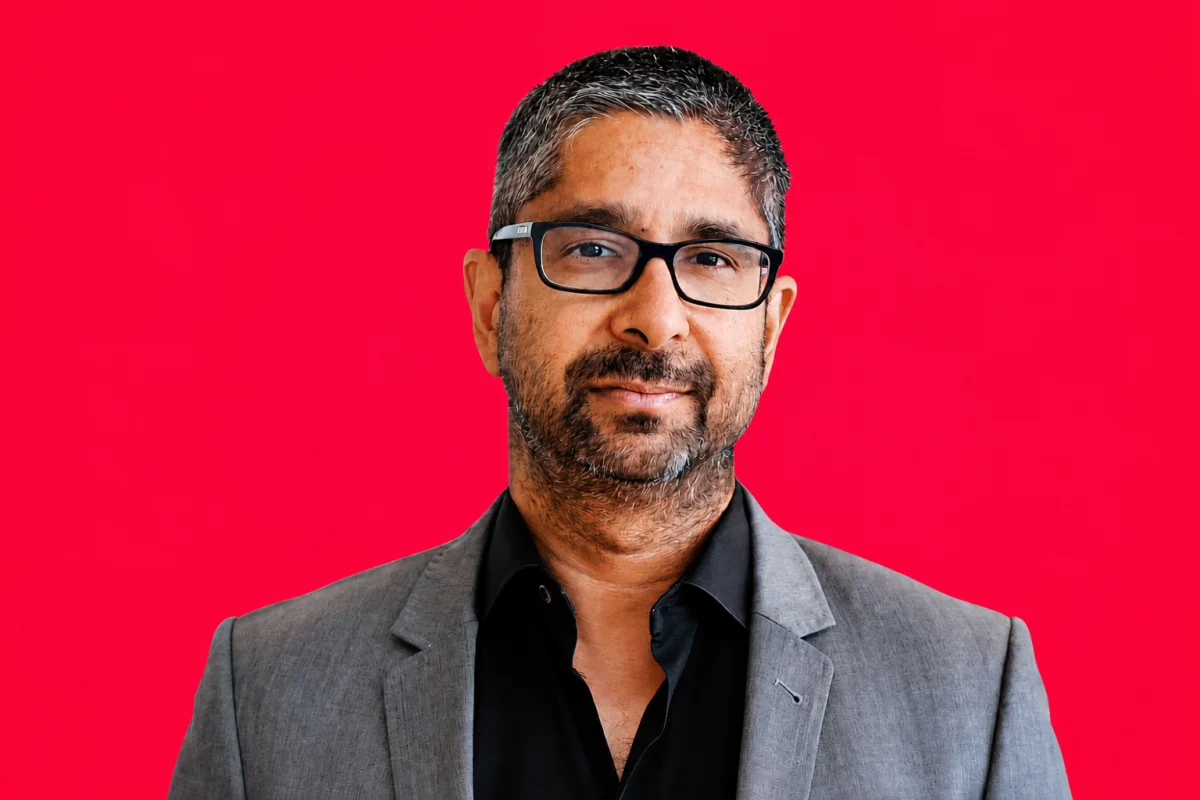
Vijay Pande, once a figure primarily recognized within academic circles, dramatically shifted his public profile over a decade ago when venture capital titans Marc Andreessen and Ben Horowitz tapped him to lead their firm’s foray into healthcare and life sciences. This was a significant pivot for Andreessen Horowitz (a16z), as the firm had spent its initial five years deliberately steering clear of these sectors. Pande, then a Stanford chemistry professor, was renowned for spearheading Folding@home, a groundbreaking distributed-computing project that harnessed the collective power of millions of personal computers to create a virtual supercomputer dedicated to disease research. Under his guidance, a16z’s initial venture into healthcare blossomed into a formidable practice, eventually managing an impressive portfolio worth close to $4 billion.
However, in a move that surprised many in the industry, Pande decided in June of the previous year to step away from this expansive operation. His new endeavor, VZVC, co-founded with long-time investor Zach Werner, represents a deliberate departure from the large-scale venture model. VZVC is designed around a highly concentrated investment strategy, focusing on just a handful of bets annually rather than dozens. The firm operates with an exceptionally lean team, notably lacking associates, and heavily integrates artificial intelligence into its day-to-day operations to streamline processes and enhance decision-making.
Pande recently shared insights into this hard pivot, discussing his rationale for adopting a concentrated investment approach in the current market climate. He also delved into a critical challenge facing AI-driven biotech: the unique nature of biological data. Unlike textual information, which can often be readily scraped from the internet, biological data is frequently proprietary and confined within "walled-off datasets." This raises fundamental questions about the accessibility of advancements promised by AI in medicine and the ultimate beneficiaries of such innovations.
Pande articulated a profound shift in the understanding of biology, moving from what he terms a "science of discovery" to a discipline that can be engineered. Historically, drug development often involved a degree of serendipity, with discoveries frequently emerging from fortuitous circumstances. The advent of AI and machine learning, however, has fundamentally transformed this process. These technologies enable computers to process and comprehend the immense complexity inherent in biological systems in ways previously impossible for humans. This capability allows for more precise identification of drug targets for specific diseases, facilitates the design and synthesis of new therapeutic compounds, and even aids in optimizing the most expensive phase of drug development: clinical trials.
The conversation touched upon the efficiency of clinical trials, with Pande addressing the common aspiration that synthetic data might reduce trial costs and the number of human participants needed. While acknowledging this as a valid aspiration, he highlighted that the reality is still distant. Although AI has begun to shrink the time and cost associated with reaching the clinical trial stage, the trials themselves can still incur hundreds of millions of dollars. The high financial burden is exacerbated by a low success rate; only about 20% of drugs successfully navigate from the first phase of trials to the completion of the third. This means eight out of ten drugs fail, and when each failure costs hundreds of millions, the amortized cost per successful drug becomes extraordinarily high. Pande explained that these failures are typically not due to errors by biologists, but rather because the drugs are often designed based on animal models, such as mice, which often prove to be poor predictors of human responses. While AI models are not infallible, they are expected to offer significantly greater predictive accuracy than traditional animal models, marking a crucial threshold for excitement and progress in the field. Beyond this, the next frontier involves determining if a drug is the right drug for an individual.
This leads directly to the concept of personalized medicine, or more precisely, precision medicine. Pande elaborated on how current medical practice often involves a degree of guesswork when a patient presents with a non-trivial condition, due to limitations in diagnostic capabilities. Doctors might prescribe a drug, and if it’s ineffective, they try another, and then another—a common scenario in fields like oncology. Precision medicine aims to ensure the first drug prescribed is the most effective one for that specific individual. Furthermore, traditional blood test values are typically compared against population averages. Pande suggested that a more advanced approach would compare an individual’s results against their own unique baseline, allowing for a personalized understanding of what constitutes a "normal" or "abnormal" reading for them. This individualized approach is central to the future of medicine.
The path to this transformative moment has not been a sudden spike but rather a steady confluence of multiple advancements. Pande explained that precision medicine was initially heavily reliant on genomics. However, the genome is merely a blueprint, analogous to a house on its first day; the reality of the body’s current state is often very different from that initial plan. Therefore, other measurable biological parameters, such as proteomics, have become increasingly relevant for understanding disease and an individual’s current physiological state. Parallel to these biological insights, there has been significant automation in robotic measurements, which naturally integrates well with AI. Over the past decade, a consistent pace of advancement has been observed in both AI for biology (focusing on disease treatment) and AI for chemistry (focusing on drug discovery for specific proteins).
A unique challenge in AI and biotech, Pande noted, is that biology stands out as one of the few domains where AI cannot simply scrape vast amounts of data from the internet, unlike text-based AI models. This means the field cannot rely on a universal dataset for training, nor can data easily be distilled from one model to another. This characteristic presents a fascinating dynamic from a pure AI perspective, creating a different kind of data landscape.
This data challenge, Pande observed, echoes a familiar problem within medicine itself: the territorial and often competitive silos in which doctors and medical institutions operate. He highlighted the inefficiency when, for example, a patient’s cancer involves both oncology and endocrinology, and the specialists in these fields do not effectively synchronize their approaches. The intriguing potential of AI, Pande suggested, is its ability to act as a universal specialist, capable of synthesizing information across various domains and identifying patterns that no single human practitioner could discern. This would be akin to having an elite team of specialists collaboratively addressing a patient’s condition in real-time.
However, the question of whether sufficient data sharing exists to realize this vision remains pertinent, especially given the natural inclination of founders and investors to protect their intellectual property. Pande believes a significant trend is the emergence of "atlases of biological information," which, from a technological standpoint, are akin to foundation models. As these become more prevalent, he anticipates a scenario similar to what has unfolded with open-source Large Language Models (LLMs), which have demonstrated strong performance against proprietary corporate versions. He envisions open-source foundation models in biology having a similarly broad and transformative impact.
In his new role at VZVC, Pande is actively involved with companies like Genesis Therapeutics, which originated from his Stanford lab, and Insitro, a drug-discovery company founded by his former Stanford colleague Daphne Koller. He also mentioned incubating a company with a founder he has known for two decades. Pande’s current investment focus lies primarily in two areas: AI for healthcare delivery, a domain he explored extensively at a16z, and AI for clinical trials. When evaluating founders, Pande prioritizes deep trust and integrity, seeking individuals who consistently deliver on their commitments. He looks for long-term relationships, ideally spanning 5 to 10 years or even extending into a founder’s subsequent ventures. His preference is for collaborative leaders who are not solely focused on individual victories but rather on how to "win together."
Reflecting on his investing career, Pande recounted the initial resistance he faced over a decade ago when discussing the integration of AI, machine learning, and technology into medicine and biology. Many dismissed these ideas as impractical or impossible. Witnessing the progression from skepticism to widespread acceptance has been profoundly fulfilling. A key lesson he has learned is the paramount importance of "go-to-market" strategy. As seductive as cutting-edge technologies can be, success ultimately hinges on how effectively a product or service reaches its intended users. He advises founders, particularly those from scientific or product backgrounds, to apply their brilliance and creativity equally to the go-to-market side, emphasizing that it is often as challenging, if not more so, than the technological development itself.
Pande further elaborated on the distinctive design of VZVC, which derives its name from Vijay (V) and co-founder Zach Werner (Z). The firm is intentionally structured to be quite small; on the investment side, it’s solely Pande and Werner. They initially considered hiring associates but found it unnecessary given the efficacy of the AI agents they have developed. The term "concentrated" in their strategy means a significant reduction from typical venture funds that might make 30 investments annually. VZVC plans to make approximately five investments per year, treating each decision with immense gravity. Pande likened adding a company to their portfolio not to "adding a Facebook friend," but rather to "wanting to have another child"—underscoring the profound commitment and long-term view they take.
Given this highly focused model, VZVC operates differently from firms competing for every "hot round." Pande noted that they typically don’t engage in direct competition for deals; instead, people often make room for VZVC. This is because founders are drawn to the hands-on involvement and unique expertise that Pande and Werner bring to the table. He cited Antonio Gracias of Valor, known for his long-term commitment to companies like SpaceX, and Thrive Capital, with its concentrated portfolio approach, as inspirations for VZVC’s model, alongside the foundational influence of a16z.
Finally, Pande addressed what he perceives as currently overhyped in the realms of AI and biotech. While acknowledging AI’s undeniable capacity to unearth insights inaccessible to humans alone, he cautioned against the exaggerated claim that AI will "cure everything." This skepticism stems not from a doubt in AI’s capabilities but from a realistic appraisal of data availability. Large Language Models thrive on vast quantities of data readily available for learning. However, when such extensive and accessible biological data simply does not exist, AI cannot miraculously resolve the underlying problem. The effective application of AI in medicine remains contingent on the quality and quantity of data it can access and learn from.






