11

In an era where informational content is increasingly synthesized by AI, a new frontier for high-traffic web pages has emerged: free tools. Pages featuring calculators, file converters, color palette generators, and email outreach templates are outperforming traditional blog posts by directly addressing user needs to "do" rather than "read." This "free-tools SEO strategy" involves building small, genuinely useful tools that rank for high-demand search queries with limited competition. A single well-executed tool can capture hundreds of keywords and generate sustained traffic for years.
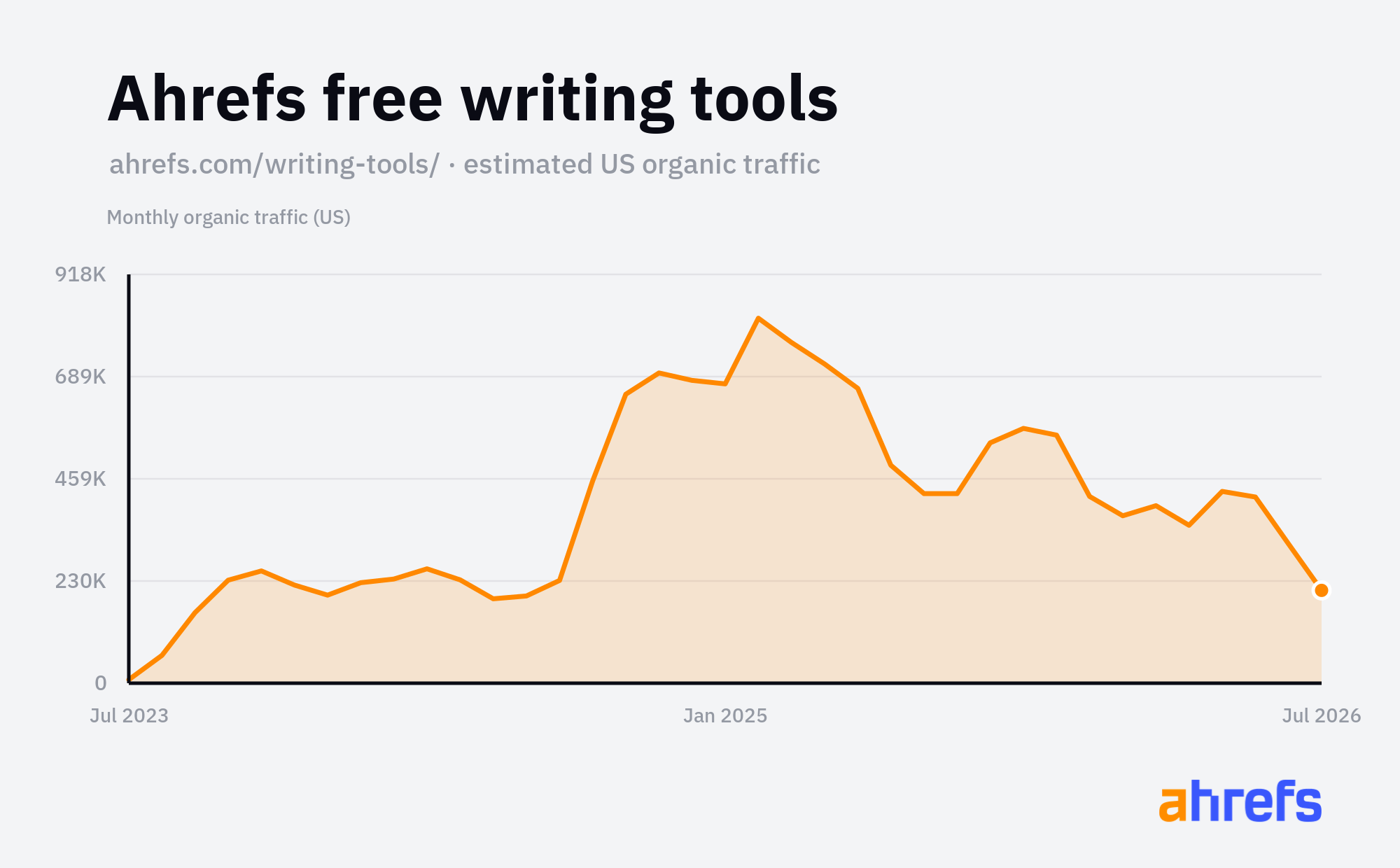
Ahrefs, a prominent SEO company, exemplifies this strategy. Their /writing-tools/ subfolder, launched in mid-2023, achieved nearly a million US organic visits per month at its peak and currently maintains hundreds of thousands of monthly visits. This success is attributed to free tools designed to answer specific user searches, including a keyword generator, backlink checker, and traffic checker, all of which are consistently among their highest-traffic pages.
The resilience of tools against the rise of AI is a significant advantage. While AI can summarize articles, it cannot replicate the functionality of an interactive calculator or a file converter. AI Overviews can describe how to perform a task, but they cannot deliver the working tool itself. Historically, building tools was an expensive endeavor, but advancements in AI platforms like Letaido and ChatGPT have democratized tool creation, making it possible to develop functional tools in an afternoon. The primary challenge now lies in identifying which tools to build, a process where resources like Ahrefs can provide invaluable guidance. While the ease of AI tool creation may narrow the competitive edge over time, a current window of opportunity exists for building durable search traffic through high-quality, AI-powered free tools.
Ahrefs and Letaido are collaborating to empower businesses to implement this strategy. Ahrefs offers features to generate organic traffic with free tools, while Letaido allows for the creation and deployment of any free tool from a plain-language prompt, eliminating the need for developers.
Calculators: Solving Numerical Needs
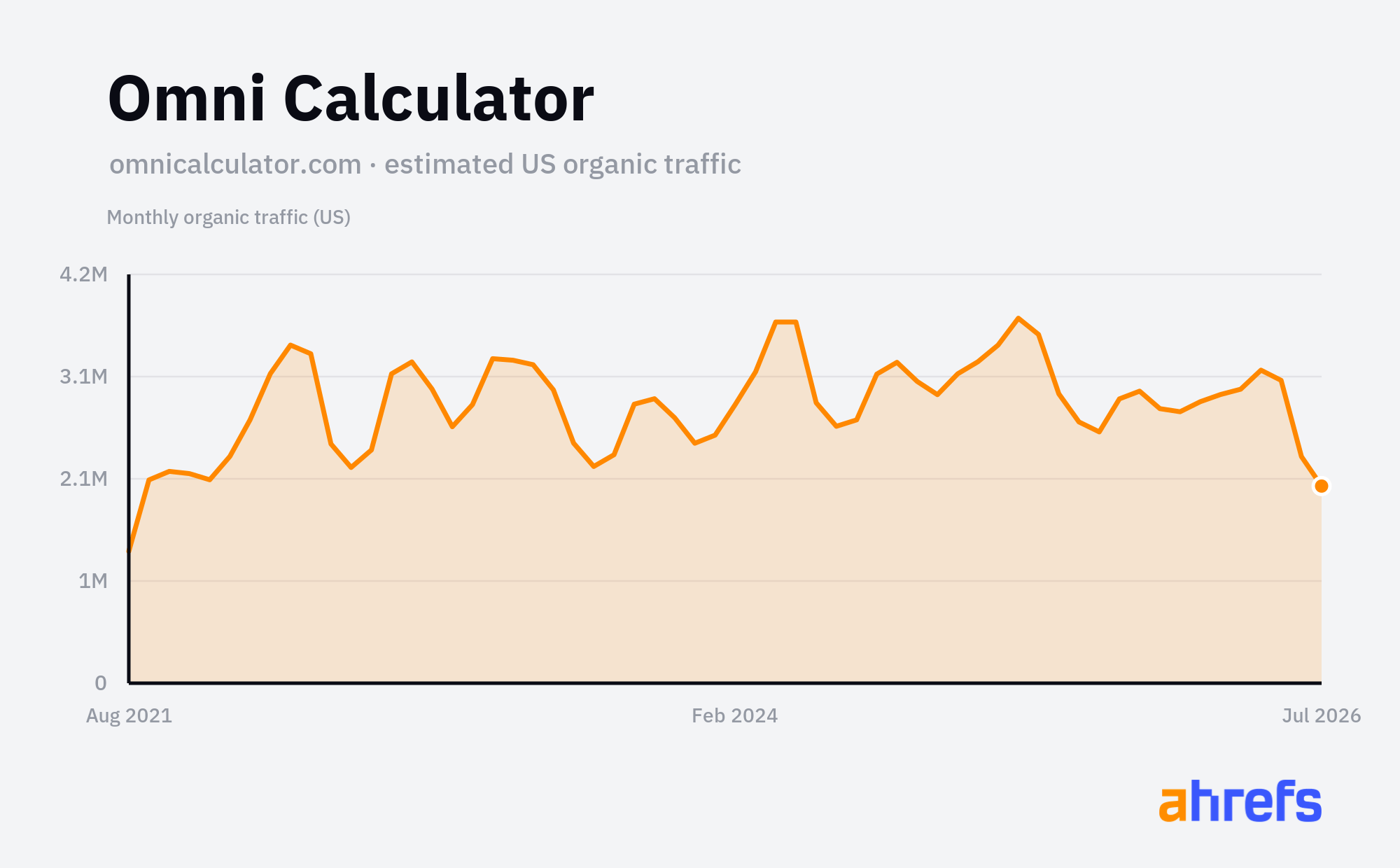
Calculators address user queries for specific numerical outputs. Searches like "margin calculator" prompt users to input data and receive instant results, bypassing lengthy articles. Omni Calculator, a platform featuring thousands of single-purpose calculators, demonstrates the power of this approach, attracting millions of monthly US visits. From grade calculators to finance and health calculators, each page serves a distinct function, collectively driving significant search traffic.
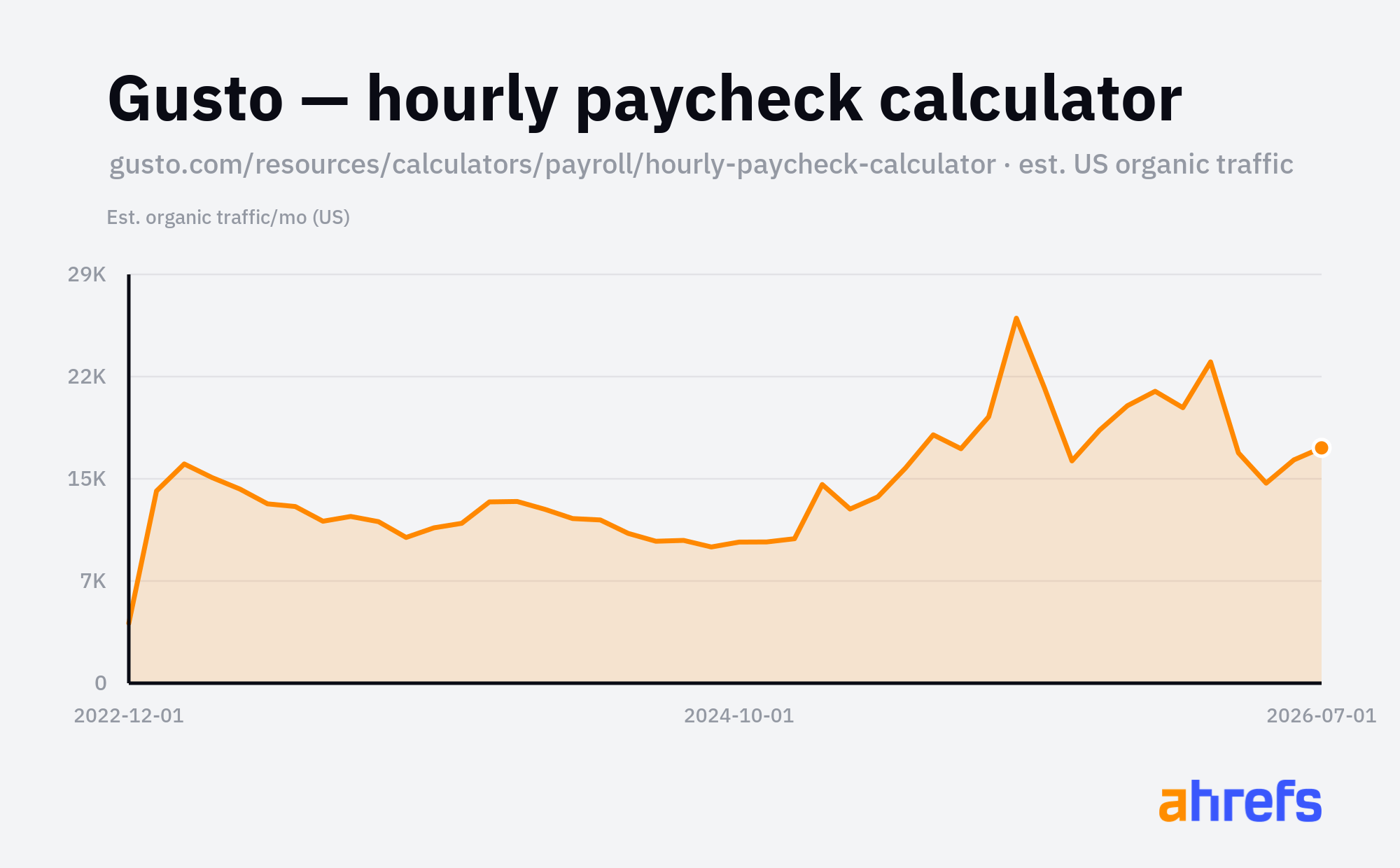
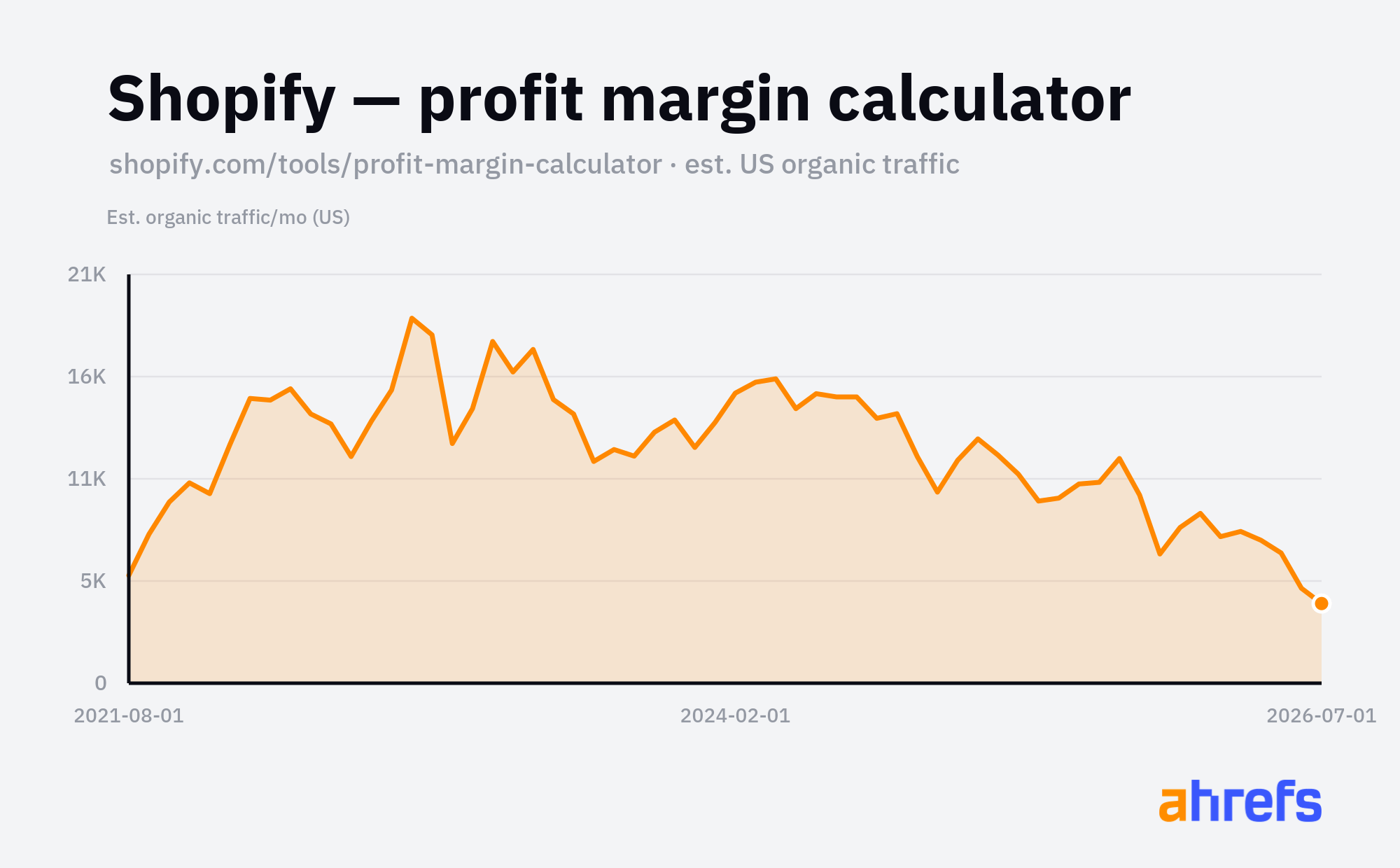
This strategy is not limited to dedicated calculator sites. Gusto, a payroll and HR software provider, gains approximately 17,800 monthly US visits for its free hourly paycheck calculator and an additional 8,000 for its salary version. These visitors, small business owners calculating payroll, are precisely Gusto’s target audience, positioning the software as a natural next step. Similarly, Shopify utilizes a /tools/ hub of free calculators and generators, with its profit-margin calculator alone peaking at over 20,000 US visits per month. Even as traffic wanes, these tools continue to introduce potential customers to the platform.
While broad calculator keywords like "mortgage calculator" have immense search volume, they also possess high Keyword Difficulty (KD) and are dominated by major brands. The winnable keywords are often niche-specific, offering lower search volume but significantly reduced difficulty and high traffic potential. Examples include "amazon fba calculator" (4,800 volume, 20 KD) and "deck material calculator" (1,200 volume, 9 KD). Seed patterns for finding calculator keywords include "[thing] calculator," "[thing] cost calculator," and "[metric] to [metric]."
Converters: Bridging Format Gaps
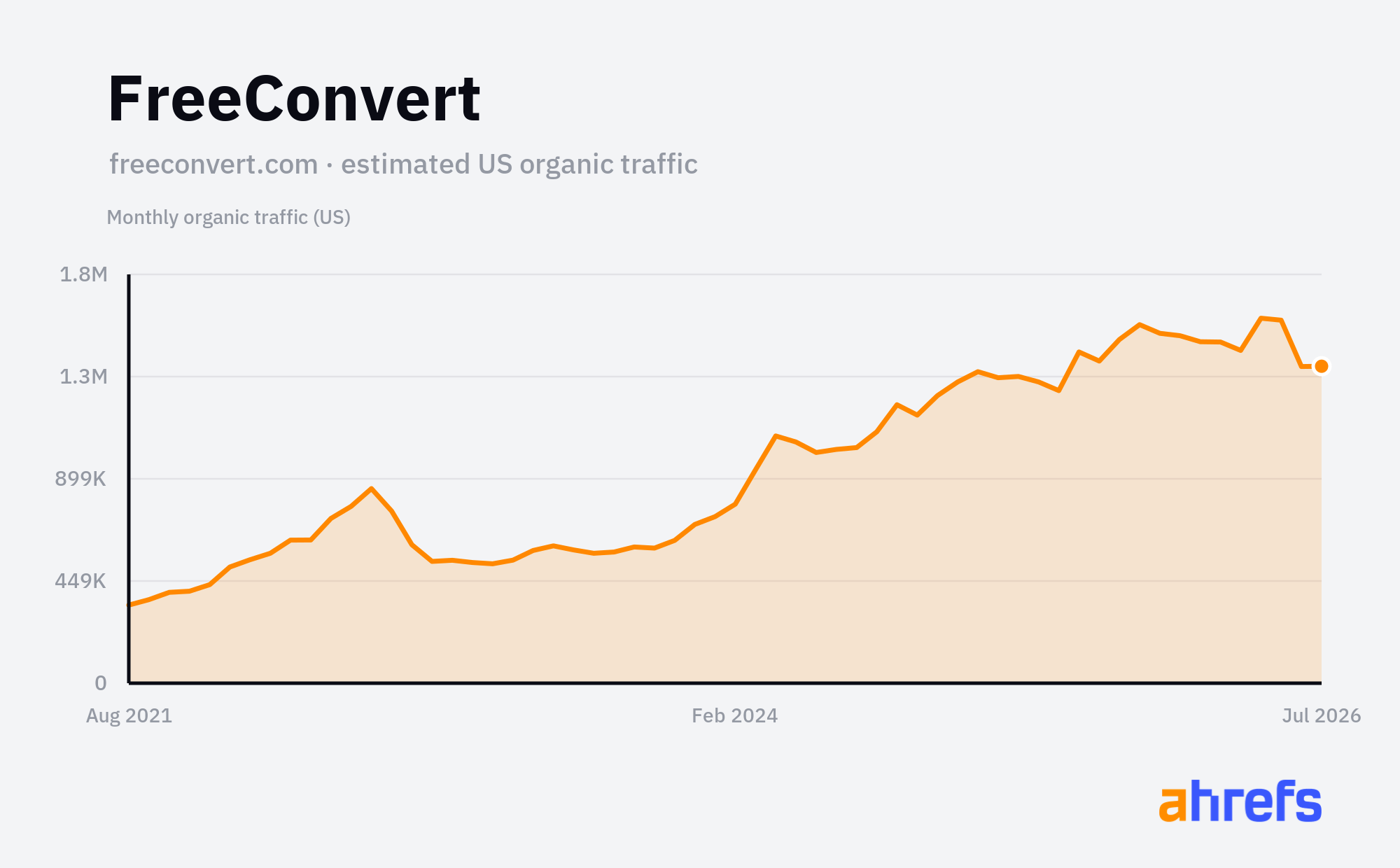
Converters transform data from one format to another. Sites like FreeConvert have seen substantial growth, rising from approximately 380,000 to over 1.5 million monthly US organic visits by ranking for "convert X to Y" searches across various file types. Each format pair, such as "mp4 to mp3" or "heic to jpg," becomes a dedicated landing page, capitalizing on the constant need for file conversions.
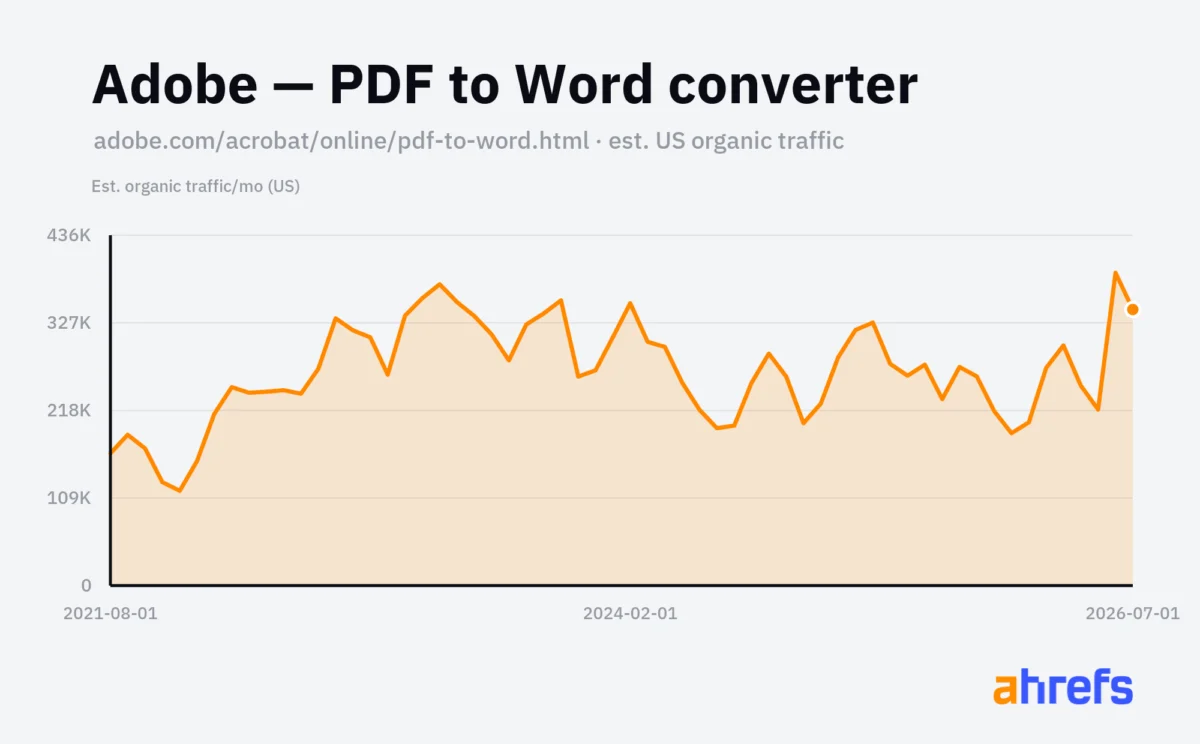
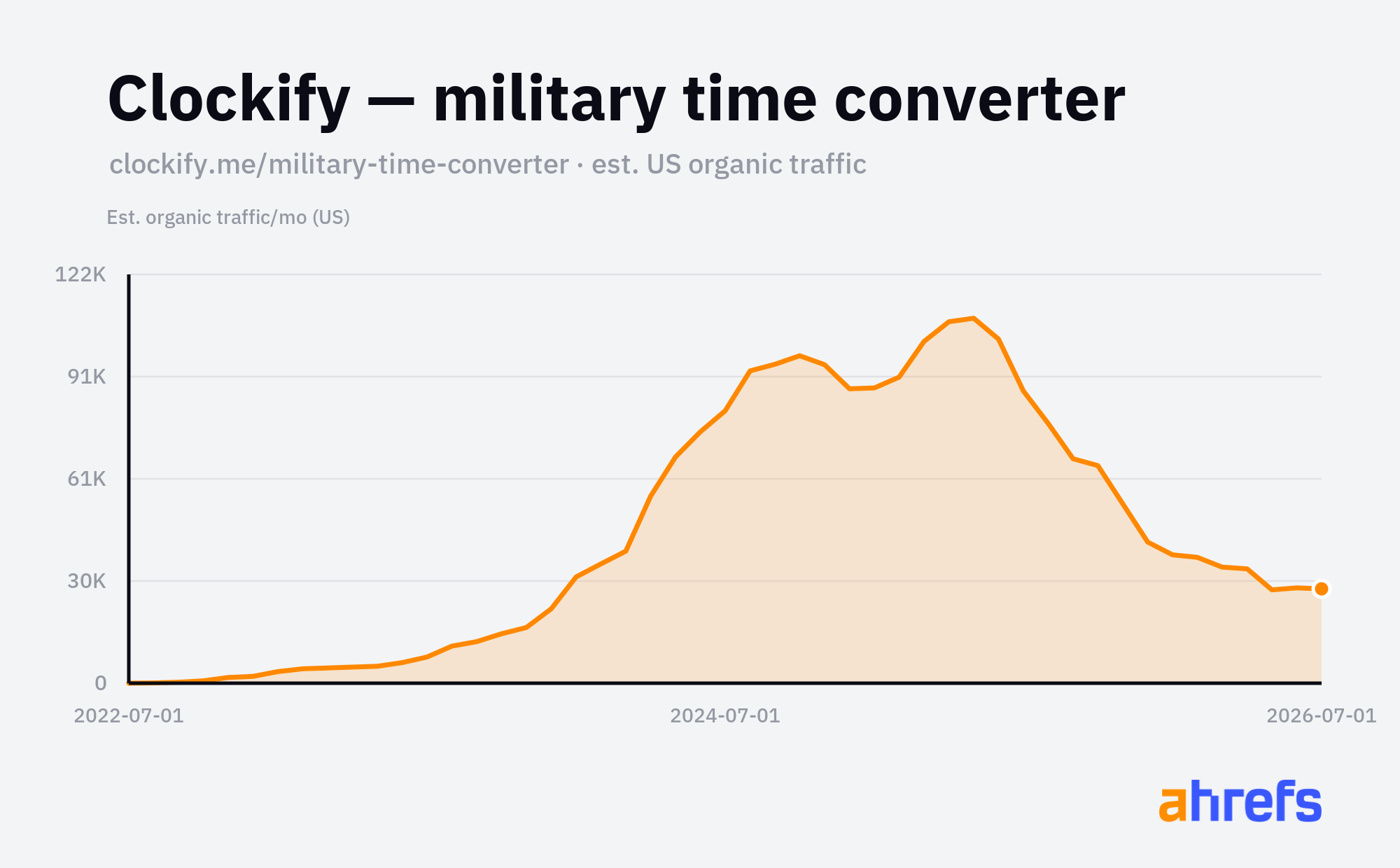
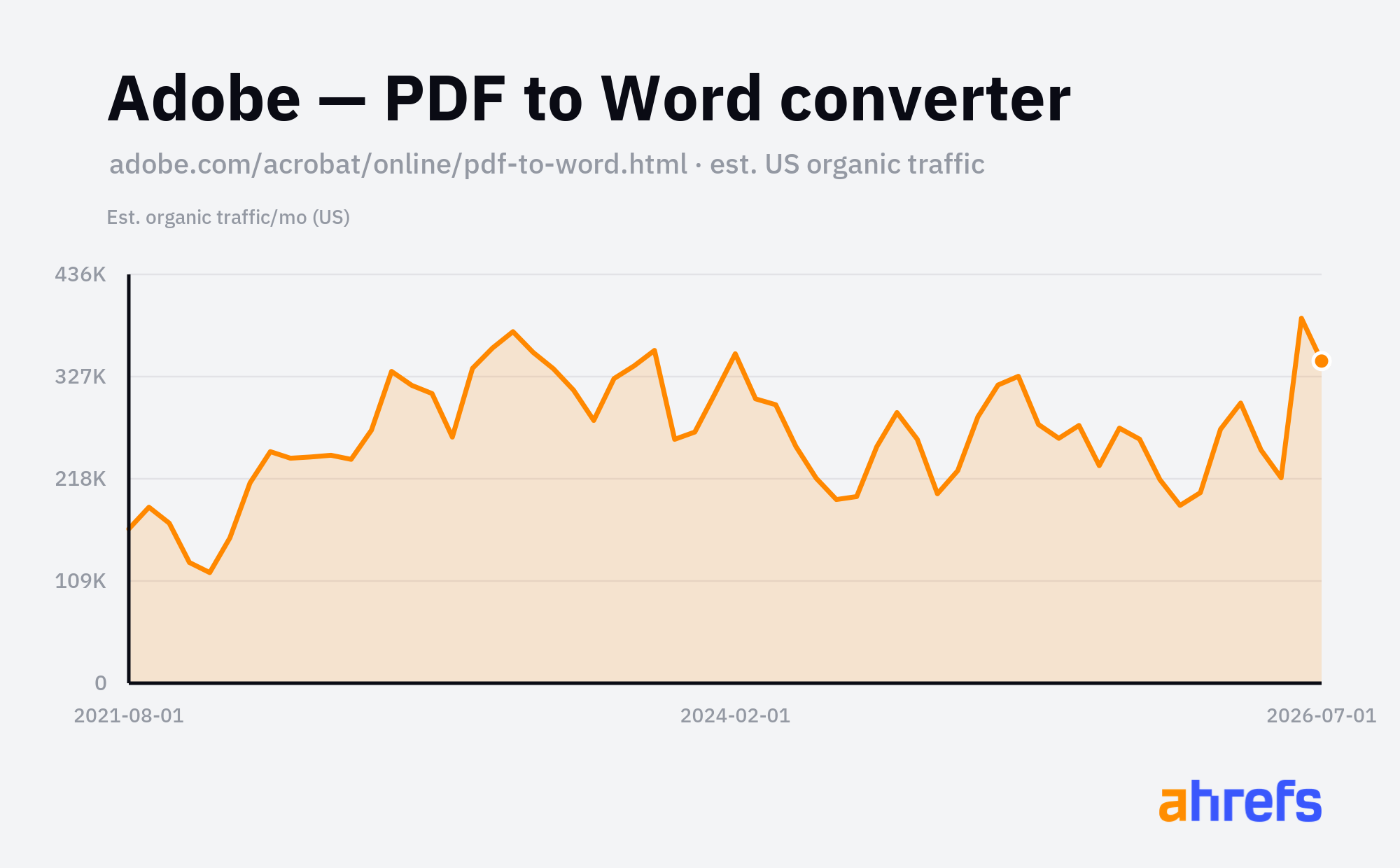
Time-tracking software Clockify utilizes its free military-time converter to attract around 31,200 monthly US visits, and its decimal-hours converter brings in another 2,400. These tools target individuals who might benefit from time-tracking services. Adobe’s free online converters, particularly its PDF-to-Word page, generate approximately 385,000 monthly US visits, serving as a significant top-of-funnel acquisition channel for its Acrobat Pro software.
High-volume converter keywords like "currency converter" and "pdf to word" are highly competitive. However, niche format pairs, such as "pdf bank statement to csv" (90 volume, 5 KD) and "psd to png" (2,800 volume, 4 KD), offer more attainable ranking opportunities. Seed patterns for converter keywords include "[niche format] to [niche format]," "convert [format] to [format]," and "[proprietary format] converter online."
Generators: Creating Content on Demand
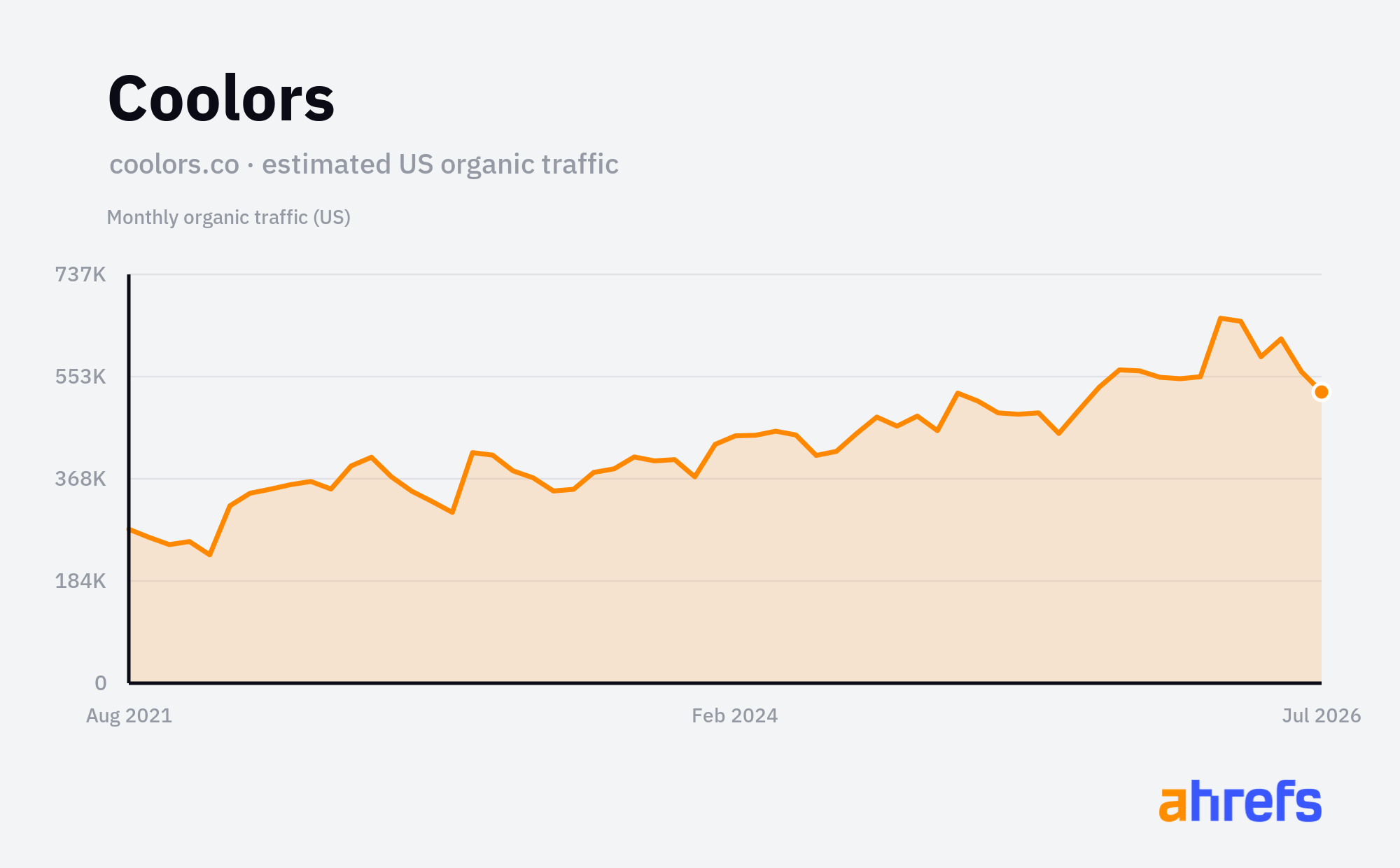
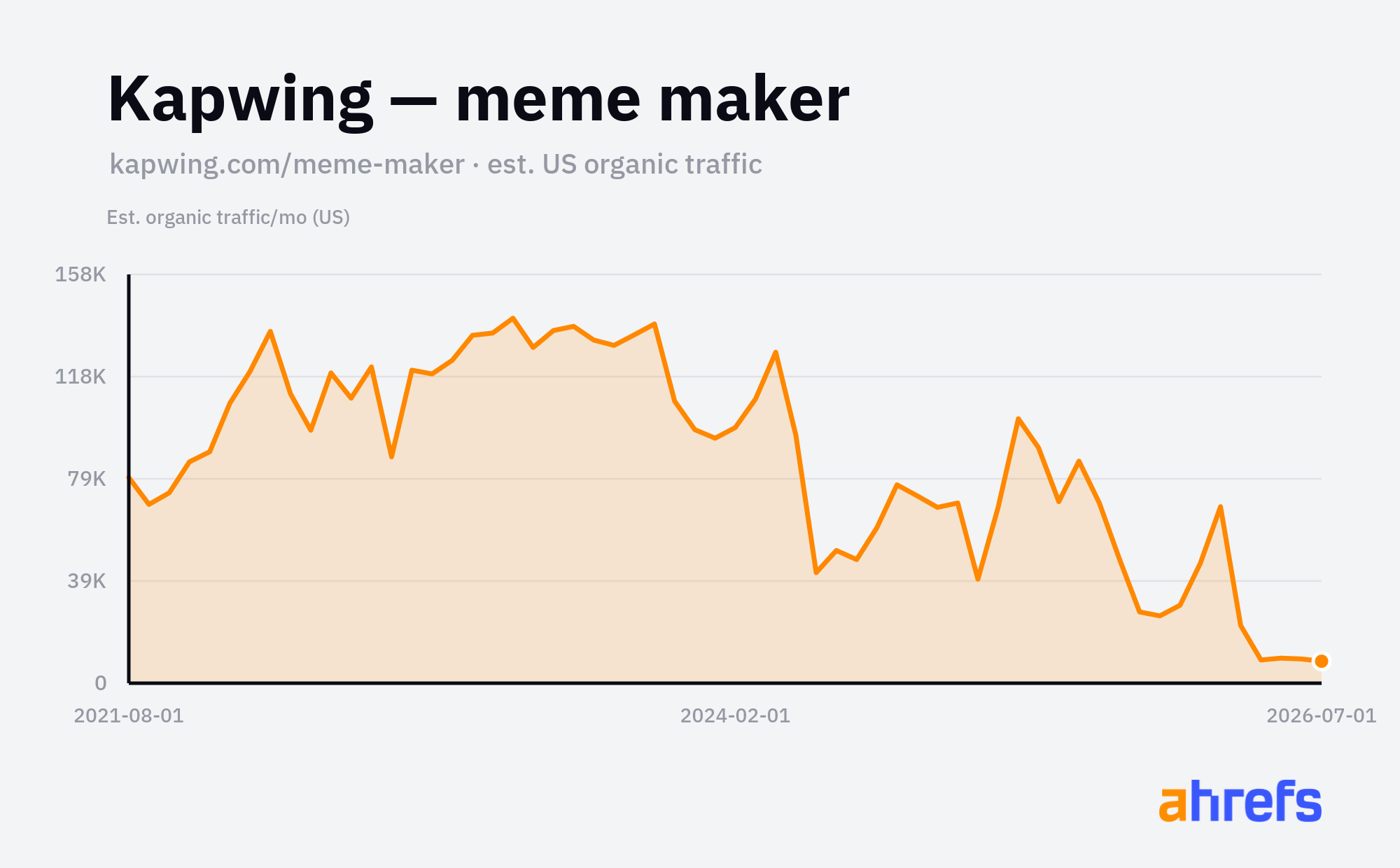
Generators produce new content based on user input or prompts. Coolors, a color palette generator, has expanded into a suite of design tools, nearly doubling its US organic traffic by ranking for "color palette generator" and related "generator" and "maker" queries. Kapwing, a video-editing tool, leverages free generators like its meme maker (10,500 monthly US visits) and subtitle generator (5,800 monthly US visits) to attract users who may later engage with its paid services. HubSpot’s free email signature generator attracts around 55,000 monthly US visits, targeting marketers and salespeople who align with its CRM and marketing software offerings.
Competitive head terms for generators include "qr code generator" (776,000 volume, 90 KD) and "password generator" (300,000 volume, 82 KD). Niche generator keywords like "band name generator" (11,000 volume, 7 KD) and "podcast name generator" (12,000 volume, 8 KD) present more accessible opportunities. Seed patterns for generator keywords include "[thing] generator," "[thing] maker," and "ai [thing] generator."
Templates: Providing Ready-Made Solutions
Templates offer pre-designed files that users can download and customize. Template.net ranks for numerous "template" queries, from doctor’s notes to obituaries, attracting around 700,000 monthly US visits. Venngage, an infographic maker, uses its /templates/ hub to draw about 11,000 monthly US visits, offering designs like org charts and infographics that can be edited within its platform. Canva’s /templates/ hub is a prime example, generating approximately 505,000 monthly US visits with a wide array of templates for budgets, meeting agendas, and more.
Generic template keywords like "resume template" (195,000 volume, 68 KD) and "invoice template" (111,000 volume, 43 KD) are highly competitive. However, specific document templates tailored to niche professions, such as "wedding seating chart template" (1,900 volume, 7 KD) and "construction estimate template" (1,200 volume, 2 KD), offer significant opportunities for ranking. Seed patterns for template keywords include "[document] template," "[document] example," and "printable [document]."
Finding, Building, and Shipping Your Own Tool
The process for leveraging these tool categories involves identifying winnable keywords in Ahrefs’ Keywords Explorer, building the tool with AI, and then deploying it on a website.
Tools offer a unique advantage in the current digital landscape by being largely immune to AI content summarization. While AI can synthesize articles, it cannot perform calculations or convert files, requiring users to interact directly with the tool on the webpage. The ease of AI-powered tool creation, coupled with genuine user appreciation for useful free resources, makes this a compelling strategy for acquiring durable search traffic, links, and goodwill.