11

Josh Mackanic, an engineer who dedicated a decade of his career to Pacific Gas and Electric (PG&E), embarked on a new mission driven by a persistent concern: the vast unknown beneath our feet. His tenure at one of the largest utility companies in the United States repeatedly highlighted a critical deficiency – a fundamental lack of comprehensive, centralized knowledge regarding buried infrastructure. This glaring gap in information, he realized, was not just an inconvenience but a systemic issue leading to significant financial losses, dangerous incidents, and operational inefficiencies across the industry.
Mackanic recounted a particularly impactful incident that solidified his resolve. "I had a job that got shut down because a pipe was in the excavation [that] we didn’t know about," he shared with TechCrunch. "Fortunately, we saw it before we impacted it." While disaster was averted, the aftermath was a stark illustration of the problem’s gravity. What followed was a protracted, three-day ordeal of frantic investigation. Teams scrambled, posing urgent questions: "Whose pipe is this? Can we tap it? Can we not? What’s in it?" The answers eventually emerged, but not before incurring a staggering cost of $60,000 in project delays. This single event underscored the immense, avoidable expenses utilities face daily due to fragmented subterranean data.
The challenge Mackanic observed at PG&E is not unique; it’s a pervasive issue for utility companies nationwide. While these entities possess detailed records for the miles of electric and gas lines they own and operate, their visibility stops there. Pipes carrying vital resources like sewage or water typically belong to other municipal departments or private entities, and crucially, so does the precise information about their exact location. This siloed data environment is a primary contributor to an alarming statistic: approximately 200,000 "utility strikes" occur annually across the U.S. These incidents, ranging from minor disruptions to catastrophic failures, result in billions of dollars in damages, service outages, environmental hazards, and, tragically, sometimes even injuries or fatalities.
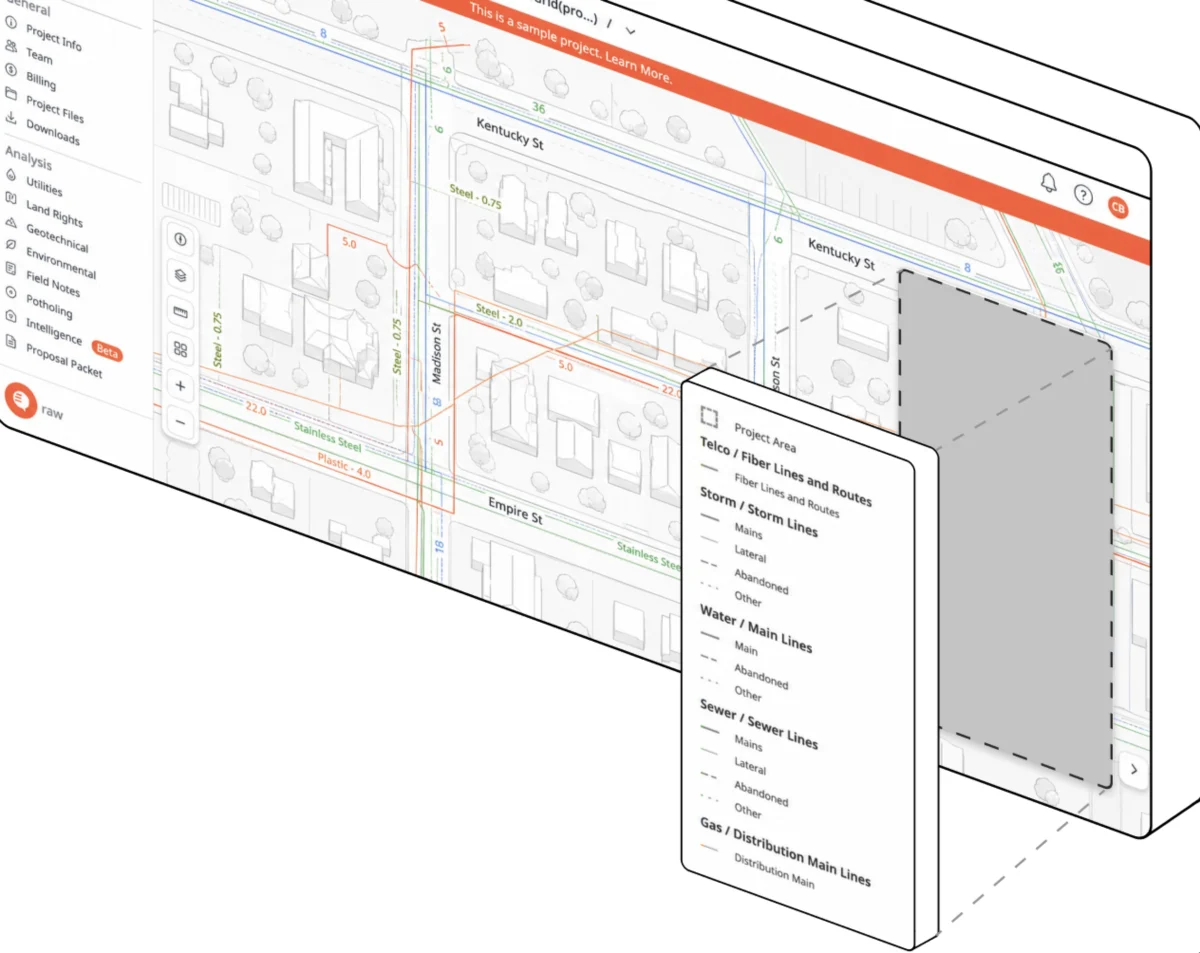
Motivated by this profound realization and the desire to provide a tangible solution, Mackanic founded CivilGrid in 2020. His startup’s ambitious goal is to bridge these critical information gaps by creating a unified, intelligent mapping system for what lies beneath the surface. CivilGrid meticulously gathers disparate data points related to utility assets, property ownership boundaries, and environmental regulations. It then integrates and bundles this complex information into a user-friendly, interactive platform that Mackanic playfully describes as "Google Maps for what’s underground." This innovative approach transforms fragmented, often outdated records into a cohesive, actionable dataset.
CivilGrid’s service is strategically targeted at key stakeholders: governments, civil engineering firms, and utility companies – a testament to its broad applicability and essential nature. Notably, among its growing client base is Mackanic’s former employer, PG&E, highlighting the industry’s recognition of the urgent need for such a solution. The company’s rapid progress and demonstrated value recently culminated in a significant financial milestone: a successful $26 million Series A funding round. This substantial investment is earmarked to accelerate CivilGrid’s growth and expand its capabilities.
The Series A round was led by Spark Capital, a prominent venture capital firm known for backing transformative technology companies. Additional crucial investment came from a consortium of early-stage funds, including Afore, A*, Ford Street Ventures, and SNR. Perhaps most tellingly, CivilGrid also secured investment from Energy Impact Partners, a fund distinguished by its numerous utility companies serving as Limited Partners (LPs). Mackanic specifically highlighted this particular investment as a powerful "vote of confidence from the industry," signaling that the very entities most affected by the problem are now actively supporting CivilGrid’s solution. This strategic alignment not only provides capital but also opens doors to invaluable industry insights and partnerships.
The impact of CivilGrid’s technology is already being quantified by its clients. Christine Cowsert, Senior Vice President of Enterprise Business and Technology Modernization at PG&E, articulated the value proposition in a statement, emphasizing the critical role CivilGrid plays in meeting California’s escalating energy demands. "California’s energy needs are growing rapidly, and our customers expect us to deliver the infrastructure they need safely, reliably, and affordably," Cowsert stated. She underscored that "planning smarter from the start with tools like CivilGrid" empowers PG&E teams to "identify risks earlier, build more efficiently, and avoid unnecessary costs while keeping safety front and center." This testimonial from a major utility client provides compelling validation of CivilGrid’s immediate and tangible benefits.
A detailed case study conducted by PG&E further illustrates the profound financial advantages of integrating CivilGrid’s platform. Through its application, PG&E identified an astonishing $60 million in avoidable paving costs across 1,600 planned gas distribution projects. This figure represents a massive saving that directly impacts operational budgets and, ultimately, customer rates. Such efficiencies are crucial for utilities striving to modernize infrastructure while maintaining affordability. Building on this success, Mackanic’s immediate vision for CivilGrid includes expanding its customer base significantly. Looking further ahead, he aims to tackle an even broader spectrum of "red tape" problems that frequently impede construction and infrastructure development in the U.S.
Mackanic outlined CivilGrid’s evolutionary path, from providing essential data to becoming a proactive solution provider. "Right now, we’re providing engineers the data to be able to make a decision" about infrastructure placement, he explained in an exclusive interview with TechCrunch. However, he envisions a future where CivilGrid moves beyond mere information delivery. "Once I’ve given them the constraints, it’s not too hard for me to say, ‘Well, I would recommend that you put the pipe down right here, and oh, by the way, here are the permits you need in order to move to construction on this pipe. Would you like me to file those permits? Okay, let me file those permits.’" This aspiration points towards CivilGrid evolving into an intelligent, automated platform that not only informs but also streamlines complex regulatory processes, significantly reducing project timelines and administrative burdens.
Mackanic believes there is "a lot more" CivilGrid can automate, particularly now that the core dataset has been built and the platform has captured the attention of "the core user who’s at the very early stages of making decisions about what’s going to be built." This strategic focus on the foundational planning stages allows CivilGrid to exert maximum influence on project efficiency and risk mitigation. The potential for automation extends beyond initial planning to encompass ongoing maintenance, emergency response, and future infrastructure upgrades, creating a continuous loop of optimized operations.
The concept of enhancing visibility into subterranean infrastructure is not entirely new, as Mackanic acknowledges. However, he asserted that previous attempts often faltered due to the formidable challenges involved in effectively collecting, sorting, and securing such vast and diverse datasets. Furthermore, striking up meaningful relationships with the numerous partners and entities most likely to benefit from and pay for this critical information has historically been a significant hurdle. CivilGrid’s success lies in its ability to overcome these complex data and relationship challenges.
Mackanic reflected on his decision to leave a secure position at PG&E to launch CivilGrid. "One of the reasons I left PG&E to start CivilGrid was because I felt like this was a problem that was going to be better solved from the outside in than the inside out," he explained. He clarified that this wasn’t due to a lack of awareness or interest within utilities. Instead, he pointed to the operational realities of the industry: "Utilities, they run relatively lean, right? Nobody wants to pay more for their gas bill than they have to." This lean operational model, while beneficial for consumers, often limits the internal resources and agility required for pioneering large-scale data aggregation and technological innovation. An external startup, unburdened by legacy systems and internal bureaucratic processes, could more effectively tackle such an ambitious endeavor.
Mackanic’s personal journey to becoming a utility tech entrepreneur was somewhat unexpected. Like many children, he harbored childhood dreams of launching rockets into space. He pursued mechanical engineering in both college and graduate school, initially envisioning a career far removed from the underground world of pipes and wires. "I was like, aren’t these places boring?" he recalled thinking about utility companies.
However, his decade at PG&E profoundly shifted his perspective. He came to realize the incredibly high stakes involved in utility work – the unseen, ceaseless effort required to ensure that millions of people can effortlessly turn on their lights or brew a pot of coffee every day without a second thought. This essential, yet often unappreciated, work forms the backbone of modern society. "The reality is, unfortunately, we do ourselves a disservice in not championing the extent to which they work wonders every day," Mackanic concluded, emphasizing the vital importance of the industry he is now helping to modernize and make safer. CivilGrid stands as a testament to his vision, transforming a hidden problem into a clear path forward for infrastructure development.