11


Atlassian has announced a fundamental shift in the architecture and capability of Rovo Chat, moving the platform from a retrieval-augmented generation (RAG) search tool to a sophisticated, autonomous agent harness designed to power end-to-end enterprise workflows. Originally conceived as a localized utility for searching internal Atlassian data across Jira and Confluence, Rovo Chat has rapidly expanded its footprint to integrate with over 50 third-party data sources. This evolution marks a transition toward "agentic AI," where the system acts as an always-on digital sidekick capable of planning work, managing complex cross-cutting tasks, and operating independently in a distributed environment. As the industry sees a convergence between code-executing agents and standard chat applications, Atlassian is positioning Rovo as a generalized personal assistant that mirrors the robustness of professional development environments.

To facilitate this transition, Atlassian has moved away from simple, synchronous tool calling in favor of a robust, distributed execution model. This new framework is built upon a "split-plane architecture," which intentionally separates the control plane from the data plane. By decoupling these two elements, Atlassian can scale each component independently, ensuring that the system remains resilient even under heavy computational loads. This architectural choice addresses the inherent risks of a monolithic design, where a failure in the execution environment could crash the entire user session. In the new distributed model, the control plane manages the user interaction and high-level logic, while isolated compute sandboxes handle the actual data processing and tool execution.
The split-plane architecture provides several critical advantages for enterprise-grade reliability. First, it enables "graceful degradation." Because the chat interface—the primary layer for the user—is hosted on the control plane, any failure within the underlying execution sandbox is abstracted away. If a sandbox container crashes during a complex task, the system can transparently spin up a new instance and retry the operation without the user perceiving an interruption. Second, the architecture allows for efficient scaling. Lightweight queries can be handled by smaller sandbox instances, while heavy data-crunching tasks automatically trigger the allocation of larger compute resources. This ensures optimal performance while managing operational costs. Finally, this design increases "agent density," allowing a single scaled control service to manage background events and notifications for millions of users simultaneously, ensuring that agents remain "always available" to respond to triggers in real-time.
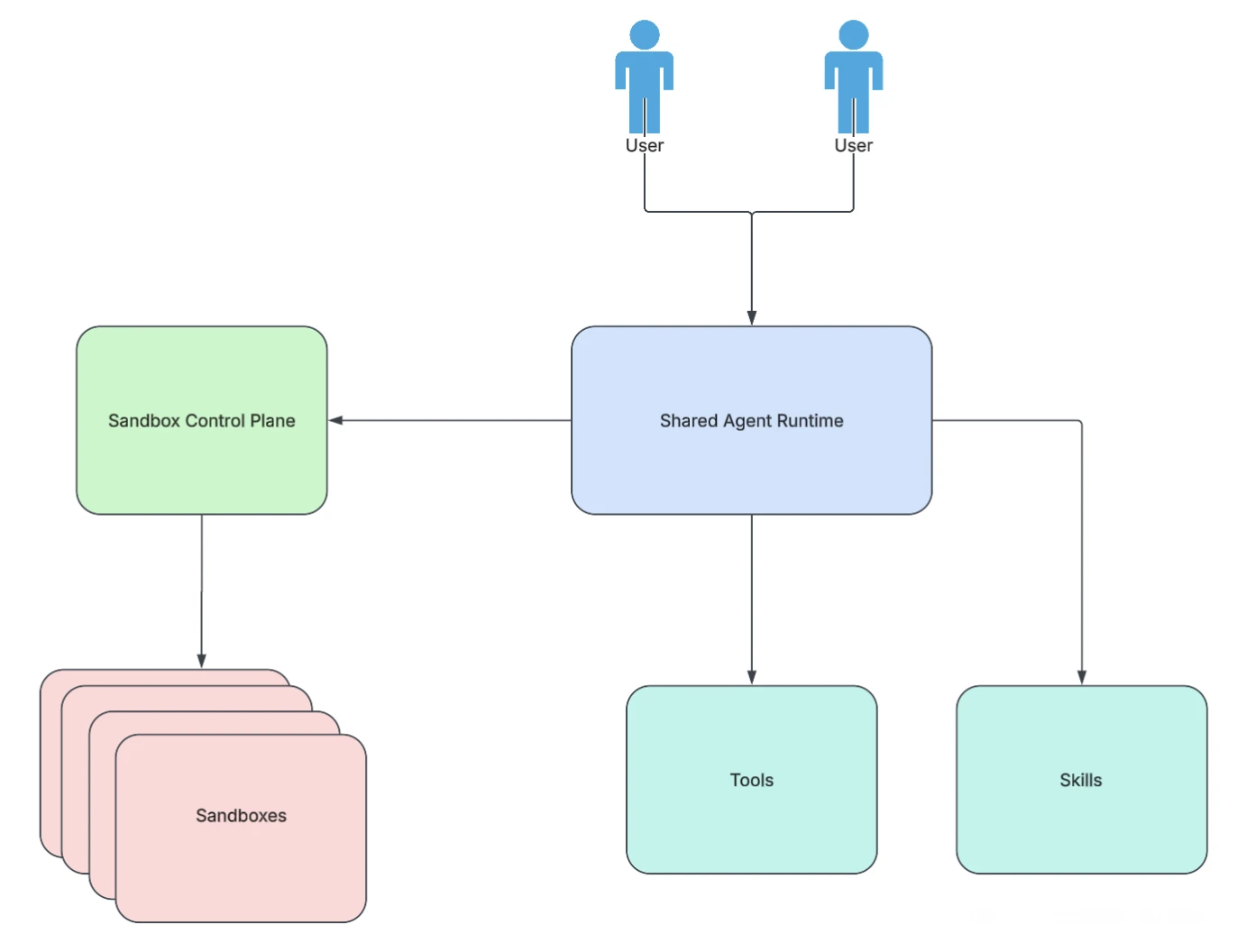
A cornerstone of this technological leap is the move "Beyond MCP" (Model Context Protocol) toward programmatic tool calling within an isolated sandbox. While standard Large Language Models (LLMs) often struggle with large-scale data iteration and pagination, Atlassian’s new harness offloads these repetitive tasks to direct code execution. This approach, which mirrors recent innovations such as Anthropic’s "computer use" and Cloudflare’s "programmatic tool calling," allows the agent to handle massive volumes of Jira work items and Atlas goals without being throttled by the sequential nature of LLM tool invocation. The sandbox serves as a stateful environment where the agent can store temporary information, generate visualizations, and create interactive artifacts for the user. By combining this programmatic access with "progressive disclosure," Atlassian safely exposes thousands of API actions across both first-party and third-party products, achieving comprehensive coverage without overwhelming the model’s context window.
The efficiency of this new execution model is validated by Atlassian’s internal performance metrics. By implementing "code mode"—where the agent writes and executes Python code to solve problems—the company recorded a reduction in latency for complex Jira queries of over 50%. Furthermore, token consumption was slashed by 55%, significantly reducing the cost of operations, while accuracy improved by 30% compared to a baseline harness using standard meta-tools. To manage the vast library of tools available to the agent, Atlassian utilizes a dynamic CI/CD pipeline. New tools are versioned and packaged into localized Python libraries that are loaded into the sandbox on a "warm start," maintaining startup times of under 100 milliseconds. This hybrid design allows the agent to access both internal, statically defined tools and remote MCP servers managed by third-party providers.
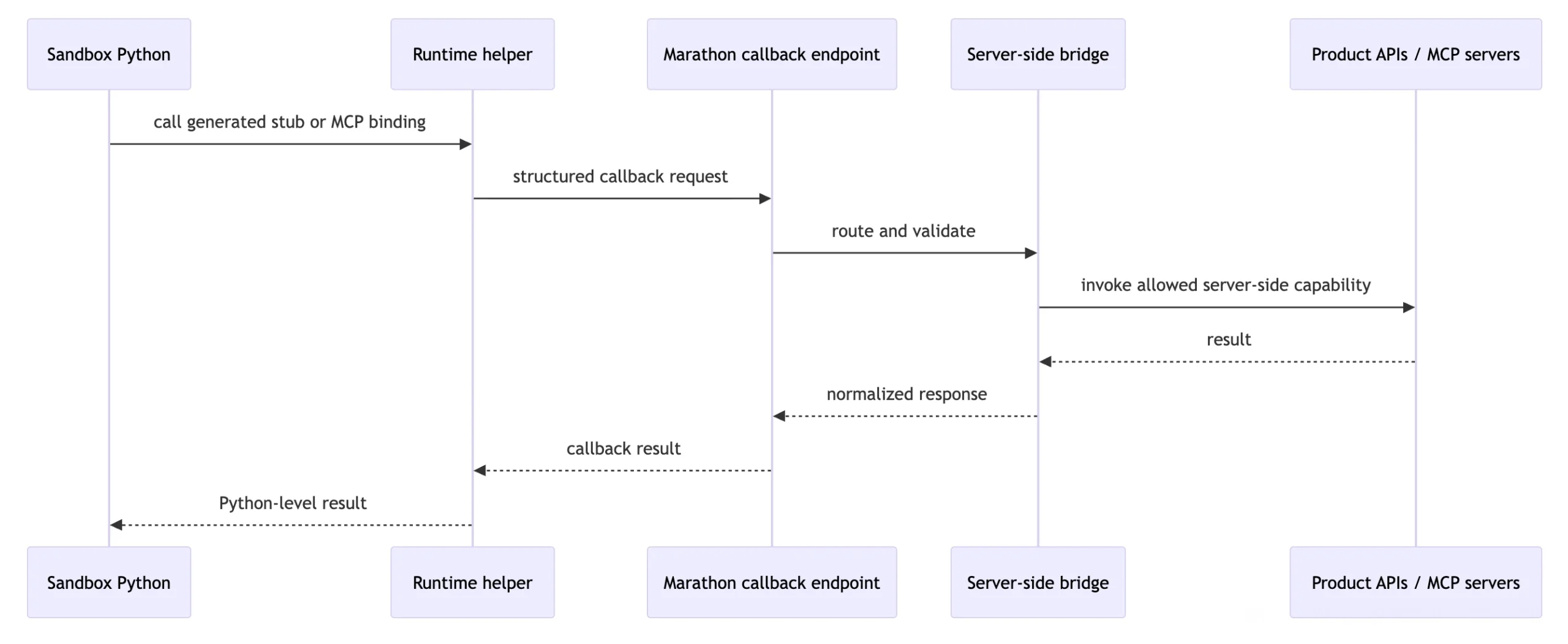
Security and data integrity remain central to the Rovo Chat evolution, managed primarily through a "Callback Bridge." Because the sandbox environment is isolated to prevent unauthorized external network access, all tool calls are routed back through an internal server. This bridge acts as a secure translator and validator, ensuring that user permissions are verified and requests are authenticated before any external API is invoked. This "zero-trust" approach to agent execution ensures that even as the agent gains more autonomy, it cannot bypass the security protocols established by the enterprise.
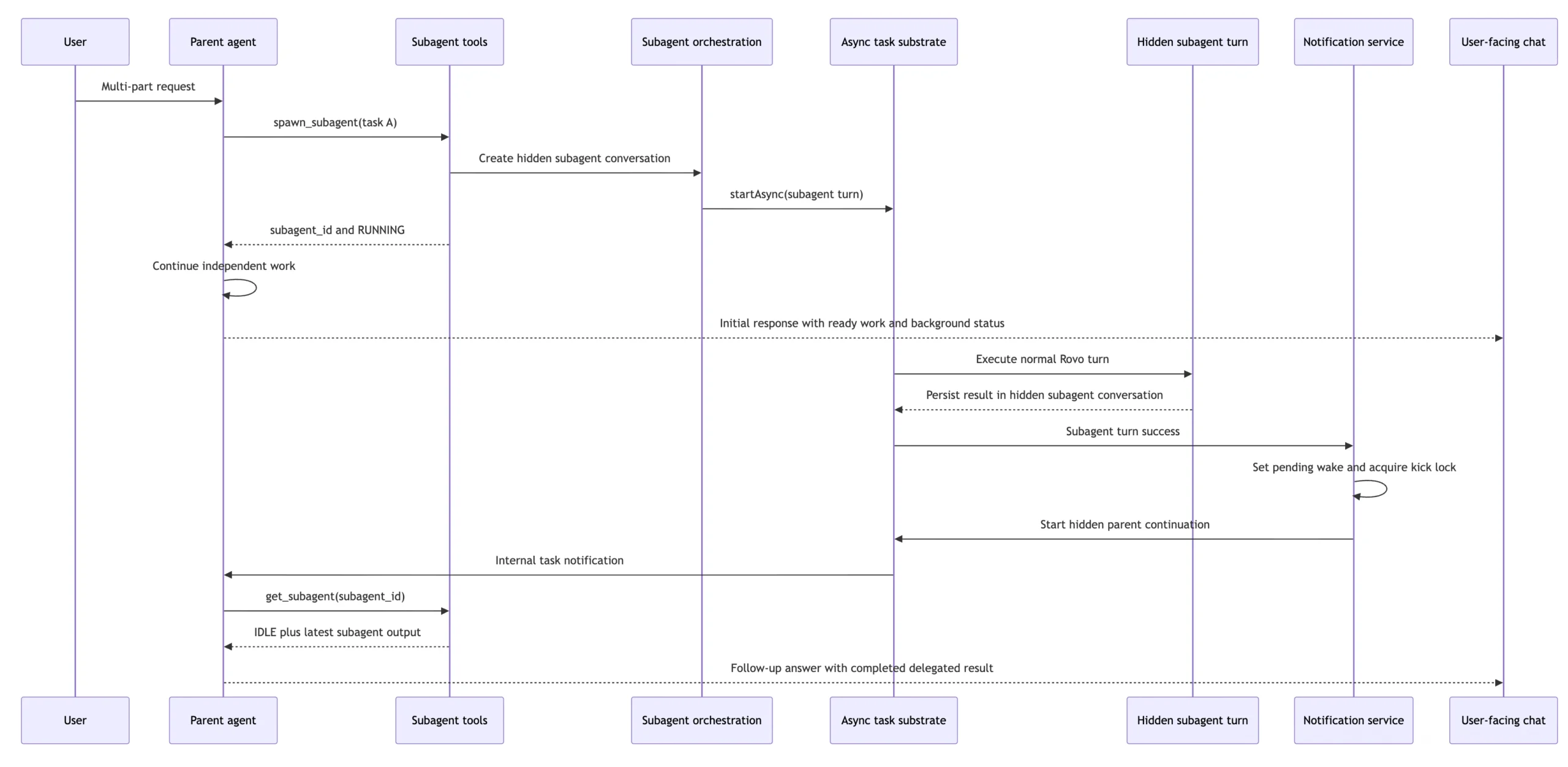
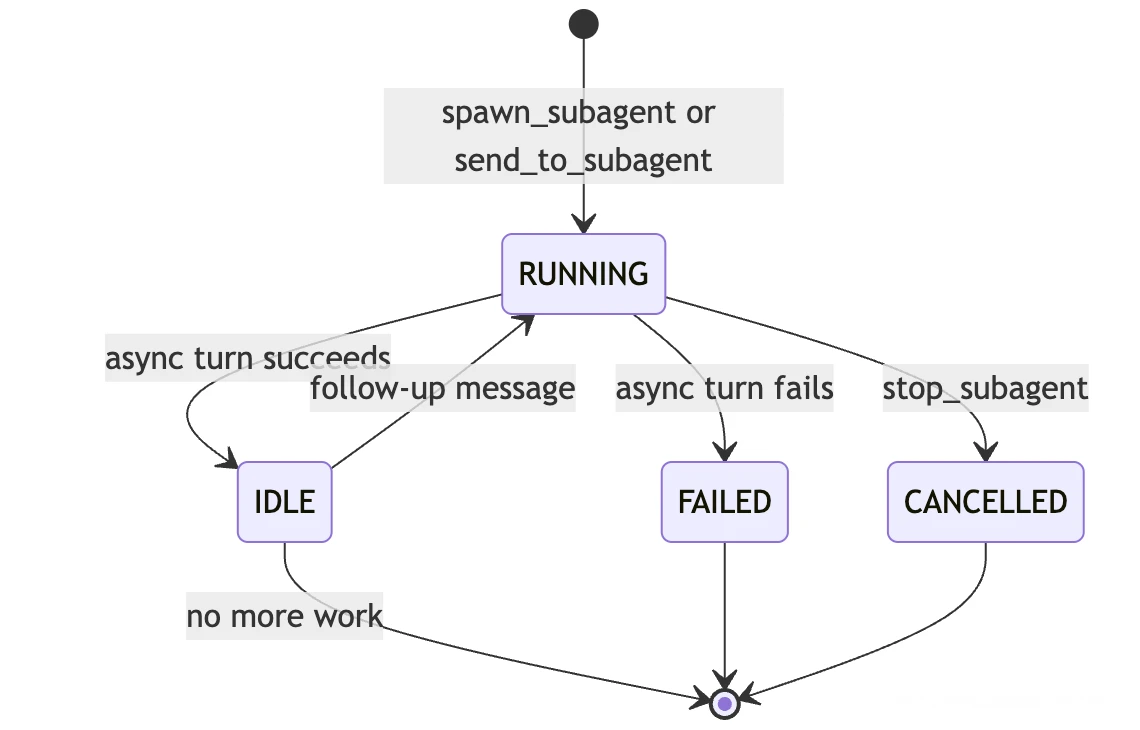
The transition to a multi-agent system represents another significant milestone in the Rovo roadmap. In previous iterations, Atlassian utilized single-use sub-agents that functioned synchronously and lacked persistent state. The new architecture introduces "interactive sub-agents" that can be delegated independent work by a parent agent. These sub-agents can operate in the background, outliving the parent’s immediate response turn and maintaining their own independent conversation history. Architecturally, these are not mere ephemeral function calls but are instantiated as hidden Rovo Chat conversations with durable handles. They can perform parallel workflows, such as triaging notifications or monitoring data streams, and "wake" the parent agent only when a task is completed or requires human intervention.
Recognizing that LLMs will inevitably encounter edge cases or unexpected parameters, Atlassian has built sophisticated error-recovery scaffolding into the harness. This includes "Discovery Probes," which intercept runtime errors and return rich, structured feedback to the model. Instead of falling into a blind retry loop that wastes tokens, the agent receives guidance on correct function signatures and available parameters, allowing it to self-correct. Additionally, the system employs "Checkpointing" by snapshotting the execution state at key milestones. If a multi-step automation fails late in the process, the agent can perform a precise rollback to the last successful state, preventing the creation of duplicate artifacts or "Entity Already Exists" errors.
The long-term value of the Rovo Chat harness lies in its capacity for "systematic self-evolution." Atlassian has integrated the agent harness directly into an automated evaluation pipeline. When the agent encounters a failed query or an inefficient execution path, the telemetry is flagged and analyzed. This data is then fed back into an evaluation suite where engineers can review and approve optimizations. This continuous feedback loop ensures that the agent improves its performance over time without requiring constant manual prompt engineering. While the current evolution flow still involves human oversight, Atlassian envisions a future where software engineers focus on higher-order work—such as defining guardrails and setting goals—while agents handle the repetitive, deterministic logic of workflow management.
As Rovo Chat moves forward, Atlassian aims to transform it into a "digital twin" for every user. This assistant will not only remember past actions and conversations but will actively monitor work streams to autonomously execute complex workflows. The shift from simple retrieval to intelligent, context-aware agency marks a new era for enterprise productivity, where AI functions as a creative sparring partner and an autonomous background operator. By building a foundation of resilience, security, and self-optimization, Atlassian is preparing its ecosystem for a future where the boundaries between human planning and machine execution become increasingly seamless. This technological trajectory suggests that the role of the AI assistant is no longer just to answer questions, but to actively participate in the lifecycle of project management and software development.