 11

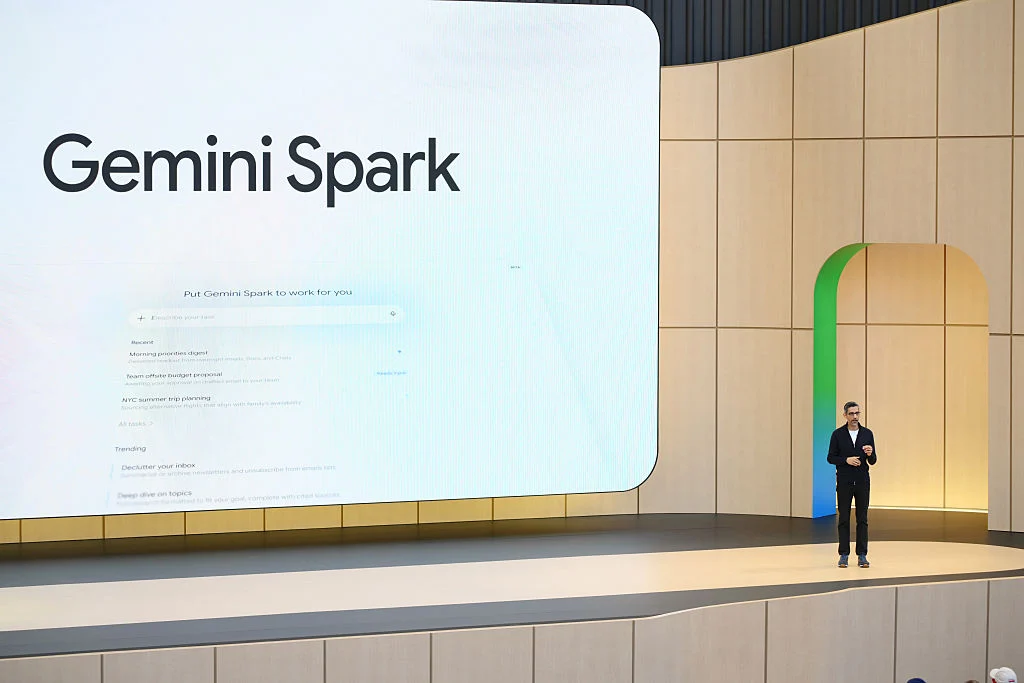
Google’s recent announcement regarding new Gemini Live voice features, unveiled on a Wednesday, articulated a vision of streamlined interaction, asserting that users "shouldn’t have to guess whether a task requires Spark, a Daily Brief, or a quick inbox search." This statement was presented as a core promise: that the updated Gemini application would adeptly handle a diverse array of tasks through intuitive voice commands, eliminating the need for users to navigate complex interfaces or distinguish between different AI functionalities. However, a critical paradox emerges from Google’s own design philosophy: by assigning distinct brand identities to virtually every Gemini AI feature, the company inadvertently undermines this very message of seamless integration and ease of use, leading to a cluttered and potentially confusing user experience.
The practical implementation within the Gemini app illustrates this challenge vividly. Users are presented with a choice between "chat," "Spark," and "Daily Brief"—three disparate features, each meticulously branded with its own unique icon and assigned a specific location within the app’s navigation framework. This proliferation of distinct features, while perhaps reflecting internal development structures or modular design, translates into a fragmented and cumbersome consumer experience. Rather than offering a unified AI assistant that intelligently discerns and executes user requests, Gemini demands that its users actively select the appropriate mode for each task. Such a design approach suggests an ongoing struggle for Gemini to identify and deliver a truly singular, compelling "killer feature" that would intuitively encompass a broad spectrum of user needs without requiring explicit mode switching.
Consider the "Daily Brief" feature as a prime example of this engineering-driven design. This functionality appears to cater more to the conceptual elegance admired by an AI engineer than to the practical, immediate needs of an everyday user. Conceived as an AI-enabled agenda, Daily Brief promises to deliver "proactive, personalized updates" by intelligently extracting and synthesizing data from a user’s integrated Google applications, such as Gmail and Calendar. In theory, this sounds like a valuable tool for productivity and organization. Yet, in practice, its execution often falls short of expectations. The Brief frequently struggles to differentiate between genuinely urgent or actionable information—like an impending meeting or a critical email—and unsolicited, often tangential nudges. It might prompt a user to continue research previously initiated in the chatbot, or, more jarringly, resurface prior Google searches.
This latter aspect, the resurfacing of old search queries, often elicits a sense of discomfort rather than utility. For instance, if a user had previously researched college scholarships or animal rescues on Google, the AI’s subsequent, unprompted reminder about these topics can feel intrusive. It crosses a line from helpful context into what many perceive as "creepy." The user’s engagement with a search engine for specific information does not automatically imply a desire for an AI to continually tap them on the shoulder about those past inquiries, especially when the context or urgency has long passed. This raises questions about privacy, user agency, and the appropriate boundaries of AI-driven proactive assistance.
Conversely, "Spark" represents one of the more genuinely useful components of the Gemini app. It functions as an AI agent capable of taking concrete actions on behalf of the user, moving beyond mere information retrieval or summarization. This capability to execute tasks is a significant step towards a truly assistive AI. However, Google’s decision to brand Spark as a distinct, standalone feature within the app presents an unnecessary hurdle. While internal teams at Google might naturally coalesce around a "Spark team," this internal organizational structure need not be reflected directly in the consumer-facing product. A mainstream AI app user should not be burdened with the mental overhead of determining which "side" of the AI application they need to enter to accomplish a given task. The ideal user experience dictates that a user should simply articulate their request—whether through voice or text—and the underlying AI system should intelligently decipher the intent and automatically deploy the appropriate agent or functionality to fulfill it, without requiring explicit user selection of a branded mode.
This issue of exposing internal architecture directly to consumers, rather than abstracting it behind a simpler, more intuitive interface, is not unique to Google’s Gemini; it appears to be a pervasive challenge across the AI industry. Many leading AI platforms exhibit a similar tendency to segment their functionalities into distinct, often branded, interaction modes. For example, users of Anthropic’s Claude often find themselves contemplating whether to "chat" with the AI or to engage in "Cowork." Until very recently, a significant flaw in this design was that these two modes within the Claude app did not even share a continuous memory of past conversations, leading to a disjointed and frustrating experience where context had to be repeatedly re-established. Similarly, OpenAI’s ChatGPT requires users to consciously swap between "Chat" and "Work" modes depending on their current task.
This engineering-minded approach to design, where the user is made aware of the underlying functional divisions, often makes interacting with AI feel unnatural and cumbersome. Consumers are effectively asked to learn the specific brand names for what are fundamentally different interaction paradigms or "surfaces" powered by the company’s core AI model. This creates an unnecessary cognitive load and steepens the learning curve for technologies that are ostensibly designed to simplify life. The focus shifts from solving user problems seamlessly to understanding the internal taxonomy of the AI provider.
In contrast to this trend, Apple’s somewhat "anticlimactic" approach to integrating AI, particularly through its enhancements to Siri, holds the potential to ultimately win over a broader consumer base. Apple’s strategy is characterized by its subtlety and seamless integration. Instead of introducing new, branded AI applications or demanding changes in user behavior, Apple simply makes the applications and features that users already habitually employ—such as Spotlight Search, the Photos app, the iPhone’s Camera, and existing Siri voice requests—incrementally smarter. For instance, AI capabilities enhance image recognition in Photos, provide more contextual search results in Spotlight, or power more sophisticated computational photography in the Camera. The brilliance of this approach lies in its "invisible" nature; users gain the benefits of advanced AI without ever having to learn a new interface, download a separate app, or even consciously think about "using AI." The intelligence is embedded, enhancing existing functionalities rather than creating new, distinct ones.
This very principle of simplicity and integration may also explain the burgeoning rise of text-based AI services. A growing ecosystem of startups, including Poke, Ollie, Lindy, Orchid, Lucas, Folk, Tomo, and Instinct, are developing AI assistants that operate primarily through text messaging. The user interaction is remarkably straightforward: one simply texts a chatbot, much like texting a friend, and the assistant proceeds to fulfill the request. This model leverages the inherent familiarity and ubiquity of text messaging as a user interface. It requires no additional mental effort to navigate complex menus, select features, or discern which specific product within a larger application is best suited for a task.
As Justine Moore, an investment partner at a16z, succinctly articulated, "People don’t want to open an app every time they need help – they want a contact they can text like a friend. And the gold standard is iMessage." This observation highlights a profound user desire for AI interactions that are as natural, immediate, and frictionless as sending a text message. The established paradigm of text messaging provides a clean, simple, and universally understood user interface that removes the barriers of cognitive friction often introduced by multi-modal AI applications with their array of branded features.
In conclusion, while Google’s Gemini Live voice features represent a commendable step towards more intuitive human-computer interaction, the company’s internal branding strategy for features like Spark and Daily Brief risks undermining this very promise. This issue reflects a broader industry trend where the internal architectural complexities of AI systems are prematurely exposed to the end-user, leading to cluttered interfaces and fragmented experiences. In contrast, approaches championed by Apple, which integrate AI seamlessly into existing functionalities, and the emerging wave of text-based AI services, which leverage the inherent simplicity of messaging, offer compelling alternatives. The future of successful AI adoption hinges not on the proliferation of branded features, but on the ability to deliver powerful, proactive, and context-aware assistance through an interface so intuitive and integrated that it effectively fades into the background, making our digital lives effortlessly smarter.