 11

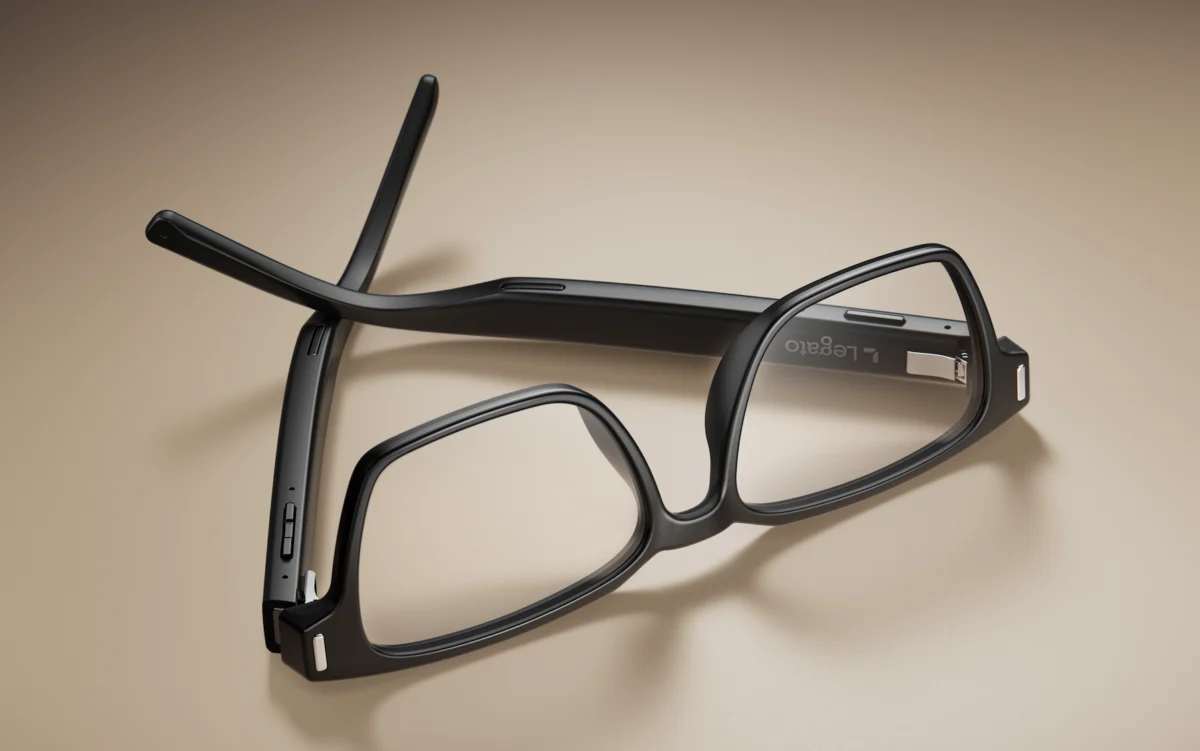
San Francisco, CA – A significant hurdle in public health and personal well-being, hearing loss impacts an estimated 50 million adults across the United States. Despite the widespread prevalence, a staggering statistic reveals that only approximately 20% of those diagnosed with hearing loss actively seek treatment. This substantial gap in care often stems from factors such as the high cost, perceived discomfort, and the persistent social stigma associated with traditional hearing aids. Addressing this critical unmet need, Legato, an innovative new hearing technology company, has officially emerged from stealth, announcing $12 million in funding and unveiling its groundbreaking AI-powered hearing glasses, the Legato Frames. The company aims to make hearing assistance as commonplace and acceptable as vision correction.
The startup’s emergence was accompanied by an exclusive reveal to TechCrunch, detailing its initial funding round and providing a first look at its flagship product. The Legato Frames represent a sophisticated integration of the company’s patented hearing-assistance technology directly into the arms of stylish eyewear frames. This ingenious design not only offers a discreet and aesthetically pleasing solution but also leverages the familiar form factor of eyeglasses, which many individuals already wear. The much-anticipated Legato Frames are slated for a commercial launch later this fall, promising a new era of accessible and stigma-free hearing support.
At the helm of Legato are co-founders Mehul Trivedi and Steve Romine, a duo whose extensive and complementary backgrounds in wearables and hearing care position them uniquely to disrupt the market. Both Trivedi and Romine bring a wealth of experience from their tenure at Bose, a company renowned for its audio innovations. During his time at Bose, Trivedi was instrumental in leading the creation of the acclaimed Bose Frames, an early pioneer in smart eyewear that integrated audio technology. Romine, meanwhile, oversaw Bose’s dedicated hearing aids division, gaining deep insights into the complexities and challenges of the traditional hearing care industry.

Following their impactful contributions at Bose, both founders further honed their expertise in related fields. Trivedi transitioned to EssilorLuxottica, a global leader in eyewear, where he spearheaded smart eyewear initiatives and played a key role in the development of the Meta Ray-Bans. This experience further solidified his understanding of combining advanced technology with everyday eyewear. Romine, on the other hand, continued his focus on hearing care, serving as Chief Operating Officer at Audicus, a company committed to making hearing aids more affordable and accessible.
The genesis of Legato traces back to late 2024. After years dedicated to larger corporate endeavors, Trivedi took a sabbatical to delve into the burgeoning intersection of hearing technology and smart eyewear. During this exploratory period, he encountered a specific technological advancement that he believed held the key to seamlessly merging these two domains. Recognizing the immense potential and the need for a seasoned partner, Trivedi reached out to Romine, and together, they founded Legato. Their shared vision was to create a product that not only enhanced hearing but also integrated effortlessly into users’ daily lives without the encumbrances of existing solutions.
Mehul Trivedi articulated the company’s ambitious philosophy in an interview with TechCrunch, stating, "Our goal is to make hearing as ubiquitous as vision." He drew a compelling analogy to the process of vision correction: "It’s kind of a no-brainer that you go to an eye exam, you get your glasses, you wear your glasses, and you’re happy, and you do that for the rest of your life — and the idea of it being blurry again where you would just stop wearing them is not a consideration. I think that’s what we want to do with hearing: just make it something that people address and almost forget about." This vision underscores Legato’s commitment to normalizing hearing assistance, making it a simple, integrated part of daily life rather than a conspicuous medical device.
Legato’s strategic focus is on individuals experiencing mild to moderate hearing loss. This demographic represents the largest segment of the overall hearing-loss population, a market often underserved or hesitant to adopt traditional solutions. The company’s initial mission was built upon three core pillars: addressing the prohibitive cost, enhancing user comfort, and dismantling the pervasive social stigma associated with conventional hearing aids.

To achieve this, Legato invested heavily in product development, meticulously engineering the Legato Frames to be as small and lightweight as possible. This was accomplished through the development of a proprietary acoustic system, a sophisticated signal-processing stack, and an innovative mechanical architecture. These technological advancements allowed Legato to miniaturize complex hearing assistance components and embed them discreetly within standard eyewear frames, ensuring that the glasses feel and look like regular prescription or fashion eyewear.
A key differentiator for Legato Frames lies in their advanced AI-powered sound processing. Traditional hearing aids typically rely on directional microphones, which, while effective in quiet environments, often struggle in complex, noisy settings like bustling restaurants or social gatherings. These devices amplify all sounds from a specific direction, leading to a "cognitively draining" listening experience where the user expends significant mental effort to discern speech from background noise. Legato’s innovative approach utilizes an intelligent AI system capable of discerning and separating background noise from human voices, amplifying only the latter. This allows for clearer, more natural conversations, significantly reducing the mental fatigue often associated with traditional hearing aids.
Trivedi emphasized the user-centric design philosophy, stating, "We wanted to deliver an experience that was unique. So a form factor that’s really discreet and looks normal. They’re meant to feel and look like regular glasses. And so, we want it to be a product that’s effortless, easy to use, with kind of no controls that you need to fiddle with, works everywhere, works throughout your day, doesn’t need a ton of configuration, and just delivers you better hearing." This highlights the company’s commitment to creating an intuitive and seamless user experience, moving away from complex adjustments and settings often found in conventional devices.
Despite their open-ear design, which might typically raise concerns about sound leakage, Legato Frames incorporate a sophisticated dual-speaker system. This innovative design precisely directs sound towards the wearer while simultaneously employing advanced sound-canceling technology to mitigate sound escaping to the surroundings. The result is an impressive 99% reduction in sound audibility just a few inches away from the ear, ensuring privacy and preventing disturbance to others. This technical feat addresses a common concern with open-ear audio devices, making the Legato Frames suitable for various social and professional environments.

The $12 million funding round, spearheaded by prominent venture capital firms including Neotribe Ventures, Listen, and Village Global, underscores the significant investor confidence in Legato’s vision and technological prowess. These funds have been strategically allocated, primarily directed towards accelerating product development – including further research and development, refining manufacturing processes, and scaling production – as well as robust marketing efforts aimed at raising awareness and challenging entrenched perceptions about hearing assistance.
Trivedi further elaborated on the profound impact Legato aims to achieve. "We have an opportunity to address a population with this product and build something that delivers without all the compromises of traditional hearing aids," he remarked. He then expanded on the broader implications of improved hearing: "Hearing, at first glance, it’s not so much just like ‘I want to hear the TV better.’ It’s really about connection. When you hear better, you connect to the world. It reduces dementia risk and depression risk." This highlights the critical link between hearing health and overall well-being, emphasizing that Legato Frames are not just about amplifying sound but about fostering social engagement, cognitive health, and an improved quality of life. Trivedi concluded, "There’s impactful hearing health factors associated with better hearing. We’ve got a product that lives on people for 16 hours that is trusted to help them with their hearing and their vision, and we’d love to continue helping them in every way we can."
Upon their anticipated launch later this year, Legato Frames will be made available through a carefully selected network of eye-care providers nationwide. This distribution strategy is intentional, leveraging existing professional channels where individuals already seek vision care, further integrating hearing health into a familiar and accessible framework. Critically, Legato states that its frames will "cost a fraction" of traditional hearing aids, making advanced hearing technology more financially attainable for a broader audience. Furthermore, the company anticipates that when purchased through an eye-care clinic, Legato Frames may be eligible for vision insurance, providing an additional pathway to affordability and accessibility, thereby breaking down two of the most significant barriers to hearing loss treatment.
Legato’s entry into the market signals a potential paradigm shift in how hearing loss is perceived and addressed. By combining cutting-edge AI, discreet design, and a focus on user experience, the company is poised to make significant strides in closing the treatment gap and empowering millions to reconnect with the world around them.






