11

Atlassian has announced a significant suite of updates for Jira Cloud, aimed at consolidating fragmented project management workflows into a single, AI-powered ecosystem. By integrating individual capacity planning, advanced formula fields, and real-time space insights, the company seeks to eliminate the reliance on disconnected spreadsheets and static status decks that frequently lead to data misalignment. These features are designed to provide a unified environment where work execution, financial budgeting, and resource management coexist, allowing Atlassian’s AI agent, Rovo, to leverage full organizational context for more accurate risk assessment and project forecasting.
The primary challenge addressed by this update is the systemic fragmentation of project data. In many enterprise environments, capacity plans, budget trackers, and task lists reside in separate, siloed systems. This lack of synchronization often results in "stale" data, where a spreadsheet becomes obsolete the moment it is shared or a budget page fails to reflect real-time labor costs. By bringing these elements directly into Jira, Atlassian ensures that as work progresses, the associated plans and financial metrics update automatically. This integration is foundational for the deployment of AI tools, which require comprehensive, live data to provide meaningful insights rather than superficial summaries.
A cornerstone of this release is the new Capacity view, designed specifically for team leads and resource managers. Historically, determining team bandwidth required manual data entry into external tools or frequent status meetings. The new individual capacity planning feature allows leads to visualize bandwidth in a single interface, identifying which team members are overloaded before performance issues arise. Users can assign time in hours, percentages, or days, providing flexibility for different management styles. Crucially, the system accounts for non-project variables such as planned leave, on-call shifts, and routine operational work. By housing capacity and actual work in the same system, availability remains current even when project priorities shift mid-sprint. This prevents the "fire drill" scenario where teams realize they are over-committed only after a deadline has been missed.
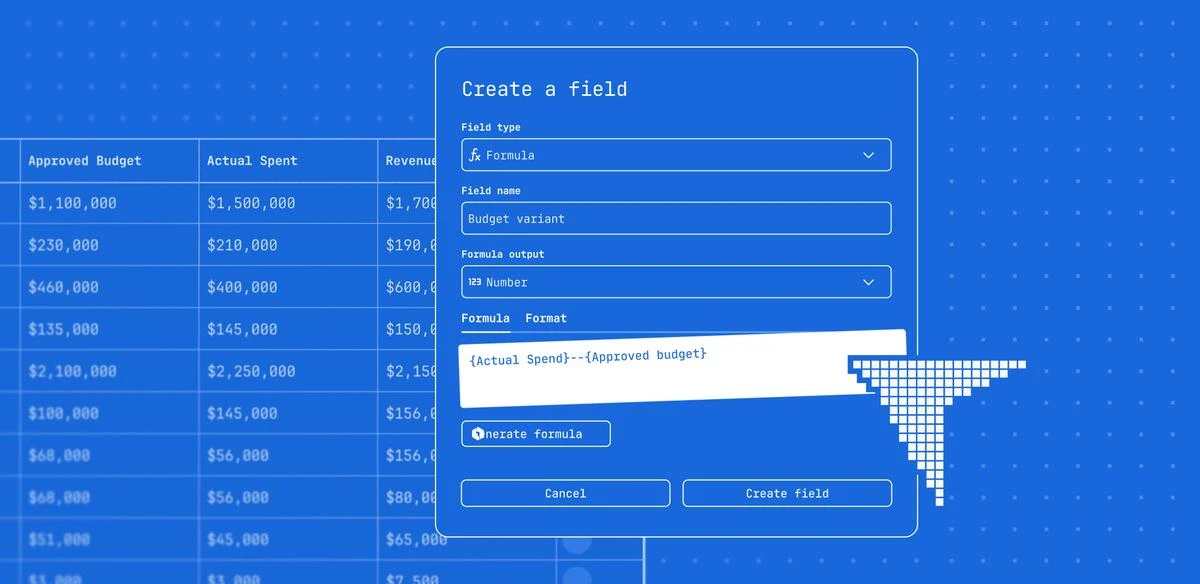
To complement resource management, Atlassian has introduced Formula fields, a new custom field type that enables complex calculations directly on work items. This feature effectively brings spreadsheet-like power to the Jira interface. Users can describe a specific business outcome or mathematical requirement—such as identifying projects where actual costs have exceeded 80% of the allocated budget—and Rovo, Atlassian’s AI, will generate the necessary formula. Alternatively, advanced users can manually configure these formulas. The results of these calculations are not merely visual; they are fully integrated into the Jira ecosystem, appearing in dashboards, remaining searchable via Jira Query Language (JQL), and serving as triggers for automated workflows. This allows for sophisticated automation, such as sending an alert to a project manager when a "cost-to-complete" metric reaches a certain threshold.
The reporting experience has also been overhauled through the introduction of Space Insights. Recognizing that manual reporting is a significant time sink for project administrators, Jira now offers live, custom dashboards connected directly to the underlying work data. Rather than exporting data to third-party visualization tools, space admins can interact with Rovo to build charts using natural language. For example, a user can request a chart showing "work completed versus work created this month," and the AI will generate the visualization instantaneously. Furthermore, the "Insights" feature allows Rovo to analyze these trends and explain them in plain language, helping teams understand the "why" behind the data. Because these dashboards are native to the Jira space, they require no manual updates and remain a constant, accurate reflection of the project’s health.
The strategic value of these features is tied to the Atlassian Teamwork Graph, a common data schema that connects work, people, and tools across the Atlassian platform. When capacity plans, budget formulas, and project data are centralized in Jira, they feed into this graph, providing the deep context necessary for Rovo to be effective. As more teams across an organization adopt these integrated features, the Teamwork Graph becomes more robust, offering a clearer picture of organizational velocity and resource distribution. This "compounding context" is what Atlassian identifies as the transition of Jira from a simple task tracker to a comprehensive platform where work actually lives.
For team leads, the practical applications of these tools are immediate. They can now balance workloads with precision, ensuring that specialized talent is not bottlenecked and that junior team members are appropriately utilized. For space admins, the burden of manual report generation is replaced by dynamic dashboards that are accessible to all stakeholders. For the individual contributor, the integration means that their work is automatically reflected in the broader project plan, reducing the need for repetitive status updates.
In addition to these major updates, Atlassian noted that these features are part of a broader, continuous effort to modernize Jira Cloud. The goal is to move away from "side systems" that act as shadows to the actual work. When the plan and the execution are decoupled, the plan is rarely accurate. By coupling them, Atlassian aims to reduce the "coordination tax" that teams pay when they have to sync information across multiple platforms.
The rollout of these features also highlights the evolving role of AI in the workplace. Rather than acting as a standalone chatbot, Rovo is positioned as an integrated agent that thrives on the data generated by capacity planning and formula fields. By having access to the full scope of a project—from the initial budget to the daily task updates—the AI can flag risks that a human observer might miss, such as a subtle trend indicating that a project will exceed its budget in three weeks based on current velocity and resource costs.
The integration of formula fields specifically addresses the financial management aspect of project delivery. Teams are already utilizing these fields for a variety of use cases, including calculating Return on Investment (ROI), tracking vendor spend against contract limits, and monitoring the "burn rate" of specific initiatives. By making these metrics searchable in JQL, leadership can pull cross-project reports to see how the entire organization is performing against financial goals.
The Space Insights feature also empowers teams to be more self-sufficient. Instead of waiting for a weekly report from a project manager, any team member with access to the space can view the live dashboard to see if they are on track. This transparency fosters a culture of accountability and allows for quicker pivots when the data indicates a slowdown in a specific area.
All of these features—individual capacity planning, formula fields, and space insights—are currently available to Jira Cloud customers. Atlassian emphasizes that getting started does not require a total overhaul of existing workflows; rather, these features can be layered onto current projects to immediately begin gathering the data context needed for AI-driven insights.
As the landscape of software development and project management becomes increasingly complex, the move toward a "single source of truth" is becoming a necessity rather than a luxury. Atlassian’s latest updates represent a significant step in this direction, providing the tools necessary for teams to deliver on time and on budget while maintaining a clear view of their most valuable asset: their people’s capacity. By anchoring AI in the reality of the work being done, Jira aims to provide a more reliable and impactful management experience for organizations of all sizes.