 11

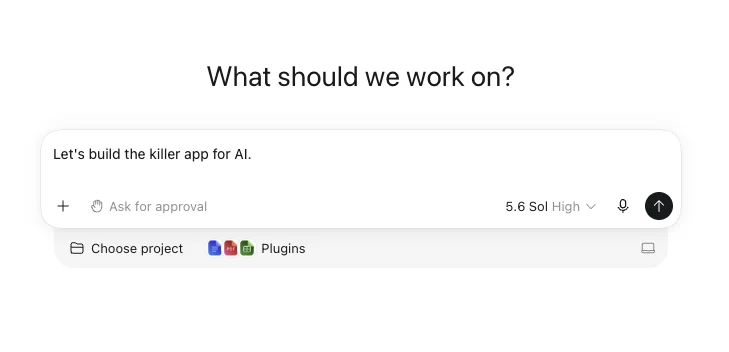
Gaining the maximum utility from a large language model (LLM) increasingly necessitates granting it significant access to one’s digital ecosystem. For individuals wary of relinquishing control or those hesitant about artificial intelligence, this level of access can seem daunting. However, for Andrew Ambrosino, the lead engineer for OpenAI’s desktop application, it represents the essential path to testing the future of AI integration. To this end, his personal LLM now has comprehensive access to and control over his email inbox, Slack account, phone, and productivity applications such as Notion and Figma, among others.
Ambrosino acknowledges the inherent risks associated with such extensive permissions. "If I’m asking it to write a document, is there a possibility that it’s going to pull from a private DM on that subject and not know that it’s not supposed to share some info? Yes," Ambrosino conceded in an interview with TechCrunch. Despite this, he remains committed to the experiment, stating, "I’ll do it for the job. I will take the personal hit here and there if I have to. And I haven’t had to." This willingness to embrace potential privacy trade-offs underscores the deep conviction within OpenAI regarding the transformative potential of fully integrated AI agents.
Ambrosino’s work is central to OpenAI’s strategic initiative, ChatGPT Work, which was launched last month. Positioned as one of the company’s most significant endeavors, it is accessible through OpenAI’s lowest subscription tier at $20 per month. The product is specifically designed to empower white-collar professionals to deploy AI agents capable of seamlessly integrating with and automating their digital workflows. This includes a broad spectrum of professions, from accountants and investors to doctors and virtually anyone whose daily tasks are heavily reliant on computer interaction.
OpenAI’s official marketing materials articulate this ambitious vision succinctly: to create a world where "[artificial] intelligence goes beyond answering questions to helping everyone turn their biggest ideas into reality." This aspiration signifies a shift from AI as a mere informational tool to an active, autonomous collaborator.
While the transition to AI-driven workflows is already evident among software developers, its adoption across other departments has been considerably slower. ChatGPT Work represents a refined version of OpenAI’s earlier Codex coding tool. Its core purpose is to extend similar functionalities to non-engineers, providing an AI tool that not only answers queries but can independently execute and complete multi-step projects. Thibault Sottiaux, who oversees OpenAI’s core product development, including ChatGPT Work, emphasized this capability to TechCrunch, stating, "In this new factor, ChatGPT can actually do entire, very complicated tasks for you all autonomously in a way that is delightful and safe." He further added, "It’s the very mission of OpenAI — to bring everyone along."
From a commercial standpoint, the widespread adoption of such agents carries substantial implications. Agents that operate for extended periods naturally consume more computational "tokens," thereby increasing their revenue potential on a per-user basis for OpenAI. Expanding into diverse professional sectors is paramount, not just for OpenAI but for the broader AI industry. While AI labs have found lucrative applications within software engineering, this field represents a relatively small segment of the professional landscape. To justify the immense investments in AI model training and computational infrastructure, these companies must enable AI tools to permeate a much wider array of professional work. This imperative is particularly highlighted by the emergence of vertical-specific competitors like Harvey (focused on legal applications) and Clay (tailored for sales), which adopt a model-agnostic approach, leveraging whichever AI model performs best for their niche.
Industry analysts echo these sentiments, identifying this as a critical challenge for OpenAI and its rivals. Christian Catalini, in an article on a16z’s Time to Build blog, warned, "If the labs cannot rapidly get ahold of the key complementary assets needed to scale AI in the market, value will accrue elsewhere." This underscores the urgency for AI developers to create accessible and valuable tools for a broader audience.
The process of adapting AI applications for non-software engineers has required significant refinement and "hand-holding." Ambrosino recounted how OpenAI’s own non-engineering staff, including communications and finance teams, initially struggled with Codex, which was "actively hostile to them — asking them about code and showing them, ‘oh, you have an empty diff for this thing,’" a technical readout meant for software changes. This experience spurred the development team to make the tool more general-purpose, a process that unfolded between February and the present.
A study backed by OpenAI revealed a stark contrast in Codex usage: in June, 98% of OpenAI employees utilized the tool, yet only 17% of organizational subscribers and less than 1% of individual subscribers were using the agentic coding tool. This significant disparity between internal adoption and external uptake highlights both the challenge and the immense opportunity for the company. Sottiaux believes that as the value proposition becomes clearer, users will readily adopt the service: "The more value and the more utility that we generate for users, the more they will be willing to also pay for some part of that utility, and that’s how we’ve always seen ChatGPT as well. You sit there and you’re like, ‘of course I want to pay $20 bucks a month for this,’ because the value that you get is so much more."
How to make AI intuitive
Understanding this user adoption disconnect requires appreciating the architectural nuances of OpenAI’s offerings. Every LLM operates within what engineers term a "harness"—the encapsulating software that governs the information the model receives, the tools it can employ, and the format in which it presents its outputs. For a model to evolve into an active "agent" capable of performing tasks, this harness must furnish it with specific tools and instructions for their application across long-term objectives. For developers, a command-line interface (CLI) that enabled LLMs to generate code was sufficient to revolutionize software development. However, the vast majority of computer users are not accustomed to CLIs; the widespread adoption of graphical user interfaces (GUIs), epitomized by Windows replacing DOS, demonstrates this preference for intuitive visual interaction.
An agentic product designed to transcend software engineering must, as Ambrosino articulated to TechCrunch, "play with the messy world of your life and your tools and websites that were built in 1995 and never updated." He stresses that the user experiences his team is crafting are crucial for broadening access to genuinely useful AI. The goal is to make sophisticated functionalities, similar to those found in tools like OpenClaw (which coders use to orchestrate LLMs for work), as straightforward as issuing a simple prompt.
"Without these products in front of the model, experts would know how to get the same results, but you wouldn’t get to a billion people using the thing," Ambrosino explained. This inherent tension between the requirements of power users and the demands of mainstream adoption often fuels internal debates at OpenAI, where some employees argue that a dedicated button is redundant if users can simply instruct the model directly. Ambrosino, however, champions the former, stating, "We push back on [that]—because it’s very early. Discoverability matters in this phase, and at some point we won’t have the button." He draws an analogy to skeuomorphism, the design trend of making digital tools visually resemble their physical counterparts (e.g., a calculator app looking like a pocket calculator). "That stuff wasn’t just cringe design. That actually helped get people into this [and] make the transition," he observed, highlighting the importance of familiar interfaces in fostering adoption.
Despite these efforts, OpenAI has not disclosed specific usage figures for ChatGPT Work versus Codex. However, the combined application currently boasts only 20 million users, a stark contrast to the more than one billion users OpenAI claims for ChatGPT online, underscoring the ongoing challenge of widespread agent adoption.
Giving ChatGPT a license to skill
For the time being, OpenAI positions ChatGPT Work as particularly well-suited for routine, data-intensive coordination tasks. Internally, OpenAI employees are leveraging the tool to set up weekly metrics reports and transform spreadsheets into dynamic planning tools. Outside the company, venture capitalists are reportedly using agents to synthesize relevant communications and analyses into comprehensive investment memos, while operations teams are deploying them to create bespoke dashboards and data visualizations. Even OpenAI CEO Sam Altman has publicly shared his use of the tool for planning personal vacations. One OpenAI engineer recounted asking the program to analyze a Slack conversation about an engineering issue and "make some charts," receiving a series of insightful plots in return.
Akshay Nathan, who leads the product engineering team at OpenAI, articulates the fundamental problem ChatGPT Work addresses: "There is a deluge of information for the average worker or employee of any of these companies, including myself. We’re actually quite limited by our ability to parse everything that’s available to us, and then take action on it. That information lives in all these system records tools [like Salesforce]… the value of ChatGPT is you already have access to this, but now you truly have access to it."
This vision positions ChatGPT Work as the long-awaited digital personal assistant that AI evangelists have long envisioned. Similar to Claude Cowork or Perplexity AI’s browsing agent, ChatGPT Work connects its agents to a user’s existing digital workspace—including email, web browser, and a multitude of SaaS platforms—and utilizes that context to execute tasks on the user’s behalf.
The reporter’s personal experience with ChatGPT Work illustrates its potential. The model successfully extracted a son’s oddly formatted preschool calendar from email and populated a Google Calendar, saving considerable repetitive data entry. This practical application demonstrates the agent’s ability to streamline mundane but crucial tasks, potentially preventing missed school events or childcare arrangements.
However, the reporter exercised caution, opting not to grant OpenAI access to sensitive data such as their inbox, source interviews, or story drafts, and certainly not their bank account. Despite these reservations, the reporter acknowledged that the tool’s utility would undoubtedly increase with greater trust and access. They tasked it with financial analysis of publicly traded companies, receiving an auto-updating dashboard of metrics. It also created a queryable database of space launches, a task previously requiring custom Python scripts, and now sends a weekly email summarizing new AI research from academic clearinghouses. The reporter expressed an intention to continue experimenting with its capabilities.
While prompting the model feels intuitive, configuring the necessary permissions for it to act independently proved less straightforward. Setting up access to a cloud drive, for instance, was described as confusing and circular. Attempts to grant only "read" access repeatedly resulted in error messages. The model itself offered little assistance, but eventually, a dialog box on the mobile app clarified that only "complete access" would enable the functionality. Furthermore, many critical settings are exclusively available on the web application, forcing the reporter to juggle both interfaces simultaneously. ChatGPT Work also exhibited baffling limitations, such as its ability to create events in Google Calendar but not new calendars. A crucial piece of advice for new users is to always set the "effort level" to high; otherwise, the agent performs like "the worst intern you’ve ever worked with."

Joe Gershenson, the engineering lead for OpenAI’s harness, acknowledged that the "effort settings" are not yet intuitive for new users, stating, "there are things that we can do better to help them get the right level of reasoning… Watch this space."
OpenAI faces another significant hurdle in penetrating mainstream white-collar work: most professional workflows are not as easily quantifiable or evaluable as code. Software either functions or it doesn’t, though even this distinction simplifies the nuances of code quality. Evaluating the success of a presentation, a business strategy, or a sales pitch is far more subjective and complex.
Ambrosino noted the unique challenge of such a versatile product: "One of the unique challenges with a product like this is just that it can really do anything." When pressed on specific problems or workflows the team designs around, the engineers deferred, indicating it was a question for OpenAI’s research team. OpenAI later clarified to TechCrunch that it employs its GDPVal benchmark, which encompasses 44 occupations and hundreds of knowledge work tests, augmented by user feedback. A less official, but equally important, source of insight comes from OpenAI employees themselves. As Ambrosino put it, "We have to always parse out… are we doing the workflow that everybody else will be doing, or are we weird?"
The actual usage patterns of early adopters will generate invaluable data, provided they don’t opt out of data collection for training purposes (as the reporter did). Much of the success of coding tools, for instance, has been built upon similar data aggregation.
The rivalry that drove OpenAI’s product design
Despite the intense focus on model interfaces, OpenAI’s engineers were notably reluctant to directly address a seemingly simple question: What distinguishes Codex and ChatGPT Work from competitors like Claude CoWork or other agentic harnesses aimed at a mass user base? Gershenson offered a typical response: "It’s going to be a really disappointing answer for you, and I’m sorry, but the honest answer is that I really don’t look at the harnesses that they’re building. The Mad Men ‘I don’t think about you at all’ meme comes to mind here."
The reporter expressed skepticism regarding this claim, citing the striking similarities in user interfaces, the inherent need for competitive intelligence in any business, and the fact that ChatGPT Work’s initial prompt upon setup was to import Claude CoWork data.
The topic of Claude Code is likely sensitive within OpenAI, given that their corporate rival, Anthropic, largely defined the market for AI coding and initiated a paradigm shift in how software engineers operate. This is particularly frustrating for OpenAI because they conceived the idea first but, as Ambrosino candidly admitted, "didn’t quite harness it correctly." When OpenAI initially developed Codex as a web application, the engineers were, in Ambrosino’s words, "a bit more AGI-pilled." This meant they heavily relied on the model’s inherent intelligence to handle tasks almost entirely autonomously, with minimal user intervention.
In contrast, Claude Code, developed shortly thereafter, adopted a conversational, back-and-forth approach. When presented with a problem, it would analyze possibilities, offer several options for proceeding, and then, after a user choice, execute a step and check back, providing continuous updates. This iterative interaction minimized the potential for the model and its harness to make errors. Anthropic’s strategy proved more effective, even if it demanded slightly more user engagement. "Our product was a little ahead of where the model and harness was at the time," Ambrosino now concedes.
OpenAI eventually mirrored this approach, integrating more opportunities for user interaction into Codex, leading to the desktop and mobile applications familiar today. While download statistics, used as a proxy for interest, indicated Claude Code held a lead until April of this year, Codex has since gained a slight advantage. Surveys of enterprise use also suggest that OpenAI is closing the gap. This shift can be attributed to several factors: OpenAI’s improved product-market fit, coupled with complaints about Anthropic’s safety restrictions and compute shortages. However, OpenAI engineers consistently assert that the primary differentiator remains the sheer power and cost-effectiveness of OpenAI’s latest models. "The frustrating answer is that a lot of times it is the model, and one thing that we have tried to do really well with this app is fully leverage the model," Ambrosino concluded.
What makes a good harness anyway?
This explanation circles back to the "bitter lesson" learned by AI researchers: the superior performance of a more general, larger model often outweighs the benefits of specialized domain expertise. For staunch believers in this principle, the harness is seen as a temporary support structure, not a lasting competitive advantage or "moat."
Gershenson elaborates on this perspective, arguing, "You could get good results in the short term by adding a whole bunch of extras—if and thens and tools—but like, come on, the next model is going to come out in a couple of months and make that obsolete." His team’s philosophy, therefore, centers on identifying the simplest, most direct methods to expose the model to the essential tools and context it requires, and nothing more. "The goal of good harness engineering is to… be more precise about what information the model really needs to solve your problem, because the models are getting better and better at doing that if you simply let them do their thing," Gershenson stated.
However, an open question remains: are most people, or even the models themselves, truly ready for such a minimalist approach? Ethan Mollick, a Wharton School of Business professor who researches AI tools in the workplace, still perceives Claude as more user-friendly. He noted on social media that "ChatGPT tends to want to do magic & just do it for you, while Claude does comparisons & shows them, repeatedly asking for input & feedback and doing A & B tests." Sottiaux, and perhaps OpenAI as a whole, appears to hold a different view, asserting that the conversational nature of their app is inherently superior to requiring users to learn a new application. "We definitely see that the world seems to be ready," he declared regarding the app, adding, "This is why we’ve had incredible adoption."
Furthermore, it’s not definitively clear that a model-specific harness is the optimal strategy for maximizing a model’s potential. Comparative analyses conducted by companies like Composio and Databricks have demonstrated that different combinations of harnesses and models can yield varying performance on coding benchmarks. Databricks, for instance, found that Pi, an open-source harness developed by the software company Earendi, actually outperformed Codex while utilizing the same GPT 5.5 model. Pi has been instrumental in building projects such as OpenClaw and CloudflareOS.
Mario Zechner, Pi’s creator, believes his intentionally minimalist harness validates that an "AGI-pilled" approach can indeed be effective, at least for software engineers and coding tasks. He posits that what his harness lacks in explicit features, it compensates for through its capacity to modify itself and construct its own interfaces. He empathizes with the challenge OpenAI’s engineers face in expanding their user base beyond engineers. "Everything is coding agent shaped… the reason is that they only have training data for coding agent tasks," Zechner told TechCrunch. He further explained the difficulty for non-coding tasks: "Say I’m in management, I make a decision today, and the outcome happens months later. You cannot capture that in a simple trace of a user and agent back and forth, so all of these kinds of tasks and anything that you don’t digitize is inaccessible to a model to learn."
Like other open-source providers, Zechner views the major labs’ efforts to promote their proprietary harnesses as a strategy to lock in users. He suggests, "They need to own the entire stack; otherwise, they just become a model provider and then need to compete with Chinese models."
Both Zechner and other engineers interviewed by TechCrunch expressed concerns that the transparency into token expenditure and agent behavior within frontier labs’ harnesses is too limited. While this might be less immediately relevant to non-technical workers, as with coding tools, widespread adoption at the scale OpenAI envisions will inevitably necessitate more rigorous discussions about cost. For example, the reporter, while casually experimenting with a $20-a-month subscription, consumed over 80 million tokens in four days, which, according to the model’s own analysis (there’s no dashboard in the app), cost $65. This represents a subsidy exceeding three times the monthly subscription price for just four days of moderate use.
Sottiaux addressed these cost concerns, stating, "We are working every day to push the frontier on efficiency," pointing to a recent 80% price reduction for users of OpenAI’s Luna model. He optimistically projected, "If you wake up six months from now, you should be able to do all of the same [tasks] with less spend."
Another pertinent question revolves around whether these applications create a lock-in effect for customers, either through data retention or the sheer effort involved in configuring access to all the necessary plug-ins and their permissions.
During a visit to OpenAI’s wood-paneled, plant-filled headquarters in July, the atmosphere was described as calm but tinged with a slight tension, indicative of a team with extensive responsibilities. The engineers interviewed were frequently monitoring their laptops while conversing and hurrying between meeting rooms. Nathan, the head of the product engineering team, reiterated the company’s core focus: "the promise of the magic box, but I still think there’s too much complexity… I’m very optimistic that we can solve it, with the model and in a truly AI native way."






