 11

For many, the allure of a swimming pool on a scorching day, particularly in climates like Houston, is undeniable. However, the joy of swimming is often overshadowed by the tedious and physically demanding task of cleaning. This fundamental truth – swimming pools are fun, cleaning them is not – becomes even more apparent for pool owners facing relentless heat and a constant battle against leaves, dirt, and debris. The thought of manually scooping detritus from the pool deck when temperatures soar above 100 degrees Fahrenheit is, for most, a cruel prospect.
The concept of robotic pool cleaners isn’t new; they first emerged as early as the 1980s. Back then, the prevalent technology involved pressure-side cleaners. These devices operated by attaching to a surface pump, utilizing water pressure rather than electricity to navigate the pool. A tell-tale sign of these older models was the long, unsightly length of tubing that would float in the water, connecting the cleaner to a jet set into the pool wall. While still available, this technology has largely been superseded by more advanced solutions.
Today, the market has significantly evolved, with a strong gravitational pull towards electronic cleaners. These modern robots eliminate the need for an external pump or the cumbersome, "ugly" hose that characterized their predecessors. While corded electronic cleaners, which run off a long extension cord connected to wall power, remain an option, the industry’s clear future lies in battery-powered robotic cleaners.

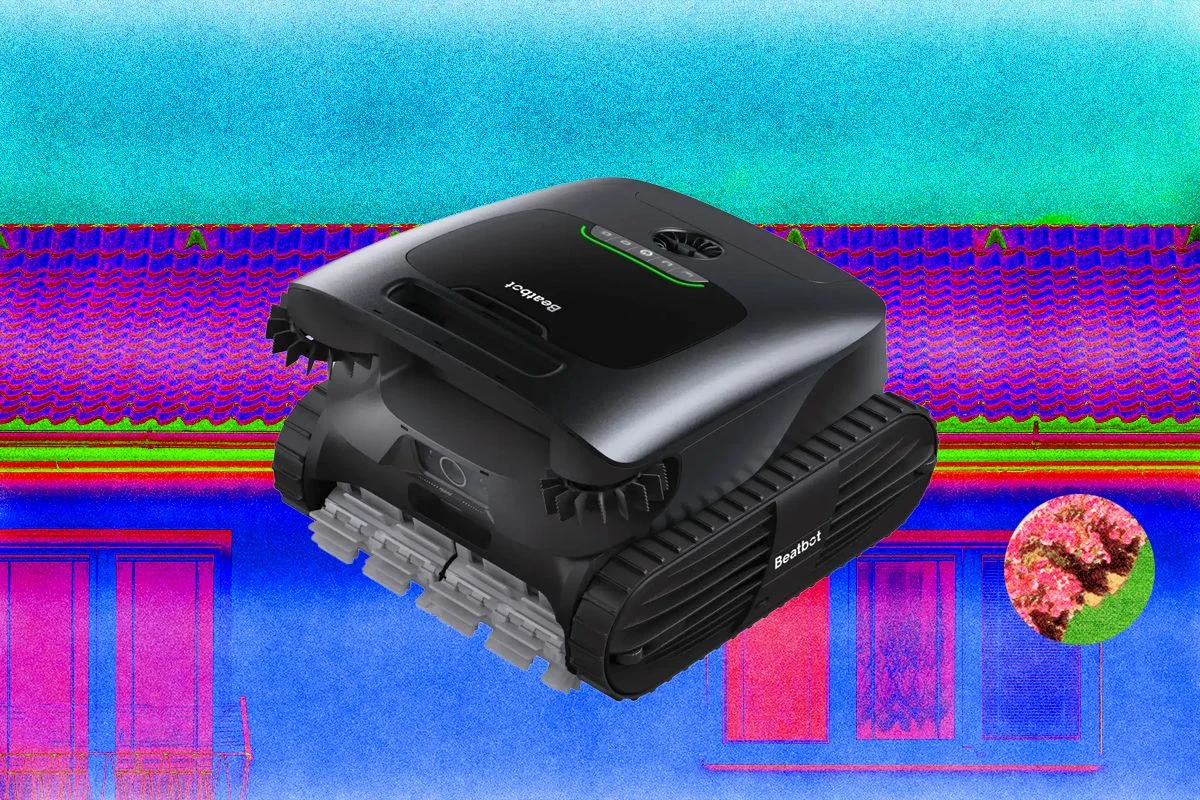
Battery-powered cleaners offer a host of compelling benefits that enhance the overall pool ownership experience. Foremost among these is the complete absence of hoses or cords, which not only improves aesthetics but also removes potential tripping hazards and obstacles in the water. Furthermore, these units can be easily removed from the pool on demand, ensuring the swimming area remains unencumbered and ready for use whenever desired. After extensive professional testing over four years, involving hundreds of test runs, one model consistently stands out: the Beatbot AquaSense 2 Ultra, lauded as the best all-around performer. However, the market offers a diverse range of options catering to various budgets and preferences.
Beyond pool cleaning, homeowners seeking to elevate their outdoor living spaces can explore guides on related smart yard technologies, including robot lawn mowers, flat-top grills and griddles, outdoor pizza ovens, and high-performance coolers. This review was most recently updated in August 2026, incorporating new models like the Poolease X1 and the SunnyWhale FinWhale smart chlorine dispenser, while removing discontinued products and ensuring all links and prices are current.
The Best Pool-Cleaning Robot: Beatbot AquaSense 2 Ultra
The Beatbot AquaSense 2 Ultra has emerged as the premier choice among robotic pool cleaners, a conclusion drawn from four years of professional review and countless hours of operational testing. This top-shelf robot embodies a comprehensive suite of features designed for superior pool maintenance. Its cleaning capabilities are near-perfect, adept at scrubbing pool floors, walls, and even the waterline, ensuring a spotless finish. Powering this performance is a robust battery providing an impressive six hours of underwater charge, allowing for thorough cleaning cycles even in larger pools.

Advanced AI-powered debris detection enables the AquaSense 2 Ultra to intelligently identify and target problematic areas, optimizing its cleaning path for maximum efficiency. A solid mobile application provides intuitive control and monitoring. Uniquely, this robot also possesses the ability to skim the surface of the pool, tackling floating debris before it can sink. Upon completion of its cleaning cycle, the AquaSense 2 Ultra conveniently floats to the surface, making retrieval effortless from the comfort of the pool deck. A quick cleanup of its filter basket is followed by dropping the robot onto its included charging stand for wireless recharging, eliminating the hassle of cables.
However, such monstrous cleaning ability comes with a trade-off. The 29-pound Beatbot AquaSense 2 Ultra is undeniably unwieldy. Hauling this substantial robot out of the water can be a chore, suggesting prospective buyers might want to incorporate forearm curls into their fitness routine. The other significant consideration is its price point; at approximately $3,000, it stands as one of the most expensive battery-powered pool robots available, though several competitors fall within a similar range. For those with a tighter budget, the Beatbot Sora 70 offers much of the same coverage at a more accessible price of $1,499.
Pool-Cleaning Robot with the Best Battery Life: iGarden Robotic Pool Cleaner M1-AI 90
The conventional approach to using a robotic pool cleaner involves storing it dry-docked and charged, deploying it only when cleaning is required, and then retrieving it for filter cleaning and recharging. An appealing alternative for less frequent intervention is to leave the robot in the pool for extended periods, allowing it to run on a repeating schedule, and only performing maintenance when the battery is depleted. This strategy, however, is limited by the battery capacity of most robots.

The iGarden Robotic Pool Cleaner M1-AI 90 addresses this limitation with a massive 12,500 mAh battery, enabling up to nine hours of continuous operation in floor-only mode. While it also handles walls and waterline, these functions naturally consume more power. This substantial battery allows the robot to remain in the pool for at least a week, or even up to three weeks with shorter, optimized cleaning runs. The M1-AI 90 further enhances its efficiency with integrated cameras and an AI-powered algorithm that actively scours for missed debris after its initial S-shaped cleaning path, ensuring a more thorough result. Its bright red, racecar-inspired design also makes it a more aesthetically pleasing fixture in the pool compared to more industrial-looking models.
A High-Grade Entry-Level Pool Robot: Beatbot AquaSense 2
For many pool owners, the Beatbot AquaSense 2, the simplest model in the AquaSense line, offers ample cleaning power without the premium price tag. Priced under $1,000, this model provides three essential cleaning modes: floors, walls, and waterline. A key convenience feature is its ability to dock itself next to the pool deck upon job completion, eliminating the need for a pole and hook to retrieve it. Like its more advanced siblings, the AquaSense 2 charges wirelessly on its compact docking station, simplifying the recharging process. Its 10,000 mAh battery provides a four-hour run time, which is generally sufficient for most larger pools. At $799, a significant discount from its launch price, it presents an excellent value proposition for most budgets.
Best Budget Pool-Cleaning Robot: Dreame Z1 Pro Cordless Robotic Pool Cleaner

The sub-$800 category for pool robots often demands compromises in performance, battery life, or design. The Dreame Z1 Pro, however, defies these expectations, offering a quirky yet capable cleaner packed with intelligence. Its onboard sensors allow it to graphically map the pool within its effective mobile app as it cleans. While the robot operates at a somewhat slow pace underwater, it proves to be an effective cleaner once its firmware is updated. Although it may not achieve the flawless scrubbing performance of more luxurious poolbots, it is more than adequate for casual cleanups, particularly in smaller pools. Noteworthy features include a plug-free magnetic charging cable that prevents water ingress into the electronics, and a remote control that can summon the robot to the surface for easy retrieval and filter cleaning. Originally listed at $1,499, dramatic price cuts have brought the Z1 Pro down to $499, making it an outstanding value and a worthwhile investment.
Best Surface Skimmer: Beatbot iSkim Ultra Robotic Pool Skimmer
Most robotic pool cleaners are designed for subsurface cleaning, and those few that claim surface skimming capabilities rarely excel at it. While efficient in-wall skimming systems can suffice, pools prone to accumulating large amounts of floating debris or those with quickly overwhelmed wall skimmers benefit immensely from a dedicated robotic surface skimmer. These devices are typically solar-powered, allowing them to remain in the pool indefinitely, requiring removal only for periodic cleaning. They can also be topped up via a standard power cable if sunshine is limited.
Historically, surface skimmers have been "dumb," moving randomly and hoping to scoop debris. The Beatbot iSkim Ultra breaks this mold with front-mounted sensors that detect pool walls, prompting the robot to slow down and turn rather than collide, preventing damage to both the unit and the pool. This intelligent navigation distinguishes it as the best-performing skimmer among all tested models. However, it does have a peculiar design flaw: the debris basket release button is located on the robot’s front nose. This placement can lead to accidental ejection of the basket if the robot clips a corner, such as in an L-shaped pool. While easily replaceable, a minor redesign of this button’s location would eliminate this minor inconvenience.

Other Recommended Pool Robot Models
For those seeking alternatives, the market offers a variety of models across different price points and feature sets:
FAQ
Who Needs a Robotic Pool Cleaner?
Any pool owner can benefit from a robotic pool cleaner. Regular pool cleaning is not merely for aesthetics; it is crucial for maintaining water quality and the longevity of pool equipment. Debris, dirt, and leaves in the water actively promote the growth of algae and harmful bacteria, which can quickly turn a pristine swimming area into an unappealing, unhealthy pond. Furthermore, accumulated debris can strain and reduce the lifespan of your pool’s pump and filtration system. While professional pool maintenance services are an option, they can be costly. A robotic pool cleaner, while perhaps not completely replacing a pool guy (who typically handles chemical adjustments and complex filter maintenance), can significantly reduce the frequency and cost of professional visits by keeping the pool physically clean.

Key Features to Look for in a Robotic Pool Cleaner
The market for robotic pool cleaners is vast, spanning a wide range of styles and prices. Generally, this is an industry where investment correlates with performance; very inexpensive robots (under $350) are often only suitable for small wading pools. When making a purchase decision, consider the following:
Corded vs. Battery-Powered: Which Is Best?
The debate between corded and battery-powered robotic pool cleaners often centers on a few key differences.
Proponents of corded robots argue for their indefinite run time, as they are continuously powered and not constrained by battery capacity. This makes them ideal for very large pools or situations requiring near-constant cleaning. Corded models are also generally slightly less expensive than their battery-powered counterparts, though a direct "apples-to-apples" comparison can be challenging due to feature differences. Concerns have been raised about the safety of battery-powered robots due to isolated incidents of lithium-ion battery fires, but these risks are comparable to those associated with other common devices like laptops or electric vehicles, which also utilize similar battery technology.
However, in most other aspects, battery-powered robots hold a significant advantage. They are inherently more maneuverable, free from the drag and entanglement risks of a trailing power cord. The absence of an unsightly, potentially 70-foot-long cable in or around the pool greatly enhances aesthetics and user convenience. While some corded robots attempt to mitigate cable management issues with integrated features, the sheer length of the cord always presents a challenge. Many modern battery-powered robots can also be left in the pool for a week or more, operating on an automated schedule, before requiring cleaning and recharging, offering a high degree of autonomy.

Ultimately, if you own an exceptionally large pool and require continuous, uninterrupted cleaning, a corded robot might be the more practical choice. However, for the vast majority of pool owners, regardless of pool size, the superior convenience, maneuverability, and aesthetic benefits of battery-powered robots make them the preferred option.
How I Test Robotic Pool Cleaners
All robotic pool cleaners are rigorously tested in a real-world environment: an in-ground, L-shaped backyard pool. This pool measures 12 by 36 feet on its longest side, with an additional 6 by 6-foot short side, totaling 468 square feet. Its depth varies from 4 to 7 feet, and the surface is finished with PebbleTec. This L-shaped design and varying depths provide a challenging and realistic test environment, allowing for comprehensive evaluation of navigation and cleaning efficiency across different contours and depths.
Each robot undergoes a testing period of up to a week, utilizing both organic and synthetic debris. Initial tests involve cleaning the pool with naturally accumulated leaves and dirt, establishing a baseline for the robot’s performance in everyday scenarios. This is followed by a more quantifiable test: scattering and sinking 100 silk crafting leaves to the pool floor. This method provides a consistent and repeatable testing condition, allowing for easy calculation of debris capture percentage based on the number of leaves left behind. All other features, including filter cleaning ease, mobile app functionality, and overall maneuverability, are qualitatively assessed throughout the testing process.






