11

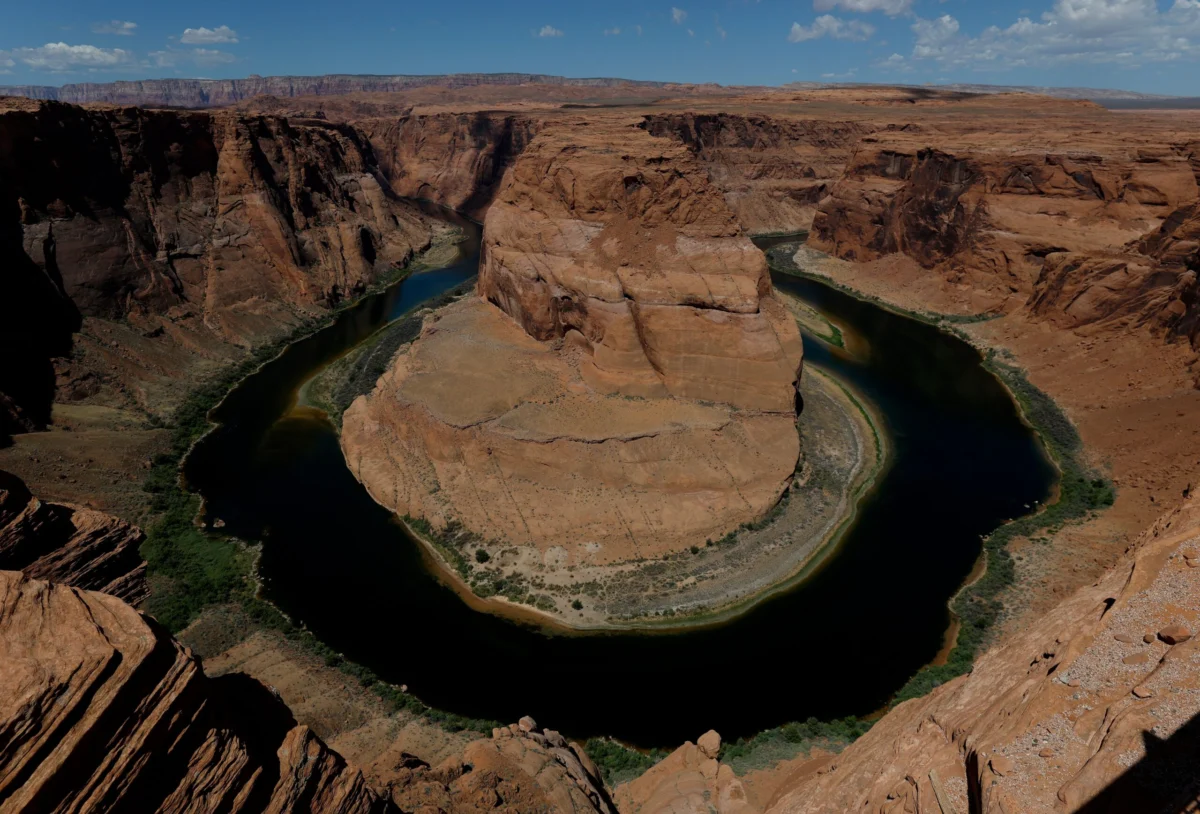
The Colorado River, a vital artery providing water for an estimated 40 million people across seven states—Colorado, Utah, New Mexico, Wyoming (Upper Basin), and California, Arizona, Nevada (Lower Basin)—is currently grappling with an unprecedented crisis. This critical waterway sustains vast agricultural industries, numerous urban centers, and generates essential hydropower for the American Southwest. The situation has been exacerbated by the perilous decline of the nation’s two largest reservoirs, Lakes Mead and Powell, both of which have recently plunged to multiple record low points, signaling a deepening environmental and socio-economic emergency.
Amidst this dire scenario, the emergence of El Niño offers a glimmer of potential, albeit uncertain, relief. This powerful weather phenomenon, currently projected to be the strongest of its kind in recorded history, holds the promise of increased rain and snowfall across the southwestern United States throughout the upcoming winter and spring seasons. However, climate experts and water managers are quick to temper expectations, cautioning that even a significant surge in precipitation may prove insufficient to avert the slow-building disaster that has long plagued the Colorado River system. They emphasize that even under a best-case scenario, where the region experiences a robust snowpack that temporarily replenishes the river, such a reprieve would be a mere temporary balm against the more profound, long-term challenges confronting the beleaguered river.
The Colorado River’s primary water source is snowmelt originating from the vast mountain ranges within its Upper Basin states: Colorado, Utah, New Mexico, and Wyoming. This snowmelt then flows downstream, feeding the crucial reservoirs of Lakes Powell and Mead, which in turn supply water to the Lower Basin states of California, Arizona, and Nevada. The health of the Upper Basin’s snowpack is, therefore, directly proportional to the overall water availability for the entire system.
The current crisis is a direct consequence of a winter characterized by record-breaking warm temperatures across the Western United States. Scientists have increasingly linked these elevated temperatures to long-term climate change, which significantly increases the likelihood and severity of such conditions. This warming trend, combined with some of the lowest snowpack levels ever recorded in the mountain ranges of multiple states, has led to an incredibly arid season for the Colorado River. The consequences are starkly visible in the reservoir levels. As of a recent report, Lake Powell was recorded at an alarming 3,519.4 feet, while Lake Mead stood at a precarious 1,039.6 feet. Both figures represent their lowest levels ever recorded, underscoring the severity of the water deficit.
These record lows bring the reservoirs perilously close to what is known as "deadpool" levels. For Lake Powell, this critical threshold is 3,370 feet, and for Lake Mead, it is 895 feet. Reaching "deadpool" signifies a catastrophic point where water can no longer flow out of the reservoirs downstream by gravity, effectively cutting off supply to vast swathes of the Lower Basin. The implications extend beyond just water delivery; hydropower generation from the massive dams on both reservoirs, Hoover Dam on Lake Mead and Glen Canyon Dam on Lake Powell, would be severely affected, or cease entirely, even before the deadpool mark is reached. The loss of this clean energy source would have cascading effects on the region’s power grid and economy.
Adding another layer of complexity to this environmental catastrophe is a concurrent political crisis. The river’s water resources have been over-allocated for decades, largely to thirsty industries such as agriculture, a practice rooted in a century-old compact that is now set to expire at the end of this year. This foundational agreement, the 1922 Colorado River Compact, originally allocated water based on an unusually wet period, leading to an overestimation of the river’s perennial flow. The seven basin states, along with Mexico, have been engaged in protracted and often contentious negotiations to forge a new agreement dictating future water rights. However, they have repeatedly missed deadlines to establish a viable framework for future allocations, necessitating intervention from the federal government. This political impasse, combined with the dismal water levels at Lakes Powell and Mead, has created a terrifying situation for experts who have observed the slow-motion crisis on the river suddenly accelerate to an alarming pace.
John Berggren, a policy manager at the environmental nonprofit Western Resource Advocates, encapsulates the gravity of the situation: "People have talked about the Colorado River crisis for decades—we’re now in it. Everyone you talk to is like, ‘Shit, man. This is the year. Next year is the year.’ We’re really going to see: Can we get through it?" His words reflect a widespread apprehension among those intimately familiar with the river’s struggles.
A significantly wet and snowy winter this year could indeed provide a crucial, albeit temporary, respite, offering precious time for the states and the federal government to formulate and implement a sustainable, long-term solution for the river’s future. It is true that El Niño is expected to bring some measure of relief to certain parts of the region that rely on the Colorado River. Zeke Hausfather, a climate scientist at Berkeley Earth, notes that one of the most "reliable" signals associated with El Niño is the occurrence of wetter weather in specific areas of the country, including some states that draw water from the Colorado. "A strong El Niño does load the dice toward a wet winter across the southern US, from Southern California through Arizona and New Mexico to the Gulf Coast," Hausfather explains.
However, whether the crucial Upper Basin states, whose snowmelt is indispensable for feeding the river and replenishing Lakes Powell and Mead, will receive adequate snowfall remains a significant question. Hausfather points out that during the last "very strong" El Niño event in the winter of 2015-16, the river’s Upper Basin experienced only a "normal" amount of snowfall. He further elaborates that "peer-reviewed correlations between El Niño and Upper Basin snowpack or streamflow are modest at best," suggesting that even a powerful El Niño does not guarantee substantial snow accumulation where it is most needed for the entire river system.
Despite the inherent uncertainties regarding the Upper Basin, this year’s El Niño is distinguishing itself as the strongest on record. Daniel Swain, a climate scientist at the University of California Agriculture and Natural Resources, highlights the unprecedented nature of the current phenomenon, stating that "a normal El Niño and a ‘ridiculously strong El Niño’ are almost two completely distinct things." Given the exceptional strength of this El Niño, Swain concedes that there is an increased probability that some of the Upper Basin states might indeed receive a portion of the anticipated precipitation. Yet, a consensus among experts remains that the area most likely to experience significant impact is the Lower Basin states. While beneficial for local water supplies in those regions, precipitation in the Lower Basin does little to directly replenish the vast storage capacities of Lake Powell and Lake Mead, which are critically dependent on upstream snowmelt.
The pervasive influence of climate change further complicates the situation. Many states across the West have experienced increasingly warmer winters, a trend that makes "snow droughts" more common and severe. While Swain anticipates that the West may not endure as warm a winter as the previous year, he stresses that climate change has fundamentally altered the baseline conditions of what once constituted a "normal" winter. This shift profoundly affects the efficacy of the wetter weather that El Niño may bring. As Swain explains, precipitation in a warmer, drier landscape can be "intercepted by drying soil, or re-evaporated directly into a thirstier atmosphere, or [fall] as rain rather than snow." Consequently, he concludes, "That won’t have the same effect as a good snow year in 1980 or 1990." The ground itself has become a thirsty sponge, and warmer temperatures mean less snow, more rain, and higher evaporative losses, all diminishing the water yield from precipitation events.
All experts unequivocally agree that even the most optimistic outcome—a scenario in which the mountains feeding the Colorado River experience a record-breaking snowpack year, pulling Lakes Powell and Mead back from their precipice—would be insufficient to make a serious, lasting dent in the problem. The sheer magnitude of the water deficit, accumulated over years of drought and over-consumption, far outweighs the potential gains from a single wet season. Moreover, El Niño itself is predicted to temporarily intensify global temperatures next year, further underscoring the relentless pace at which climate change is transforming the world’s hydrological cycles. Long-term projections paint a stark picture, indicating that the river’s flow could shrink by as much as 30 percent by 2050, primarily due to the exacerbating effects of climate change.
In a sobering summation, Berggren reiterates the long-term challenge: "Even one big year is not going to save us. It might be a sigh of relief, but we’ll be right back in it." This sentiment highlights the urgent need for comprehensive, systemic changes in water management, conservation, and policy across all basin states. While El Niño may offer a temporary reprieve, the fundamental crisis of the Colorado River demands far more than seasonal precipitation; it requires a transformative approach to water stewardship in an era of accelerating climate change.