 11

Cybersecurity professionals, often at the forefront of defending against digital threats, paradoxically find themselves as prime targets for malicious hackers. Their unique knowledge, access to sensitive systems, and involvement in cutting-edge research make them invaluable assets to compromise, despite their advanced awareness of cyber risks. A recent campaign highlighted this vulnerability, with a cunning attacker impersonating an employee from a prominent cryptocurrency news organization to ensnare security experts shortly after two of the industry’s most significant events: Black Hat and Def Con.
The elaborate phishing attempt unfolded earlier this month, capitalizing on the heightened activity and networking opportunities that surround these major hacking conferences. The perpetrator initiated contact with attendees through various channels on the social media platform X (formerly Twitter), employing both public replies to posts and direct messages (DMs) to establish communication. The core of their strategy revolved around leveraging Google Docs in a multi-stage social engineering attack designed to trick victims into inadvertently installing malicious software on their devices.
Details of the sophisticated campaign were brought to light by the security firm Huntress, which published a comprehensive blog post on Wednesday. The firm’s investigation commenced after one of its own researchers became a target. Recognizing the suspicious nature of the interaction, the researcher commendably chose to engage with the attacker, feigning cooperation to meticulously uncover the hacker’s tactics, tools, and ultimate objectives. This proactive approach allowed Huntress to document the full scope of the malicious operation and warn the broader cybersecurity community.
The initial communication from the hacker was marked by "broken English," according to a screenshot of the conversation provided by Huntress. The attacker probed the researcher about their future conference attendance plans, subtly segueing into mentioning a purported upcoming conference that they falsely claimed was organized by the leading crypto news website they were impersonating. This tactic aimed to build credibility and leverage the target’s professional interest in relevant industry events and publications.
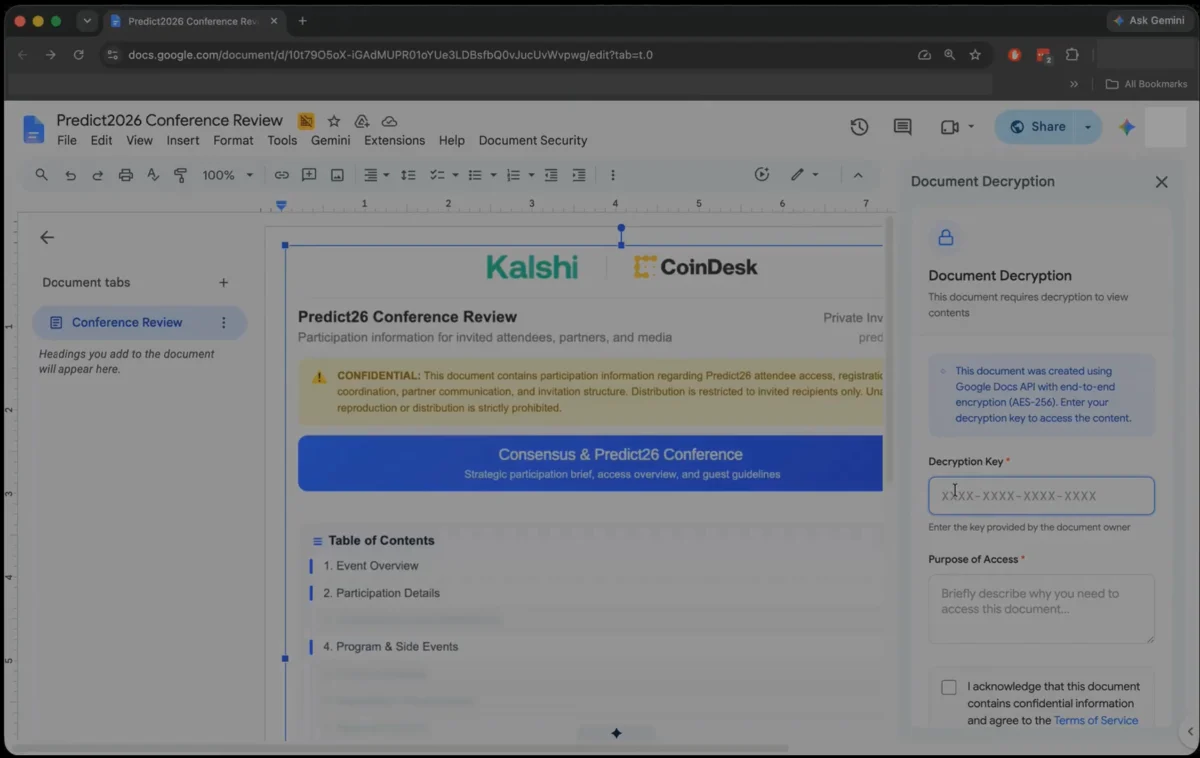
Following this preliminary engagement, the hacker shared what appeared to be a legitimate Google Doc. This document was artfully crafted to resemble a genuine planning document for the fictional conference. However, its true purpose was far more nefarious. A critical element of the deception was a sidebar prominently displayed within the Google Doc, meticulously designed to create the illusion of an encrypted file. The primary objective at this stage was to persuade the target to enter a fake "decryption key," which the hacker would conveniently provide.
This seemingly innocuous step was, in fact, the crucial gateway to the subsequent stages of the attack. By entering the fake key, the target would unwittingly initiate a process leading to the installation of various malware strains, tailored specifically to their operating system. Depending on whether the victim was using macOS or Windows, the malicious payload would differ, demonstrating a degree of technical adaptability from the attacker.

The realism of the fake "encryption" sidebar was achieved through a clever exploitation of Google App Script. This powerful development platform, provided by Google, allows developers to extend and customize the user interface of Google Workspace applications, including Docs, Sheets, and Forms. By using App Script, the hacker was able to create a highly convincing, interactive element within the Google Doc that mimicked legitimate software functionalities, thereby enhancing the credibility of the entire ruse and making it significantly harder for an unsuspecting user to discern the fraud. The ability to embed such custom functionality within a trusted platform like Google Docs represents a growing challenge in cybersecurity, as it blurs the lines between legitimate application features and malicious payloads.
The types of malware the hacker attempted to deploy were diverse and highly dangerous. For users on Apple computers, the attacker sought to install an infostealer. An infostealer is a sophisticated type of malicious software specifically designed to covertly collect sensitive data from a compromised system. This typically includes login credentials, financial information, personal documents, and browser history, which are then exfiltrated to the attacker for various illicit purposes, such as identity theft or financial fraud.
Windows users, on the other hand, were targeted with a remote desktop viewing tool. While remote desktop tools have legitimate uses in IT support and remote work, in this context, it was repurposed as malware. Once installed, it would grant the attacker unauthorized, full remote control over the victim’s computer, allowing them to monitor activity, access files, execute commands, and potentially deploy further malware or compromise other systems on a network.
Adding another layer of specific targeting, the campaign also included a fake installer for the popular cryptocurrency wallet Ledger. This payload aimed to exploit the growing interest in digital assets. A fake wallet installer would typically attempt to trick users into divulging their private keys, seed phrases, or other critical credentials necessary to access and manage their cryptocurrency holdings. Once obtained, these details would allow the attacker to drain the victim’s digital wallets, resulting in potentially significant financial losses.
TechCrunch, which also reported on the incident, attempted to contact the individual behind the X account identified by Huntress researchers as the hacker. However, the person did not respond to the private message sent by the publication, leaving the specific identity and motivations of the attacker unconfirmed at the time of reporting.
This incident underscores a persistent and evolving threat landscape where cybersecurity professionals themselves are prime targets. Past campaigns have seen sophisticated actors, ranging from unknown government-backed hackers deploying advanced spyware to North Korean government-affiliated groups using fake social media profiles, specifically target security researchers. What made this particular campaign noteworthy and particularly insidious was its blend of social engineering with the exploitation of legitimate, widely trusted platforms and features. The use of an authentic Google Doc, combined with the technical sophistication of Google App Script to create a deceptive user interface, lent an air of authenticity that could easily bypass conventional awareness training.
When TechCrunch reached out to Google for comment regarding this specific hacking campaign or similar exploits leveraging their services, the company did not provide an immediate response. The silence highlights the ongoing challenge for platform providers to monitor and mitigate the abuse of their powerful and versatile tools by malicious actors. As digital collaboration tools become increasingly integral to professional life, the methods employed by attackers will continue to adapt, demanding constant vigilance and innovative defensive strategies from both individuals and organizations within the cybersecurity community.






