11

The advent of AI search assistants presents a paradigm shift for website visibility, moving beyond traditional organic traffic metrics. While AI search may not entirely supplant organic traffic, its influence fundamentally alters how potential customers discover and evaluate brands. Before a user even lands on a website, an AI assistant can already provide explanations of a product, compare it with competitors, and guide purchasing decisions. This means that by the time a user clicks through to a website, they may already possess a comprehensive understanding of the market and their needs. The real opportunity, therefore, lies not solely in securing clicks, but in cultivating a brand that AI can accurately describe and confidently recommend. To achieve this, brands must focus on four key pillars: establishing owned channels as reliable sources of truth, building sufficient external evidence for category inclusion, creating content that withstands AI summarization, and measuring visibility holistically.
Pillar 1: Establish Owned Channels as a Reliable Source of Truth
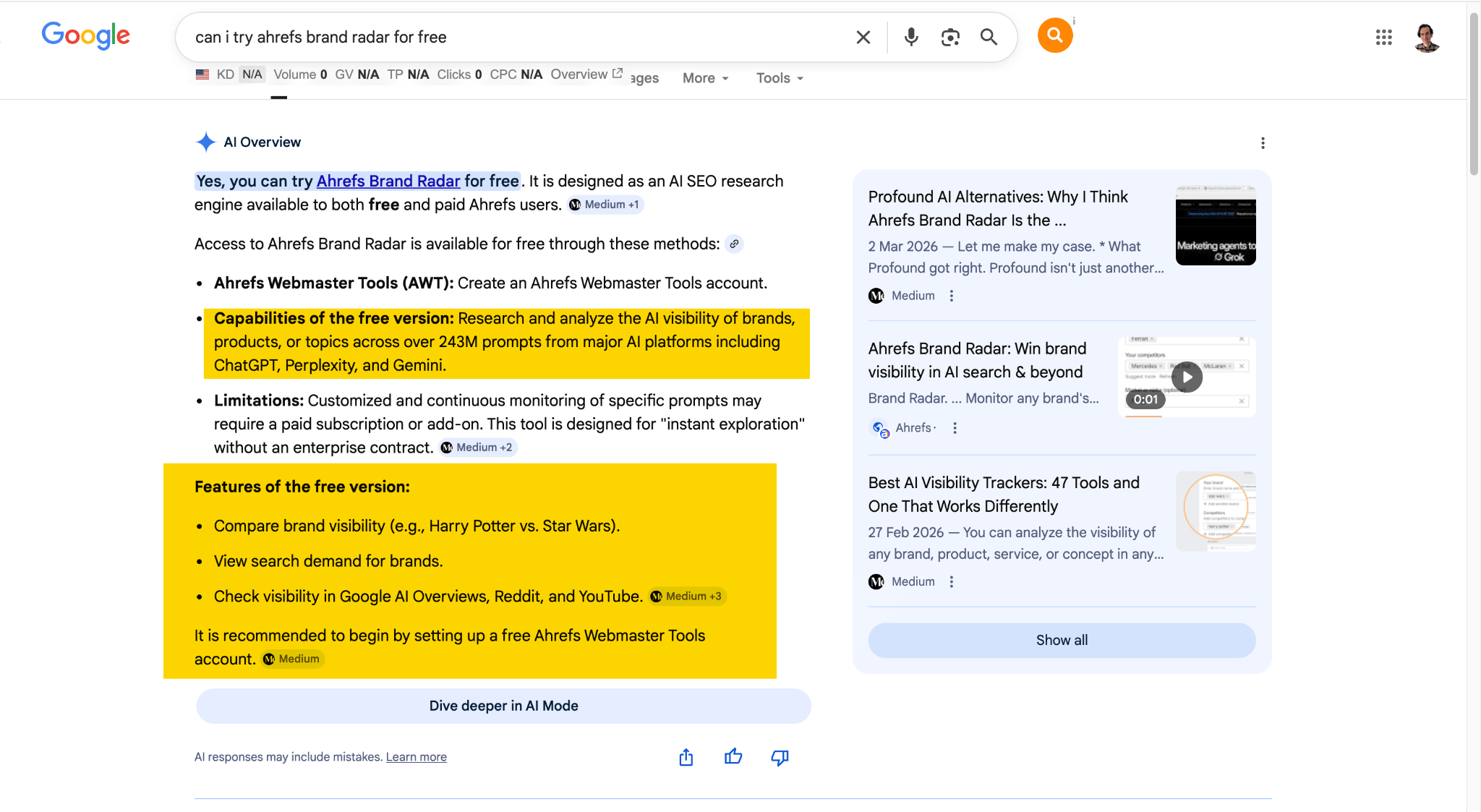
AI assistants function as new sales representatives, learning about products from the public web. They require clear, consistent answers to fundamental questions about a brand’s offerings. Inconsistent or outdated information scattered across various platforms—landing pages, blog posts, and profiles—forces AI to fill in the gaps, potentially leading to misrepresentations, incorrect audience targeting, or factual errors. For instance, a lack of clear documentation can cause AI to conflate the functionalities of free and paid versions of a product, as observed with Ahrefs Brand Radar. This highlights a key distinction between Generative Engine Optimization (GEO) and traditional Search Engine Optimization (SEO). While SEO focuses on ranking for specific queries, GEO values pages that serve as dependable sources of truth for AI systems, even if they don’t directly rank.
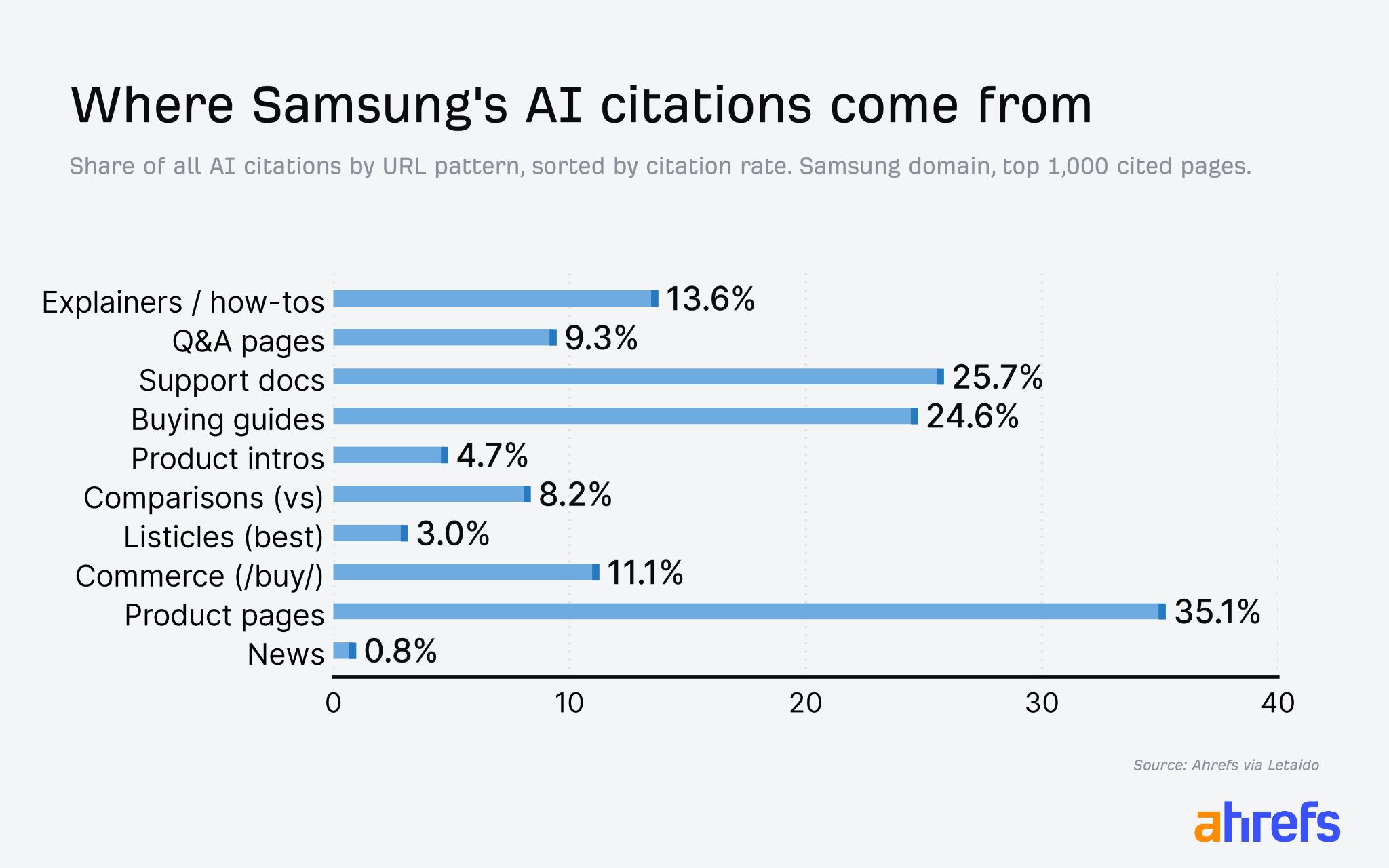
Leading tech brands like Samsung exemplify this by prioritizing content that mirrors what sales or support representatives would use, such as product guides, support documentation, and FAQs. Detailed information on features, integrations, pricing, use cases, and product terminology empowers AI to provide accurate answers. This principle extends beyond a company’s own website to include profiles on platforms like G2, Capterra, LinkedIn, Crunchbase, and app marketplaces, which AI assistants frequently consult. Maintaining consistency in descriptions, positioning, and product details across all owned profiles is crucial. Backing claims with evidence such as reviews, certifications, rankings, or awards further strengthens AI’s confidence in accurately describing a business.
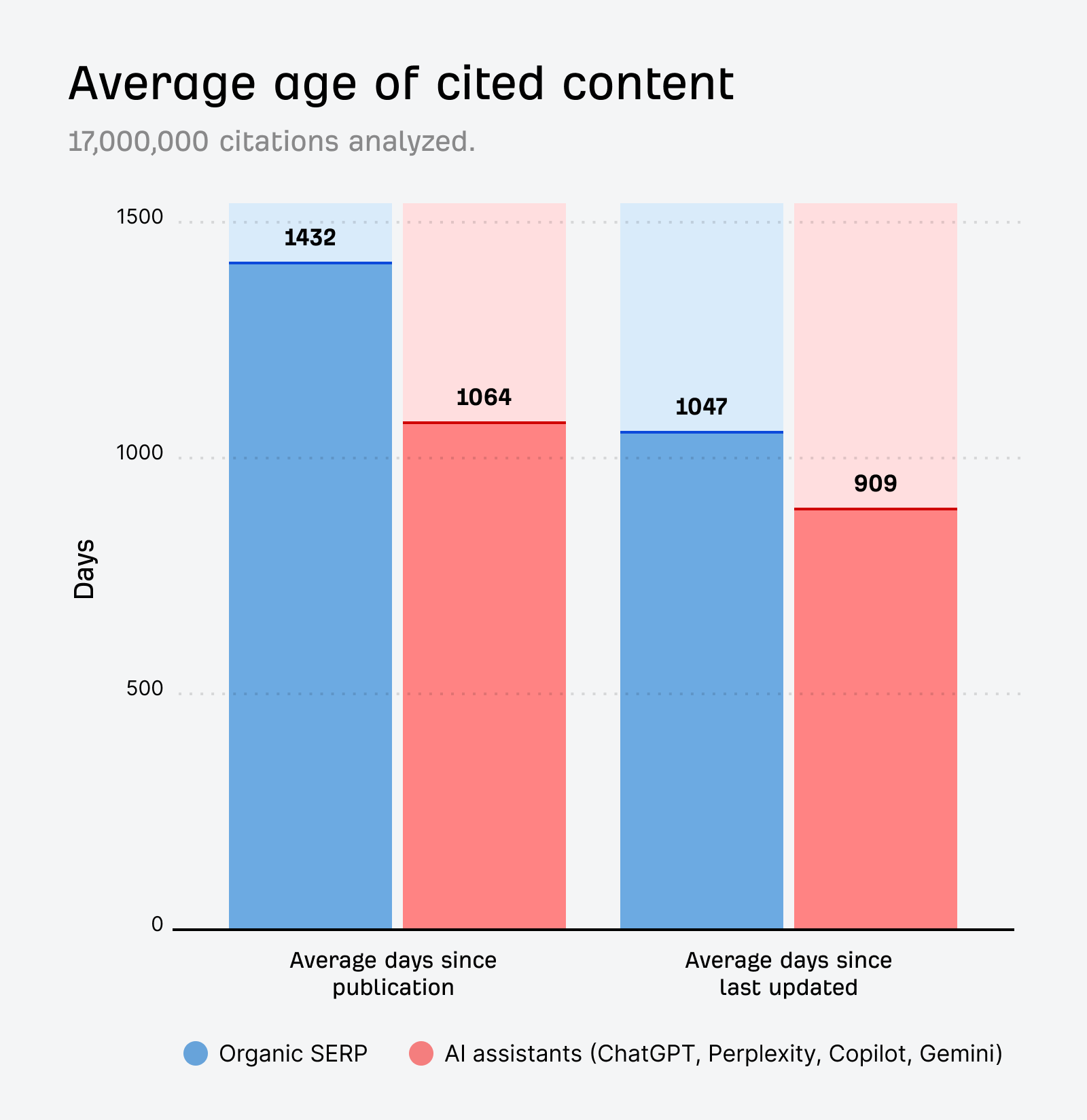
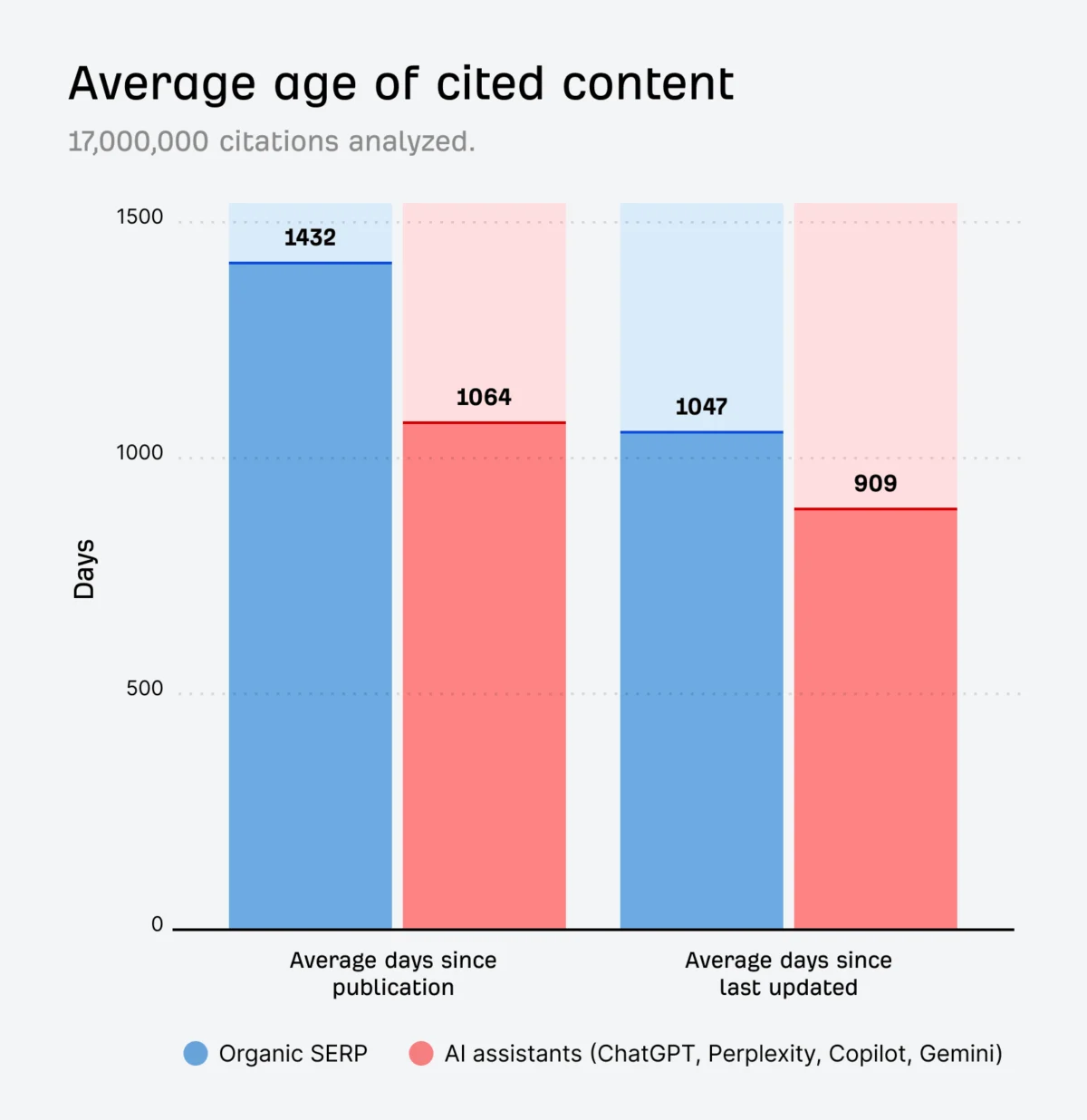
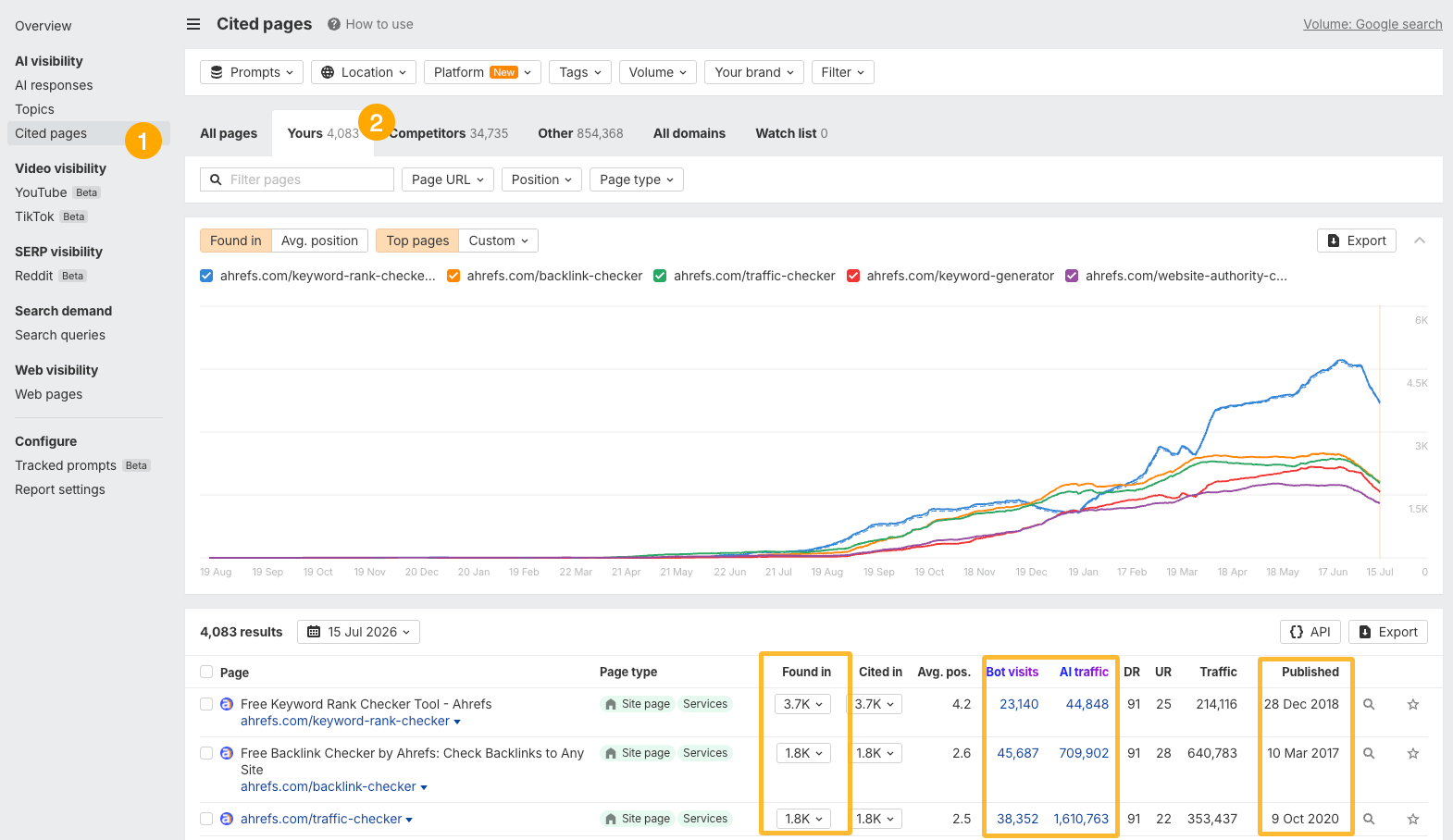
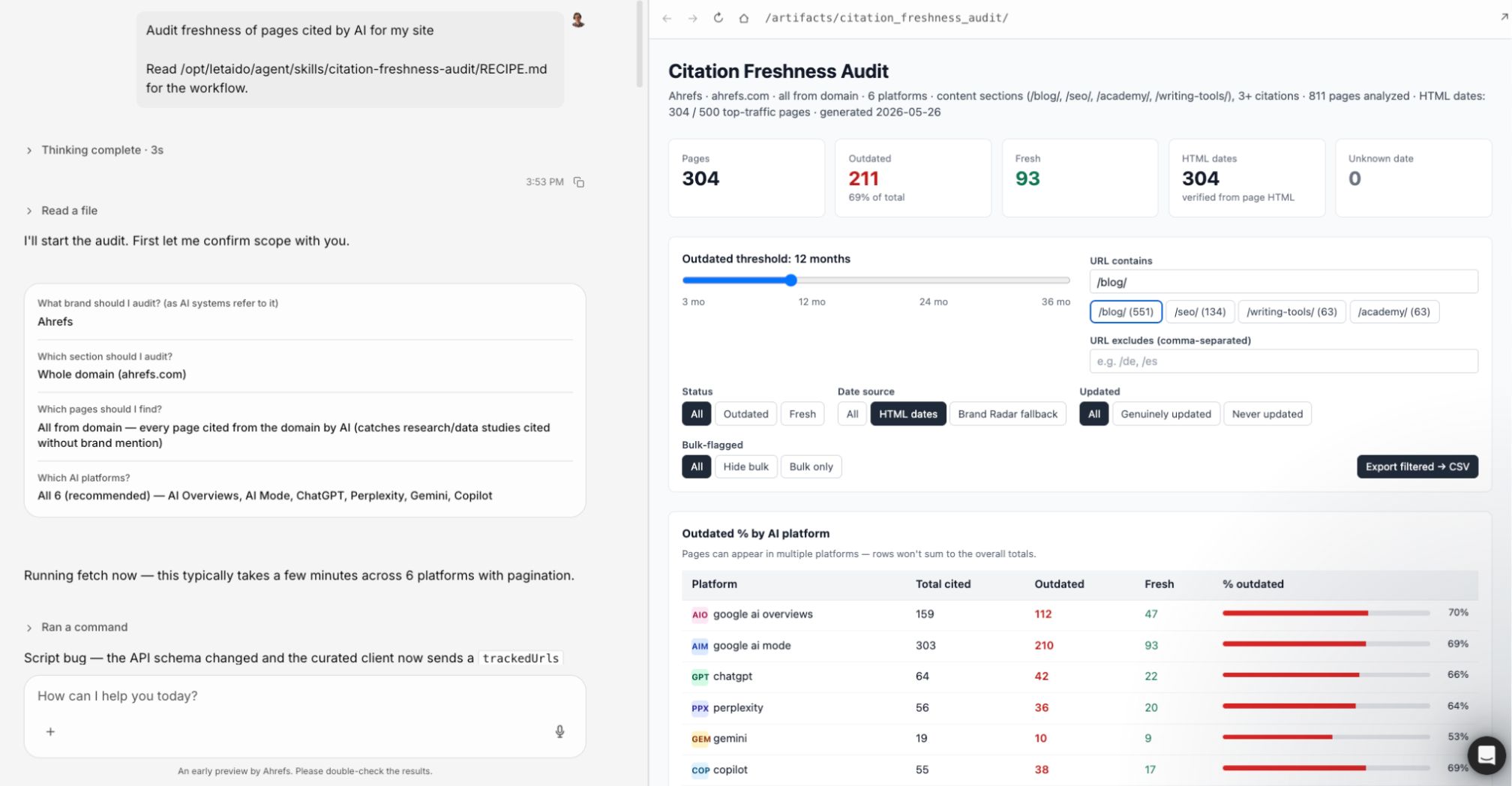
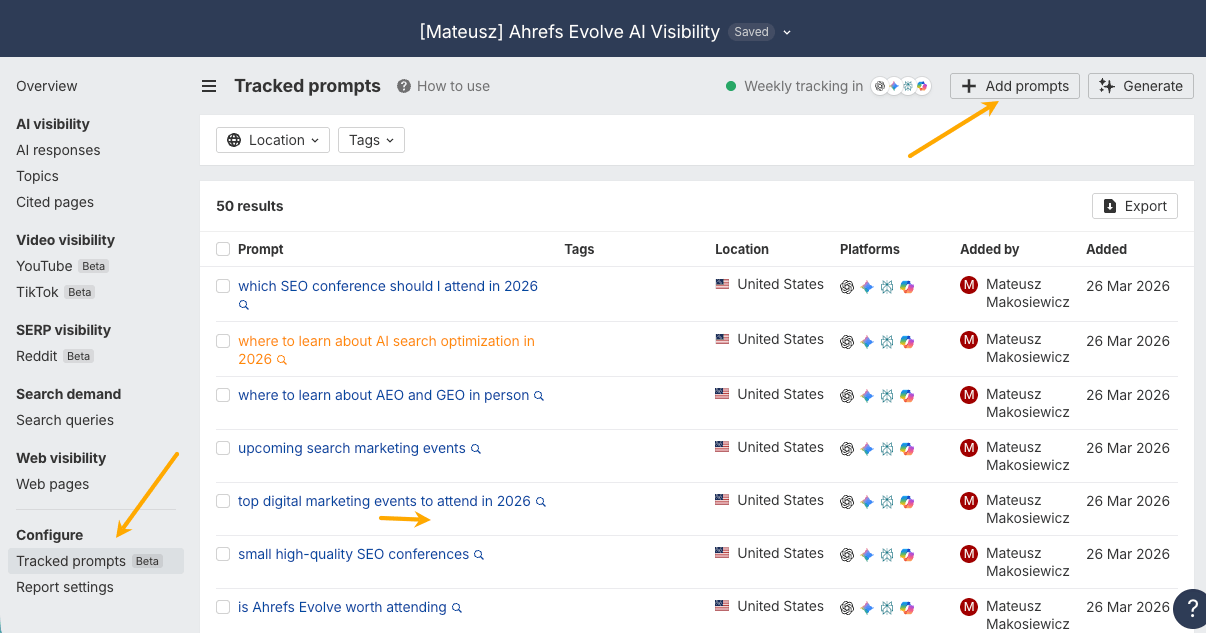
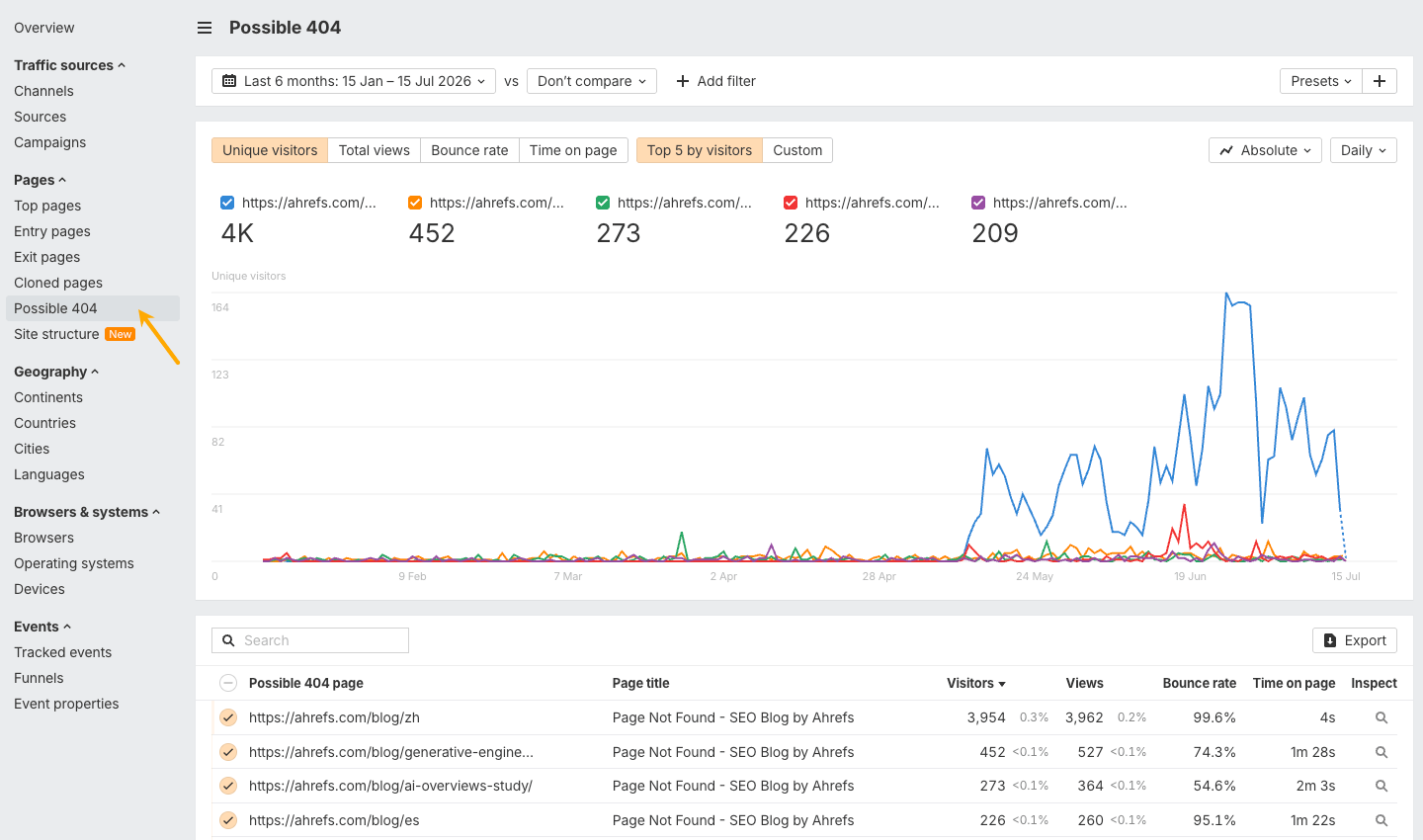
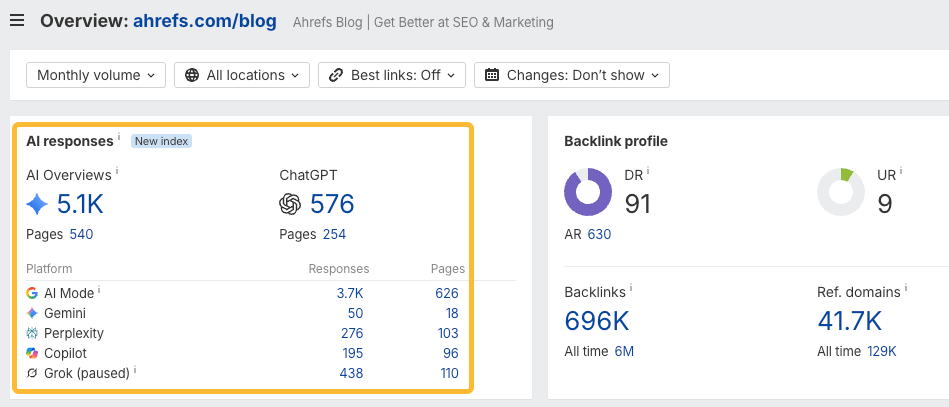
To implement this, a three-step audit is recommended. First, identify outdated content by reviewing publication and last updated dates across all owned assets. Tools like Ahrefs Brand Radar can help identify which pages AI cites, which AI bots visit, and when they were last updated. Second, monitor AI bot activity and AI search traffic through tools like Ahrefs Web Analytics. This provides insights into how AI systems are interacting with a brand’s digital presence. Third, directly query AI assistants like ChatGPT, Claude, or Gemini to assess how they represent the brand. Custom prompts can automate this tracking over time, distinguishing between isolated errors and recurring issues, and monitoring the impact of new content. Paying attention to hallucinated URLs can also reveal expected but missing content, indicating opportunities for new pages or redirects.
Pillar 2: Build External Evidence for Category Inclusion and Recommendation
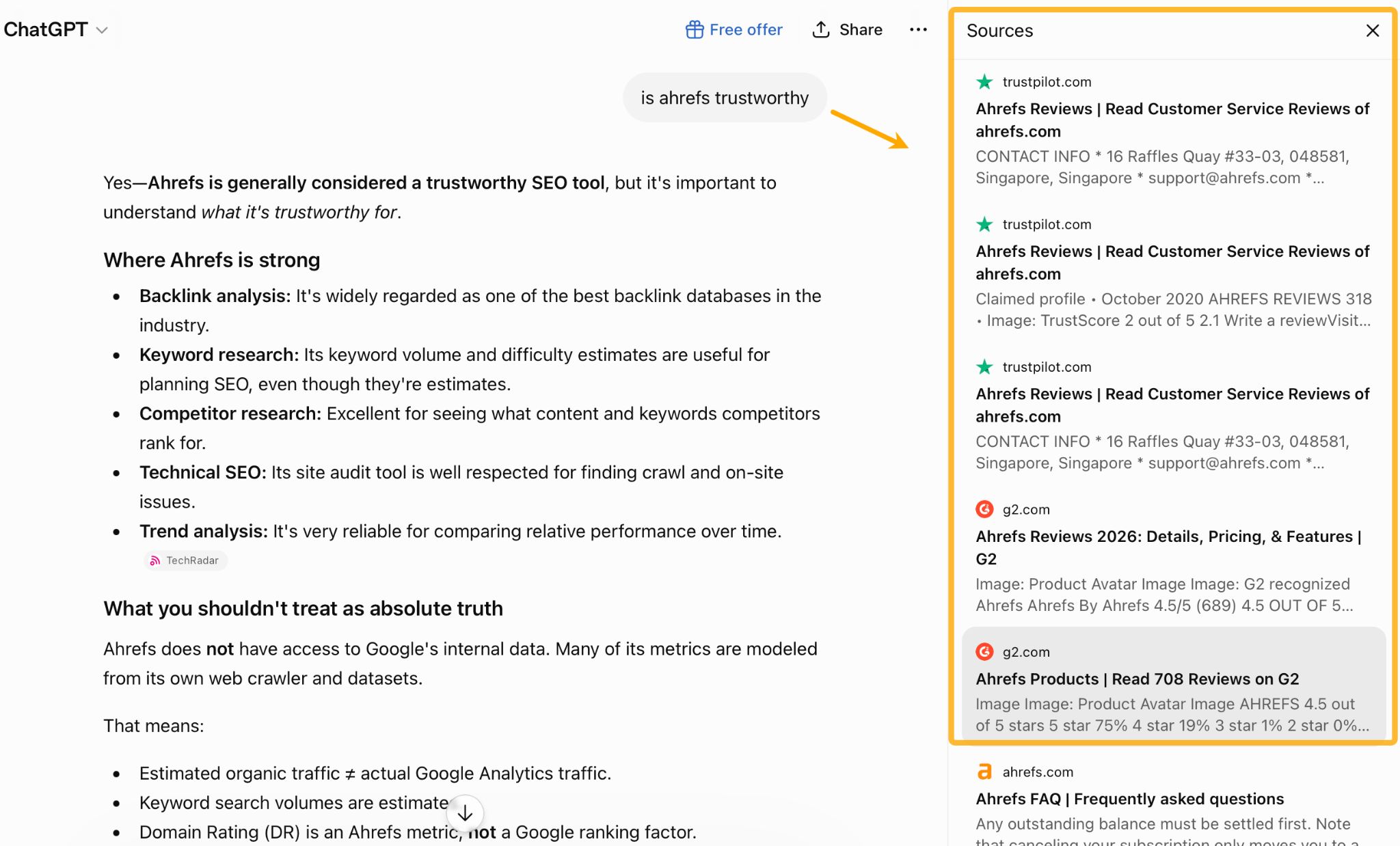
AI assistants draw information not only from a brand’s owned channels but also from a wide array of third-party sources, including reviews, YouTube videos, analyst reports, industry publications, comparison sites, podcasts, Reddit, and customer discussions. In many cases, brand mentions in AI answers originate from these external platforms rather than the brand’s own website. User-generated content, in particular, plays a significant role in providing a human perspective. Platforms like YouTube, Reddit, Facebook, and LinkedIn are frequently cited.
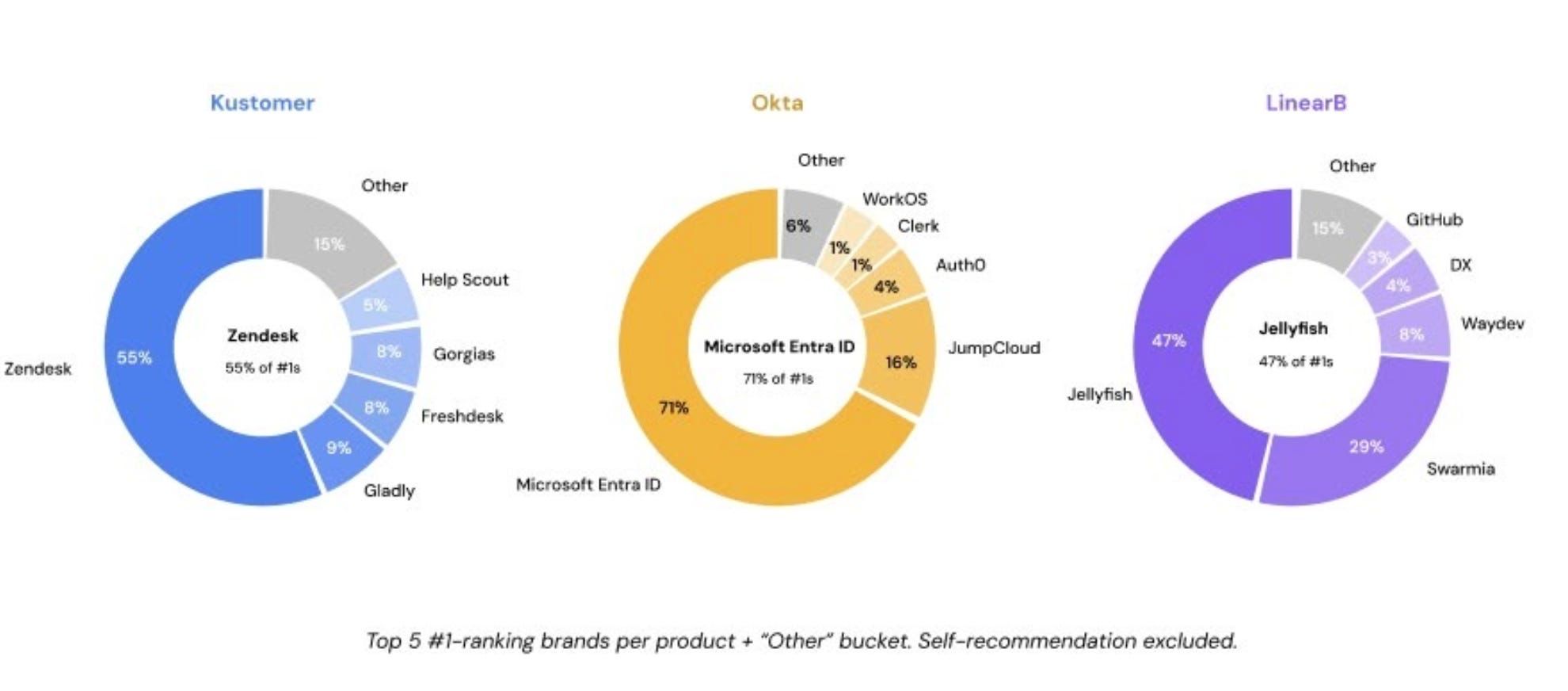
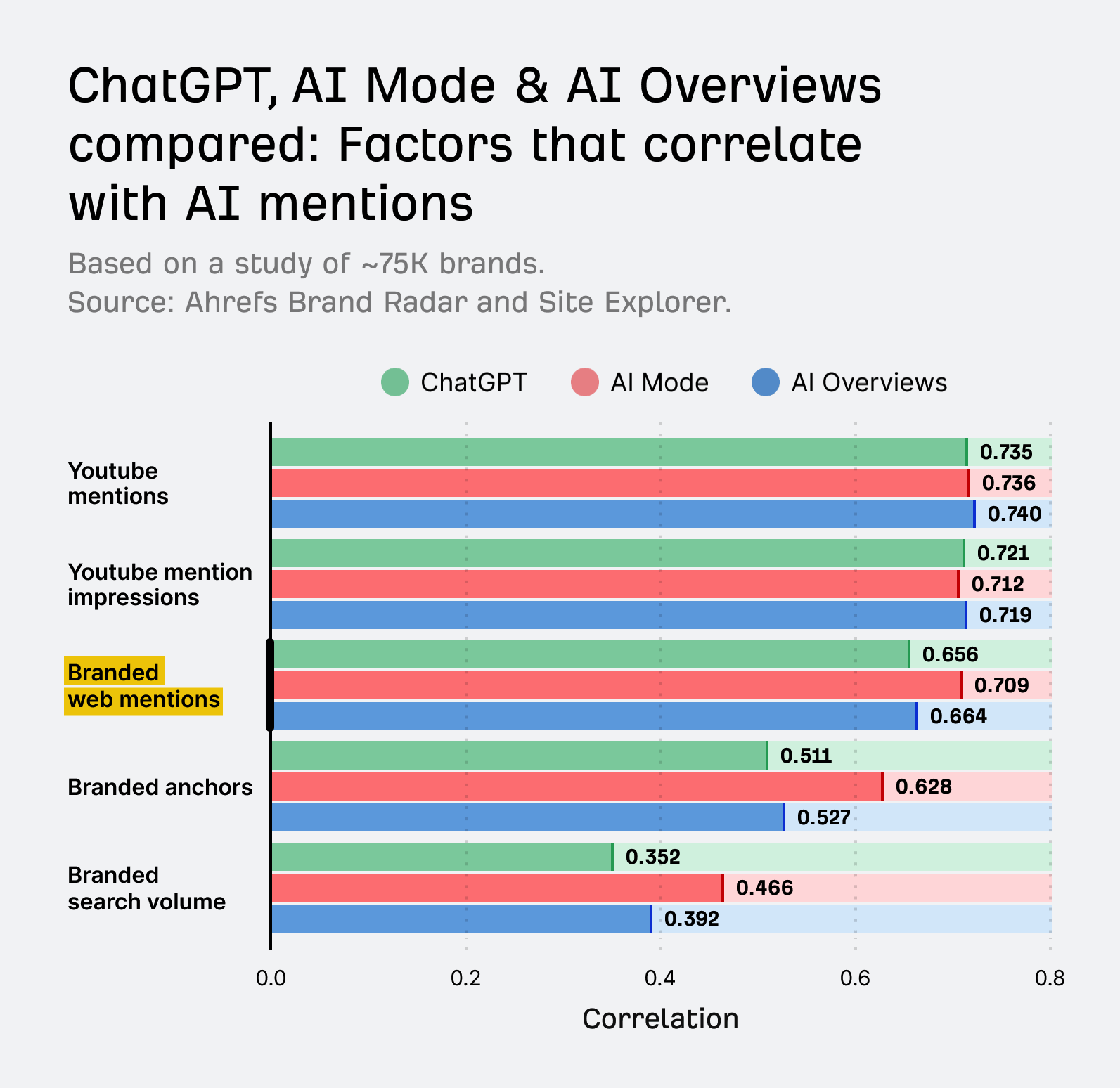
The collective information from owned content and third-party mentions shapes AI’s understanding of a brand and contributes to an online consensus about which brands belong within a specific category. AI assistants tend to recommend a select group of established companies that have accumulated substantial evidence in the form of reviews, comparisons, media coverage, and customer discussions over time. This explains why similar content can yield different results; AI prioritizes brands with more demonstrable evidence of belonging in the conversation. Studies have shown that off-site mentions, especially from YouTube video transcripts, strongly correlate with AI visibility.
To be recommended by AI, a brand must first establish sufficient evidence to be included in the relevant category. This evidence should consistently connect the brand with its category, desired use cases, and key competitors. A "source strategy" is therefore paramount, focusing on platforms AI systems already utilize for generating answers, such as review sites, YouTube, Reddit, industry publications, and podcasts.
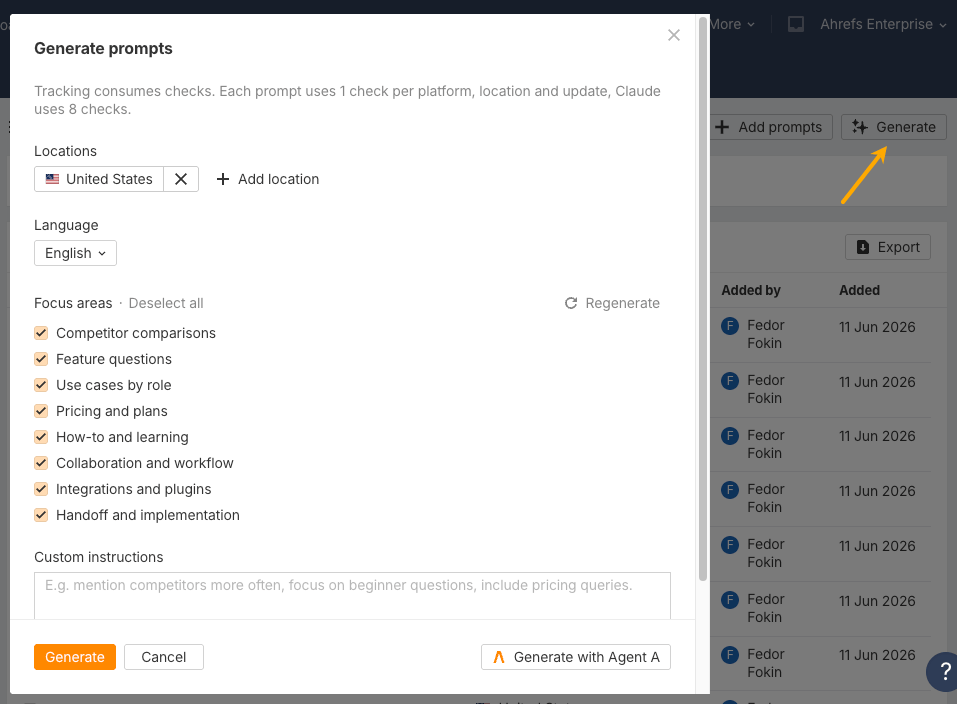
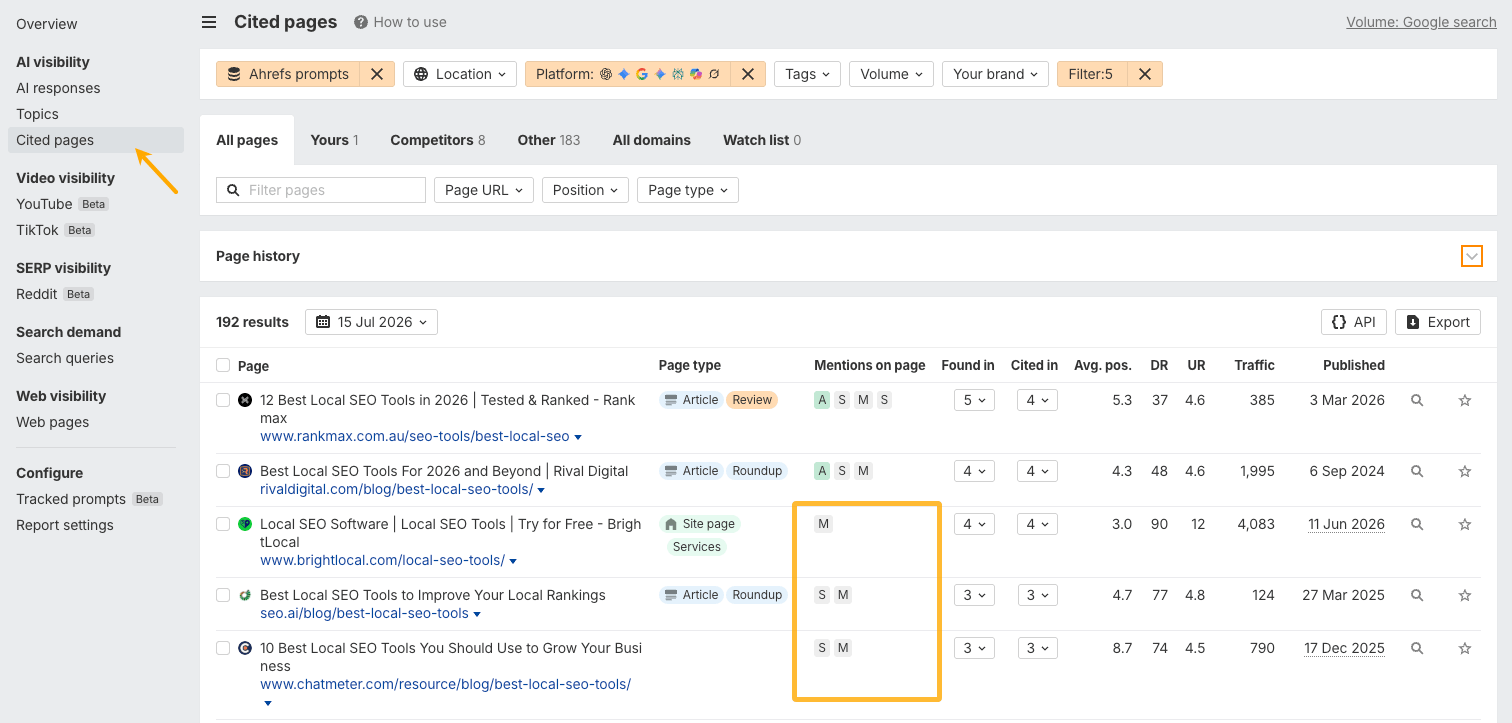
To assess this, brands should check if AI assistants already include them among regularly recommended companies in their category. If so, the focus shifts to maintaining that position and ensuring accurate representation. If not, acquiring more third-party evidence that links the brand to its category, use cases, and competitors is necessary. Tools like Ahrefs Brand Radar can identify prompts where competitors are mentioned but the brand is not, revealing gaps. Analyzing cited pages in these AI answers and identifying opportunities for mentions on those sites, or improving the brand’s own website coverage of the topic, are key steps. The "Mentions on page" column in reports can highlight influential pages that do not yet mention the brand, guiding outreach and collaboration efforts.
Pillar 3: Create Content That Survives AI Summarization
When an AI assistant answers a question, it summarizes the most relevant sources, making direct clicks to those sources optional. This necessitates creating content that retains its value even after summarization. Generic explainers and basic how-to guides are easily summarized by AI without significant loss of information. Content that endures falls into two categories: original research, firsthand experiments, and unique opinions, and content that AI cannot replicate, such as online tools, calculators, and templates.
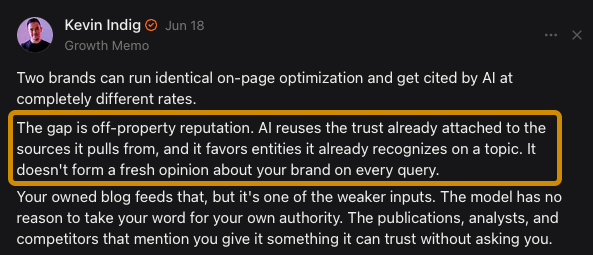
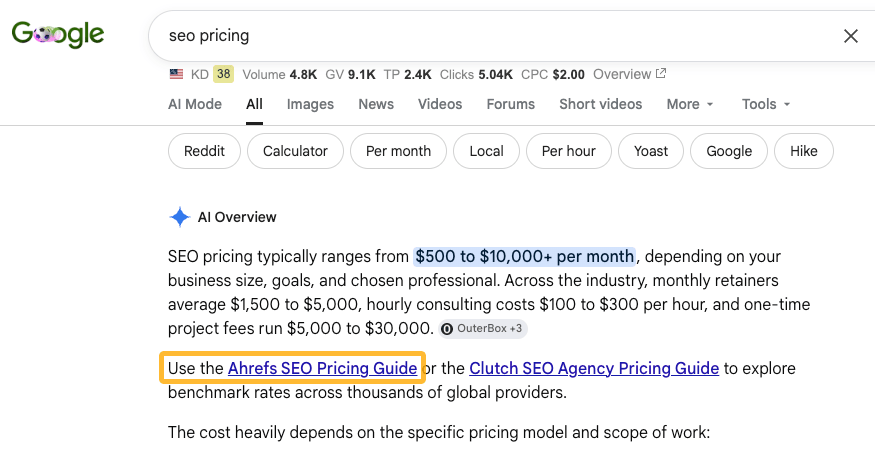
Original research, experiments, and opinions offer unique value that AI can quote or summarize but must attribute to the source, thereby building awareness and authority. This "deep content," as predicted, encourages users to visit the original article for a more complete understanding. AI can outline steps for a task, but the critical decision-making remains with the user. Similarly, while AI can describe a backlink checker, it cannot perform the function itself. This often leads to keywords associated with such tools not triggering AI Overviews, making them valuable for direct traffic.
Content creation for AI search should not be viewed as a separate investment. Original research, unique perspectives, and exclusive data not only earn AI citations but also drive social shares, media quotes, podcast discussions, and sales enablement. This content fuels newsletters, social media engagement, sales conversations, and earns valuable third-party mentions. AI visibility is an inherent benefit of producing high-quality, publishable content.
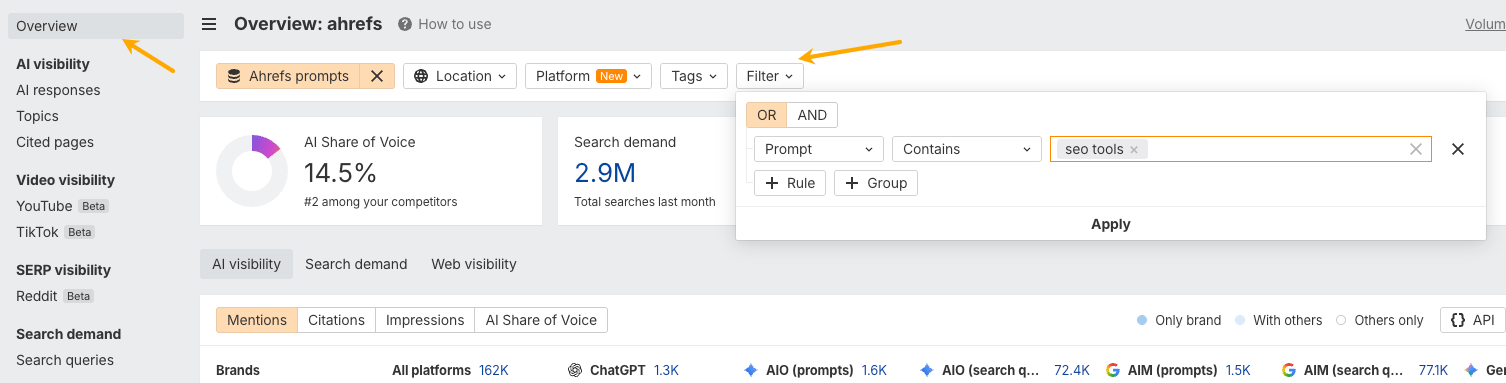
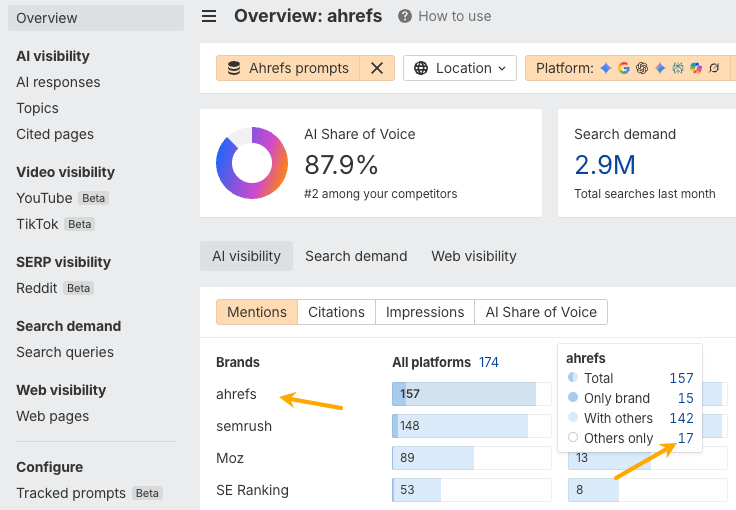
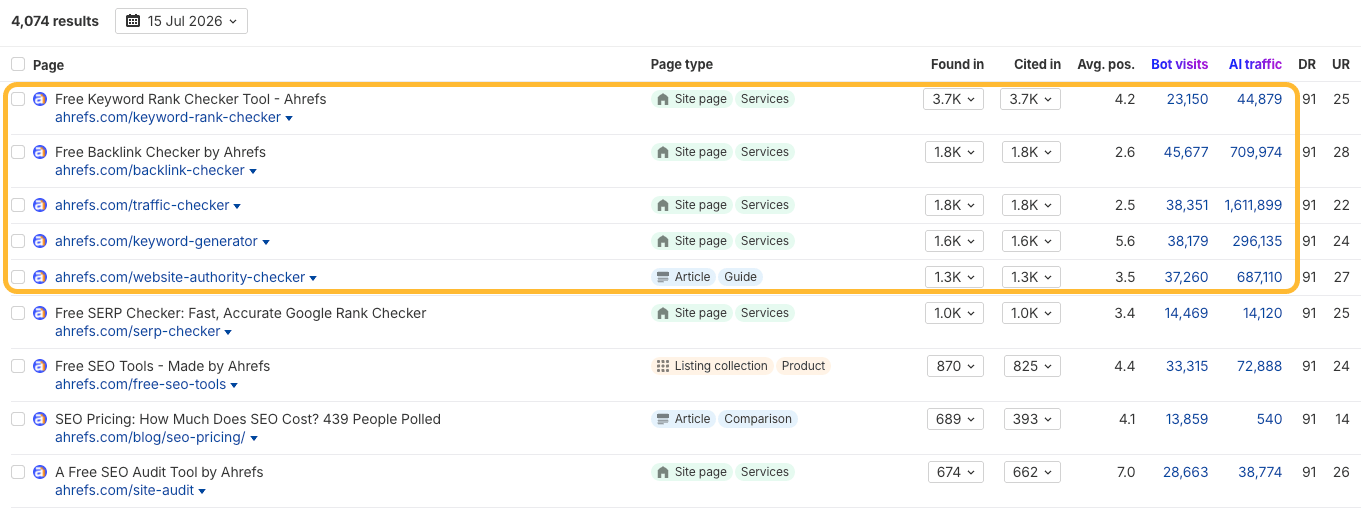
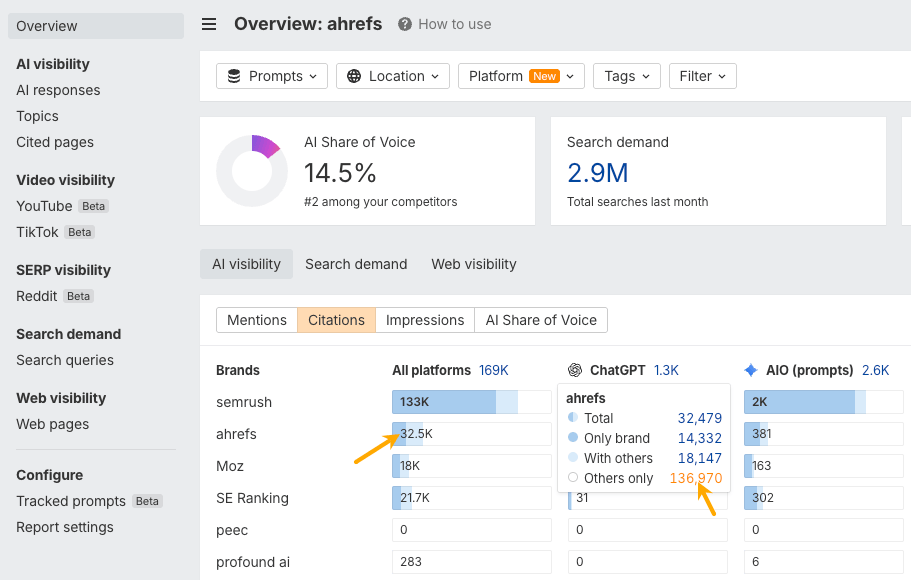
To get started, brands should identify citation gaps—topics where AI assistants cite competitors but not their own brand. These gaps represent a demand signal, indicating a relevant topic where the brand has yet to establish a presence. Ahrefs Brand Radar can help uncover these gaps by filtering for "Others only" in the Citations tab and then examining the Cited pages report. Identifying pages that AI cites but do not mention the brand, or pages that cover topics not yet addressed by the brand, reveals opportunities for new content or improvements to existing content. Prioritizing these opportunities based on columns like "Found in" and "Traffic," and assessing the freshness of existing cited content, is crucial. Filtering by close competitors can reveal topics they are successfully leveraging. The final step involves identifying unique contributions—internal data, customer research, benchmarks, experiments, or firsthand experiences—to create content that stands out. For content that resists summarization, keyword research tools can identify opportunities where AI Overviews are not yet prevalent.
Pillar 4: Measure Average Visibility, Not Individual Answers
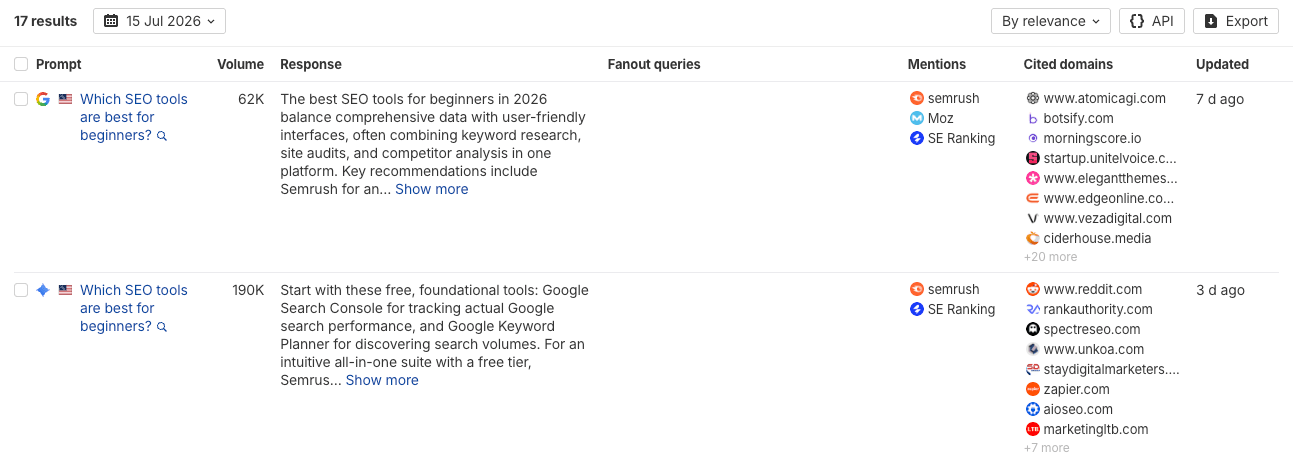
AI answers are dynamic and can vary significantly across different assistants and over time. A brand might appear in one AI’s response but be absent from another’s. Therefore, tracking individual responses is less effective than measuring average visibility across numerous prompts and AI systems over time, akin to tracking share of voice rather than specific search rankings. The crucial metric is a brand’s average presence across the questions, platforms, and buying scenarios relevant to its audience.
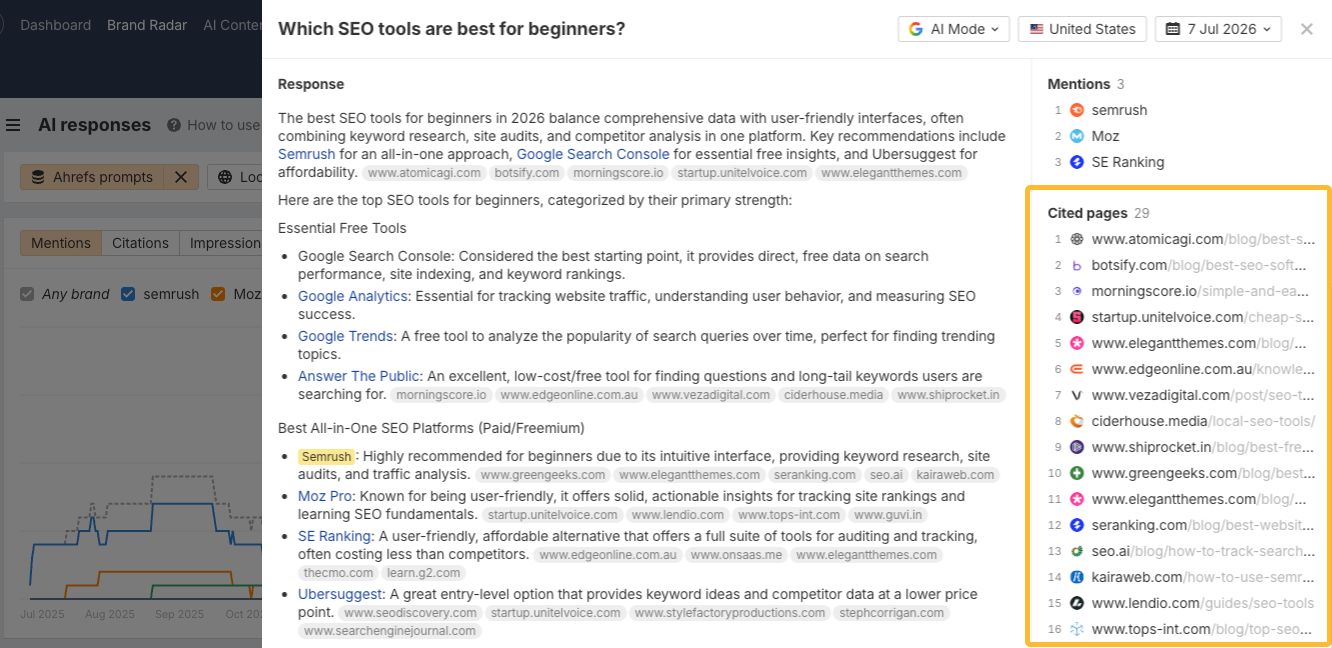
To establish this baseline and monitor progress, tools like Ahrefs Brand Radar offer brand performance charts that track mentions, citations, AI share of voice, and estimated impressions over time. These charts enable comparison against competitors and allow for filtering by prompt index, AI platform, and location. This provides answers to fundamental questions: how often is the brand mentioned, how often is it cited, what is its share of voice, and what are its estimated impressions?
As familiarity with these metrics grows, custom dashboards can be built to track additional indicators. These include AI share of voice for competitive positioning, AI traffic to understand content survival and referral journeys, AI bot activity as a diagnostic metric for crawler engagement, AI coverage (mentions versus citations) to gauge presence in absolute terms, AI perception to monitor how the brand is described and whether market narratives are shifting positively, outdated pages cited by AI to identify and correct stale information, and recommendations for actionable insights derived from citation gaps and misrepresentations. This holistic approach transforms AI visibility monitoring from passive observation into an actionable strategy.
What to Avoid in Your AI Search Strategy
As AI search evolves, shortcuts may appear tempting but are often short-lived. Self-promotional "best tools" lists, where a brand ranks itself first, can inadvertently boost competitors’ visibility by providing AI with more information about them. Transparent comparison pages that acknowledge competitor strengths are more credible. Similarly, publishing large volumes of unreviewed AI-generated content, often referred to as "scaled content," can lead to repetitive, inaccurate, and eventually penalized content, a pattern sometimes dubbed "Mount AI." While AI is valuable for research, outlining, and editing, it should not replace original ideas, firsthand experience, evidence, or human judgment. Finally, blocking AI crawlers without a compelling reason can hinder visibility, as it prevents AI systems from accessing and indexing valuable content.
Final Thoughts
AI search, while feeling like a new frontier, rewards the same fundamental principles that have always driven success: clear communication, credible validation, original content, and consistent measurement. What distinguishes AI search is its ability to synthesize information from diverse channels—websites, documentation, reviews, news, social media, and videos—into a single, cohesive answer. This integration of traditionally separate marketing disciplines, including SEO, content marketing, digital PR, brand marketing, product documentation, and customer advocacy, means that performance in AI search is no longer solely an SEO concern. It is a reflection of how effectively an entire marketing ecosystem collaborates to enable AI to understand, verify, and recommend a brand.