11

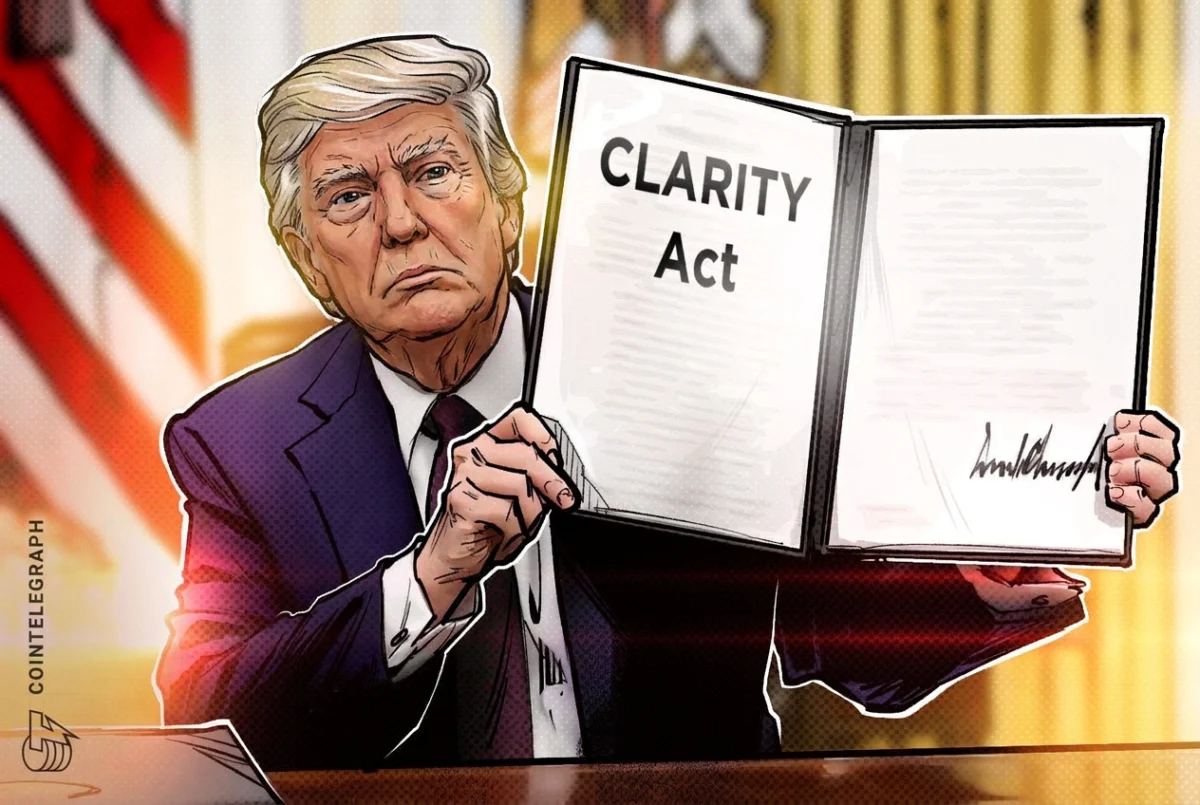
Washington D.C. – U.S. President Donald Trump intensified his advocacy for the passage of a comprehensive crypto market structure bill during a press conference held Wednesday, even as the U.S. Senate continues its recess. The bill, known as the Digital Asset Market Clarity (CLARITY) Act, which cleared the House of Representatives in July 2025, has faced prolonged delays in the Senate, encountering significant debate surrounding issues such as tokenized equities, stablecoin incentives, and potential conflicts of interest involving the Trump family and the burgeoning cryptocurrency industry.
Addressing a gathering of prominent figures from the crypto sector, including Coinbase CEO Brian Armstrong and Gemini co-founders Cameron and Tyler Winklevoss, President Trump articulated his strong belief that members of Congress should swiftly approve "a fair version" of the CLARITY Act. He emphasized that such legislative action is crucial for maintaining the United States’ competitive edge, stating, "to keep the US ahead of China."
Brian Armstrong, speaking after the President and U.S. regulatory heads, underscored the bill’s potential to establish a stable and enduring regulatory framework for digital assets. He expressed his conviction that the legislation would render U.S. crypto policies "durable into the future, so it could survive for decades and decades to come." Armstrong further projected a strong likelihood of bipartisan support, speculating that the bill could garner "more than 60 votes" once the Senate addresses a cloture motion scheduled for September 18.
President Trump echoed this sentiment, characterizing the bill’s prospects as "very bipartisan" and noting, "Lot of Democrats support." This assertion followed Armstrong’s comments and highlighted the potential for cross-party consensus on the matter.
The President’s renewed push for the CLARITY Act comes after a previous appeal in July, following the passing of Senator Lindsey Graham. Trump had lauded Senator Graham as a "big supporter" of the bill and urged lawmakers to advance the legislation in his honor. This latest engagement underscores the administration’s continued focus on shaping the regulatory landscape for digital assets.
The remarks made by crypto executives to the press occurred just one day prior to a scheduled Innovation Advisory Committee meeting hosted by the Commodity Futures Trading Commission (CFTC). CFTC Chair Michael Selig indicated that the agency would explore the advancement of cryptocurrency regulations during this meeting, acknowledging that Congress would not reconvene for another month. This timing suggests a parallel effort by regulatory bodies to address the evolving digital asset space in the absence of definitive congressional action.
Adding another layer to the ongoing discussions around crypto regulation, the White House meeting took place in the same week that the Securities and Exchange Commission (SEC) proposed new rules. These proposed regulations offer companies a safe harbor, shielding certain tokens from being classified as "investment contracts," and include specific exemptions related to token issuance. The SEC’s proactive measures, even in the absence of the CLARITY Act, signal the increasing attention being paid to the digital asset market by U.S. regulatory agencies.
The CLARITY Act, as previously passed by the House of Representatives, aims to provide a clear regulatory structure for digital assets, addressing key areas that have long been subject to uncertainty. Its proponents argue that such clarity is essential for fostering innovation, attracting investment, and protecting consumers within the rapidly growing crypto market. However, the bill’s journey through the Senate has been marked by considerable debate, particularly concerning the classification and regulation of tokenized securities and the implications of stablecoins. Concerns have also been raised regarding potential conflicts of interest, given the increasing involvement of prominent figures and their families in the digital asset space.
The inclusion of tokenized equities in the CLARITY Act has been a point of contention, as it touches upon the complex interplay between traditional securities markets and the emerging world of digital assets. Lawmakers are grappling with how to effectively regulate these novel forms of financial instruments to ensure market integrity and investor protection. Similarly, the provisions related to stablecoin rewards have drawn scrutiny, with discussions revolving around the potential risks and benefits associated with such mechanisms.
The ongoing deliberations in the Senate highlight the challenges inherent in crafting effective legislation for a rapidly evolving technological and financial sector. The lack of a clear and consistent regulatory framework has been cited by industry participants as a significant impediment to the growth and adoption of digital assets in the United States. Many argue that this uncertainty could lead businesses and talent to seek more favorable regulatory environments abroad, potentially impacting U.S. competitiveness in the global digital economy.
The President’s repeated calls for the CLARITY Act’s passage, coupled with the proactive steps taken by regulatory bodies like the CFTC and SEC, indicate a growing consensus among various stakeholders regarding the need for regulatory clarity in the cryptocurrency market. The upcoming Senate session, particularly the cloture motion on September 18, will be a critical juncture in determining the future of digital asset regulation in the United States. The potential for bipartisan support, as suggested by President Trump and Brian Armstrong, offers a glimmer of hope for the swift resolution of these complex issues.
This is a developing story and will be updated as more information becomes available.
Cointelegraph is committed to independent, transparent journalism. This news article is produced in accordance with Cointelegraph’s Editorial Policy and aims to provide accurate and timely information. Readers are encouraged to verify information independently.