11

The landscape of enterprise marketing has undergone a fundamental transformation over the last 24 months, driven by a rapid acceleration in artificial intelligence adoption and a subsequent shift in operational philosophy. While the initial wave of AI integration was characterized by broad experimentation and the localized deployment of disparate tools, a new report from software giant Atlassian suggests that the industry is entering a secondary phase defined by strategic consolidation and systemic integration. This evolution comes at a critical juncture for the sector, as marketing leaders face mounting pressure to bridge the gap between high adoption rates and measurable financial outcomes.
According to recent research conducted by Atlassian, a staggering 94% of marketers report utilizing AI in their daily professional workflows. However, this widespread usage has not yet translated into executive-level confidence regarding its efficacy. The study reveals that only 3% of marketing executives feel fully confident in their ability to demonstrate a clear, organization-wide return on investment (ROI) from their AI initiatives. This profound disparity suggests that while the workforce is eager to utilize the technology, the overarching strategy for extracting value remains elusive for the vast majority of organizations. The consensus emerging from Atlassian’s internal marketing operations is that this failure is rarely a result of technological limitations; rather, it is a failure of organizational strategy and the lack of a connected ecosystem.
At Atlassian, the challenge of managing a global marketing portfolio is particularly acute. The company’s marketing team oversees multi-channel campaigns that span a diverse product suite, targeting a spectrum of users from individual software developers to high-level enterprise decision-makers across dozens of international markets. Historically, the team followed the industry standard: experimenting with AI in isolated pockets and struggling to link individual successes to broader corporate objectives. The turning point occurred when the organization pivoted away from simply accumulating more AI tools and began focusing on the architecture of how those tools were utilized. By moving away from a fragmented approach, the company identified three "connected bets" designed to transform their operational model.
The first major investment focuses on the dynamic optimization of paid media budgets to enhance spend efficiency. In traditional marketing models, budget reviews are often retrospective, occurring on a quarterly basis. This "post-mortem" approach frequently reveals that significant capital was funneled into saturated or underperforming channels long after the window for adjustment has closed. To combat this, Atlassian developed a machine learning budget engine capable of detecting diminishing returns across various channels in near real-time. This tool provides immediate recommendations on where to reallocate funds, allowing the team to shift investments mid-campaign before waste compounds. By reacting to shifting performance signals instantaneously, the company aims to improve overall cost-per-conversion efficiency by at least 10%, transitioning the marketing team from a culture of guesswork to one of data-backed precision.
The second strategic bet involves the personalization of multi-touch user journeys using lifecycle signals. Recognizing that many potential customers are not ready for an immediate purchase, the marketing team utilizes machine learning models to coordinate messaging across various touchpoints, including landing pages, email tracks, and in-product notifications. This system ensures that every interaction is informed by the previous one, creating a cohesive narrative for the user. Central to this effort is Atlassian’s "Teamwork Graph," a proprietary data structure that provides the AI with institutional memory. By connecting context regarding the audience, existing messaging, and internal work streams, the Teamwork Graph allows the models to make more informed decisions and deliver increasingly relevant experiences over time. This automation not only provides a smoother experience for the buyer but also eliminates the manual labor previously required to stitch disparate campaign elements together.
The third pillar of Atlassian’s AI strategy addresses the scaling of creative optimization to mitigate ad fatigue and increase relevance. Reaching the correct audience at the optimal time is ineffective if the creative asset itself fails to resonate. Traditionally, producing localized and role-specific ad variations required extensive cycles with creative teams, often adding weeks to launch timelines and increasing costs. Atlassian has deployed an agentic creative tool that analyzes performance data to determine which assets are resonating with specific demographics. The tool then generates tailored, localized variants at scale. This approach significantly reduces the costs associated with personalization while simultaneously boosting campaign performance through higher creative relevance.
The cumulative value of these three bets is found in their connectivity. As signals from the budget engine sharpen the understanding of where investment is most effective, and journey data reveals how customers respond to specific touchpoints, the creative performance data highlights which messages are driving engagement. When these insights are allowed to flow through a connected system rather than remaining in silos, each campaign becomes progressively more intelligent. This reinforces the core takeaway of Atlassian’s recent efforts: AI builds momentum when it is intentionally connected. Standalone tests may provide minor wins, but they remain isolated, whereas a connected system possesses the capacity to learn and grow.
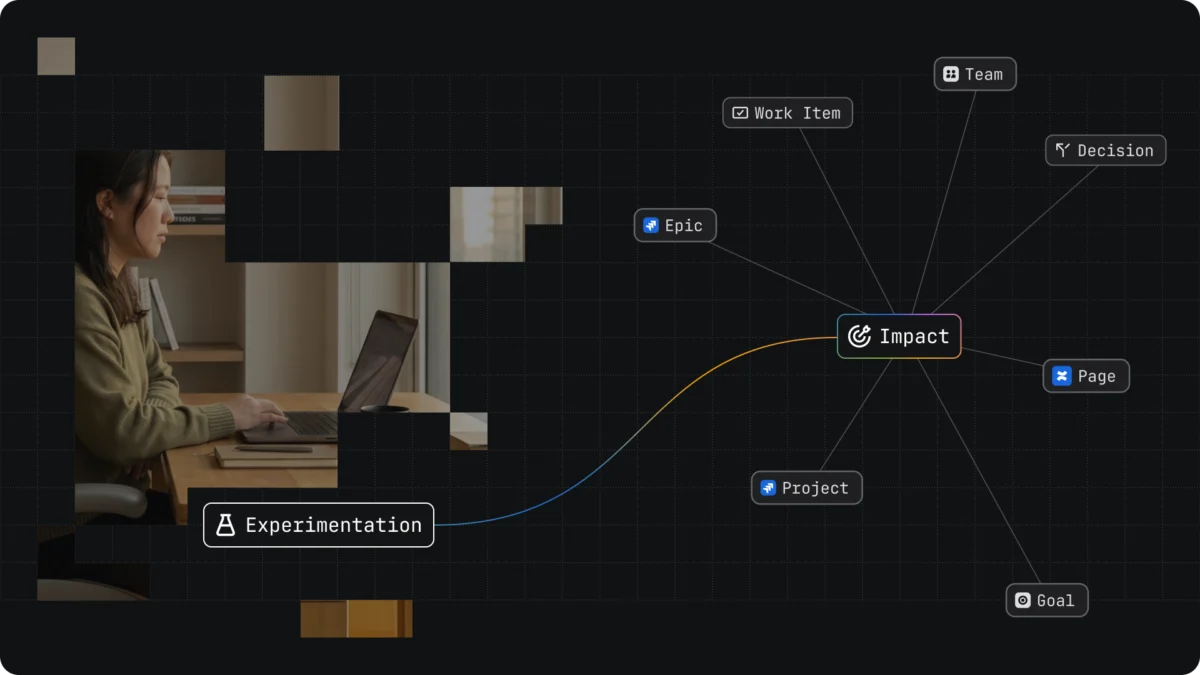
To manage the operational complexity of these AI-driven initiatives, Atlassian has integrated an experimentation agent built on Rovo, the company’s AI-powered organizational search and assistance platform. Prior to this implementation, dozens of teams across product, growth, and performance marketing were running simultaneous experiments. The data from these tests were scattered across Jira Product Discovery boards, Confluence pages, Atlas tickets, and Slack threads. This fragmentation meant that when a core metric shifted unexpectedly, teams would spend hours manually digging through various platforms to identify the cause.
The Rovo-based experimentation agent has consolidated these disparate data points into a single, queryable dashboard. It monitors Jira Product Discovery boards, tracks launch dates, identifies trending signals, and provides a real-time view of all organizational experiments filtered by product, channel, or workstream. One of the most significant advantages of this agent is that it operates without requiring individual teams to change their internal processes or adopt rigid new systems. It simply pulls the relevant data from existing workflows, providing visibility without adding administrative friction.
Despite the successes of these automated systems, Atlassian’s journey has also highlighted the necessity of maintaining human oversight, a concept often referred to as "human-in-the-loop" governance. In early testing phases, the company allowed external advertising platforms to automatically optimize top-performing creative assets. While the algorithms were successful in chasing higher conversion rates, they lacked an understanding of brand identity and nuance. Within a short period, the resulting advertisements became generic and clinical, losing the distinct personality associated with the Atlassian brand. While the data on the dashboards showed positive conversion trends, the quality of the creative output was deemed unacceptable by brand standards.
This experience led to a fundamental shift in how the company approaches AI governance. Today, while Atlassian relies heavily on agent-based recommendations and automated scaling, every piece of creative and every strategic shift undergoes human review and approval before going live. The organization has concluded that while AI is an unparalleled tool for accelerating work and processing data, humans remain the essential protectors of brand integrity and creative vision.
For marketing leaders looking to move beyond the initial hype of AI, the Atlassian model suggests a focus on three core principles: strategic connectivity, real-time optimization, and rigorous human oversight. By moving away from "bolting" AI onto broken or fragmented workflows and instead building a connected foundation—such as the company’s own Teamwork Collection—marketing teams can begin to bridge the confidence gap. The transition from isolated experimentation to a unified, intelligent system represents the most viable path toward achieving the organization-wide ROI that has so far eluded the majority of the industry. In the age of AI, the ultimate goal is no longer just reaching the masses, but reaching the right individual with a precise, relevant message, supported by an infrastructure that learns from every interaction.