 11
11
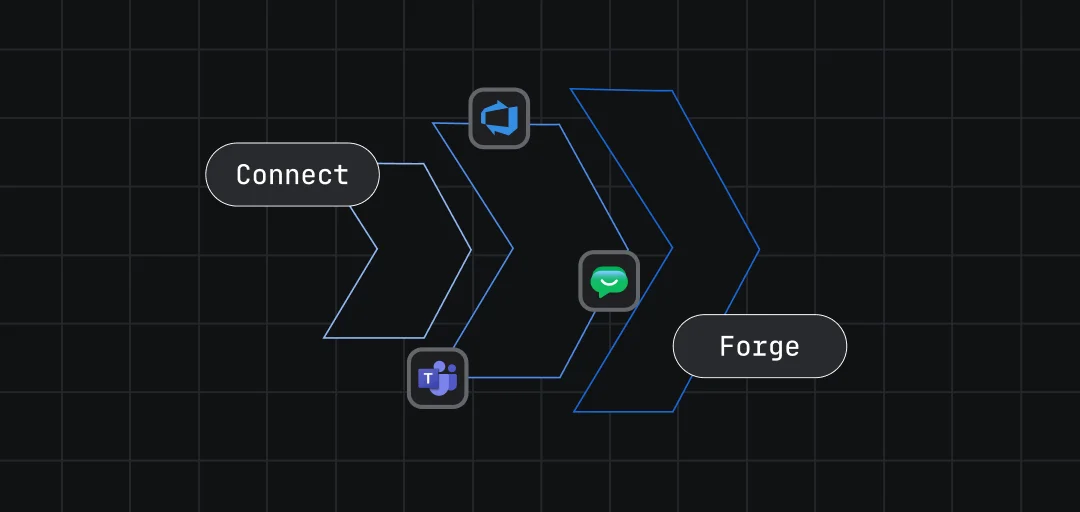
Move Work Forward, a prominent Atlassian Marketplace Partner, has successfully completed the migration of five enterprise-grade applications from the legacy Connect framework to the modern Forge platform within a condensed two-month timeframe. This achievement highlights a significant shift in software development methodologies, demonstrating how artificial intelligence (AI) can be utilized to compress development cycles and standardize architectural transitions across an entire app portfolio. By integrating AI tools into their workflow, the development team reported that the migration of the final four applications proceeded at a pace two to five times faster than the initial manual migration.
The transition from Atlassian Connect to Forge represents a fundamental shift for developers within the Atlassian ecosystem. While Connect relies on a remote, vendor-hosted architecture where the application communicates with Atlassian products via iframes and webhooks, Forge is Atlassian’s serverless development platform. Forge offers hosted compute and storage, integrated security, and a more streamlined development experience. However, the migration process requires a comprehensive translation of existing code patterns, UI components, and backend logic to align with Forge’s unique architecture and security protocols.
The strategy employed by Move Work Forward was rooted in a "patterns-first" philosophy. The team recognized that while AI is highly efficient at structured and repetitive tasks, it requires a verified baseline to produce reliable results. Consequently, the team did not begin with AI automation. Instead, they focused their initial efforts on a manual migration of their first application, Azure DevOps for Confluence. This pilot project served as the experimental ground where the team learned the intricacies of the Forge framework, including its Custom UI capabilities and the Forge Remote feature, which allows Forge apps to communicate with external backend services.
During this first phase, the developers utilized AI primarily as a research assistant. They employed the Forge developer Model Context Protocol (MCP), a specialized toolkit that can be integrated into AI environments to provide instant access to Atlassian’s technical documentation and API specifications. This allowed the team to quickly identify the appropriate Forge modules to replace Connect equivalents and to establish a robust set of architectural patterns. Once the Azure DevOps for Confluence migration was finalized and validated, it served as a master template for the remaining four applications in the portfolio.
The decision to move to AI-assisted migration for the subsequent apps was driven by the structural similarity of the Move Work Forward product line. Most of the applications featured comparable configuration pages and shared modular logic, making them ideal candidates for automated replication. By providing the AI with the completed code of the first migrated app as a reference, the team was able to delegate several time-consuming tasks to the AI models.
One of the primary areas where AI provided immediate utility was in the updating of app manifests. In the Forge framework, the manifest.yml file acts as the central configuration hub, defining permissions, modules, and functions. Translating these definitions from the Connect descriptor format is a mechanical but detail-oriented task. AI was used to parse the old descriptors and generate the corresponding Forge YAML files, ensuring that all necessary scopes and webhooks were correctly mapped.
The migration of frontend components also saw significant acceleration. Most of the applications utilized React-based interfaces, but these needed to be adapted to function within Forge’s Custom UI environment. The developers used AI to refactor existing frontend components, ensuring they adhered to the new platform’s rendering requirements while maintaining a consistent user experience across the product suite. Because the configuration pages across the five apps were built on similar patterns, the AI was able to replicate the UI logic with high fidelity, significantly reducing the manual labor usually required for interface adjustments.
Furthermore, AI was employed to bridge backend logic. Migrating from a purely remote host to the Forge environment often requires changes in how data is fetched and how authentication is handled. The team utilized AI to write the "glue code" necessary to connect the new Forge frontend with existing backend services via Forge Remote. Additionally, the AI was tasked with generating unit tests for the newly migrated modules. By feeding the AI the updated code and asking it to produce comprehensive test suites, the team ensured that the rapid pace of migration did not come at the expense of software stability or security.
To ensure the success of this AI-driven approach, Move Work Forward established specific protocols for interacting with the AI models. The team found that providing the AI with sufficient context was critical. Rather than asking for isolated code snippets, developers provided the AI with the full context of the project, including relevant files from the already-migrated "template" app. They also discovered that explicitly referencing documentation or pointing the AI toward specific Forge modules prevented the generation of deprecated or incorrect code patterns. By treating the AI as a junior developer that required clear instructions and high-quality examples, the senior engineering team was able to maintain high standards of code quality.
The results of this streamlined approach were quantifiable. The initial migration of Azure DevOps for Confluence took approximately three weeks of focused manual labor. By contrast, the subsequent four migrations were completed within the remaining five weeks of the two-month window. The team noted that the frontend work saw the most dramatic reduction in development time, as the repetitive nature of the UI components allowed the AI to perform at its highest efficiency.
Beyond the speed of delivery, the use of AI contributed to a higher degree of architectural consistency across the portfolio. Because the AI was trained on the same master template for each subsequent migration, the resulting codebases followed identical patterns and structures. This uniformity is expected to simplify long-term maintenance and updates, as the engineering team will be dealing with a standardized architecture across all five Forge applications.
For other development teams considering a similar transition, Move Work Forward offers several strategic recommendations based on their two-month intensive. The primary takeaway is the importance of the sequence: "do it once, then automate." Attempting to use AI to figure out the migration path from scratch can lead to hallucinations or suboptimal architecture. Establishing a manual "gold standard" first provides the AI with the necessary data to scale the effort effectively. Additionally, the team emphasizes the value of the Forge developer MCP and similar tools that ground AI outputs in real-time technical documentation.
The success of Move Work Forward in migrating five apps in 60 days serves as a case study for the evolving role of AI in the software development life cycle. As platforms like Atlassian Forge continue to evolve, the ability to rapidly transition legacy systems to modern frameworks will be a competitive necessity for software vendors. The integration of AI does not replace the need for skilled developers; rather, it shifts their focus from repetitive translation tasks to high-level architectural design and validation. This project demonstrates that with a structured approach, AI can transform a daunting platform migration into a manageable and highly efficient process, allowing companies to modernize their offerings without the traditional overhead of multi-year development cycles.