 11
11

Atlassian has officially announced its Jira Summer Release, a comprehensive update introducing 15 new capabilities designed to transform the platform into an AI-native environment. This release marks a significant milestone in a six-month evolutionary journey aimed at refining the Software Development Life Cycle (SDLC) through artificial intelligence. By building the necessary infrastructure for AI agents to act on work, enhancing Model Context Protocol (MCP) capabilities for coding agents, and making the Teamwork Graph CLI generally available, Atlassian is ensuring that AI entities have the enterprise-scale context required to function effectively within a professional ecosystem.
The Jira Summer Release focuses on making everyday operations faster, simpler, and more powerful for both human teams and AI agents. According to Atlassian, these features are currently rolling out and are scheduled to be generally available across Jira Cloud by the end of August 2026. The update addresses three primary pillars of the Jira experience: the proactive involvement of AI agents in manual coordination, a complete rebuild of core views for enhanced performance, and the introduction of automated planning tools that provide real-time data visibility.
One of the central themes of this release is the transition of Jira’s AI from a passive assistant to a proactive agent capable of performing "real work." Atlassian’s AI agents are now designed to surface insights, generate updates, and handle recurring coordination tasks that traditionally consume significant portions of a project manager’s or developer’s day.
A standout feature in this category is the new Delivery Agent. This tool is specifically engineered to automate the coordination tasks that teams previously performed manually. This includes conducting health checks on projects, generating standup digests, and providing consistent updates to stakeholders. To facilitate ease of use, Atlassian has integrated automation templates within the Jira Summary view, allowing users to configure the Delivery Agent in a matter of seconds. This shift is intended to free up human talent to focus on high-value creative and strategic work while the agent manages the administrative overhead of the SDLC.
Furthermore, the integration of Atlassian Rovo has simplified the process of setting up new project environments. Rather than configuring a workspace or "space" from scratch—a process that often involves tedious manual setup of workflows and work types—users can now describe their team’s requirements using natural language. This feature allows for the inclusion of existing context, such as Confluence pages, Loom videos, slide decks, or images. Rovo processes this information to generate a fully functional space, complete with customized workflows, work types, specific views, and suggested initial work items. This generative approach to project infrastructure ensures that teams can move from ideation to execution with minimal friction.
Beyond AI-driven automation, the Jira Summer Release introduces a massive technical overhaul of the platform’s core views. Atlassian has rebuilt these essential interfaces on a shared modern foundation to ensure consistency and speed across the entire Jira ecosystem. The performance improvements are substantial: work items now load 45% faster, list views and search functions have seen a 48% increase in speed, and boards and backlogs are up to 22% faster.
These performance gains are accompanied by a push for functional consistency. Features such as swimlanes, subtask visibility, and inline editing have been standardized to work the same way across both software and business spaces. This unification reduces the learning curve for teams operating in different areas of an organization and ensures a seamless transition between various project types.
A key part of this interface modernization is the merging of the "List" and "All Work" views. These two previously distinct views have been combined into a single, unified "List" view that incorporates the best features of both. Users can now search using the Jira Query Language (JQL) or natural language, view parent/child hierarchies, perform inline editing, and save custom views within a single interface. This consolidation eliminates the need to switch between different views to perform similar tasks, streamlining the user experience and improving data accessibility.
The software board in team-managed spaces has also been completely rebuilt. In addition to the aforementioned speed improvements, the new boards support swimlanes, subtasks on cards, and inline editing. Notably, Atlassian has removed work item caps on these boards, ensuring they can keep up with the demands of large-scale projects without performance degradation. While the underlying technology has changed, the workflows remain the same, providing a better user experience without requiring teams to relearn their processes.
The third pillar of the Summer Release focuses on "planning smarter" by bringing data and calculations directly into the workflow. Atlassian’s goal is to ensure that teams do not have to leave Jira to find answers to critical questions regarding team capacity and project deadlines. By integrating "the math" directly into the platform, Jira now provides real-time visibility into the health and progress of work.
The new Capacity view is a primary example of this initiative. It allows leads and managers to see exactly how work is allocated across a team, identifying who has remaining bandwidth and who is currently overloaded. Because the backlog is positioned directly next to these capacity numbers, users can rebalance workloads and reassign tasks without having to switch tools or export data to external spreadsheets. This immediate feedback loop is designed to prevent burnout and ensure that project timelines remain realistic.
Additionally, Atlassian is introducing Formula fields to allow for deeper data customization. These fields enable users to create custom calculations—such as remaining budget, days until a deadline, or weighted priority scores—directly within their Jira issues. To make this feature accessible to non-technical users, Atlassian has leveraged Rovo to allow users to describe the desired calculation in plain language. Rovo then writes the necessary formula automatically. These results are not just static displays; they are searchable and sortable, living exactly where the work is being performed. This ensures that the most relevant metrics are always at the team’s fingertips.
The 15 new capabilities announced in the Summer Release are built upon a foundation of recent technical enhancements intended to support an AI-first future. Over the last six months, Atlassian has focused on the infrastructure required for agents to take meaningful action. This includes the expansion of MCP capabilities, which provide a standardized way for coding agents to interact with Jira’s data and perform actions that were previously restricted to human users.
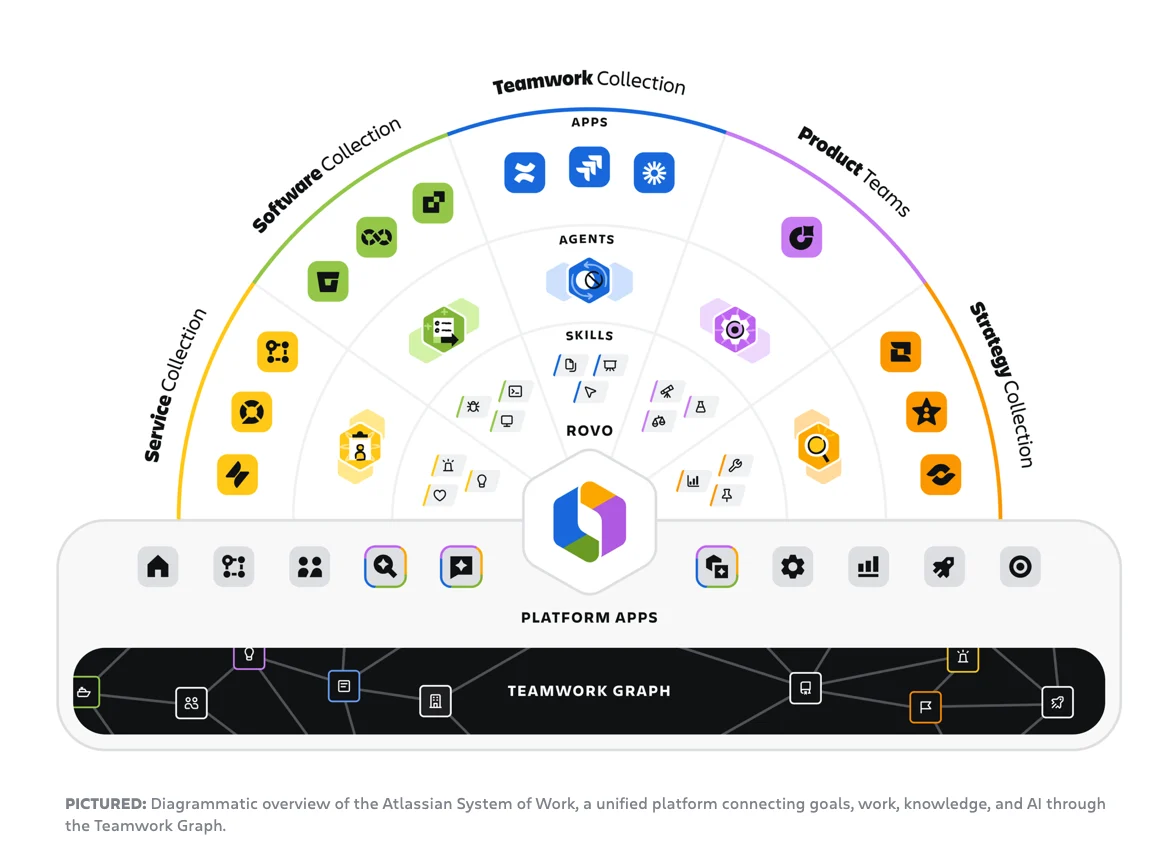
Furthermore, the general availability of the Teamwork Graph CLI is a critical component for enterprise-scale AI. The Teamwork Graph provides the necessary context—connections between people, goals, and work items—that allows AI agents to understand the nuances of a specific organization. Without this context, AI agents often struggle to provide relevant insights or perform accurate automations. By making this data accessible via a CLI, Atlassian is enabling developers to build more sophisticated, context-aware agents that can operate effectively within the Jira environment.
The Jira Summer Release represents a significant shift in how project management software functions. By combining deep AI integration with a high-performance technical foundation, Atlassian is positioning Jira as more than just a tracking tool; it is becoming an active participant in the software development process. The combination of the Delivery Agent’s proactive coordination, Rovo’s generative workspace creation, and the significant speed increases in core views points toward a future where the administrative burden of project management is heavily mitigated by intelligent systems.
While this announcement highlights six major features—the Delivery Agent, Rovo space generation, the unified List view, rebuilt software boards, the Capacity view, and Formula fields—they represent only a portion of the 15 total capabilities included in the release. These updates are being rolled out to Jira Cloud users immediately, with a target for full general availability by the end of August 2026. As teams continue to adopt AI-native workflows, these enhancements are designed to provide the speed, simplicity, and power necessary to manage the complexities of modern software development at scale.