11
11
The content industry has been significantly disrupted by the advent of artificial intelligence, with many early adopters promoting AI as a complete replacement for human marketing teams and agencies. This surge of "plug-and-play" content generation, promising effortless traffic through simple keyword inputs, has unfortunately led to a widespread perception of AI-generated content as low-effort and mass-produced. However, a new perspective is emerging, one that reframes AI as a powerful creative tool rather than a mere content factory. This approach emphasizes collaboration and augmentation, making previously challenging, expensive, or impossible content creation tasks achievable.

At Ahrefs, a data-driven approach to SEO and content marketing, the team is exploring innovative ways to integrate AI into their workflow. The goal is not to automate more, but to unlock new creative possibilities and enhance the content creation process, making it more enjoyable and effective.
Innovative AI Content Creation Strategies at Ahrefs:
1. Vibewriting: Steering Drafts with Intuition and Iteration
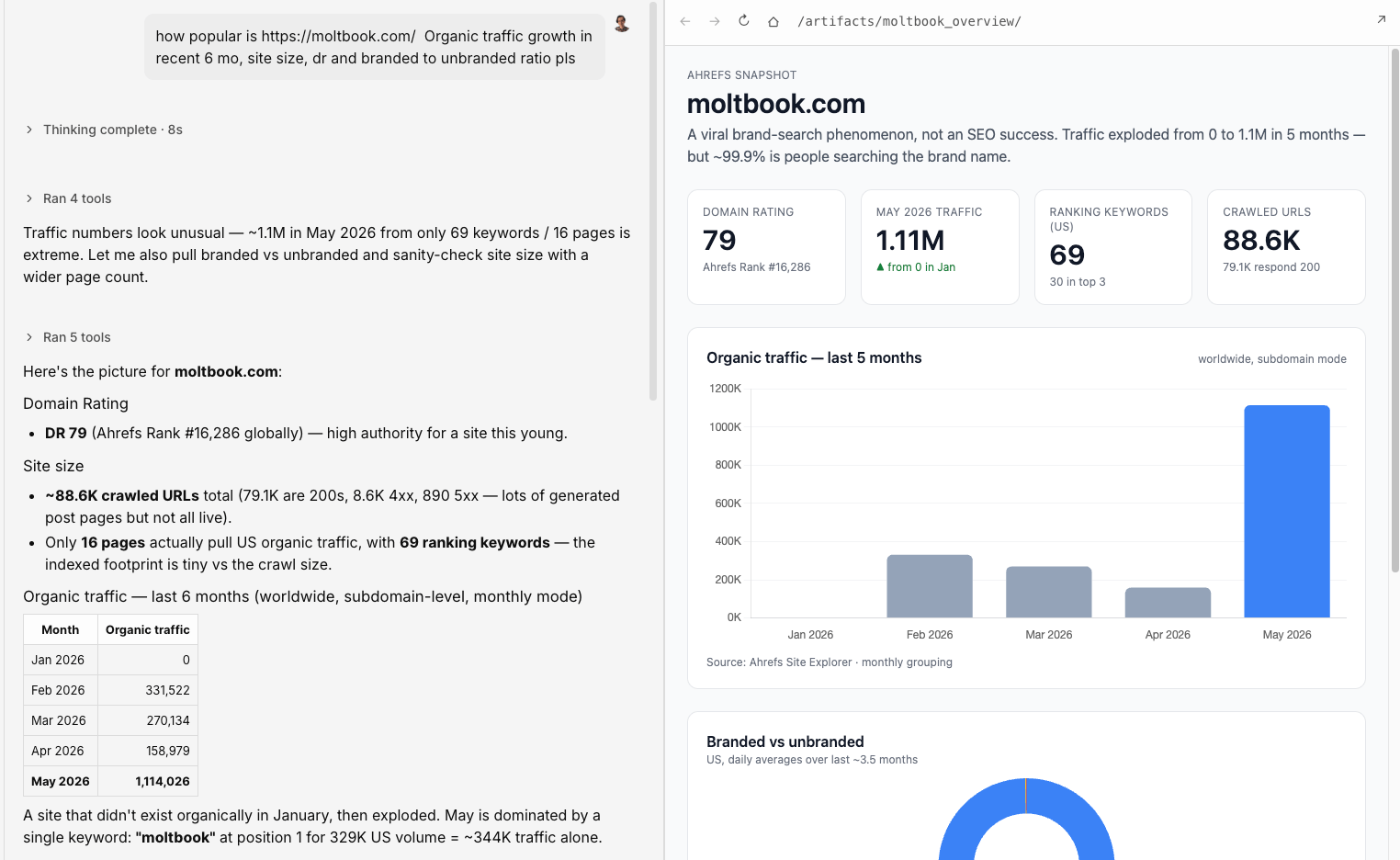
Vibewriting is a method of guiding AI with qualitative inputs and iterative feedback, moving away from the pressure of crafting perfect prompts or expecting a finished product in a single attempt. It involves providing AI with context, reacting to its output, and progressively refining the content to align with the creator’s vision. This process treats AI-generated drafts as a starting point for editing, allowing for requests to make writing punchier, revise introductions, expand sections, tighten paragraphs, or improve transitions. Each feedback loop brings the draft closer to the desired outcome.
An example of this method is the article "Agent-To-Agent Marketing Was Just Born on Moltbook," where the AI was used to gather data on Moltbook.com, incorporate manual research notes, and combine them with a pre-conceived story arc. Ryan Law, Ahrefs’ Director of Content Marketing, described this experience as "the most fun I’ve had writing for Ahrefs in ages." Vibewriting has also been applied to create presentation decks, demonstrating its versatility across different content formats.
2. The "Living Draft" Method: Continuous Content Evolution
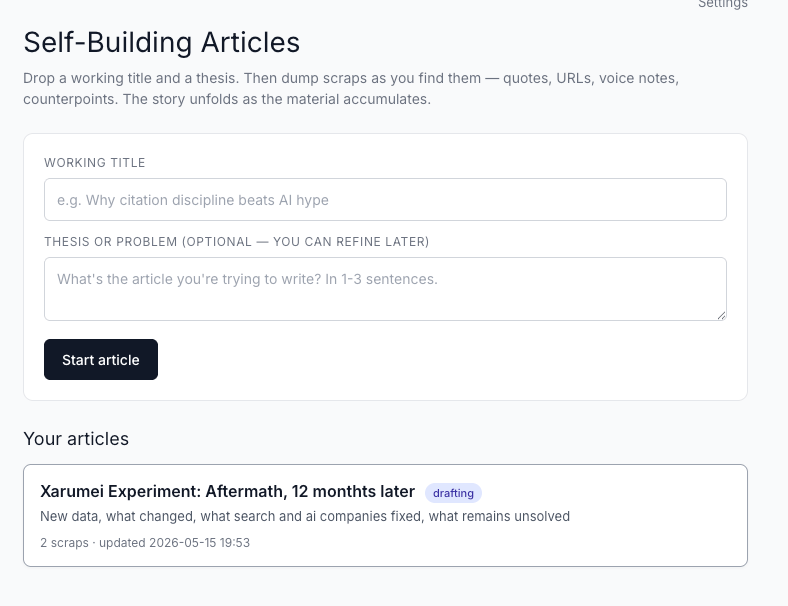
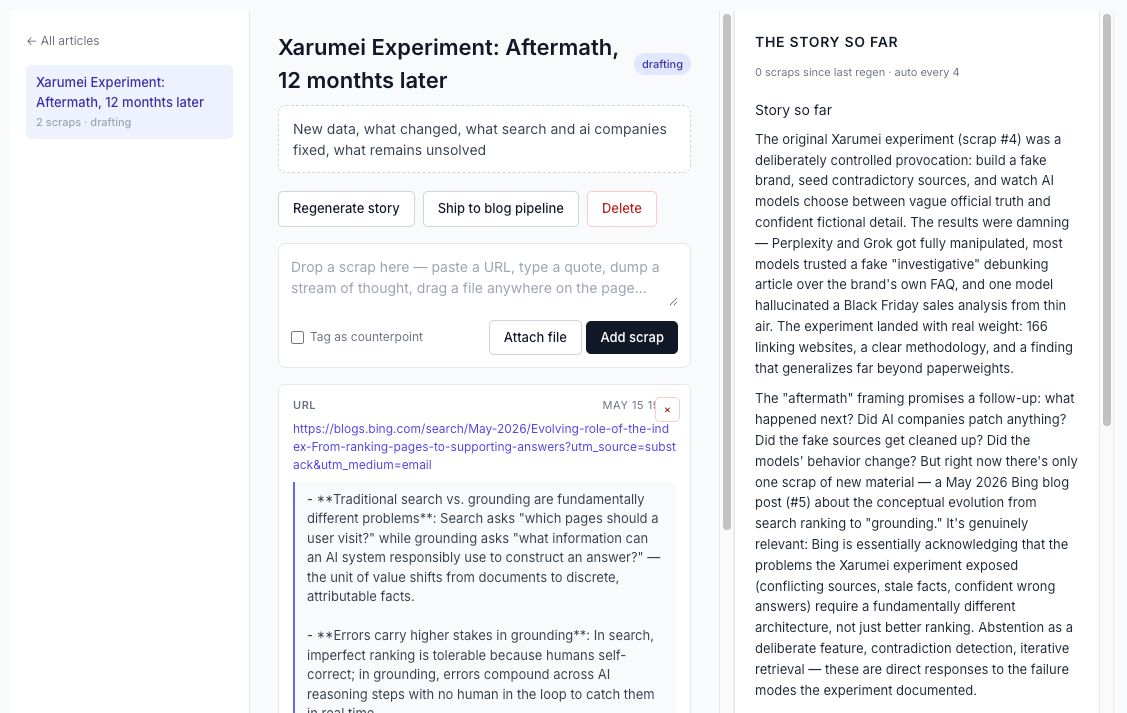
The "Living Draft" method is designed for topics that are still taking shape, where ideas emerge organically over time through various inputs like colleague suggestions, screenshots, or spontaneous thoughts. Instead of forcing an early structure, this approach maintains a perpetually open draft where all new material is continuously integrated. AI then synthesizes these inputs, enriching the content without the pressure of defining a fixed destination or endpoint. This living document can later be rendered as an article, a presentation, or multiple posts.
This method is distinct from vibewriting in that it allows the destination to reveal itself over time, rather than steering towards a pre-determined outcome. To facilitate this workflow, a custom app was built using Letaido, enabling the documentation of ongoing developments in AI perception optimization. This app allows users to drop in material, and AI unfolds the narrative, synthesizing information from various sources.
3. AI-Assisted Interviews: Extracting Expertise
For subject matter experts, AI can act as an interviewer, helping to transform their deep knowledge into accessible content. By asking thoughtful questions one at a time, AI prompts the expert to explain complex concepts, provide examples, and articulate their insights clearly. This process helps overcome the "curse of knowledge," where experts may struggle to explain topics to those with less background. The AI then uses these answers as the foundation for a polished article, preserving the expert’s voice.
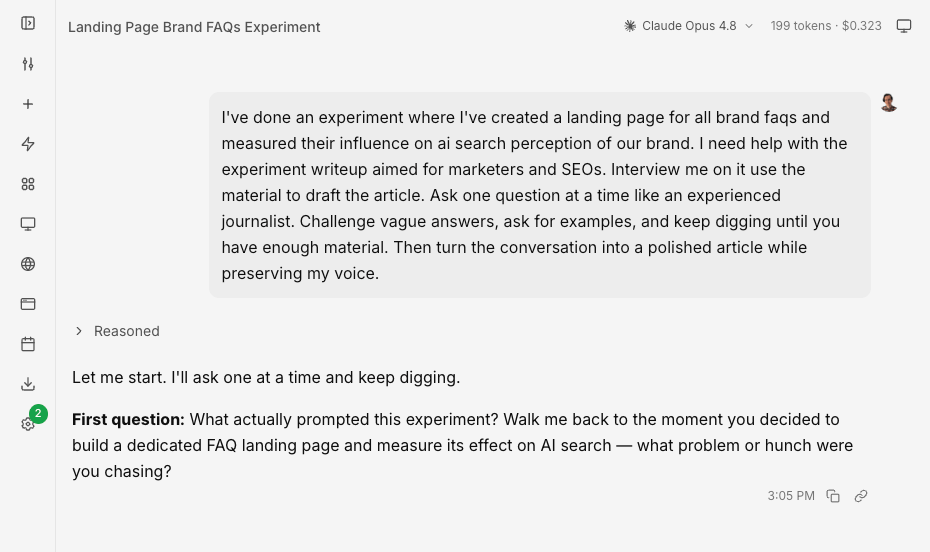
This technique was employed for an SEO experiment on whether structured FAQs could improve AI assistant information retrieval. The AI’s questioning process revealed gaps in the expert’s initial thinking, leading to a more comprehensive and clearly explained article.
4. Leveraging Existing Knowledge Bases for New Content
Many questions that arise do not require entirely new answers but rather a reframing of existing information. AI can efficiently sift through a company’s knowledge base, identifying relevant passages, eliminating redundancy, and assembling drafts grounded in established knowledge. This approach transforms existing documentation into new, contextualized articles.
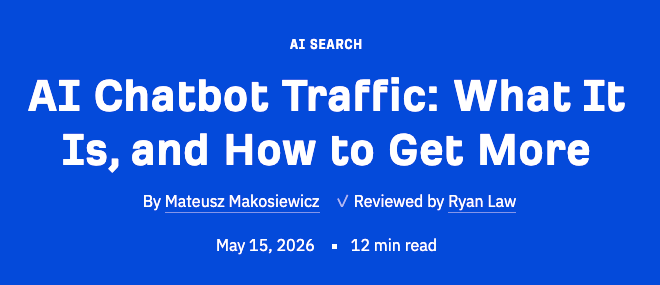
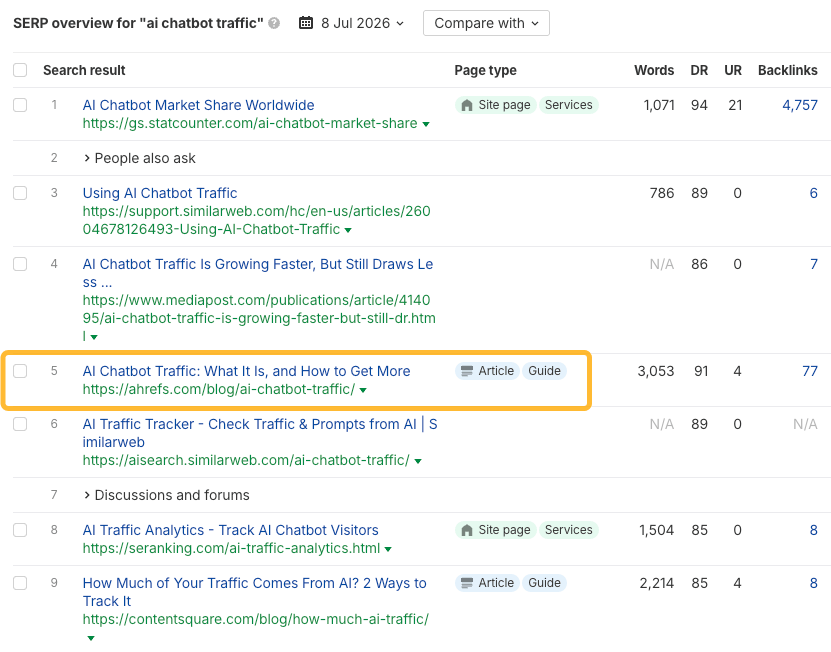
A significant portion of an article on AI chatbot traffic, for instance, was "recycled" from previously published information scattered across dozens of blog posts. By guiding AI to consolidate these pieces, a coherent and informative article was produced, even introducing a new search intent into the top search results. The efficiency of this method is attributed to an established "source of truth" repository that distills key information from internal resources.
5. Data-Driven Content Revelation
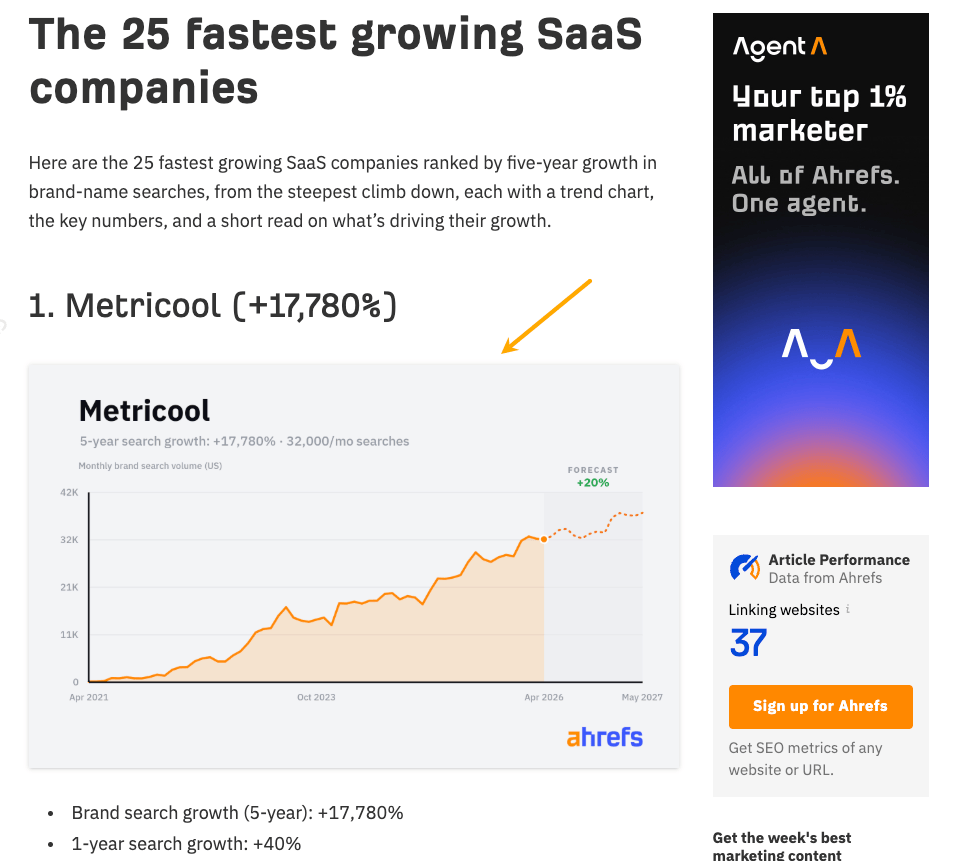
Content creation can be significantly enhanced by feeding AI with internal business data, such as product usage, customer behavior, or campaign performance. AI can then analyze this data to identify patterns, outliers, correlations, and emerging questions, forming the basis for data-driven articles. This process allows the story within the data to reveal itself, with AI generating visualizations and assisting in drafting the narrative.

Ahrefs utilizes Letaido for this purpose, enabling access to extensive data endpoints and seamless integration with platforms like WordPress. This allows for the creation of data-driven content that is both insightful and visually engaging. Custom apps can also be built to automate the updating of such articles as data evolves.
6. Exploring Broad Angles with AI
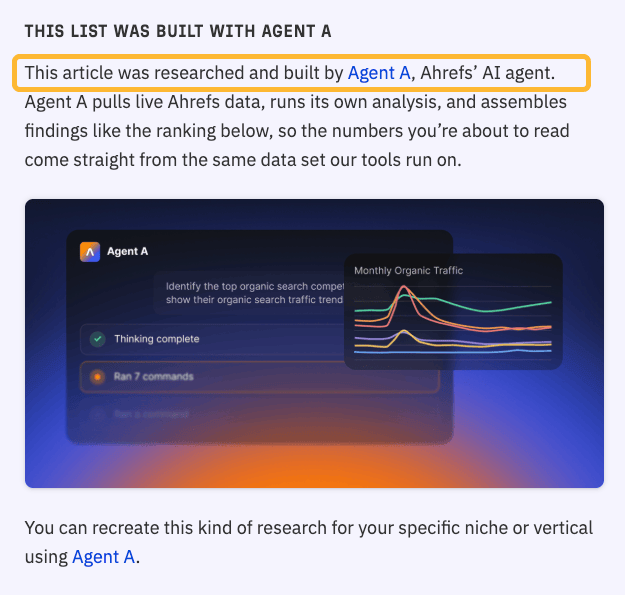
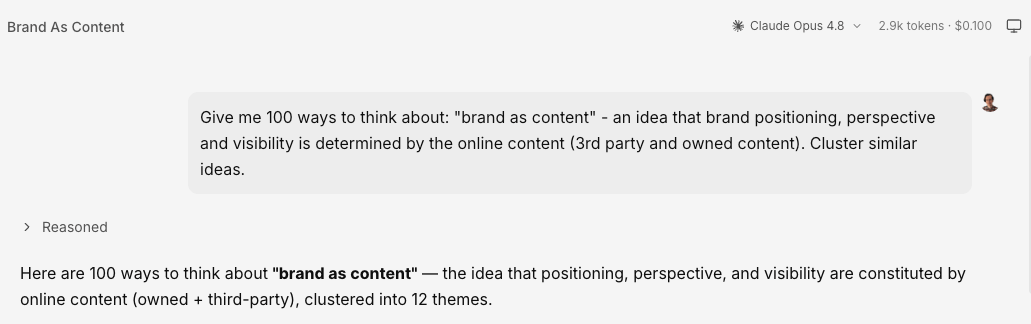
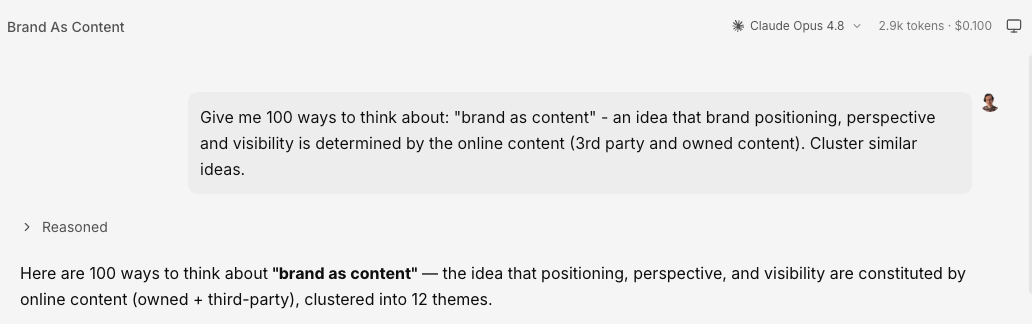
AI can facilitate extensive brainstorming by generating numerous content angles on a given topic. This is akin to how AI solved a complex geometry problem by exploring overlooked approaches. By asking for a large number of perspectives (e.g., "100 ways to think about this"), AI can surface unconventional ideas that human brainstorming might miss. These ideas can then be clustered and expanded upon, with human judgment guiding which angles are most valuable.
An example of this method involved exploring the concept "brand is content." AI generated a wide array of angles, including several that were novel and unexpected, leading to a richer understanding of the topic. This demonstrates AI’s ability to augment human creativity by expanding the scope of exploration.
7. Building Arguments with Mental Models
AI’s adaptability allows it to adopt specific thinking frameworks, such as Jobs to Be Done, the Theory of Constraints, or first principles. By providing AI with a mental model, creators can guide it to construct well-reasoned arguments, diagnose problems, and challenge assumptions, rather than simply summarizing information. This structured approach can lead to more insightful and persuasive content.
An application of this technique involved using the Theory of Constraints Logical Thinking Process to analyze a topic. The AI generated a detailed report, including its reasoning process, self-challenged assumptions, and insights that were integrated into the final draft. While the output requires human refinement, it significantly advances the thinking process.
8. Streamlining Repeatable Processes with Gated Pipelines
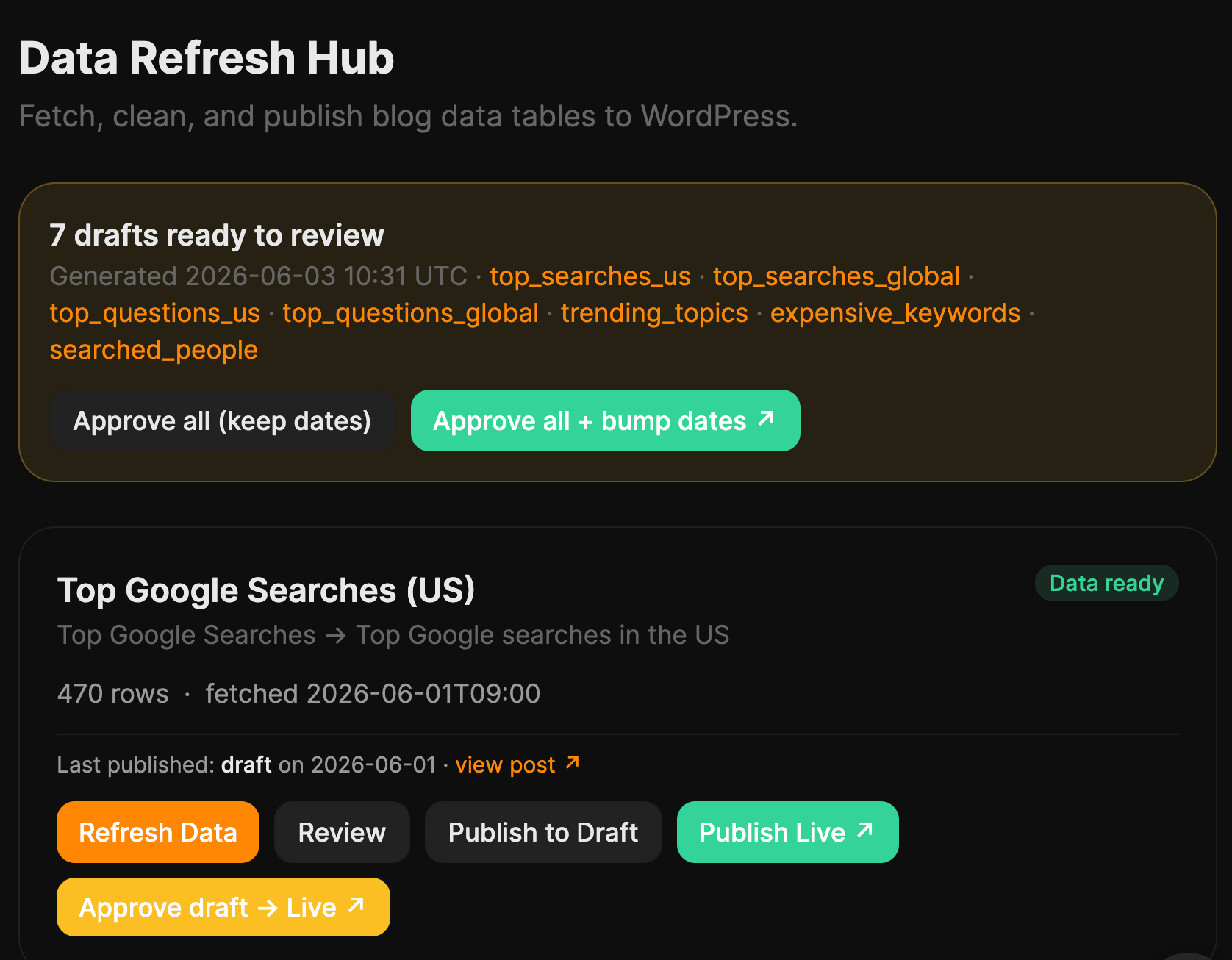
For content that follows a predictable structure, such as release notes or recurring roundups, AI can be integrated into a "gated pipeline." This involves chaining together a series of AI tasks, with human approval checkpoints at each stage. This ensures consistent quality and allows for early error detection, preventing mistakes from compounding.
An app built by Ryan Law exemplifies this. It takes a topic and source links, then proceeds through research, brief creation, outlining, drafting, fact-checking, and formatting, with pauses for human review at critical junctures. This differs from typical automation by incorporating explicit human oversight throughout the process.
9. Documenting Based on Real Customer Questions
Customer conversations, including support tickets and chat logs, are a rich source of content ideas. AI can analyze these interactions at scale, grouping similar questions, comparing them to existing content to identify gaps, and highlighting recurring themes. This ensures that documentation addresses the actual questions customers are asking in their own language.

Using Fin (Intercom) with Letaido, untapped topics were identified, such as user difficulties with internal link data and issues with Google Data Studio integration. AI was able to generate potential answers to these questions, indicating the potential for AI to directly inform content strategy.
10. Automated Content Updates for Product Marketing and Docs

AI can automate the process of keeping product marketing content and documentation current. By monitoring product releases, feature changes, and competitor updates, AI can automatically revise outdated information. This is crucial for maintaining accurate SEO and a positive user experience.
A system developed by Kamila Olexa utilizes Firehose (a real-time web data streaming API) to monitor changes on competitor pricing pages and other web sources. This workflow incorporates AI for content updates, followed by a human approval step before changes are implemented, ensuring both efficiency and accuracy.

Conclusion:
The initial hype surrounding AI in content creation, which often focused on replacing human effort, has given way to a more nuanced understanding. The true potential of AI lies in its ability to augment human creativity, making content creation more efficient, insightful, and enjoyable. By embracing AI as a collaborative partner, content creators can unlock new possibilities, produce higher-quality content, and navigate the evolving digital landscape with greater success. The key is to remain actively involved in the process, leveraging AI to enhance, rather than replace, human ingenuity.