 11
11
The burgeoning artificial intelligence coding revolution, while promising unprecedented productivity gains for developers, has come with a significant catch: its prohibitive cost. Anthropic’s Claude Code, a sophisticated terminal-based AI agent renowned for its ability to autonomously write, debug, and deploy code, has undeniably captured the imagination of software developers globally. However, its tiered pricing structure – ranging from $20 to an hefty $200 per month depending on usage – has ignited a growing rebellion among the very programmers it was designed to empower. This financial barrier, coupled with restrictive usage policies, has paved the way for a powerful open-source challenger.
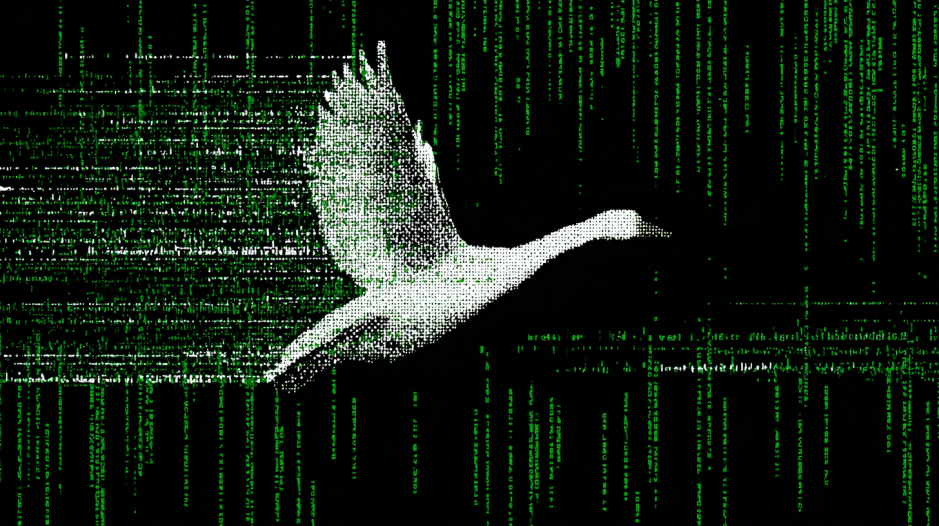
Now, a genuinely free alternative, Goose, is rapidly gaining traction, offering a compelling solution to the cost dilemma. Developed by Block (the financial technology company formerly known as Square, led by Jack Dorsey), Goose is an open-source AI agent that boasts nearly identical core functionality to Claude Code. Crucially, it distinguishes itself by running entirely on a user’s local machine, eliminating the need for expensive subscriptions, reliance on cloud infrastructure, and the frustration of arbitrary rate limits that reset every few hours.
"Your data stays with you, period," declared Parth Sareen, a software engineer, during a recent livestream demonstration of Goose. This statement encapsulates the core appeal of the platform: it grants developers complete control over their AI-powered workflow. This includes the invaluable ability to work offline, a feature particularly attractive for developers on the go, allowing them to continue their coding tasks even without an internet connection, such as during a flight. The project’s popularity has soared, evident in its more than 26,100 stars on GitHub, the premier code-sharing platform. With 362 contributors and 102 releases since its inception, Goose exhibits a development pace that rivals many commercial products. Its latest version, 1.20.1, shipped on January 19, 2026, highlighting continuous and rapid improvement. For developers increasingly frustrated by Claude Code’s pricing structure and often restrictive usage caps, Goose emerges as a rare offering in the competitive AI industry: a genuinely free, no-strings-attached option for serious, professional-grade work.
Anthropic’s New Rate Limits Spark a Developer Revolt
To fully appreciate the significance of Goose, it’s essential to understand the context of the Claude Code pricing controversy that preceded its rise. Anthropic, the prominent San Francisco-based artificial intelligence company founded by former OpenAI executives, integrates Claude Code into its various subscription tiers. The company’s free plan offers no access to the coding agent whatsoever. Its Pro plan, priced at $17 per month with annual billing (or $20 monthly), imposes severe limitations, restricting users to just 10 to 40 prompts every five hours. This constraint is particularly problematic for serious developers, who often exhaust these limits within mere minutes of intensive coding, bringing their workflow to an abrupt halt.
Even Anthropic’s premium Max plans, costing $100 and $200 per month, while offering more headroom, still come with significant restrictions that have inflamed the developer community. The $100 plan provides 50 to 200 prompts, while the $200 tier offers 200 to 800 prompts, along with access to Anthropic’s most powerful model, Claude 4.5 Opus. However, the true extent of these limitations became apparent in late July when Anthropic announced new weekly rate limits. Under this revised system, Pro users are allocated 40 to 80 hours of Sonnet 4 usage per week. Max users on the $200 tier receive 240 to 480 hours of Sonnet 4, plus an additional 24 to 40 hours of Opus 4. Nearly five months later, the widespread frustration among developers has shown no signs of subsiding.
The fundamental issue lies in the definition of these "hours," which are not literal hours of usage but rather represent token-based limits. These limits fluctuate wildly depending on factors such as codebase size, conversation length, and the inherent complexity of the code being processed. Independent analyses suggest that the actual per-session limits translate to approximately 44,000 tokens for Pro users and around 220,000 tokens for the $200 Max plan. This ambiguity has been a major point of contention. "It’s confusing and vague," one developer wrote in a widely shared analysis, articulating a common sentiment. "When they say ’24-40 hours of Opus 4,’ that doesn’t really tell you anything useful about what you’re actually getting."
The backlash across platforms like Reddit and various developer forums has been intense and widespread. Many users have reported hitting their daily limits within as little as 30 minutes of intensive coding, rendering the service impractical for sustained development work. Others have outright canceled their subscriptions, labeling the new restrictions as "a joke" and "unusable for real work." Anthropic has attempted to defend these changes, asserting that the limits affect fewer than five percent of their users and primarily target individuals running Claude Code "continuously in the background, 24/7." However, the company has not clarified whether this figure refers to five percent of Max subscribers or five percent of all users—a distinction that holds enormous significance for the overall user base.
How Block Built a Free AI Coding Agent That Works Offline
Goose takes a radically different and innovative approach to addressing the challenges of AI-powered coding. Built by Block, the payments company founded by Jack Dorsey, Goose is what engineers refer to as an "on-machine AI agent." Unlike cloud-based solutions such as Claude Code, which necessitate sending your code and queries to Anthropic’s remote servers for processing, Goose is designed to run entirely on your local computer. This is achieved by utilizing open-source language models that users can download and manage themselves, ensuring complete autonomy and privacy.
The project’s documentation succinctly describes its mission as going "beyond code suggestions" to actively "install, execute, edit, and test with any LLM." That concluding phrase – "any LLM" – is the crucial differentiator that sets Goose apart. Its design philosophy is explicitly model-agnostic, meaning it is not tied to a single proprietary AI model. Developers retain the flexibility to connect Goose to Anthropic’s Claude models if they possess API access, or to utilize OpenAI’s powerful GPT-5 or Google’s Gemini models. Furthermore, it can be routed through specialized services like Groq or OpenRouter, which offer optimized inference. However, where Goose truly shines is its capability to run entirely locally using tools such as Ollama. Ollama simplifies the process of downloading and executing open-source models directly on a user’s own hardware, providing an unparalleled level of control.
The practical implications of this local setup are profound. By running models locally, developers bypass all subscription fees, usage caps, and rate limits. Crucially, it eliminates any concerns about sensitive code or proprietary data being transmitted to external servers. All interactions and conversations with the AI remain securely on the user’s machine, enhancing data privacy and security. "I use Ollama all the time on planes – it’s a lot of fun!" Sareen noted during his demonstration, vividly illustrating how local models liberate developers from the constraints of internet connectivity, enabling uninterrupted productivity in any environment.
What Goose Can Do That Traditional Code Assistants Can’t
Goose operates primarily as a command-line tool, though a desktop application version is also available, offering a more visual interface. Its core strength lies in its ability to autonomously perform complex development tasks, moving beyond mere code suggestions. It can initiate and build entire projects from scratch, write and execute code, debug failures by identifying and correcting errors, orchestrate workflows across multiple files within a repository, and seamlessly interact with external APIs – all without requiring constant human oversight for each individual step.
This advanced capability is rooted in an AI industry concept known as "tool calling" or "function calling." This refers to the ability of a large language model to intelligently request and execute specific actions from external systems or tools. When a developer instructs Goose to create a new file, run a comprehensive test suite, or check the status of a GitHub pull request, it doesn’t merely generate descriptive text about what should happen. Instead, the AI agent actively interprets the request and executes those operations within the local development environment, behaving like an intelligent, automated assistant.
The effectiveness of this capability depends heavily on the underlying language model’s proficiency in tool calling. According to the Berkeley Function-Calling Leaderboard, which rigorously ranks models on their ability to translate natural language requests into executable code and system commands, Claude 4 models from Anthropic currently demonstrate superior performance in this area. However, newer open-source models are rapidly catching up. Goose’s documentation highlights several promising options with strong tool-calling support, including Meta’s Llama series, Alibaba’s Qwen models, Google’s Gemma variants, and DeepSeek’s reasoning-focused architectures, indicating a dynamic and competitive landscape.
The tool further extends its capabilities through integration with the Model Context Protocol (MCP). MCP is an emerging standard designed to facilitate robust connections between AI agents and a diverse range of external services. Through this protocol, Goose can gain access to databases, sophisticated search engines, local file systems, and a multitude of third-party APIs. This integration dramatically expands its functionality, allowing it to perform tasks that go far beyond what the base language model could achieve on its own, transforming it into a versatile and powerful development tool.
Setting Up Goose with a Local Model
For developers seeking a completely free, private, and self-contained AI coding environment, the setup process for Goose with a local LLM involves three primary components: Goose itself, Ollama (the tool for running open-source models locally), and a compatible language model.
Step 1: Install Ollama
Ollama is an essential open-source project that significantly simplifies the often-complex process of running large language models on personal hardware. It expertly handles the intricate tasks of downloading, optimizing, and serving these models through a user-friendly interface. To begin, download and install Ollama directly from ollama.com. Once the installation is complete, models can be pulled with a single, straightforward command. For optimal performance in coding tasks, Qwen 2.5 is recommended for its strong tool-calling support.
ollama run qwen2.5
Upon execution, the chosen model will automatically download and commence running on your local machine.
Step 2: Install Goose
Goose is available both as a convenient desktop application and a powerful command-line interface (CLI). The desktop version offers a more visual and intuitive experience, while the CLI is preferred by developers who are accustomed to working entirely within the terminal. Installation instructions vary depending on the operating system but typically involve downloading pre-built binaries from Goose’s GitHub releases page or utilizing a suitable package manager. Block provides readily available binaries for macOS (supporting both Intel and Apple Silicon architectures), Windows, and Linux, ensuring broad compatibility.
Step 3: Configure the Connection
In the Goose Desktop application, the configuration process is straightforward: navigate to Settings, then select Configure Provider, and choose Ollama. Confirm that the API Host is correctly set to http://localhost:11434, which is Ollama’s default port, and then click Submit. For users of the command-line version, simply run goose configure, select "Configure Providers," choose Ollama, and enter the specific model name when prompted. With these steps completed, Goose is now fully connected to a powerful language model running entirely on your hardware, ready to execute complex coding tasks without any subscription fees or external cloud dependencies.
The RAM, Processing Power, and Trade-Offs You Should Know About
A natural question arises when considering local AI model execution: what kind of computer hardware is necessary? Running large language models locally inherently demands substantially more computational resources compared to typical software applications. The primary constraint often revolves around memory – specifically, system RAM on most computers, or VRAM if a dedicated graphics card is employed for acceleration.
Block’s documentation suggests that a minimum of 32 gigabytes of RAM provides "a solid baseline for larger models and outputs." For Mac users, this directly translates to the computer’s unified memory being the critical bottleneck. Conversely, for Windows and Linux users equipped with discrete NVIDIA graphics cards, GPU memory (VRAM) plays a more significant role in accelerating model inference. However, it’s important to note that developers do not necessarily require expensive, top-tier hardware to get started. Smaller models, with fewer parameters, are designed to operate effectively on much more modest systems. Qwen 2.5, for example, is available in multiple sizes, with its smaller variants capable of running efficiently on machines equipped with as little as 16 gigabytes of RAM.
"You don’t need to run the largest models to get excellent results," Sareen emphasized, underscoring the flexibility of the Goose ecosystem. The practical recommendation for developers is to begin with a smaller model to establish and test their workflow, and then scale up to larger, more capable models as their specific needs and hardware resources allow. To provide some context, an entry-level Apple MacBook Air with 8 gigabytes of RAM would likely struggle with most capable coding models due to memory limitations. However, a MacBook Pro with 32 gigabytes of unified memory – an increasingly common configuration among professional developers – can comfortably handle these models, offering a smooth and responsive experience.
Why Keeping Your Code Off the Cloud Matters More Than Ever
While Goose, particularly when paired with a local LLM, presents a formidable alternative, it’s important to acknowledge that it is not a perfect, one-to-one substitute for Claude Code. The comparison involves real trade-offs that developers should carefully consider.
Model Quality: Anthropic’s flagship model, Claude 4.5 Opus, is widely regarded as one of the most capable AI models specifically engineered for software engineering tasks. It excels at deep understanding of complex codebases, meticulously following nuanced instructions, and consistently producing high-quality, often production-ready, code on the first attempt. While open-source models have made dramatic strides and continue to improve at an astonishing pace, a discernible quality gap still persists, especially when tackling the most challenging and abstract coding problems. One developer who transitioned to the $200 Claude Code plan described the difference bluntly: "When I say ‘make this look modern,’ Opus knows what I mean. Other models give me Bootstrap circa 2015."
Context Window: Claude Sonnet 4.5, accessible via the API, boasts an exceptionally massive one-million-token context window. This enormous capacity is sufficient to load and process entire large codebases, eliminating the need for complex chunking strategies or manual context management, thereby simplifying interactions. In contrast, most local models are typically limited to context windows of 4,096 or 8,192 tokens by default. While many can be configured for longer contexts, this often comes at the cost of increased memory usage and noticeably slower processing speeds.
Speed: Cloud-based services like Claude Code operate on dedicated server hardware specifically optimized for high-performance AI inference. This infrastructure allows them to process requests with exceptional speed and low latency. Local models, running on consumer-grade laptops or desktops, inherently process requests more slowly. This difference in speed can be a critical factor for iterative development workflows where developers are making rapid changes and relying on immediate AI feedback.
Tooling Maturity: Claude Code benefits significantly from Anthropic’s dedicated engineering resources, ensuring a polished and robust user experience. Features such as prompt caching, which can reduce costs by up to 90 percent for repeated contexts, and structured outputs are meticulously refined and thoroughly documented. Goose, while undergoing active and rapid development with 102 releases to date, relies heavily on community contributions. Consequently, it may exhibit less refinement or feature parity in specific areas compared to its commercially backed counterpart.
How Goose Stacks Up Against Cursor, GitHub Copilot, and the Paid AI Coding Market
Goose enters an already crowded market of AI coding tools, yet it carves out a distinctive and compelling niche. Cursor, a popular AI-enhanced code editor, employs a pricing model that mirrors Claude Code’s Max plans, charging $20 per month for its Pro tier and $200 for Ultra. Cursor’s Ultra level provides approximately 4,500 Sonnet 4 requests per month, which represents a substantially different allocation model compared to Claude Code’s hourly resets. Other open-source projects like Cline and Roo Code also offer AI coding assistance but with varying levels of autonomy and tool integration. Many of these projects primarily focus on code completion and suggestion, rather than the agentic, autonomous task execution that defines Goose and Claude Code.
Meanwhile, Amazon’s CodeWhisperer, GitHub Copilot, and various enterprise offerings from major cloud providers are primarily targeted at large organizations with complex procurement processes, substantial budgets, and specific compliance requirements. These solutions are generally less relevant to individual developers and small teams who are actively seeking lightweight, flexible, and accessible tools. Goose’s unique value proposition lies in its powerful combination of genuine autonomy, model agnosticism (the freedom to choose any LLM), local operation (ensuring privacy and offline capability), and a zero-cost model. It is not attempting to compete with commercial offerings solely on the basis of polish or raw model quality. Instead, Goose competes fundamentally on the principle of freedom – both financial and architectural – offering developers unprecedented control over their AI coding environment.
The $200-a-Month Era for AI Coding Tools May Be Ending
The market for AI coding tools is undergoing rapid evolution. Open-source models are demonstrating continuous improvement at a pace that is consistently narrowing the performance gap with proprietary alternatives. Emerging models such as Moonshot AI’s Kimi K2 and z.ai’s GLM 4.5 are now benchmarking remarkably close to Claude Sonnet 4 levels – and critically, they are freely available for use.
If this trajectory of rapid open-source advancement continues, the quality advantage that currently justifies Claude Code’s premium pricing may erode significantly. In such a scenario, Anthropic and other commercial providers would face increasing pressure to compete on factors beyond raw model capability, such as advanced features, superior user experience, seamless integrations, and innovative service models.
For now, developers are presented with a clear and distinct choice. Those who absolutely require the best possible model quality, who can afford premium pricing, and who are willing to accept usage restrictions may continue to prefer Claude Code for its cutting-edge performance. However, developers who prioritize cost-effectiveness, data privacy, the ability to work offline, and architectural flexibility now have a genuine and robust alternative in Goose. The mere existence of a zero-dollar open-source competitor that offers comparable core functionality to a $200-per-month commercial product is, in itself, a remarkable development. It underscores both the rapid maturation of open-source AI infrastructure and the strong appetite among developers for tools that genuinely respect their autonomy and control.
Goose is not without its limitations. It requires a more technical setup process than most commercial alternatives, demanding a certain level of technical proficiency from its users. It also depends on specific hardware resources that not every developer may possess, particularly for running larger models. Furthermore, its model options, while improving rapidly, may still lag behind the very best proprietary offerings when tackling the most complex and nuanced tasks. Yet, for a growing and enthusiastic community of developers, these limitations are considered acceptable trade-offs for something increasingly rare and valuable in the AI landscape: a tool that truly belongs to them, offering freedom from external constraints and proprietary lock-ins.
Goose is available for download at github.com/block/goose. Ollama is available at ollama.com. Both projects are free and open source.