 11
11
In a significant expansion of its cloud development capabilities, Atlassian has officially announced the general availability (GA) of the Forge LLMs API. This milestone marks a transition from the preview phase to a fully supported production environment, allowing the global developer community to integrate large language models (LLMs) directly into their applications within the Atlassian ecosystem. By providing a streamlined, secure, and native way to leverage generative AI, Atlassian aims to transform how software teams interact with Jira, Confluence, and other tools, reducing manual effort and surfacing critical information through intelligent automation.
The introduction of the Forge LLMs API addresses a primary challenge in modern enterprise software development: the friction between the desire for advanced AI features and the necessity of maintaining strict data security and privacy standards. As large language models become ubiquitous in everyday applications, developers often face the "heavy lifting" of managing infrastructure, API keys, and, most importantly, ensuring that sensitive customer data does not leave the secure environment of the platform. The Forge LLMs API solves this by allowing developers to call upon powerful AI models through a single, developer-friendly interface that operates entirely within the Atlassian trust boundary.
A key technical highlight of this launch is the integration with Amazon Bedrock, which serves as the underlying foundation for the Forge LLMs API. By embedding Bedrock—Amazon Web Services’ (AWS) managed service for generative AI—directly into Forge’s core infrastructure, Atlassian provides developers with native access to high-performing foundational models without requiring them to set up their own external AI accounts or manage complex third-party integrations. Jamie Simon, Director of Partner Sales & Development for Asia Pacific at AWS, noted that this integration is a meaningful step toward making enterprise-ready AI easier to build and deploy, specifically because it keeps data contained within the Atlassian cloud boundary.
The selection of models available at launch includes several tiers of the Claude model family, known for their sophisticated reasoning and safety features. With the move to general availability, Atlassian has upgraded its support to include Claude Sonnet 5, along with Opus 4.7 and 4.8. These models offer varying levels of performance and speed, allowing developers to choose the right tier for their specific use case, whether they are building a simple text summarizer or a complex workflow automation agent. Because these models run via Amazon Bedrock inside the Forge platform, customer data is never transmitted to an external third-party service provider, ensuring that apps can maintain high standards of data residency and security.
This architectural decision has a direct impact on how apps are perceived by enterprise customers. Apps utilizing the Forge LLMs API are eligible for the "Runs on Atlassian" badge. This designation is a critical trust signal for enterprise security teams, as it confirms that the application’s data remains entirely within the Atlassian cloud throughout the processing cycle. By removing the need for data egress, Atlassian has eliminated one of the most significant hurdles developers face when attempting to clear security reviews for AI-powered features in large-scale corporate environments.
The adoption of the Forge LLMs API has seen rapid growth since its initial preview launch in June. According to Atlassian, more than 100 unique applications utilizing the API have already been launched in production environments. Among these, twenty are public Marketplace apps that are currently serving active customers. Furthermore, there are over 350 additional applications currently in various stages of development. This surge in activity indicates a strong demand for AI-native experiences within the Atlassian suite, ranging from internal bespoke tools created by customers to commercial solutions offered by third-party Marketplace partners.
The use cases emerging from the developer community are diverse and target specific pain points in the project management and collaboration lifecycle. Developers are leveraging Forge LLMs to address risk management, diagramming, workflow automation, and content quality. For instance, AI is being used to transform unstructured, open-ended user input into structured data, a task for which large language models are uniquely suited. Other domain-specific applications are surfacing in areas such as software testing and procurement, where AI can help synthesize complex requirements or automate repetitive documentation tasks.
One notable example of the API’s impact is "Shoppie," an application developed by Caelor. Shoppie is designed to transform request management within Jira Service Management into a more intuitive, shop-like interface. Marin Varvodic, CEO of Caelor, highlighted the efficiency gains provided by the Forge LLMs API, stating that his team was able to ship AI-powered translation for Assets in just a few days. The ability to deploy such features without building or operating independent AI infrastructure allowed the team to focus on delivering customer value rather than managing platform complexity.
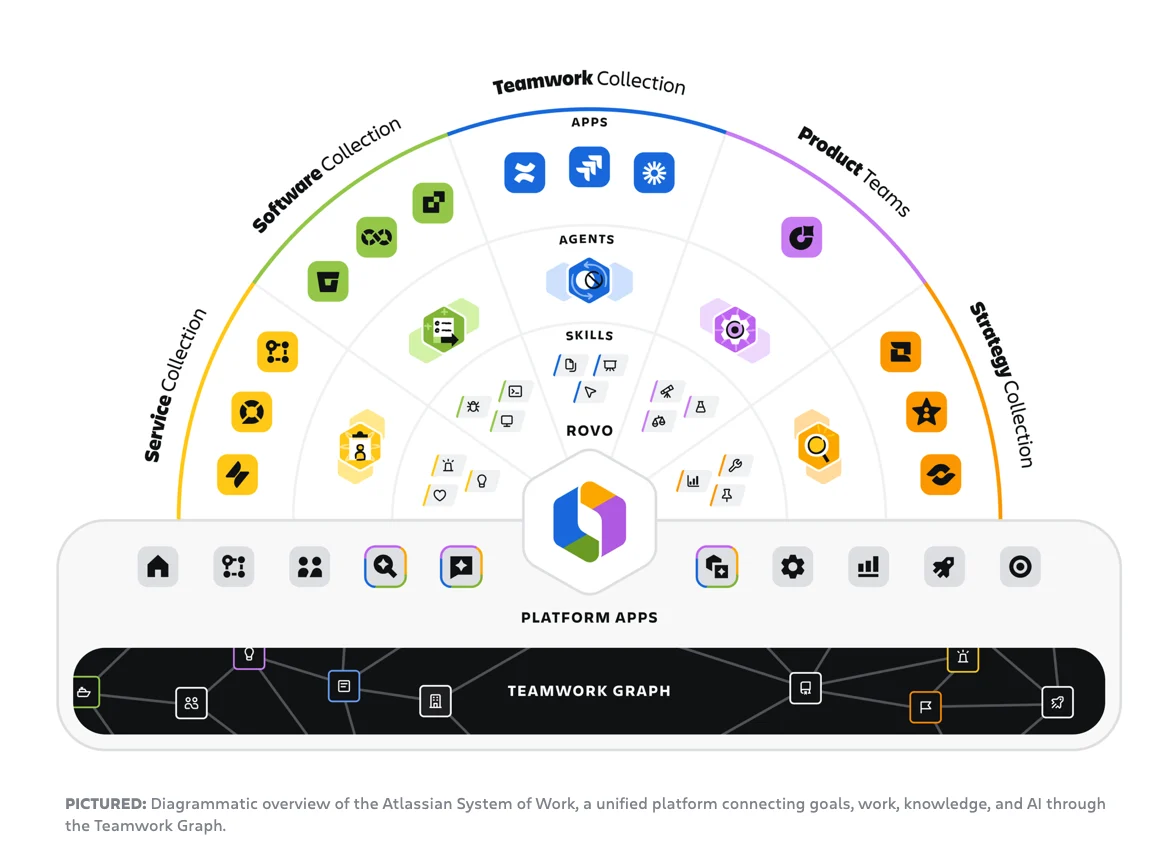
The launch of the Forge LLMs API is part of a broader strategic initiative to position Forge as the premier platform for building AI-native experiences. Atlassian is heavily investing in a suite of AI "building blocks" that include not only the LLM API but also custom Rovo agents and skills. Atlassian Rovo, a recently introduced AI-powered search and knowledge discovery tool, works in tandem with Forge-built apps to help users find, learn, and act on information across their entire organization. This integrated approach ensures that AI is not just an add-on feature but a core component of the Atlassian developer ecosystem’s roadmap for the remainder of the year and beyond.
For developers, the barrier to entry for using these new AI capabilities has been kept intentionally low. To get started, developers simply need to add the Forge LLMs SDK to their existing Forge applications. There is no requirement for new credentials, separate billing accounts for AI services, or complex changes to existing app configurations. This "plug-and-play" approach is designed to encourage rapid experimentation and deployment. Atlassian has updated its official documentation to provide comprehensive guidance on calling the models, managing prompts, and adhering to best practices for AI development.
To further support the developer community during this transition to general availability, Atlassian has scheduled a livestream event for August 4th. This "Forge App Jam" will provide a technical walkthrough of real-world applications built with the Forge LLMs API, offering insights into the development process and showcasing how developers can maximize the potential of the Claude models within their Jira and Confluence apps.
As the industry moves toward more intelligent, automated work environments, Atlassian’s move to make Forge LLMs generally available provides a standardized, secure path for developers to follow. By handling the model infrastructure and ensuring data stays within the trust boundary, Atlassian is attempting to democratize access to high-end generative AI for both small-scale independent developers and large-scale enterprise partners. The transition to GA ensures that these tools are now fully supported and ready to scale alongside the needs of Atlassian’s global customer base.
In summary, the general availability of the Forge LLMs API represents a pivotal moment for the Atlassian Marketplace and its developer community. By integrating Amazon Bedrock, supporting advanced Claude models, and maintaining a strict no-data-egress policy, Atlassian has created a robust framework for the next generation of intelligent software tools. As more developers move their AI-powered features from development to production, the Atlassian ecosystem is poised to become a central hub for secure, enterprise-grade AI innovation.