 11
11
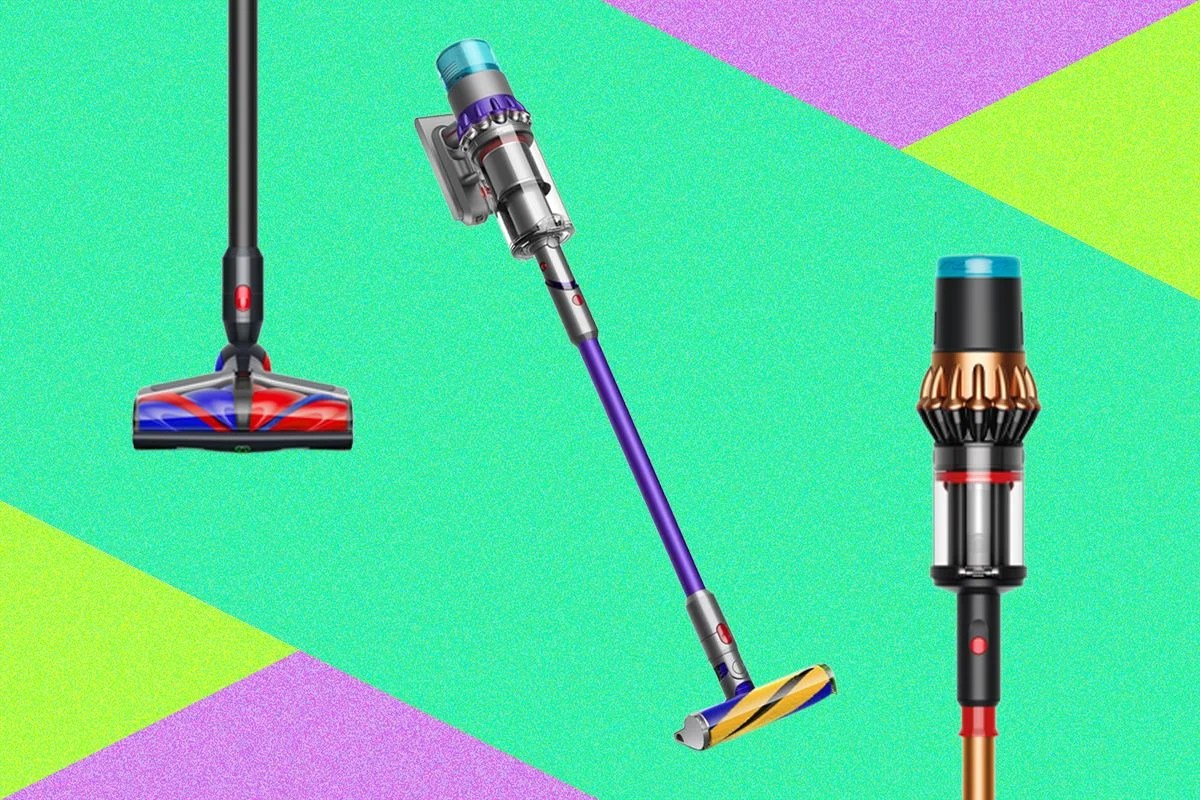
Dyson’s vacuum cleaner range has recently undergone a significant refresh, introducing new models and a revised aesthetic. While the brand remains synonymous with powerful and innovative cleaning technology, this expanded lineup, featuring both new and existing models, presents a challenging decision for consumers in the market for a high-performance vacuum. The introduction of the Dyson V16 Piston Animal, priced at $980, the V10 Konical at $500, and the V8 Cyclone at $400, has reshaped Dyson’s cordless vacuum offerings. These newcomers join the still-available and highly capable older models, the V15 Detect ($650) and the Gen5Detect ($800). This abundance of options, coupled with a wide spectrum of price points, naturally leads to a critical question for potential buyers: Is an upgrade warranted, and which Dyson model truly delivers the best value for money? To answer this, a rigorous comparative analysis was undertaken, pitting all five of these prominent Dyson vacuums against each other in a series of real-world cleaning tests. The comprehensive evaluation revealed two standout performers: the Gen5Detect emerged as the undisputed number one winner, closely followed by the V16 Piston Animal. Remarkably, the V10 Konical secured an impressive third place, despite being a considerably more affordable option. This report delves into the specifics of each test, details the statistical performance of every Dyson model, and outlines the methodology used to arrive at these conclusive results.
A Quick Dyson Vacuum Rundown and Naming Convention
Dyson’s approach to product naming is often distinctive, yet it can also be a source of confusion. The "V" in most of their vacuum names, such as V8, V10, V15, and V16, is generally understood to simply denote "vacuum." However, the accompanying numbers do not consistently follow a chronological release order. Instead, they typically serve as an indicator of a vacuum’s power level, technological advancements, and the range of accessories it offers. For instance, while the V10 and V8 share similar power levels, they differentiate through their cleaner head designs. Conversely, the V16 boasts superior power compared to the V15. Adding another layer of complexity, models like the Gen5Detect deviate from the "V" nomenclature entirely, yet still fit within the hierarchy, positioned between the V15 and V16 in terms of both suction power and price. Furthermore, shoppers may encounter suffixes like "Plus" or "Total" appended to model names; these typically signify that the vacuum comes bundled with an extended array of attachments and tools.

To provide clarity, Dyson’s vacuum lineup can be broadly understood by considering their core specifications and compatible accessories. As one progresses up the numerical scale in the "V" series, or opts for the Gen5Detect, there’s a general trend of increasing suction power (measured in air watts), a greater number of included accessories, and often compatibility with advanced optional add-ons. These include the Submarine wet cleaner head, which transforms the vacuum into a mop, or future compatibility with Dyson’s forthcoming Auto-empty Dok station, designed for automated dustbin emptying.
Regarding cleaner heads, the Digital Motorbar and All Floor Cones heads are engineered for versatile performance across both soft and hard flooring types. This adaptability is why some models are packaged with only one of these heads. More premium Dyson models, however, frequently include the specialized Fluffy Optic cleaner head. This head is exclusively designed for hard floors and features an integrated illuminated light, which dramatically enhances visibility, allowing users to spot microscopic dust and debris that would otherwise go unnoticed. It is worth noting that the All Floor Cones cleaner head, found on models like the V16 and V10, also incorporates a built-in light, offering a similar dust-detection feature without the need to switch heads.
Detailed Performance Tests and Results
The following outlines the series of rigorous tests conducted on each Dyson vacuum, highlighting their strengths and weaknesses in specific cleaning scenarios.

Sand Test: Fine Debris on Rugs
For this initial assessment, all five Dyson models were put to the test on a small, dark-colored rug. A measured quantity of fine, white sand was uniformly spread across the rug to simulate ingrained dirt and tiny particles. The objective was to evaluate each vacuum’s ability to thoroughly extract this challenging debris. The Dyson V10 Konical emerged as the top performer in this test, closely followed by the V15 Detect. Both models, despite their differing head designs, left only a minimal trail of sand after a pass. The V10’s residual line was notably smaller than the V15’s, which left a more noticeable trail on its right side. In stark contrast, the V8 Cyclone demonstrated significant difficulty, stalling entirely and proving incapable of vacuuming up any sand from the thin rug. This issue was peculiar, as other vacuums of comparable or greater power managed the task without incident. The Gen5Detect and V16 Piston Animal, while powerful enough to clean the rug, exhibited an interesting challenge: their intense suction frequently attempted to lift the thin rug itself. This led to mixed results, with a considerable amount of sand remaining after each pass. When re-tested on a thicker rug, both the Gen5Detect and V16 Piston Animal performed substantially better. The Gen5Detect achieved a perfect clean in a single sweep, while the V16 effectively collected most of the sand, though it tended to push a small pile of sand directly in front of its cleaner head.
Cereal Test: Larger, Scattered Debris
Building on previous evaluations, the cereal test was updated to use Cheerios, a common household item often found scattered on floors, particularly in homes with children. A mix of crushed and whole Cheerios was dispersed onto a thicker living room rug to simulate everyday spills. Across the board, all Dyson models performed exceptionally well in cleaning up this mess on the very first pass. The differences in performance among the models in this specific test were minimal. The V8, V10, and V15 Detect models generally collected all the Cheerios and their fragments on the initial sweep, with only one to three pieces occasionally scattering a short distance, easily retrievable in subsequent passes. However, the Gen5Detect slightly pulled ahead, demonstrating its superior containment by sending absolutely no pieces flying during its operation. The V16 Piston Animal also showed excellent control, with only a single, tiny piece of cereal being propelled forward, placing it just behind the Gen5Detect in this particular challenge.

Litter Test: Hard Floor Performance with Fine Granules
This test focused on the effectiveness of the vacuums on vinyl plank flooring, targeting cat litter—a common and challenging mess. For optimal hard floor cleaning, the vacuums equipped with the Fluffy Optic cleaner head (V15, V16, and Gen5Detect) were utilized with this specialized attachment. The V8 continued with its Digital Motorbar head, and the V10 with its All Floor Cones head. Unsurprisingly, the models featuring the Fluffy Optic head, specifically designed for hard surfaces, excelled. The Gen5Detect delivered an impeccable performance, leaving no trace of litter or even residual dust, as confirmed by its illuminated light, after a single pass. The V16 Piston Animal also performed very well, clearing the litter effectively. However, similar to the sand test, it exhibited a tendency to push a small amount of litter forward when encountering an exceptionally dense spill. This minor issue is unlikely to occur during routine, lighter cleanups. The V15 Detect followed closely, successfully collecting all large pieces but leaving a faint layer of dust discernible under the Fluffy Optic’s headlight, though it appeared clean to the naked eye. The V10 Konical managed the task adequately but required two passes for complete debris removal. The V8 Cyclone once again struggled, mirroring its sand test performance by merely pushing the litter into a pile, necessitating multiple, awkward passes to finally vacuum it up.
Handheld Test: Versatility and Edge Cleaning
Dyson vacuums are celebrated for their versatility, easily converting into powerful handheld units. This test assessed their performance on carpeted stairs, a notoriously difficult area to clean thoroughly. All five models demonstrated good capability for this task, making any of them a viable option for households prioritizing stair cleaning. However, the V16 Piston Animal and Gen5Detect distinguished themselves. Their elevated suction power was distinctly palpable in handheld mode, leading to impressively full dustbins packed with pet hair and fine dust extracted from the deeply embedded fibers of the carpeted stairs. As a cat owner and parent, the efficiency of these two models in tackling such accumulated debris was particularly noteworthy. Both also offer integrated crevice tools for convenience; the V16’s tool remains permanently attached, while the Gen5’s is built-in but requires detachment to connect other heads directly to the handheld motor. The V15 Detect, while competent, felt as though it was gliding over the carpet rather than engaging with it, unlike the more "locked-in" feel provided by the other Dyson vacuums, including the less powerful V8 and V10 models. These more affordable options performed respectably, falling into the runner-up category for this specific test.

Carpet and Rug Test: Deep Cleaning Performance
Initial testing of an early release V16 Piston Animal revealed some clogging issues on carpets. However, with a current production model, the V16’s performance on carpets and rugs significantly improved. Both the V16 and Gen5Detect delivered outstanding results on various carpet types, extracting a remarkable quantity of cat hair and dust even from recently vacuumed areas. The potent suction of these models proved particularly effective on carpeted surfaces, especially for pet owners. The V10 Konical, equipped with its All Floor Cones cleaner head, provided a smooth and effortless glide across carpets and rugs. Its head design was notably easier to maneuver than the Digital Motorbar head found on both the V8 and V15 when navigating low-pile rugs. The V8 Cyclone, while requiring more effort to push on rugs, demonstrated better mobility on full carpets. The V15 Detect shared similar maneuverability characteristics but presented a notable ergonomic drawback: its trigger button, which must be continuously held down during operation. In contrast, all other tested Dyson vacuums feature a power button for continuous cleaning. For extensive vacuuming sessions, particularly in homes with large carpeted areas, a power button and the higher suction power of models like the Gen5Detect or V16 are highly desirable.
Which One Wins? The Final Verdict
The array of Dyson models and their varied performances across different tests present a nuanced picture. To provide a definitive ranking, a scoring system was implemented: each vacuum received points from 1 to 4 for every test, with 4 points awarded for the best performance and 1 for the worst, and 2 or 3 points for intermediate results. This comprehensive scoring approach revealed a clear leader.

The Dyson Gen5Detect emerged as the overall winner, achieving a near-perfect score of 19 points across the five rounds of testing. Its exceptional power and effective transition across different debris types make it a formidable cleaning tool. For pet owners, its 280 air watts of suction power are particularly effective at extracting embedded pet hair and dander from carpets, often filling the debris tank even after recent vacuuming with less powerful alternatives. While it is one of the more expensive options, its robust performance and comprehensive suite of attachments justify the investment for those seeking the absolute best. Recent sales have also made it a more attractive proposition since the launch of newer models. The primary limitation of the Gen5Detect is its lack of compatibility with Dyson’s larger add-ons, specifically the Submarine wet cleaner head and the forthcoming Auto-empty Dok station. However, for sheer vacuuming prowess, without concern for these auxiliary features, the Gen5Detect remains the top recommendation.
The Dyson V16 Piston Animal secured a strong second place. With an impressive 315 air watts of suction, it performed exceptionally well in almost every test. Its only minor flaw was a tendency to push small debris, such as sand and litter, into a pile when encountering large spills, a slight disadvantage compared to the Gen5Detect. Despite this, the V16 Piston Animal maintained a close second. It boasts several ergonomic and design upgrades, including a convenient cleaner head release located below the motor, built-in crevice tools on both the handheld motor and the wand, and a compressor feature to assist in emptying the dustbin. Critically, the V16 Piston Animal is designed for future compatibility with Dyson’s self-emptying docking station, and a Submarine version ($1,100) is available, allowing it to function as a wet mop. This model is highly recommended for buyers who plan to invest in these advanced add-ons; otherwise, the Gen5Detect might offer better pure vacuuming value.
For those seeking exceptional performance without the premium price tag, the Dyson V10 Konical stands out as the "Affordable All-Arounder." It consistently delivered solid results, never scoring in last place in any test. Its new cleaner head design made it particularly comfortable and effective on carpets and rugs. Surprisingly, it outperformed both the more expensive and powerful Gen5Detect and V15 Detect in the sand test. Its All Floor Cones cleaner head was also noticeably easier to maneuver on low-pile rugs compared to the Digital Motorbar head on the V15 and V8. While its performance on hard floors was not as stellar as the top contenders, it was by no means poor. This model, despite coming with only a single head, offers excellent value, especially since its All Floor Cones cleaner head includes a built-in light—a feature often reserved for pricier models. Furthermore, the V10 Konical will be compatible with Dyson’s upcoming self-emptying docking station, making it a fantastic buy at its price point.
Also Consider: The Upgrade Options and Future Compatibility

Beyond raw cleaning power, certain Dyson models offer compelling upgrade paths that might influence a purchasing decision. These features cater to specific needs, such as automated dustbin emptying or integrated wet cleaning capabilities.
The V16 Piston Animal Submarine ($1,100) and the V10 Konical with Auto-empty Dok ($650) represent the pinnacle of these upgrade options. The Submarine variant, also available for the V15 Detect ($750), integrates a wet roller head that efficiently manages both clean and dirty water during operation, effectively transforming the stick vacuum into a mop. This feature has received positive feedback for its convenience and effectiveness in managing liquid spills and hard floor cleaning.
For those who detest manually emptying vacuum dustbins, Dyson’s forthcoming Auto-empty Dok station is a significant innovation. This docking station, capable of holding up to 60 days’ worth of debris, charges the vacuum while automatically emptying its bin. This add-on, already available for the V10 Konical, mirrors similar popular features found in competing brands like Shark and Tineco, offering enhanced convenience and storage for accessories. Dyson has also indicated plans for a V16-compatible docking station in the future, though a release timeline remains unconfirmed.
When factoring in these potential add-ons, the V16 Piston Animal, with its Submarine option and future Dok compatibility, could hypothetically draw even with or surpass the Gen5Detect in overall utility, particularly if the Gen5Detect remains incompatible with such accessories. The V10 Konical, with its existing Dok compatibility, also holds its ground as a highly versatile option. Ultimately, the decision rests on individual priorities: whether the advanced cleaning performance in specific tasks is paramount, or if the convenience and multifunctionality offered by these optional upgrades are worth the additional investment.