11
11
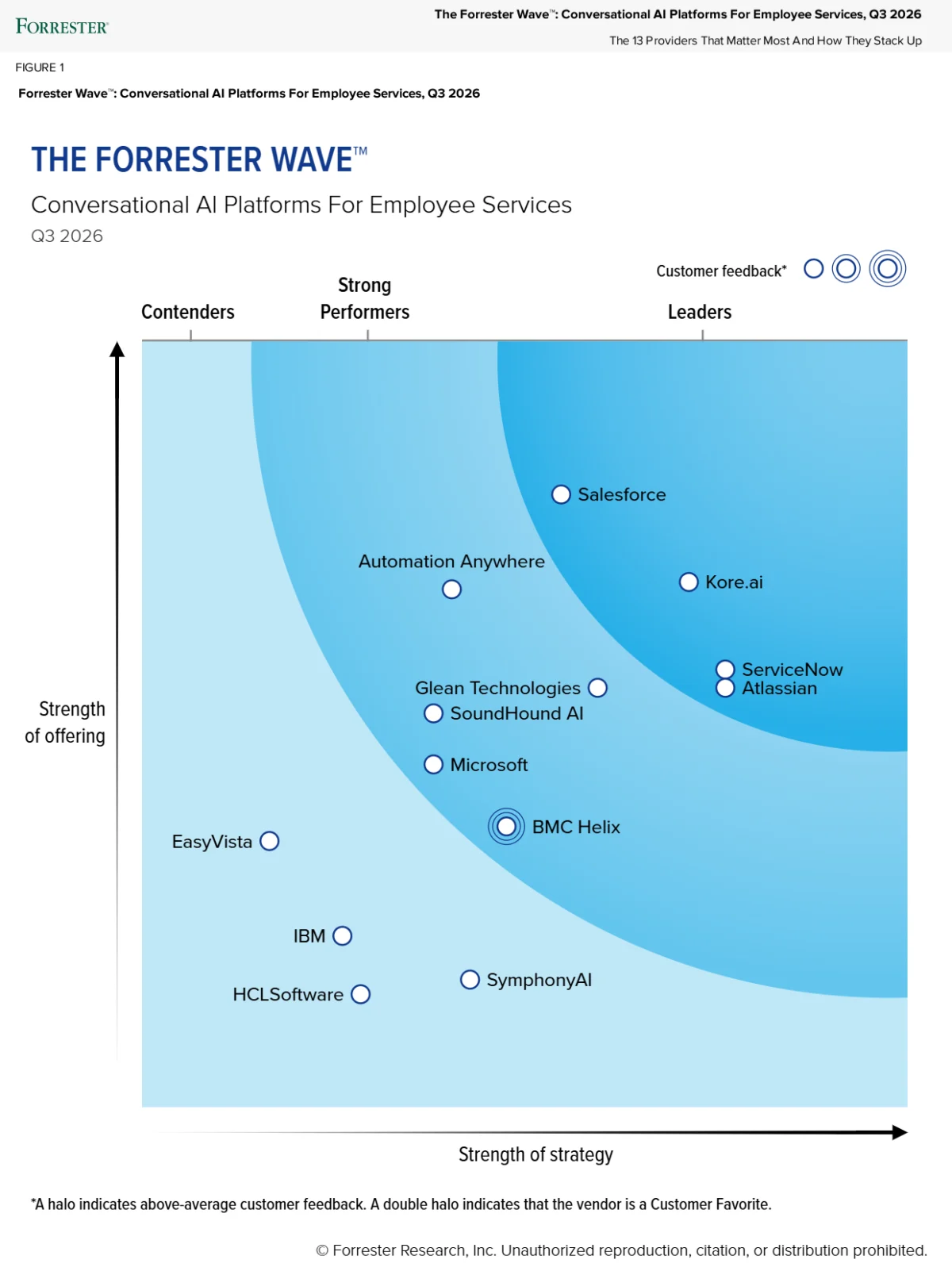
The landscape of enterprise service management is undergoing a fundamental transformation driven by the rapid evolution of artificial intelligence, a shift recently validated by two major industry analyst reports naming Atlassian as a market leader. As of the third quarter of 2026, Atlassian has been recognized as a Leader in both The Forrester Wave™: Conversational AI Platforms for Employee Services and the 2026 Gartner® Magic Quadrant™ for IT Service Management Platforms. These accolades come at a time when organizational expectations for service delivery are pivoting away from traditional ticket-based systems toward proactive, context-aware environments.
The central thesis of these industry recognitions is the critical role of "context" in making artificial intelligence effective within the enterprise. Modern AI is no longer judged solely on its ability to generate text, but on its capacity to understand the full picture of an organization’s operations—spanning people, knowledge, services, assets, and code. According to recent research, the ability for AI to see these interconnections is the primary factor in whether a service interaction feels seamless or frustrating. For employees, this means receiving help that feels intuitive; for customers, it means obtaining answers without the friction of repeated explanations or long wait times; and for operations teams, it means the ability to preemptively address incidents before they escalate into disruptions.
Despite the promise of AI, the transition to these advanced service models has been hampered by data fragmentation. A recent commissioned survey conducted by Forrester Consulting highlighted a significant gap in organizational readiness: only 18% of surveyed organizations reported that their internal knowledge is part of a broader context graph or a unified data layer. This lack of organizational context was identified as the single largest hurdle for enterprises attempting to adopt agentic AI in their service workflows. The data suggests that this is not merely a challenge for newcomers but a persistent problem across the entire maturity curve, affecting even those organizations that have already deployed AI solutions.
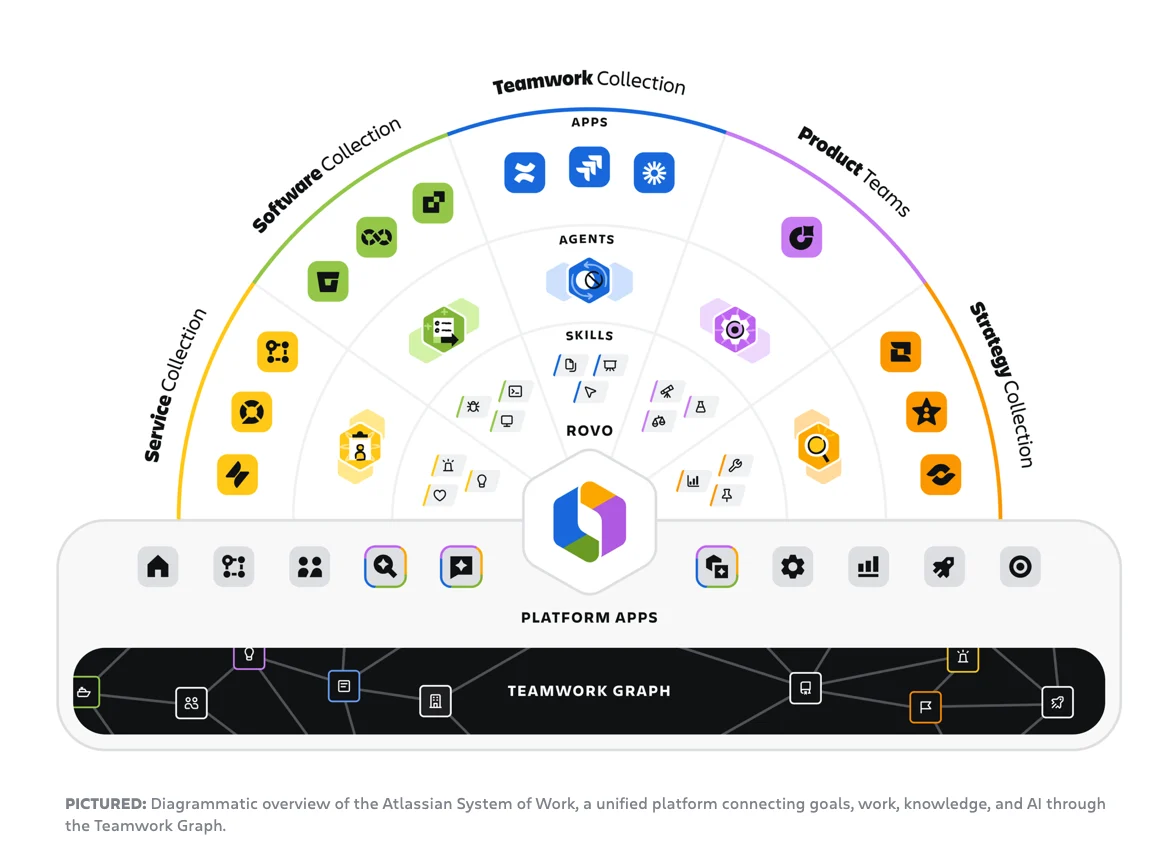
Atlassian’s leadership position in the Q3 2026 Forrester Wave for Conversational AI Platforms for Employee Services is largely attributed to its strategic focus on Rovo, an AI-powered tool designed to unlock teamwork by prioritizing connected user context. Forrester’s analysis noted that Atlassian’s vision involves embedding Rovo directly into the surfaces where employees already work, rather than forcing them to navigate to a separate portal. By focusing on proactive support and leveraging the "Teamwork Graph," Atlassian provides a framework where AI can access the necessary background information to provide relevant, high-quality assistance.
The Teamwork Graph is a cornerstone of Atlassian’s technical strategy, currently encompassing over 150 billion objects and relationships. This massive data layer allows AI agents to pull from a deep reservoir of institutional knowledge, past request histories, and cross-functional service dependencies. Because Atlassian customers are already utilizing these tools for project management and software development, they are effectively sitting on one of the richest context layers in the industry. This allows for a reduction in the time spent by teams piecing together answers and provides AI systems with the data required to take autonomous action.
In the realm of employee support, the traditional model of the centralized service portal is being challenged. Atlassian’s "Service Collection" initiative aims to meet people where work happens—including search interfaces, chat platforms, and Slack channels. The goal is to eliminate the "detective work" often required by service agents who must navigate a maze of disconnected tools to find the root cause of an issue. When knowledge is scattered across various documents and threads, traditional AI often fails to provide accurate answers. By contrast, embedding AI-powered support into collaborative surfaces ensures that the context of the conversation is preserved, leading to faster resolutions and a reduction in the "service quo" of repetitive manual tasks.
Forrester’s report specifically highlighted Atlassian’s ability to integrate Rovo into multiuser chat channels, which are increasingly becoming the primary hub for internal enterprise communication. This approach acknowledges that employee support does not happen in a vacuum; it happens within the teams that own the work. By proactively bringing context to these channels, Atlassian aims to improve the employee experience while freeing up service teams to focus on more complex, high-value projects.
Simultaneously, the 2026 Gartner® Magic Quadrant™ for IT Service Management Platforms has recognized Atlassian as a Leader, a distinction that underscores the strength of Jira Service Management (JSM) as a unified platform for service and operations. The Gartner report, authored by analysts Rich Doheny and Jen Lichucki, reflects a broader industry trend where IT operations (Ops) and service management are merging into a single, cohesive workflow. For operations teams, the value of context is most apparent during the "chaos" of an active incident. Responders require an immediate and clear understanding of what changed in the environment, which services are affected, and what remediation steps have been successful in the past.
Without this diagnostic context, teams often lose critical minutes switching between disparate monitoring tools and manually reconstructing the timeline of an event. Jira Service Management addresses this by bringing critical service and operations data into a single pane of glass. This allows teams to move from detection to resolution and eventual post-incident learning without losing the narrative thread of the incident.
A significant part of this operational efficiency is driven by new AIOps capabilities. Atlassian has introduced advanced integrations with third-party platforms such as Lansweeper, Coralogix, and Honeycomb. These integrations bring telemetry data, asset intelligence, and log data directly into the Jira Service Management environment. By consolidating this information, teams can identify risks earlier and understand complex service dependencies without the need for constant tool-switching. This proactive approach to incident management is designed to reduce the frequency of repeat issues and, ideally, prevent incidents from occurring at all.
When disruptions do occur, the AI within the platform uses the Teamwork Graph to surface similar historical incidents, identify likely root causes based on recent code deployments or configuration changes, and suggest specific mitigation steps. This level of automated assistance is intended to transform the role of the incident responder from a manual investigator to an informed decision-maker.
The recognition from Gartner and Forrester signals a departure from what Atlassian describes as the "clunky, disconnected experiences" of the past. The industry is moving toward a future where service management is "AI-native," meaning that AI is not an add-on feature but a foundational element of the platform’s architecture. In this future, the boundaries between support, operations, and development continue to blur, as all teams operate from the same unified data layer.
Ultimately, the shift toward context-rich service management is about shattering the status quo of enterprise friction. By ensuring that AI has the depth of context it needs to be useful across support and operations, Atlassian is positioning itself at the forefront of a movement that values confidence and clarity over fragmented data and manual triage. As the 2026 analyst reports suggest, the organizations that succeed in the coming years will be those that can successfully bridge the gap between their data and their AI, turning organizational knowledge into a strategic asset for every service interaction.
The information regarding the Gartner Magic Quadrant for IT Service Management Platforms is based on the report published on July 27, 2026. Gartner’s recognition is an opinion based on its business and technology insights and should be evaluated within the context of the full research document. Similarly, the Forrester Wave findings regarding Conversational AI Platforms for Employee Services for Q3 2026 reflect the analyst firm’s judgment at the time of publication. Both reports serve as benchmarks for the industry’s progress toward more integrated, intelligent, and context-aware service ecosystems.