 11
11
Atlassian has officially announced a significant architectural shift in its artificial intelligence capabilities with the launch of Project Long Horizon, a new reasoning engine for Rovo Chat. This update marks a transition from a traditional multi-agent routing system to a unified, single reasoning loop designed to handle complex, cross-product workflows with greater accuracy and contextual integrity. By consolidating the reasoning process into a single model, Atlassian aims to eliminate the friction and context loss associated with previous iterations of the software, providing users with a more reliable and transparent AI experience.
In the initial phase of Rovo Chat’s development, the system utilized a multi-agent routing architecture. Under this model, the system operated with specialized agents for different domains—one for Jira, one for Confluence, and one for Slack. While this approach was clean and efficient for isolated tasks, it encountered significant limitations during real-world usage. Specifically, when users issued queries that required information from multiple sources—such as finding bugs logged by a specific teammate in Jira and cross-referencing them with context from Slack—the system had to hand off work between these specialized agents. These handoffs often resulted in incomplete context, slower response times, and a fragmented user experience.
The previous architecture was largely a workaround for the limitations of earlier-generation Large Language Models (LLMs), which struggled to process massive contexts or manage extensive lists of tools simultaneously. However, the emergence of newer frontier models has changed the landscape. These advanced models are capable of maintaining significantly larger contexts and performing complex planning and reflection without the need for segmented agent handoffs. Recognizing this shift, Atlassian developed Project Long Horizon to leverage these capabilities, moving away from a specialized routing system toward a more holistic, iterative reasoning engine.
Project Long Horizon functions as a single model that retains the full context of a conversation alongside every tool interaction. Rather than passing a request between specialists, the engine operates within a continuous loop of thinking, acting, observing, and reflecting. This "Think-Act-Observe-Reflect" cycle allows the model to decide its next steps based on the results of previous actions without losing any thread of the original query. The engine is designed to be highly resilient and thorough, with the capacity to iterate up to 150 times per query if a task demands such depth.
A key feature of the Long Horizon engine is its use of adaptive reasoning effort. This mechanism allows the model to scale its cognitive processing based on the complexity of the user’s request. For simple, straightforward lookups—such as checking the status of a specific Jira ticket—the model applies minimal reasoning overhead, ensuring a rapid response. Conversely, for multi-step research tasks, such as comparing sprint velocity across multiple quarters and identifying long-term trends, the engine engages in deeper reasoning. It plans its approach, evaluates intermediate results, and synthesizes a comprehensive answer. While most queries are resolved within three to eight iterations, the system’s ability to scale ensures that complex problems are addressed with the necessary rigor.
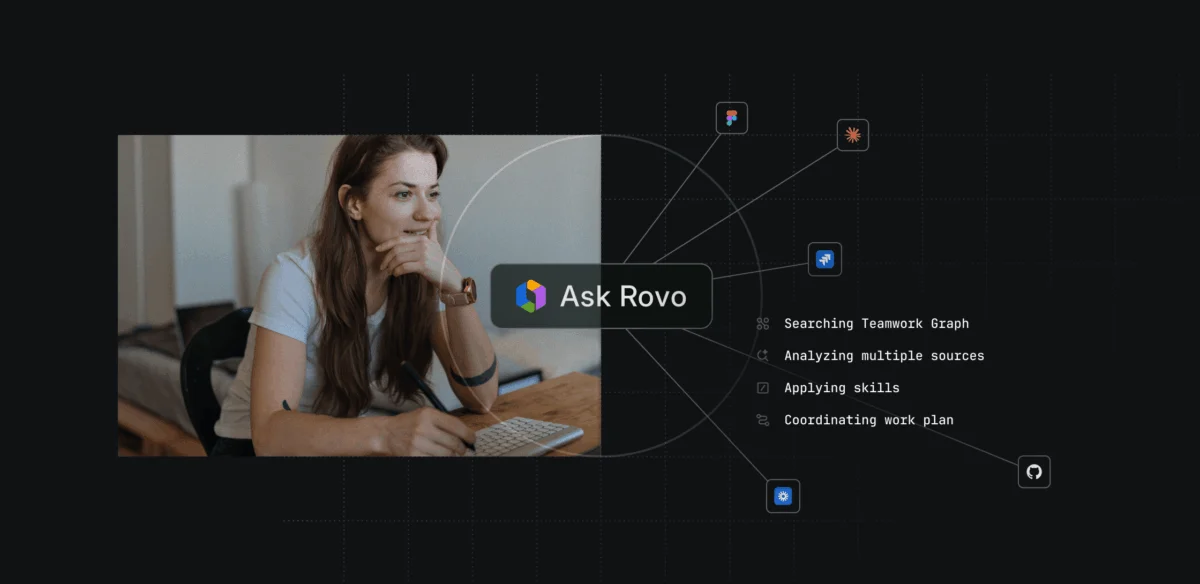
This shift in architecture does involve a trade-off regarding speed. As queries become more complex, the unified engine may take slightly longer to produce a final answer compared to the previous multi-agent system. However, Atlassian’s internal feedback and testing indicated a strong user preference for trustworthy, high-quality answers over immediate but potentially fragmented results. To mitigate the impact of this increased latency, Atlassian has introduced reasoning traces within the Rovo Chat user interface. These traces allow users to see the system’s step-by-step progress, showing where the engine is making headway and how it recovers from obstacles. This transparency is intended to reduce perceived latency and build user trust in the AI’s methodology.
The performance of Long Horizon has been validated through extensive offline evaluations and online A/B testing. The data indicates statistically significant gains in user-facing quality. One of the most notable improvements occurred in the system’s interaction with Confluence. The jump in performance here highlights the engine’s enhanced ability to navigate complex documentation, hold context across multiple search queries, and cross-reference information across various pages and documents.
Beyond improving the quality of existing tasks, Long Horizon enables entirely new categories of workflows that were previously unreliable. One major advancement is in the realm of agentic tool use. Rovo Chat can now perform multi-step actions across different products in a single pass. For instance, a user can command the system to create a Jira ticket based on a specific Slack message and simultaneously link it to a roadmap epic in Confluence. The unified reasoning loop ensures that these actions are performed reliably and with full awareness of the context in both platforms.
The new engine also supports long-running background tasks. Users can now task Rovo with summarizing a full day’s worth of Slack activity, preparing weekly status reports from live project data, or tracing production incidents across deployment logs, pull requests, and design documents. Because the model can persist through these complex tasks and gather data from multiple sources, it returns a complete and synthesized result rather than partial or disjointed information.
Furthermore, Long Horizon facilitates deeper cross-product reasoning. When a query touches Jira, Confluence, Slack, and various third-party tools, the system maintains cognitive continuity. Context gathered from one product directly informs the search parameters and logic used in the next. This eliminates the "stitched-together" feel of previous AI responses, providing a more coherent narrative and actionable data.
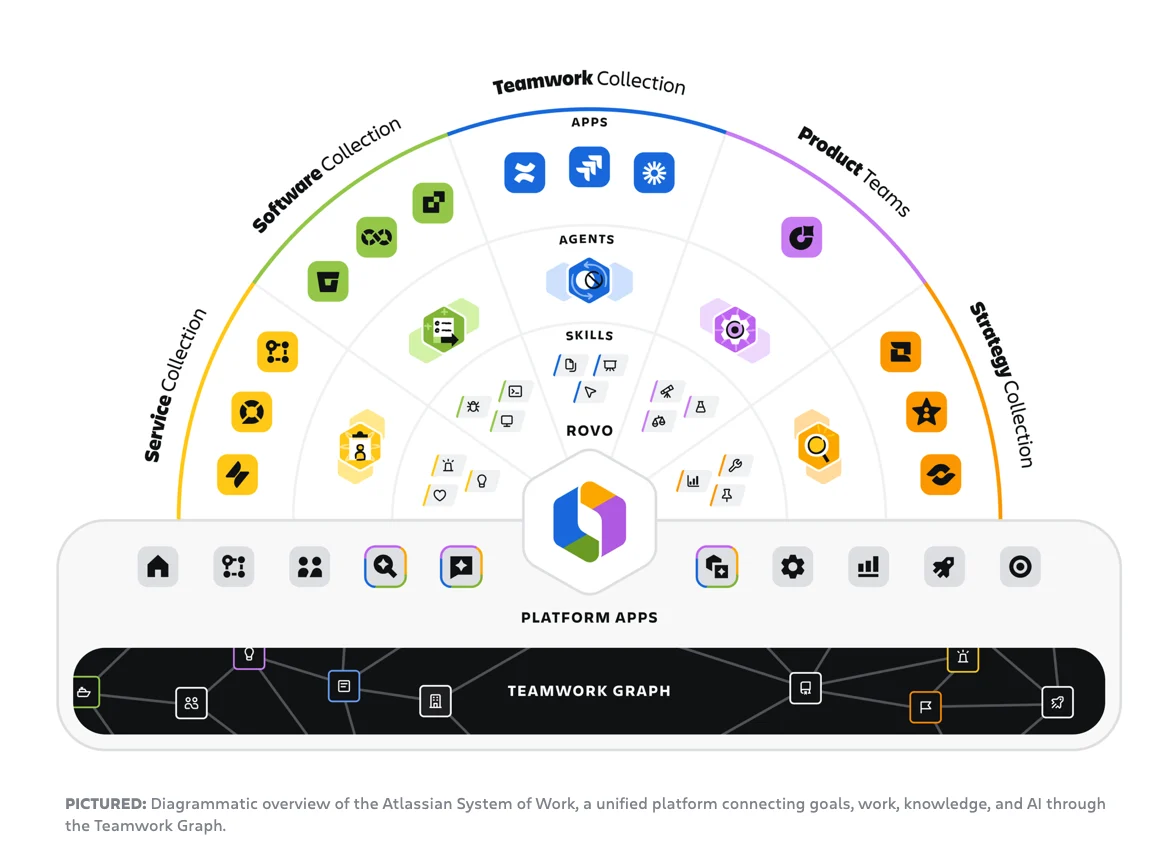
The deployment of Long Horizon is supported by significant upgrades to Atlassian’s underlying technology stack. The system now utilizes Claude Opus 4.x class models, with the flexibility to integrate future reasoning models as they become available. Additionally, Atlassian has improved its connectors across the Teamwork Graph, enhancing the integration between Jira, Confluence, and Slack. The engine also features better interoperability with third-party tools through the Model Context Protocol (MCP). As organizations connect more of their software stack to the Atlassian ecosystem, Long Horizon’s reasoning capabilities automatically extend to those new surfaces.
Atlassian’s engineering teams have documented the technical architecture of Long Horizon, detailing the iteration strategies, prompt caching techniques, and progressive tool discovery methods used to achieve these results. The development of the engine was driven by the realization that the primary bottleneck in modern work is not necessarily the speed of individual tasks, but the friction involved in coordination across different tools and platforms. By reducing this friction through a unified reasoning loop, Long Horizon allows for fewer dropped threads and more complete work cycles.
Project Long Horizon is currently live and available to all Rovo customers. Users can access the new capabilities by opening Rovo Chat within any Atlassian product. The system’s reasoning steps are visible during the processing of multi-source queries, allowing users to witness the shift in how the AI approaches and solves complex organizational tasks. This update represents a major step in Atlassian’s strategy to move AI beyond simple chatbots and into the role of a sophisticated reasoning partner capable of managing the complexities of modern enterprise environments.