 11
11
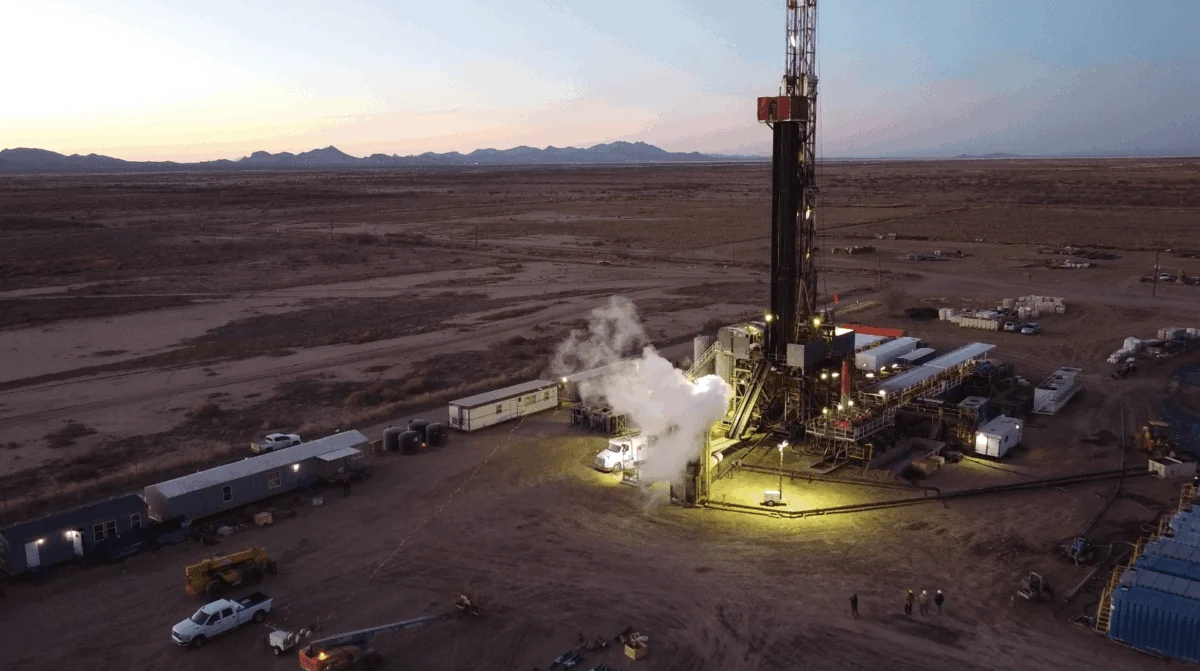
In a remarkable turnaround that challenges long-held assumptions about conventional geothermal energy, Zanskar, a leading geothermal company, has revitalized a New Mexico power plant that was on the verge of collapse. Acquired in 2024, the facility, known as the Lightning Dock site, had been visibly failing, with its shallow wells experiencing a rapid and alarming loss of heat, significantly hampering its ability to generate electricity. This once-struggling operation has now, under Zanskar’s stewardship, emerged as a beacon of productivity in the geothermal sector.
Following a year of intensive operation and the strategic drilling of a new, deeper well, Zanskar proudly announced a complete reversal of fortunes for the Lightning Dock plant. Exclusive figures shared with WIRED reveal that the site has ascended to become one of the most productive pumped geothermal wells in the United States. It now consistently supplies ample heat, ensuring the power plant runs efficiently and without any of the previous issues that plagued its performance.
Joel Edwards, cofounder of Zanskar, emphasized the profound implications of this achievement. He stated that the productivity witnessed at the Lightning Dock site over the past year "fundamentally changes how people think about these types of systems that we really thought we understood in the past." This success is not merely an isolated incident but represents a significant milestone for the long-overlooked geothermal industry, which is currently experiencing an unprecedented investment renaissance. A combination of innovative drilling technologies, sophisticated artificial intelligence, and a degree of fortunate circumstances all played pivotal roles in achieving this breakthrough. Zanskar’s triumph at Lightning Dock serves as a powerful testament, suggesting that many older, seemingly exhausted well sites might still hold untapped potential, warranting further exploration and investment.
Traditional geothermal energy generation relies on harnessing the Earth’s inherent heat by tapping into reservoirs of hot water deep within the crust. This hot water is then pumped to the surface, where its steam is used to spin turbines, producing electricity. Conceptually, it presents an ideal method for generating renewable baseload power—a consistent, reliable energy supply that does not fluctuate with weather conditions like solar or wind. Humans have, in fact, been utilizing steam from hot springs for thousands of years, demonstrating the ancient origins of this energy source. However, the industry has historically faced significant hurdles. Geographic constraints dictate that power plants must be situated directly on geothermal reserves, which are predominantly concentrated in the western United States. Furthermore, the inherent difficulty and substantial expense traditionally associated with identifying and developing new wells have meant that geothermal energy currently accounts for less than 1 percent of the total electricity mix in the US.

The challenges at Lightning Dock were particularly acute, even by geothermal industry standards. The site had been experiencing a particularly steep decline in productivity, losing heat at a rate five to ten times faster than that of average geothermal wells, according to Zanskar. By 2024, when Zanskar acquired the property, the temperatures in the original wells, which barely extended beyond 2,500 feet deep, had plummeted by approximately 50 degrees Fahrenheit (10 degrees Celsius) to around 250 degrees Fahrenheit. This temperature drop was critical, as the onsite 15-megawatt power plant, responsible for supplying electricity to New Mexico’s largest utility, was specifically engineered to operate efficiently at temperatures exceeding 300 degrees Fahrenheit. The dwindling heat supply meant the plant was operating well below its optimal capacity, making it an economically unviable asset.
While conventional geothermal wells typically extend to depths of 3,000 to 5,000 feet, the potential to tap into hotter, more robust reserves of water lies significantly deeper. However, drilling deeper wells presents its own set of formidable challenges. The rock formations encountered at greater depths are considerably tighter and harder, making the drilling process far more complex and, consequently, much more expensive. Roland Horne, a senior fellow at the Precourt Institute for Energy at Stanford University, succinctly framed this dilemma as "basically a question of economics." He further elaborated on the non-linear nature of these costs, noting that "if you drill twice as deep, it costs four times as much," a factor that has historically deterred extensive deep drilling in the geothermal industry.
To mitigate the inherent risks and make more informed decisions regarding deep drilling, Zanskar employed cutting-edge artificial intelligence. This AI technology is designed to identify what are termed "hidden systems"—geothermal sites that possess substantial potential but exhibit few, if any, discernible surface signs of their viability. The company successfully leveraged this technology last year to uncover a previously unknown geothermal source in Nevada. Zanskar confirmed that the same sophisticated AI modeling played a crucial role in pinpointing the most productive location to drill at the Lightning Dock site. This advanced modeling was then integrated with state-of-the-art drill bit technology, refined through decades of innovation in the oil and gas industry. The synergy of these technologies enabled Zanskar to drill deeper holes an impressive 35 percent faster than conventional methods, all while maintaining what the company describes as a "competitive cost." While Zanskar did not disclose specific financial details, the impact has been clear: the new 8,000-foot well has been fully operational for a year, consistently delivering heat levels that surpass those recorded before the site’s decline, firmly establishing its long-term viability.
Joel Edwards reaffirmed Zanskar’s strategic commitment from the outset. "We knew that if we were going to buy this field, we were committed to drilling deeper and going after it," he stated. The productivity of the new well has been so exceptional that, on several occasions, it has supplied "too much heat" for the existing power plant, a testament to its robust output. This surplus heat strongly suggests that the site could potentially support an even larger facility, further expanding its capacity to generate clean energy. Edwards expressed high confidence in the well’s longevity, projecting that, "if you look at peers of this well, it has the attributes to be productive for decades."
While acknowledging Zanskar’s impressive achievement, Roland Horne of Stanford University offered a nuanced perspective. He pointed out that Zanskar significantly reduced initial capital outlays by acquiring an already developed site with an existing power plant, rather than undertaking a greenfield project. Horne also noted that another company had previously drilled a deep exploratory well at Lightning Dock in 2022, providing Zanskar with valuable geological information that could have aided its modeling efforts. Ben Brenner, Zanskar’s director of federal affairs, clarified in an email to WIRED that data from the prior well was indeed incorporated into their modeling, but he maintained that the company "never saw that particular well’s data as somehow definitive or essential." Horne concluded that while Zanskar "haven’t discovered anything revolutionary" in terms of entirely new techniques, the statistics provided by the company "hold up" to rank Lightning Dock among the wells with the highest flow rates—a critical measure of productivity—in the US. Brenner further highlighted Lightning Dock’s advantage by noting that while some other facilities in Nevada boast wells with higher flow rates, those wells are "much colder" than Lightning Dock’s, implying they would be less productive over an extended period. Horne unequivocally praised the outcome, affirming, "It’s a really good well."

This year has indeed marked a period of significant dynamism for the geothermal industry, particularly for companies leveraging new technologies to unlock the Earth’s vast heat reserves. Fervo Energy, an enhanced geothermal company, made headlines in May with a successful initial public offering (IPO), raising an impressive $2.2 billion. Although there has been some recent pullback in its stock prices since its debut, the event underscored a renewed investor interest. Venture capital investors, historically cautious about geothermal ventures due to perceived risks and high upfront costs, are now channeling substantial funds into the industry. Stephanie Diaz, a senior associate at BloombergNEF, reported that venture capital and private equity investment in geothermal startups has already reached $432 million through the first six months of this year. This robust funding trajectory indicates that "2026 is shaping up to be the best-funded year for geothermal startups since BNEF began tracking in 2022." This total includes Zanskar itself, which secured $115 million in a Series C funding round in January, marking one of the largest raises in the sector this year.
It is important to differentiate Zanskar’s approach from that of enhanced geothermal systems (EGS), exemplified by companies like Fervo. Enhanced geothermal utilizes techniques akin to hydraulic fracturing, requiring hot, dry rocks rather than naturally occurring hot water reservoirs. This innovation expands the potential for geothermal drilling into regions previously considered unsuitable, thereby opening up vast new areas for development. Consequently, EGS companies like Fervo have garnered a significant share of the recent investment and media attention within the industry, as Diaz noted.
However, Diaz underscored the value of data-driven methodologies, such as those employed by Zanskar, in de-risking traditional geothermal development. She cited Lightning Dock as an excellent example of successfully identifying and developing "adjacent areas to work that have worked historically." Zanskar’s achievement at Lightning Dock not only breathes new life into an old facility but also offers a compelling blueprint for the future of conventional geothermal, demonstrating that strategic investment, technological innovation, and a deeper understanding of subsurface geology can transform struggling assets into long-term, reliable sources of clean energy.